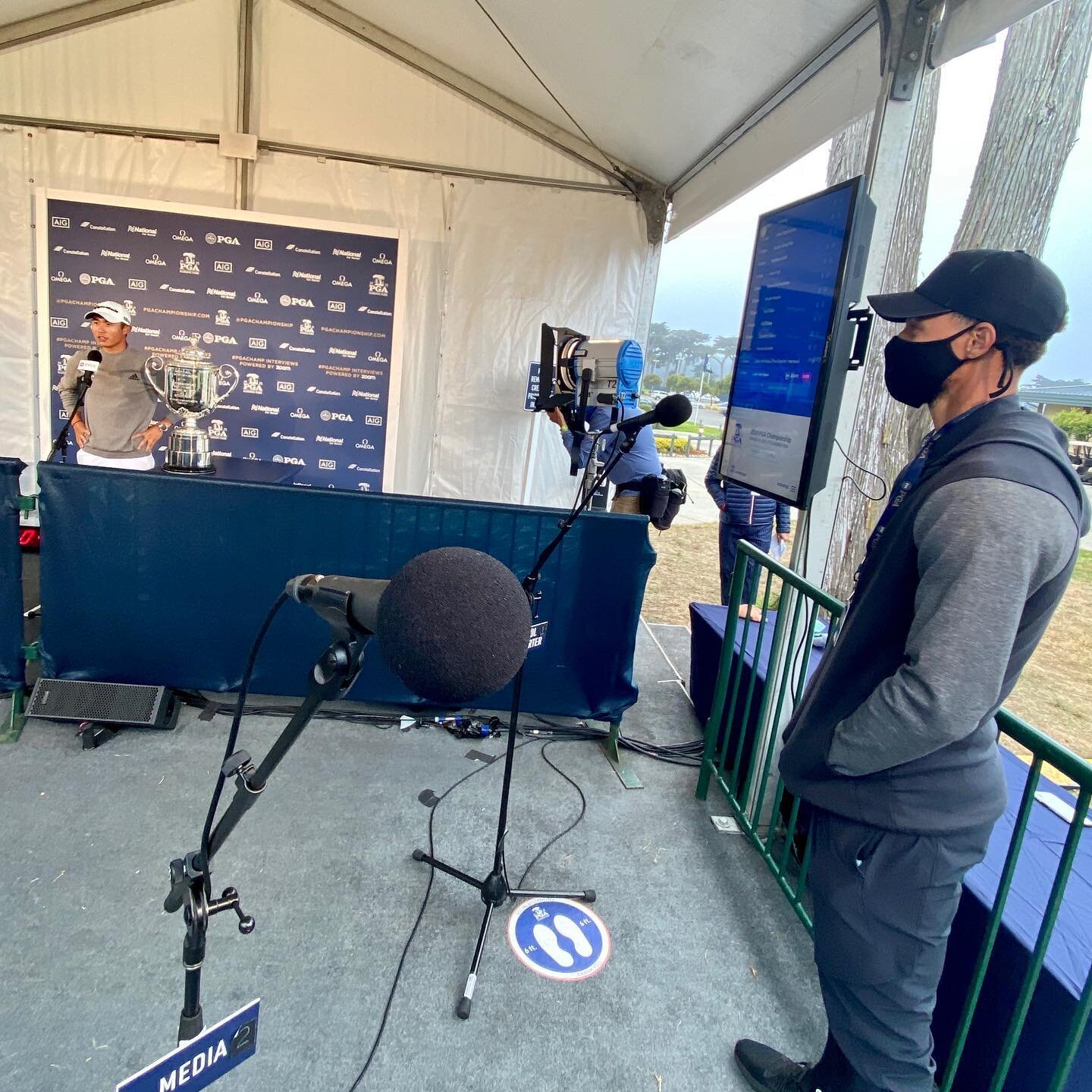
I thought Geoff Ogilvy was kind (and insightful) on the subject of what appears to be another Jack Nicklaus design players don't care for. Geoff's typically original analysis:
Q. Tiger earlier in the week said these greens were quite severe. What's the difference between big curvaceous greens like these and big curvy greens like at Augusta National?
GEOFF OGILVY: The greens at Augusta look like they're supposed to -- they look like -- they look right. Most of them are built on the hill that they're on, their natural looking slopes, it doesn't look like people moved too much dirt to make those greens.
These ones look a little contrived. And they're a bit -- Augusta has the bigger sweeping kind of more natural looking hills. These ones have a few little steep things and such.
(Laughter.)
But it's probably almost genius greens. I mean, all the best golf courses in the world have really slopey greens. So you can see what he's trying to do. Greens are getting too flat probably because greens are getting too fast. You couldn't design Augusta right now, every player would walk off if we walked into Augusta the first time we had ever seen it, played a brand new golf course, we would all quit after nine holes. We would all say, "I can't play this, it's ridiculous."
So you feel for Jack a little bit because you're not allowed to do it any more. But they look -- I don't mind big slopes. I just don't -- they just don't look as natural as Oakmont or Saint Andrews or Augusta like the truly natural slopey ones.
So he's really saying that an architect can still pull off big, sloping greens if the contours are built properly.
Now, the three courses cited by Ogilvy all had one thing in common at the time of their creation: they were not constrained by USGA spec greens. Augusta has since gone to USGA greens and according to the people I trust who played them before and after, have lost a great deal of their character in the way of neat little bumps and rolls.
Not that this is a legitimate defense of poor green design, but it is something to keep in mind as the players pile on The Ritz Carlton Golf Club at Dove Mountain. (And if they were lukewarm while at the tournament, it only gets worse when they get off property! Playing PGA National this week won't help.)