"Do we ever go back to the way things were?"

John Garrity files a lengthy Golf Magazine story titled "The Gilded age of golf design is dead." The piece is mostly quite productive and focused on talking to productive, interesting folks like Bobby Weed and Chris Monti who are trying to reimagine how the golf course will fit into a future with increased energy and water demands. And then there's Tom Fazio.
Read More

"Why would someone even consider trying to open a golf club nearly one-and-a-half times the size of Manhattan?"

I'm not sure where to start with Dan Washburn's fascinating account of the secret Mission Hills development under construction on Hainan. Here's primarily what you need to know:

In reality, this will be the world’s only self-contained golf city. Its 22 courses will cover every style imaginable – from links to desert to Augusta-like perfection – and include some decidedly non-traditional designs. Picture yourself playing into a waterfall, through a cave, around a volcano, or over a replica of the Great Wall. There will be multiple town centres with luxury homes and apartments, hotels and spas, shopping malls and streets lined with restaurants and bars. The Chus are turning countryside into suburbia, no doubt raising surrounding property values and creating thousands of jobs along the way.

And why 22 courses at one development on an island where there are said to be 3000 golfers?

But such quibbles may be missing the larger truth about golf course development in Hainan, and throughout much of China: the number of golf courses built has very little to do with the number of golfers available to play on them. With few exceptions, golf courses exist to help sell luxury villas. Developers do not worry if a course sits empty, as long as the properties around it sell. And so far in Hainan, selling homes has not been a problem. Wealthy bosses from Beijing, Shanghai, Guangzhou and central China’s coal belt fly in and buy up the villas, sometimes several at a time, often paying in cash. In China, to own a home on a golf course does not necessarily mean you play the game. It’s more about prestige. Golf, like luxury sedans and handbags, is just another way to project your wealth.

The concept sounds familiar. Anyone know how it's working out?

"I used to make a lot of Penal courses, but a Penal course is easier to play than a Strategic course. The Strategic school is one of my favorites."

Mike McAllister made my year by profiling aspiring architect Cody Carroll, a 10-year-old who has been drawing golf courses since he was 4 and has been eyeing 8 1/2 acres for his first design, all the while using Grounds for Golf as his "second bible."
Read More

China Planning "Major Crackdown" On Illegal Course Construction

Trent Baker reports for the Scotsman:

Construction of new courses has been so rapid, widespread and unregulated that Beijing officials can only estimate how many have been built. One guess, appearing in the China Daily newspaper yesterday, put the number at 2,700 by 2015 – up from none before 1984 and more than 500 today.

Read More

Australian Masters Opening Day Telecast Thoughts

What a delight watching Kingston Heath during round one of the JB Were Australian MastersTiger Woods posted a 66 in front of huge crowds and we were treated to several hours on Golf Channel here in the U.S.  Not only is the golf course so lovely to look at, but the flow of the telecast was far different than what we're used to hear in the States.

A few things about the broadcast stood out:

- Camera angles. Perhaps they were forced to have some alternatives, but a few holes featured a nice side view look at a green instead of the standard rear tower. It added variety and gave us a better sense of the architecture.

- No promos. It's amazing how much better the telecast flowed without the relentless plugs for NCIS and reality shows and...

- Made the announcing so much more enjoyable. Particularly the Ian Baker-Finch/Brett Ogle portions. Not having to read so many plugs allowed them to engage in some informative discussions about how holes had changed thanks to technology, what a great job Mike Clayton did adding the 11th hole (and why), and overall the better flow lent a relaxed, welcoming tone that made the telecast feel like we were merely listening in on a conversation among knowledgeable fans. IBF also ably explained the strategy behind some of the holes as we were treated to graphic flyovers.

- Focusing on two groups. What a joy to really study one group primarily (Badds, Appleby, Coltart) with select shots from others like Adam Scott and Matthew Goggin. This allowed us to take a tour of the course (aided by those great hole graphics) and to see a nice variety of shots, not just an onslaught of putts. Baddelay was all over the place, but his swing looks sensational and you get the sense he's making progress. Getting to see so much of his round made for more interesting viewing, even though he wasn't playing that well.

Not surprisingly, the golf course also came off beautifully. The sparse and dry roughs, the lay of the land feel of the holes and those wondrous bunkers jutting into greens with so little rough between the two: perfection!

For those who watched, I'd love to hear your thoughts.

In Praise Of Aged Bunkers

From Martin Blake's story, Tiger Woods talking about Kingston Heath:

''The bunkering is just phenomenal,'' he said. ''You never get a chance to see bunkering like this in any other place in the world.''

It's both funny and sad, but the characteristics making Kingston Heath's bunkering "phenomenal" to Tiger are precisely what most American courses try to avoid: the aged patina bordering on a look of deterioration; the irregularity of the shapes and sizes; the native plant material growing in and around the pits; the use of native sands even if they aren't bright white; the exposed dirt "lips" and finally, the lack of sand in the faces.

While the sandy soil, climate and natives lend certain characteristics to the Sandbelt look that would be tough to replicate in many places, there is still so much to learn from the look.(And thanks to the club website course tour, we have some photos to enjoy before play tees off at 7 p.m. Pacific Wednesday on The Golf Channel.)

Consider the functional side. While it's a less sexy topic, function is nonetheless a fascinating component to the Sandbelt bunker that needs to be exported ASAP!  Anyone who has played American golf wonders why the standard bunker contains inches of sand in the faces. (And usually a color not native to any region but Carmel's white sand beach).

The combination of the Sandbelt soil and a less vain golfing population unconcerned with Photoshopping every little bunker blemish, allows superintendents to keep the faces devoid of huge amounts of bunker sand. The floors are the only portion raked (with native sands) and the faces remain hardened sandy earth in a similar shade, though there are places of exposed dirt and bless them for not trying to cover those blemishes up!

While the elimination of buried lies in the face makes the bunkers seemingly less hazardous, note during the Australian Masters how the ball reacts when it lands in these firm bunkers. If the ball is coming in hot, a pinball effect is bound to send the ball anywhere, sometimes even into a nasty lie in the natives. The firmness effectively making the bunkers even more dangerous. Throw in the tight fairway mowing into the low side of most Sandbelt bunkers, and they effectively play much larger than the typical inland American bunker.

The eroded, weathered and rumpled "lips" are the other obvious stand out feature, adding deep shadowing and therefore a character-rich third dimension that only Mother Nature can shape. That naturalness makes what is an otherwise nasty hazard so lovable. Because even the best golfers in the world are not offended by what seems like a natural hazard. But clean 'em up, throw in full sand coverage, rake them meticulously, and the slightest misfortune becomes offensive.

That's the difference between a seemingly natural bunker versus the manmade and why no matter how broken down or dirty the Sandbelt bunkers may appear, they'll always be oh so lovable.

"I suggested to Tiger several months ago that now he's in the golf course design business that maybe he bring one of his guys down here to take a look"

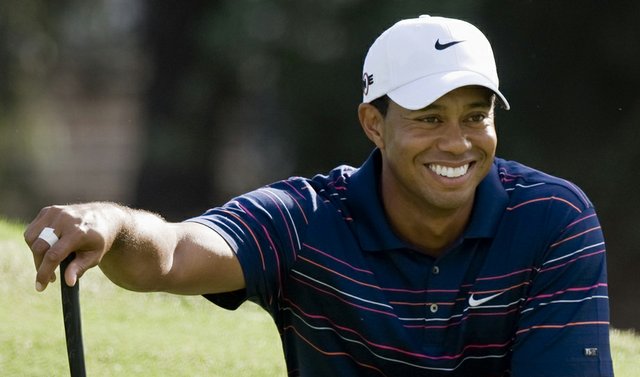
There seems to be no shortage of talk about Tiger's appearance fee in Australia and a calculated effort to spin it as a chance for him to brush up on his design expertise, not for the $3 million he's reportedly receiving.

Mark Hayes and Michael Warner in the Herald Sun talked to Sunshine Stevie Williams and lived to write about it:

The golfing superstar was holed up inside his luxury Southbank hotel suite, but continued his pre-Masters reconnaissance mission by sending his caddie to inspect the course.

Steve Williams spent two hours recording distances on all 18 holes in a sign his boss is determined to earn his giant $3 million pay packet.

"I suggested to Tiger several months ago that now he's in the golf course design business that maybe he bring one of his guys down here to take a look," Williams revealed.

"And he's done that, because in such a small, concentrated area, you've got some of the best courses in the world. The design and the bunkering on this course is unique and very, very good.

"I'm sure he (Tiger) will be looking at it tomorrow."

Now, if he goes to see some other courses in his spare time like Crenshaw would, then we'll know he really is serious about this design stuff.

Meanwhile on the appearance fee, Peter Stone opened his story today with this anecdote:

TIGER WOODS is relentless in his pursuit of Jack Nicklaus's record 18 major victories - with just four left to equal the Golden Bear. So, with a sense of mischief, let's suggest another way he could emulate the great Nicklaus.

We'll go back to the 1975 Australian Open, the first of four opens sponsored by the late Kerry Packer at The Australian, when Nicklaus headlined the field for a modest appearance fee.

Like Woods, Nicklaus was undisputed world No.1 at the time. Nicklaus asked Packer what prizemoney was on offer that week and, when told, Nicklaus immediately added his fee to the purse, which brought total prizemoney to $35,000.

So began the Packer/Nicklaus solution to appearance money. In following years, each invited player was paid $6000 and, in 1976, total prizemoney was lifted to $200,000.

This week, the Australian Masters purse is $1.5 million and Woods is reportedly receiving a $US3m ($3.3m) appearance fee.

Would Woods do the same as Nicklaus this week? Dream on.

But most of the fretting over the amount looks like it'll prove futile, because as Steve Elling notes, the event is looking like a hit, no thanks to Greg Norman:

But hand it to the Aussies, they had not seen Woods in 11 years, and he once again proved to be the game's ultimate show pony. Officials reported selling all 100,000 tickets (capped at $44 Australian dollars per round) for the week, and presumably, the Victorian government has a chance of finishing in the black once all the hotel stays, car rentals and incidentals are tolled. By the way, the tax hit in Australia is a shade under 50 percent in this bracket, so Woods will be contributing to the Oz coffers himself, too. Ah, economics in the 21st century, huh?

And judging by Patrick Smith's cranky reaction, someone in IMG's PR department has done a fine job overprepping the media for Tiger's arrival.

The reaction it must be said was childish and so fevered that normally sensible people lost the plot. Helicopters chopped above Essendon Airport, TV cameras covered this angle, that angle. Print journalists jotted down his every move. Even moves he might have made but didn't.
When he set his left foot on the tarmac, the world's greatest golfer said: "This is one small step for Tiger, one giant leap for golf". Or apparently words to that effect. Tiger's entourage is apparently colour-coded to make it easier to control them. It was noted who went into the different-coloured cars. Even the luggage van was described to radio listeners.