In golf construction art and utility meet; both are absolutely vital; one is utterly ruined without the other. GEORGE THOMAS
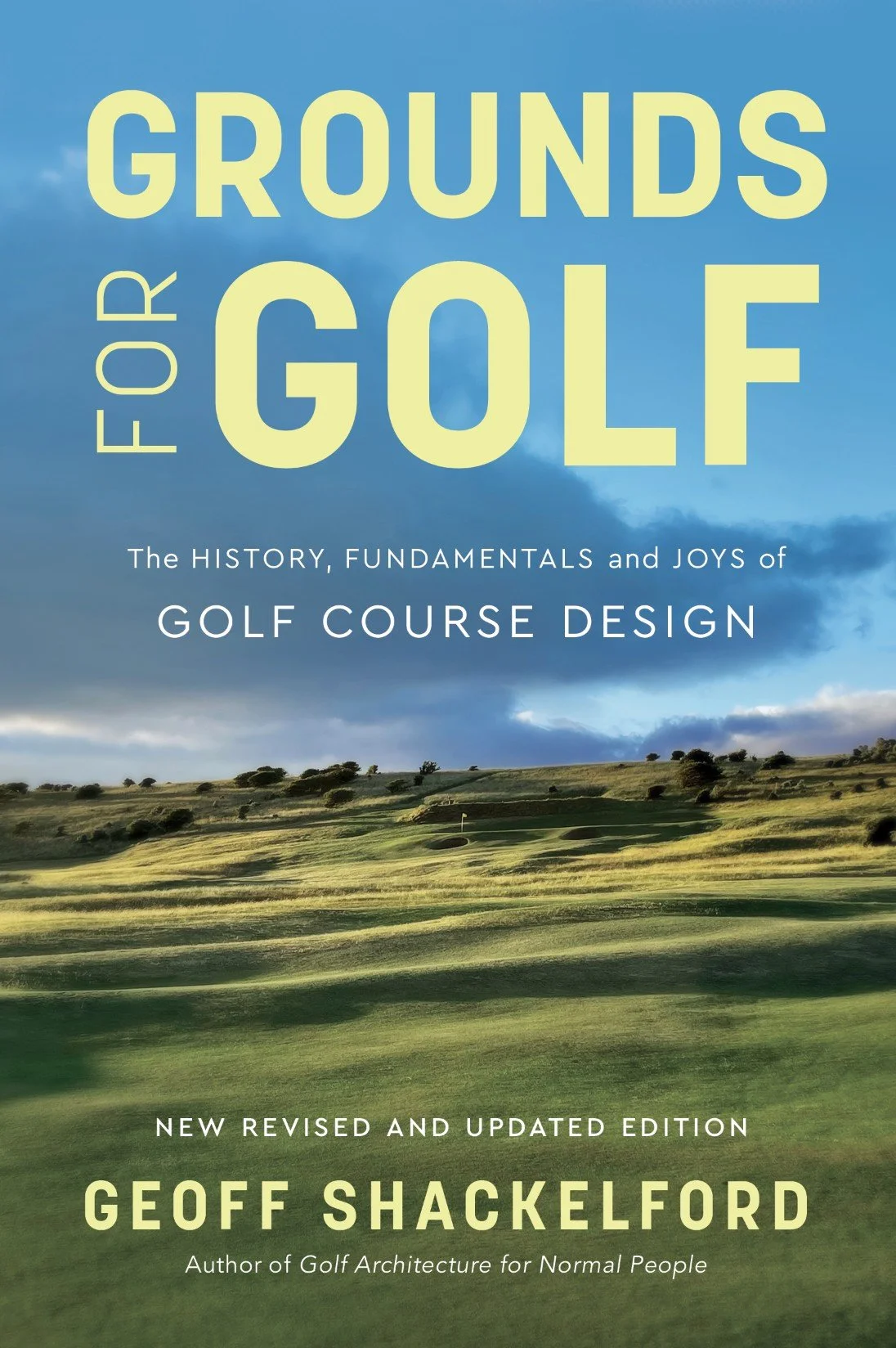
It’s back!
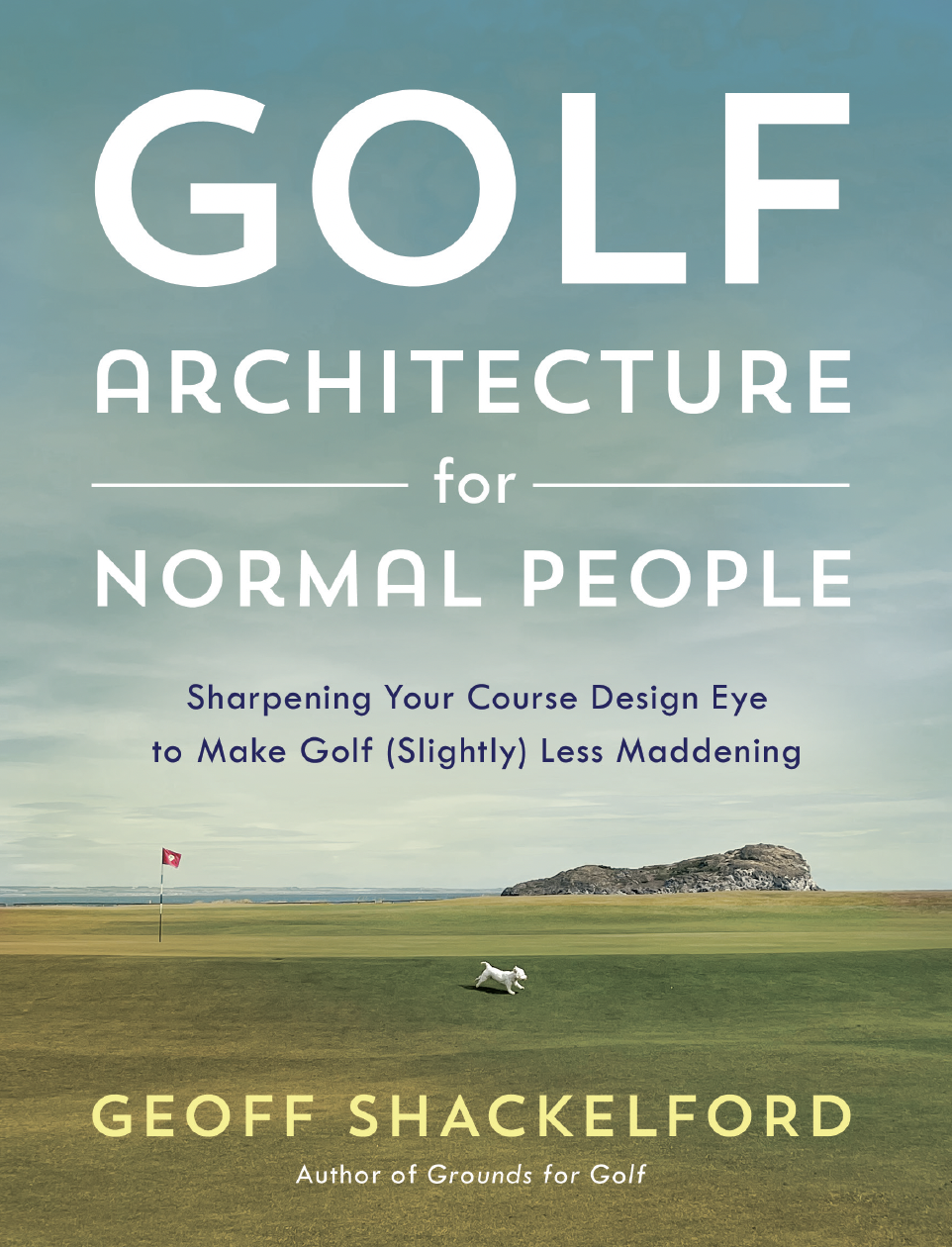
Twenty years later Tatra Press has kindly allowed me to bring back Grounds For Golf now that golf architecture is of more interest to the masses. A new Introduction looks at what’s driven the interest growth and two new chapters I had a blast adding (plus a few edits to keep things up-to-date).
The Amazon purchase page for the book arriving June 15, 2026.
Y.E. Yang And TPC Scottsdale's 17th
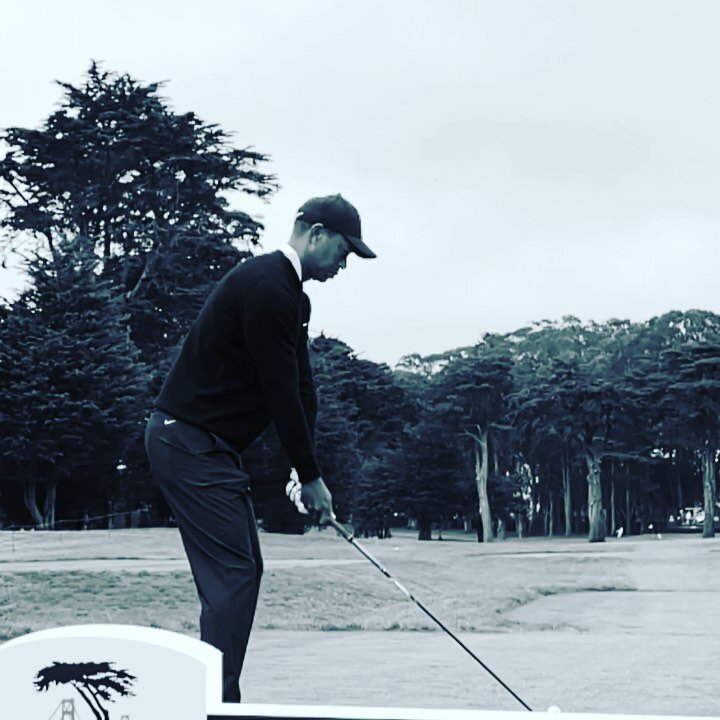
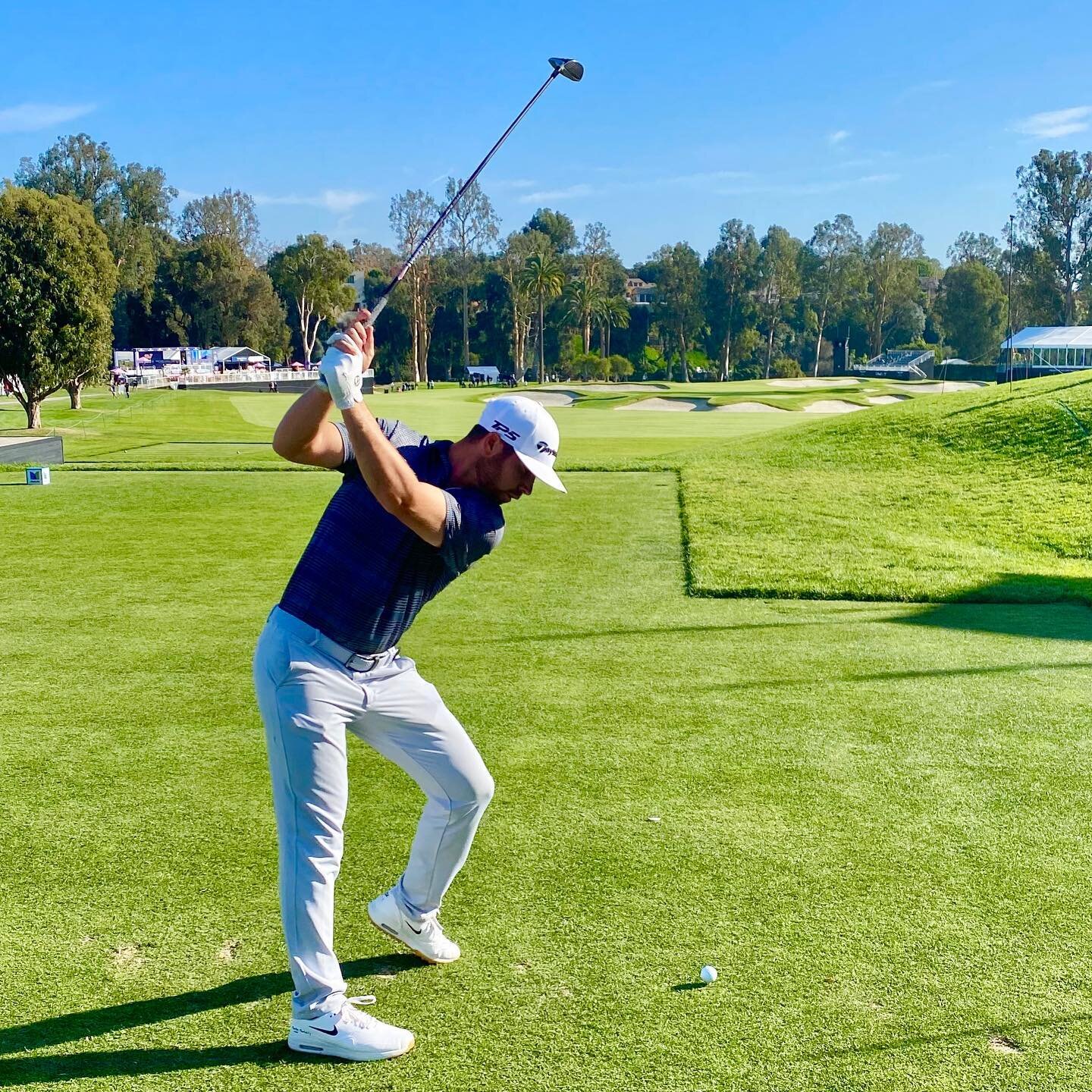
/In this week's Golf World I penned a story (not posted online) about the strategic joys of the 17th hole at TPC Scottsdale. While I spent much of the week out on the tee or green, the beauty of the architecture and pressure of a final round tour event all came into focus when Y.E. Yang arrived at the tee with a two shot lead. The following sequence, as seen from behind the tee, pretty much tells the rest of the story...
 (click image to enlarge)
 (click image to enlarge)
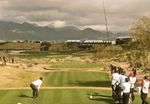 (click image to enlarge)
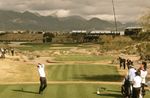 (click image to enlarge)
The Fourth Course At The Prairie Club
/ Martin Kaufmann at Golfweek.com breaks the news on who will be designing the next course at The Prairie Club, which opens this spring.
Pebble's 14th And Chipping Areas **
/The Bryce Molder and Paul Goydos' 14th hole follies during Sunday's AT&T final round raised all sorts of interesting questions heading into this summer's U.S. Open at Pebble Beach.
Read More"When I see the course, I have memories of him working against all odds."
/As they wrap up play today on Mike Strantz's remodeled Shore Course at Monterey Peninsula, Jerry Stewart catches up with Heidi Strantz about watching the event from afar.
Anatomy Of The Tenth Hole, Vol. 1
/Round 1, 2010 Northern Trust Open, morning play. All three players laid up (a rarity in the era of improved workout programs).
Based on the lay-up position, see if you can guess which player made a 9 footer for birdie, which missed his 14 footer for birdie and which player had to get up and down from the left bunker for par? (And no ShotTracker cheating, please.)
Luke Donald's approach shot:
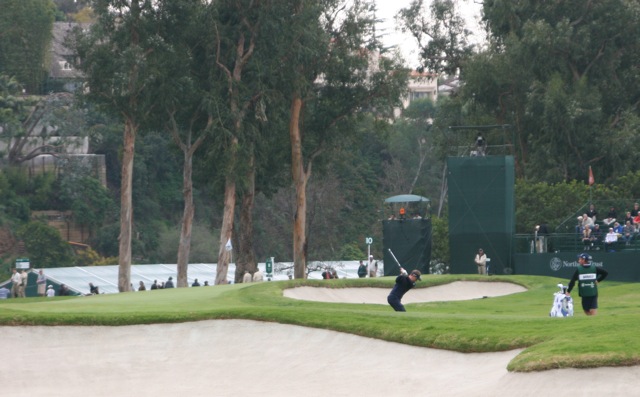
Rocco Mediate's approach angle:
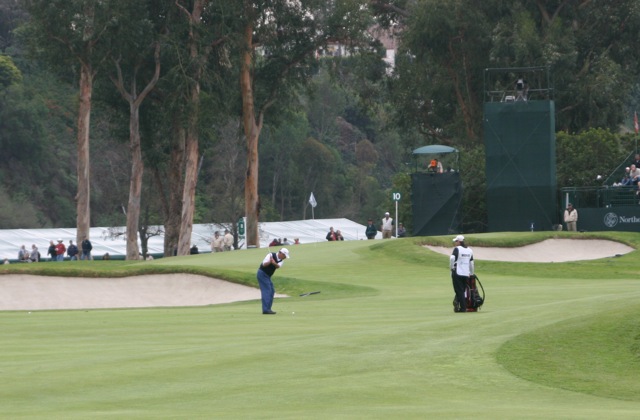
Jason Dufner's approach angle:

For more on No. 10, enjoy some of Doug Ferguson's morning Tweets from the scene.
Update on 2010-02-05 00:35 by Geoff
**Those who guessed Dufner made birdie were correct.
"Tiger Should Go Back To The Drawing Board"
/This awful, horrible, embarrassing grooves debate has been so terrible that it took Tiger off the radar. So maybe it's not so bad after all.
Read MoreA Different Take On Riviera's 10th
/I used my unique leaping and mid-air suspension abilities to capture this shot of Riviera's famous 10th hole today. Anything for the blogosphere, I say.
Read MoreThe Revamped 8th At Riviera, 2010 Edition
/Riviera's infamous double-fairway 8th has been revamped (again!) and this year's edition is a real doozy. Trees down the center have been removed and a hazard/channel/sandy Swilken Bridge cut down the center, along with some new bunkering that George Thomas surely meant to install but just never got around to it.
Read More"Gehry Player in Abu Dhabi"
/ Nice spot by Tom Dunne to notice that Frank Gehry has designed a clubhouse for Gary Player's Saadiyat Beach Golf Club in Dubai. The building is apparently a "play on traditional menswear" in that part of the world. Gehry's quote is even better.
"We're as committed as ever to High Carolina and the Tiger Woods golf course"
/There appears to be a difference of opinion in how to represent the state of Tiger's project for The Cliffs in North Carolina, as Dawn Wotapka files a lengthy WSJ story quoting developer Jim Anthony that the project is still very much on, contradicting a Golfweek report posted online yesterday.
Read More"It's all about the golf."
/ Great to see John Paul Newport filing this excellent look at the return of the golf-only, smaller-scale clubhouse, including some great stuff on the economics of big buildings. There's also a slideshow with the column.
You could see the trend beginning in the early 2000s, just as the golf course building boom was ending, with the opening of such clubs as Dallas National in Texas, The Dye Preserve in Jupiter, Fla., Friar's Head on New York's eastern Long Island, and the Chechessee Creek Club in Okatie, S.C. All of these have relatively small, understated clubhouses, superb golf courses (those at the last two designed by Ben Crenshaw and Bill Coore), and no swimming pools or tennis courts. It's all about the golf.
Whisper Rock in Scottsdale, Ariz., which opened in 2004, is another good example. It's expensive, with initiation fees running now at $130,000, and, as an all-male club, politically incorrect. (Women and children are allowed to play golf there several days a week.) But its casual atmosphere (club motto: "It's all about the hang") and two highly ranked courses have attracted an enviable membership that includes something like 40 current or former PGA Tour players, all of whom pay the full initiation fee and regular dues. During a recent lunch visit there, I spotted Paul Casey, Gary McCord and Peter Kostis.
So out of curiousity, what would you all nominate as an ideal clubhouse in golf?
"Do we ever go back to the way things were?"
/John Garrity files a lengthy Golf Magazine story titled "The Gilded age of golf design is dead." The piece is mostly quite productive and focused on talking to productive, interesting folks like Bobby Weed and Chris Monti who are trying to reimagine how the golf course will fit into a future with increased energy and water demands. And then there's Tom Fazio.
Read More"We wanted to build a nice, inexpensive, lay-of-the-land style course."
/Matt Ginella files a sad but compelling Golf World cover story on Bob Lang and the Erin Hills saga that now sees the course on the verge of receiving a U.S. Open despite the founder's money problems and a subsequent sale.
Read More"Why would someone even consider trying to open a golf club nearly one-and-a-half times the size of Manhattan?"
/ I'm not sure where to start with Dan Washburn's fascinating account of the secret Mission Hills development under construction on Hainan. Here's primarily what you need to know:
In reality, this will be the world’s only self-contained golf city. Its 22 courses will cover every style imaginable – from links to desert to Augusta-like perfection – and include some decidedly non-traditional designs. Picture yourself playing into a waterfall, through a cave, around a volcano, or over a replica of the Great Wall. There will be multiple town centres with luxury homes and apartments, hotels and spas, shopping malls and streets lined with restaurants and bars. The Chus are turning countryside into suburbia, no doubt raising surrounding property values and creating thousands of jobs along the way.
And why 22 courses at one development on an island where there are said to be 3000 golfers?
But such quibbles may be missing the larger truth about golf course development in Hainan, and throughout much of China: the number of golf courses built has very little to do with the number of golfers available to play on them. With few exceptions, golf courses exist to help sell luxury villas. Developers do not worry if a course sits empty, as long as the properties around it sell. And so far in Hainan, selling homes has not been a problem. Wealthy bosses from Beijing, Shanghai, Guangzhou and central China’s coal belt fly in and buy up the villas, sometimes several at a time, often paying in cash. In China, to own a home on a golf course does not necessarily mean you play the game. It’s more about prestige. Golf, like luxury sedans and handbags, is just another way to project your wealth.
The concept sounds familiar. Anyone know how it's working out?