
Ballyneal Auction Update
/Pete Finch updates us on the financial affairs of bankrupt Ballyneal and it's awkward. The course goes to auction March 7 with $1.7 million in debt.
Read More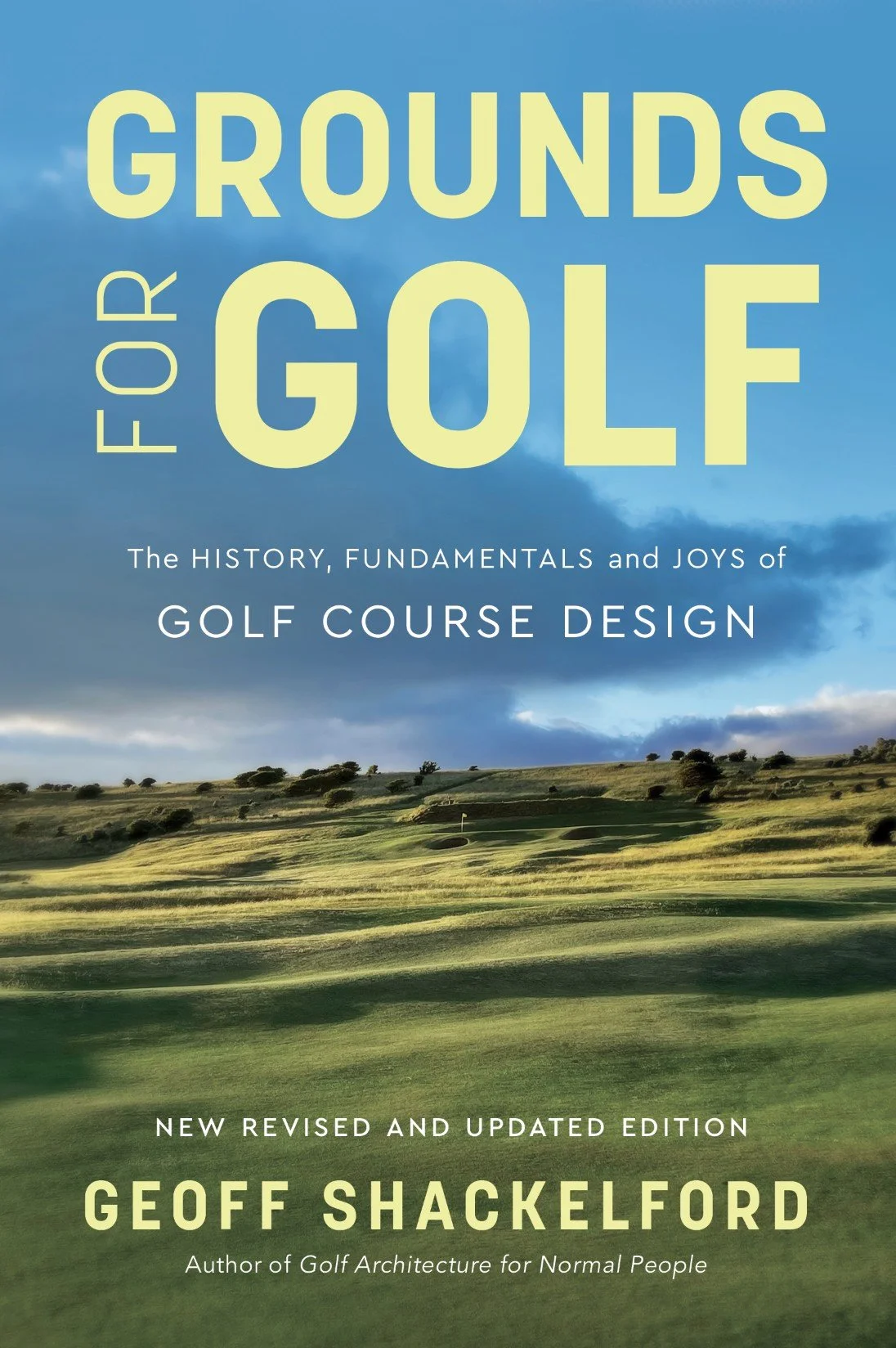
It’s back!
Twenty years later Tatra Press has kindly allowed me to bring back Grounds For Golf now that golf architecture is of more interest to the masses. A new Introduction looks at what’s driven the interest growth and two new chapters I had a blast adding (plus a few edits to keep things up-to-date).
The Amazon purchase page for the book arriving June 15, 2026.

I've always heard great things about Seth Raynor's Fox Chapel Golf Club design near Pittsburgh. Now we'll get to see it and Brian Silva's restoration work there next summer in what is a new date for the Champions Tour major.
 I have not read Jonathan Mahler's New York Times Magazine cover story yet, but it looks interesting.
Tom Doak, one of the architects applying for the commission to design the Olympic course in Rio, has revealed on GolfClubAtlas.com that eight finalists are to be announced at any moment and is holding an informal contest to select the lucky winners.
 I've been a little surprised at some of the reactions I've heard about Royal Melbourne's setup during the Presidents Cup. The complaints and grievances were from people who were speaking up not for the sake of griping, but instead, expressing their disappointment at their sense players could only play defensively due to excessive green speeds and the putting surfaces appearing dead.
There is no question that during Friday's hot, dry wind day the golfers were on defensive, but it would not have mattered what the staff and PGA Tour did to the greens, it was just one of those days. But they never lost control of the course.
As for the rest of the event, I would say we saw the ultimate in strategic golf and that the reaction people have had has more to do with how rarely we get to see the merging of strategic design, setup, and conditions calling on players to think.
First, on the subject of purple greens. A few things to remember:
- Royal Melbourne's bent, unique to the course and not available anywhere else, is a very dark shade of green, almost black, with some purplish blades. I was shocked by it at first sight and was even more shocked to see an iron application Tuesday of tournament week, but that was designed for a number of reasons, including the desire to not hear people say that the greens were purple.
- Television filters skew things. Did you notice the day the teams wore light blue shirts (twice for the Internationals, once for the U.S.)? To some of us the shirts appeared almost purple on television. So just like the yellow waves of Torrey Pines each year, we learn that television cameras and filters alter colors. That may have been the case here too.
 - The club also uses a dark sand topdressing which may give hints of purple, while the sand the greens grow out of is a very dark color. But I can say having walked on them all four days, the greens appeared very healthy.
- Royal Melbourne's greens were never close to dying, nor were they prepared at a speed higher than 13 any day of the event. They were in the low 12s during Saturday's rain event. Fast for those contours, but never unmanageable if you were attacking from the proper angle.
And that leaves the "defensive" issue. Longtime readers know there is nothing I hate more than watching golf when players are constantly on the defensive and unable to attack a well-designed course with good thinking and shotmaking. If that was the case at Royal Melbourne, I'd be the first to point it out.
Instead, what I saw repeatedly was incorrect placement in the fairways or a refusal to hit run-up shots, leading to approaches not finishing near the hole. If a player and his caddie considered the hole location, figured out the best angle to approach from, the best shot to use and executed, he was rewarded.
But on many of Royal Melbourne's best holes, the line between best approach angle and a not-so-good angle is so fine that without announcer explanation of the course nuances (eh hem, Johnny!), the golf could look defensive or even goofy. This was definitely not the case at Royal Melbourne. And the positive player reactions would validate this.
After all, if the set-up was over-the-top, you would have heard them say so. Royal Melbourne was brilliant, I only wish we had more golf like we saw there.
Geoff Shackelford is a Senior Writer for Golfweek magazine, a weekly contributor to Golf Channel's Morning








Copyright © 2022, Geoff Shackelford. All rights reserved.

