
When Is ShotLink Coming To The Majors?
/Among the revelations in David Barrett's
Read More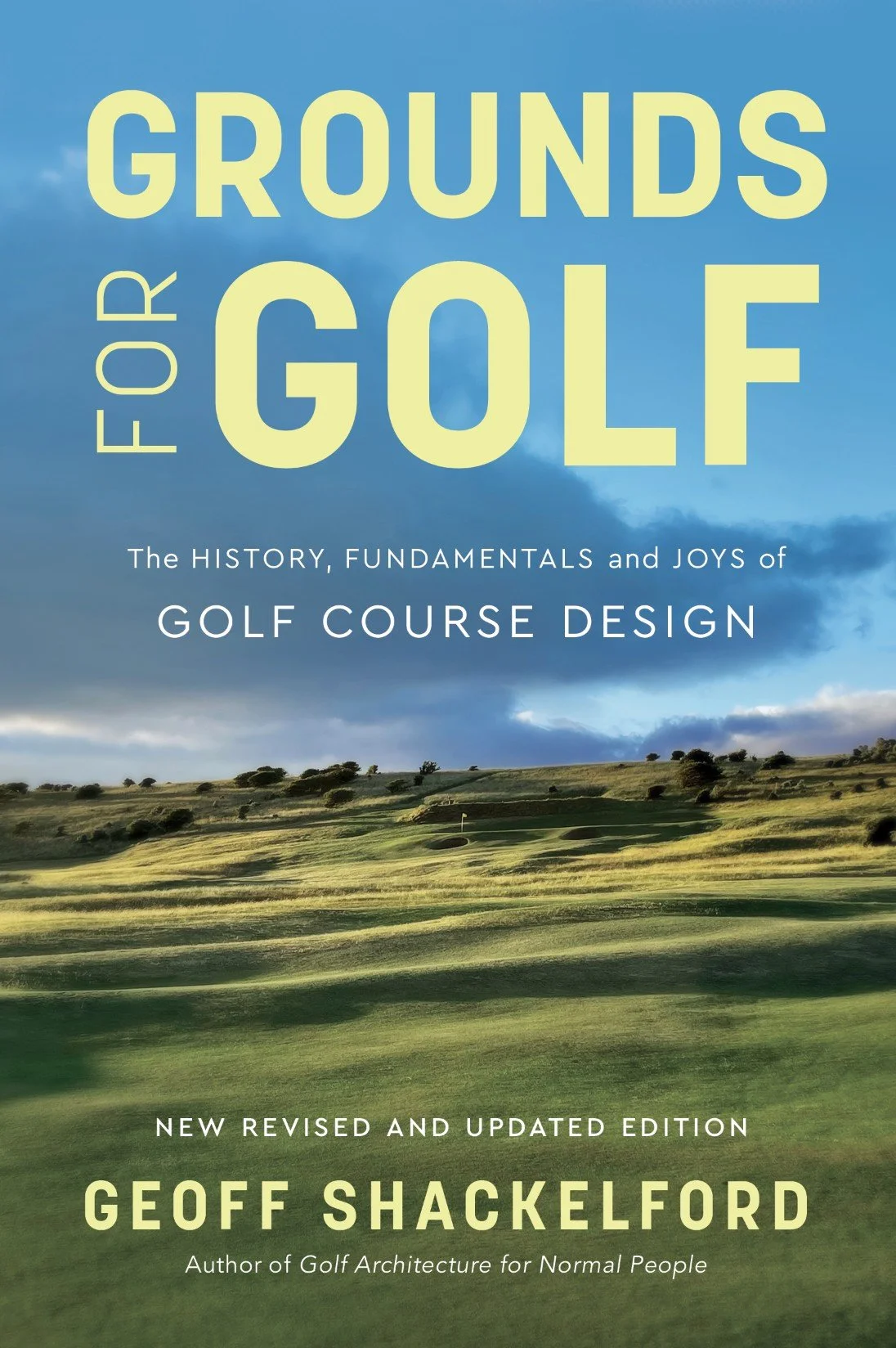
It’s back!
Twenty years later Tatra Press has kindly allowed me to bring back Grounds For Golf now that golf architecture is of more interest to the masses. A new Introduction looks at what’s driven the interest growth and two new chapters I had a blast adding (plus a few edits to keep things up-to-date).
The Amazon purchase page for the book arriving June 15, 2026.

Not one, but two all-new Grey Goose 19th Holes air Thursday and Friday nights. They feature former USGA Executive Director David Fay, author John Feinstein and yours truly all gracefully refereed by Golf Channel's Steve Sands.
 Topics will cover the incredible 2013 season's best players, favorite moments, best rounds, and of course plenty of commentary about Tiger, Rory, Phil and others.
The first show airs Thursday, December 5th and the second show on Friday, December 6th at 8:30 PT, 11:30 PM ET.
Earlier this year, the trio debated Bethpage as a Ryder Cup venue back in August before it became official. A similar discussion this time around will include places we'd like to see golf return to ala Merion and The National Golf Links.
Hope you'll tune in!
We recorded this week's State of the Game just a few hours before Adam Scott played one of the more amazing rounds of the year--62 at Royal Sydney with six birdies to start, four to finish--but we talk with Mike Clayton about his impressive play at the even more impressive Royal Melbourne.
Other topics covered include Royal Melbourne's design and setup, Rory McIlroy's game as seen up close by Clayton and 15-year-old amateur Ryan Ruffels.
As usual you can access all episodes here on the State of the Game webpage, or on iTunes.
Or for this week's episode you can download the mp3 here or, subscribe/listen on iTunes. Or here:
A lot about David Eger was learned in his recent Golf Digest My Shot, but we decided to have the Champions Tour player and former USGA/PGA Tour executive on to talk about a variety of subjects. Yes, the Tiger drop at the Masters is revisited, as are the usual State of The Game issues. Eger is one of the more interesting figures in the game and certainly a player who has the experience and knowlege to back up his opinions. I think you'll enjoy hearing from him.
As always, you can listen and subscribe via iTunes, download the MP3, download prior episodes here or hit the play button below:
I finally got a few minutes to take in the entire Deane Beman address (text version) from last week's USGA Pace of Play event, and besides enjoying the image of folks squirming as he talked bifurcation of the rules where the rulemakers reside (and steadfastly oppose bifurcation), you have to admire the dry wit.
Beman, most certainly never considered for a sidekick role on The Tonight Show, turned the tide on the bifurcation discussion by accepting that we already have it, and why are we the big, bad governing bodies trying to get rid of bifurcated rules?
The former PGA Tour Commish lays out the ways we are bifurcated now (grooves, one-ball rule) and writes:
Why is it now so important to eliminate bifurcation? There is no evidence that bifurcation has hurt the popularity of our game -- just the opposite can be creditably advanced. Golf’s popularity was surging in the 1950’s and 60’s when two different size golf balls were played around the world. Don’t let the stance on bifurcation stand in the way of addressing some of golf’s problems.
He ties it into the slow play discussion and makes this point about longer, narrower courses in championship play making their way into the everyday game:
The problem of slow play, as well as the decline in the growth and financial viability of golf in the U.S., has some of its seeds from the well-intended notion that in order to identify “a worthy champion” in major championships, it was necessary to alter the playing field to accomplish that objective.
The Red Sox won the World Series and they are the undisputed world champions of baseball. Baseball did not feel the need to add another 10 feet to get to first base, grow longer grass in the infield or move the home run fence farther out. They also have bifurcated rules that allow a designated hitter in one league versus the other and were able to make a mutual accommodation for the World Series for the good and harmony of the game. None of these actions would lessen the crown that Boston wears or harm baseball as a popular sport.
Geoff Shackelford is a Senior Writer for Golfweek magazine, a weekly contributor to Golf Channel's Morning








Copyright © 2022, Geoff Shackelford. All rights reserved.

