"Rory Sabbatini still found a way to tug on Superman’s cape"

That's Steve Elling writing about Rory Sabbatini's latest comments directed toward Tiger. Now, they say the definition of insane is when you keep doing the same thing ov...you go Rory! We love when Tiger wipes the floor with you!

His favorite foil, Tiger Woods, isn’t even in the field this week, yet cantankerous Rory Sabbatini still found a way to tug on Superman’s cape and court another mini-controversy.
 
Sabbatini shot an 8-under 63 Thursday to take the first-round lead at the inaugural FedEx Cup playoff event, The Barclays at Westchester Country Club, but he couldn’t resist taking the bait when the topic of Woods’ controversial absence was broached.
 
Sabbatini, whose opinionated honesty has repeatedly landed him in some sticky situations with regard to Woods this year, characterized the decision of the game’s top player to skip the first round of the mega-hyped playoff series as an embarrassing black eye.
 
“It's a disappointment because, obviously the whole purpose of this new system was to try and create an atmosphere that would draw everybody to the final four events of the year,” Sabbatini said. “Obviously, it's kind of backfired in the sense by Tiger skipping the first event.
 
“It leaves a lot of questions and a lot of interesting questions to what they need to do, to maybe change it so that you definitely have the incentive to play all four.”
 
Sabbatini, who won earlier this year at Colonial and stands sixth in FedEx Cup points entering the week, said those who skip stages should suffer a penalty of some sort and possibly should not receive the full $10 million bonus if they win the four-week race.
 
“There's many guys that play on tour that are out of shape and they play six, seven weeks in a row,” Sabbatini said. “It's just, I don't know if there's any solution to it, but there's got to be some kind of financial incentive.”

This ought to go over particularly well in Orlando this week. 
Woods’ claim that he was too tired to play after winning back-to-back weeks at the Bridgestone and PGA Championship rang hollow in Sabbatini’s ears. For Woods, the FedEx bonus money is probably no great windfall, odd as it might sound to civilians out there, he said.
 
“Oh, I definitely think it's something other than fatigue,” he said. “Well, I think maybe to some people $10 million doesn't seem like a whole lot of incentive but to others it would seem like a good incentive.”

 For more of Rory's thoughts, here is his press conference transcript.

"His dad taught him a lot outside of golf that has carried over into the way he plays"

Tim Rosaforte posts a peculiar little blog item about Andrew Giuliani, the Duke golfer and son of presidential candidate Rudy.

It didn't surprise Phil Mickelson that Andrew Giuliani (right, with Tiger) was doing so well in the Met Open, shooting 71 in the opening round Wednesday at the Meadow Brook Club on Long Island. Lefty and the former New York City mayor's son played in the Buick Classic Pro-Am a few years ago, before Giuliani enrolled at Duke, where he is entering his junior year as a walk-on member of the golf team. "He's got game," Mickelson told me after his opening-round 67 at The Barclays.

Rudy Giuliani is an 18-handicapper, but in Mickelson's mind, Giuliani's 21-year-old son got his father's disposition. He lists a muny, Van Cortlandt Park, as his home course, but also plays out of Trump National in Briarcliff Manor. "His dad taught him a lot outside of golf that has carried over into the way he plays," said Mickelson. "He doesn't let bad shots affect him. He plays without fear. He plays aggressive. He plays smart. He's got a good overall way to attack the game."

Uh, that stuff his dad taught him outside of golf. Was that when they were still speaking?


The Promotion Or The Format?

fedexcuplogo.jpgRon Kroichick says what others have been saying, namely that the Tour's promotion of the FedEx Cup is largely to blame for fan and media apathy:

The flaws of the FedEx Cup, then, begin with how Finchem and other tour officials promoted their pet project. They tried to jam it down our throats all year, as if the playoffs really were more important than the majors. They didn't put it that way, of course, but the implication turned off many fans (and players).
It seems to me that while that is true, the PGA Tour is in a tough position because of a perceived need to cater to "tradition."


Now, I'm just as guilty as anyone of revering golf's traditions, but if the promotion conveyed that the FedEx Cup was simply a new, fresh way to conclude the year and merely meant to entertain us, would they have been raked over the coals for daring to imply that professional golf is in the entertainment business above all else?

I'm afraid so. Which is a shame, because the pro game needs more variety outside of the major season. The Tour needs ore interesting formats, more diverse courses and more variety in setups.

But it seems golf, and in particular, pro golfers, are too conservative and devoid of imagination to accept anything outside of 72-holes of stroke play each week played on a course looking pretty similar to the one played the week before.

So has the promotion rubbed you the wrong way or is it the format?

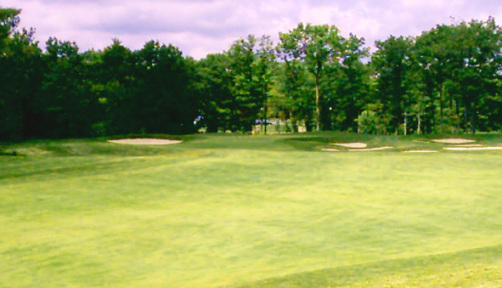
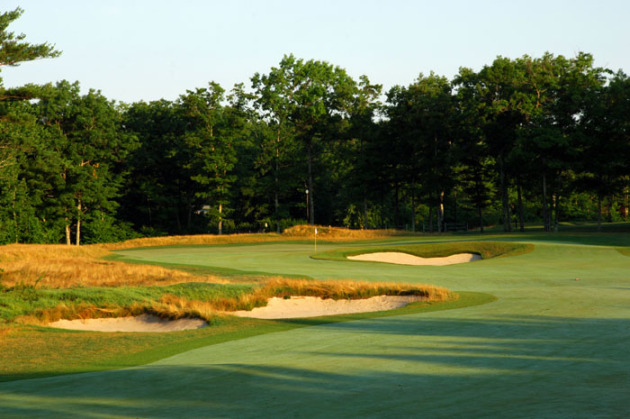
TPC Boston Before/After: 7th Hole

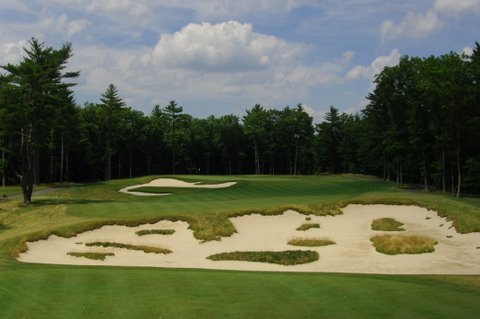
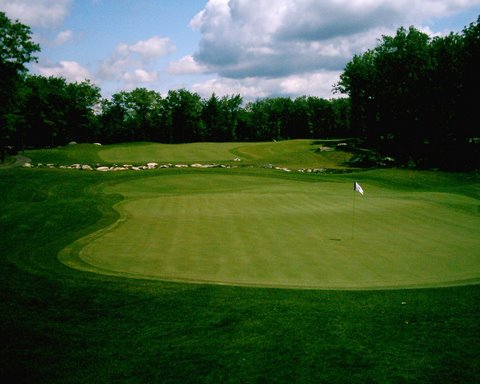
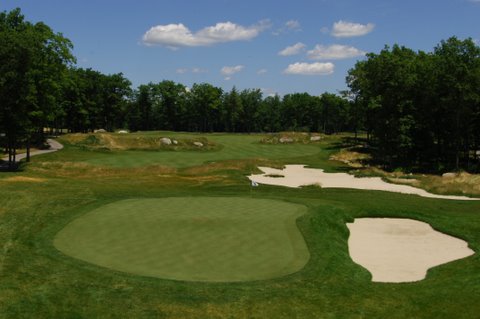
One of the more talked about additions at the revamped TPC Boston will be the "Hell's Half Acre" installed on the 600-yard par-5 7th hole. Above is a view of the hole before and below is the after shot of the Hanse-Faxon-Wagner redo, with photos courtesy of TPC Boston superintendent Tom Brodeur.

TPCBoston7thbefore-after 

And the after shot, where you may note the improved left greenside bunker and the elimination of containment mounds around the green complex... 

TPCBoston7th-after 

"They have gotten excited and captivated about the Cup. They are looking forward to everybody playing. The No. 1 player doesn't play, they don't like it."

Tim Finchem slipped away from vital cocktail reception to calm down that liberal, secular, cynical press corps on the eve of the FedEx Cup playoffs. His comments sounded genuine until...he started talking about the FedEx Cup.

Q. First question, you're here in the No. 1 media market, your No. 1 player is not here, you're promoting the Playoffs, big kickoff here, how much of an impact does his absence have on the promotion of the FedExCup?

COMMISSIONER TIM FINCHEM: Well, obviously I'm disappointed with his decision. It's not a decision that I like to see him make, candidly, any week of the year, but he doesn't play them all.
I think there's two ways to look at it. On the negative side, and I'll be candid about the negative side, you know, from the standpoint of the sponsor here, the fans in New York, it's certainly a negative. You know, I would like to see it the other way.

Thankfully, no grey area there. 
From the standpoint of the FedExCup and the Playoffs, it's a little different focus. I mean, clearly we've been carefully watching the e-mails and blogs come through over the last better part of a week now, and the fans seem to have a different view. They seem to think that Tiger was going to win this thing, and now it's not so sure that he's going to win it, so it creates more excitement and more enthusiasm.

I noticed one blog the other day on ESPN, a couple of them accused me to going to Tiger and asking him not to play for that purpose, which I thought was a little amusing. (Laughter).

Wait, you read blogs? Whoa Nellie.

And what blogs were those representing the fan enthusiasm? You have a link handy?

 Q. That said, what are some of the issues that you're focusing on next year?

COMMISSIONER TIM FINCHEM: Well, if I started listing them, I'd be focusing on them and I don't want to focus on them. We're going to look at everything.

That's a relief.

I'll say this, though, categorically, that the enthusiasm and the excitement that we had as a team, working after a couple of years with most of the players, not all players got involved in the process, but the vast majority did.

I don't think Jeff Maggert would agree

But that enthusiasm that we felt when we brought the Cup forward and announced it, there is absolutely nothing that has happened to this moment that detracts in any way from our enthusiasm about what the FedExCup potentially can be for the PGA TOUR.

Of course, the playoffs haven't started yet...

 Q. Just going back to Tiger for a second, have you had any conversations with him since he came to his decision not to play?

COMMISSIONER TIM FINCHEM: We communicate different ways, but I've had communications with him, yes.

Text? IM? Telegrams?

Q. What were the assurances, and what were the impressions that you had of assurances from him that he was going to play all four?

COMMISSIONER TIM FINCHEM: I didn't have any assurances from any player. I didn't ask for any assurances. I asked for players to get involved in structuring and lending their best contributions in terms of what they thought would make an exciting, compelling series, and most of them, you know, certainly a significant majority did just that.

And according to Adam Schupak's reporting, you didn't listen to them. At least on perhaps the most important element of the playoffs, the $10 million annuity.

I never asked a player, and I don't ask a player, you know, to commit to me. That's a process that they have to deal with based on what we put out there in terms of product. That's the history of the TOUR.

Our first product mention of the day. Word 1835. He's losing his touch.

 Q. With golf being so traditionalist-steeped and such, looking back, do you think you guys have maybe over hyped or over promoted this product at any point where there's been a little too much change?

COMMISSIONER TIM FINCHEM: No, I don't --

Q. Last Friday the reaction was pretty harsh.

COMMISSIONER TIM FINCHEM: But I think a lot of the harsh reaction was because people were excited about the Cup. I mean, that's certainly what I read in the fan comments. They have gotten excited and captivated about the Cup.

I know what you are thinking, is Tim going to head into the city to do a quick stand-up spot at Comic Strip Live this week? He is a funny man!

They are looking forward to everybody playing. The No. 1 player doesn't play, they don't like it. I like to see that. I'm glad they had that reaction rather than saying, gee, whiz, we don't care.
No, I don't think -- we have to get people -- this is not -- listen, we've been through this. We created the Presidents Cup. We created the World Golf Championships. We created The First Tee. People didn't understand The First Tee and questioned it and why would you want to go out in inner cities and get kids involved with the game of golf.

Hey don't bring the First Tee into this.

Q. You mentioned maybe the lack of players' focus on the Playoffs until they actually got here. But what was the educational process for the players adapting to the Playoffs, because a lot of them as recently as Akron and the PGA Championship seemed confused as to what the format was. So I guess can you talk about how many meetings did they have; how often were they briefed about what the format would be?

COMMISSIONER TIM FINCHEM: Well, I don't think -- let me make sure we're clear. I'm not suggesting the players didn't focus on the playoff until they got here. I'm saying a lot of the players didn't focus on the details on what's involved until late.

Oh, huuuuuuuuuuge difference!

For example, alternates or no alternates; it's just a straight 144. You play all year to get to 144 and you're in and then it cuts, little things like that. I think there's been a focus all year long on the Playoffs, and that has resulted in some scheduling impact with certain players knowing they are going to play a lot late and addressing their schedule in such a way.

Although, my sense is from talking to players during the course of the year, they weren't really going to be at a comfort level about their schedule until they got through one of these in terms of how it played out. We have had an uptick of the number of starts in the Top-30, Top-50 players, which is a good thing for the first year. It's a spinoff benefit we'd like to see the Cup have.

I suspect the stat gurus out there just logged out and are already looking over the "starts" on PGATour.com.

Hey, there is one benefit to no one really liking the FedEx Cup. No steroids questions!

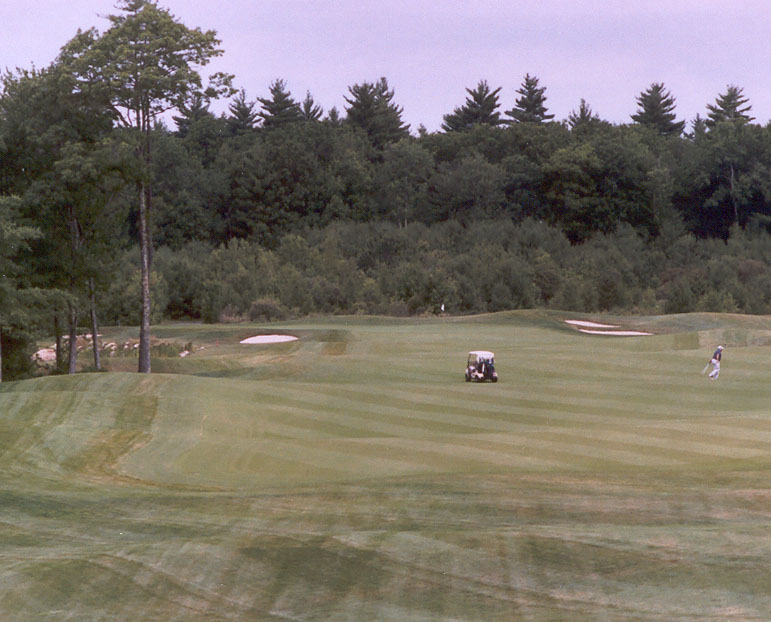
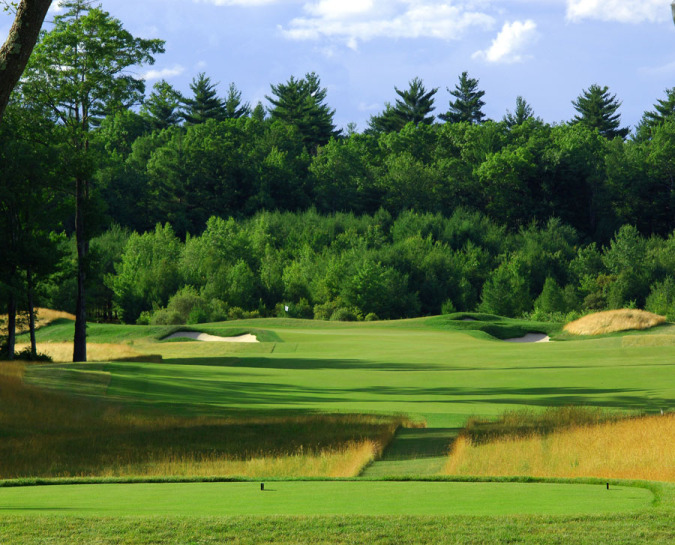
First Look at TPC Boston: 17th Hole Before/After

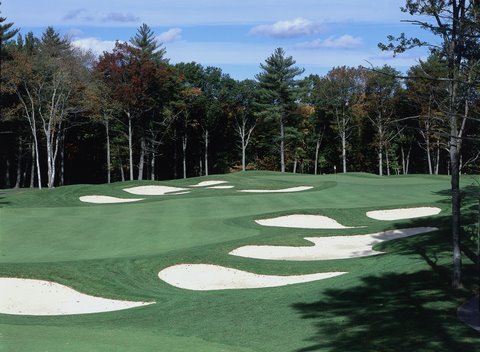
I will be posting more images in a few days, but thanks to TPC Boston superintendent extraordinaire Tom Brodeur, who managed a a major econstruction and grow in of his course since last year's Deutsche Bank event, we get to see some before/after shots of Gil Hanse and Brad Faxon's redo.

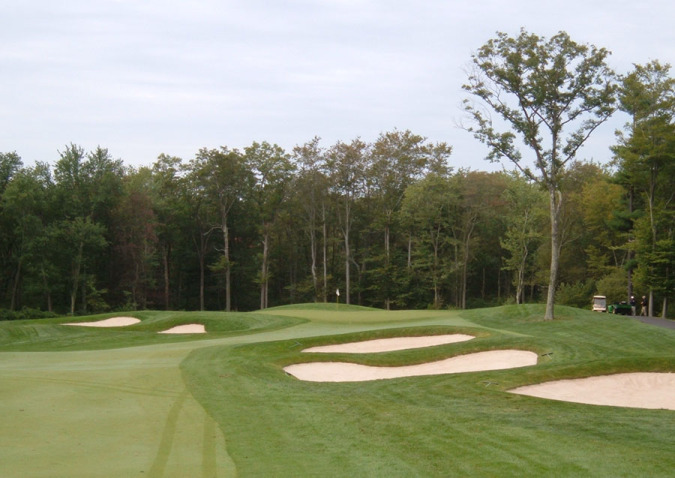
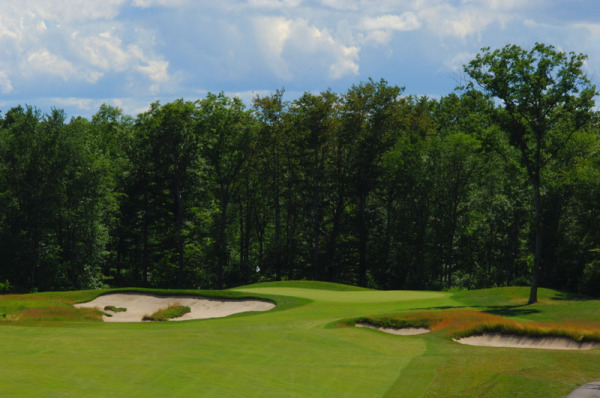
Home to next week's PGA Tour playoff event, TPC Boston was overhauled to reflect more of a New England-style look and feel. Much of the new-meant-to-look-old bunkering was crafted by Jim Wagner, who was recently featured in this YouTube video.

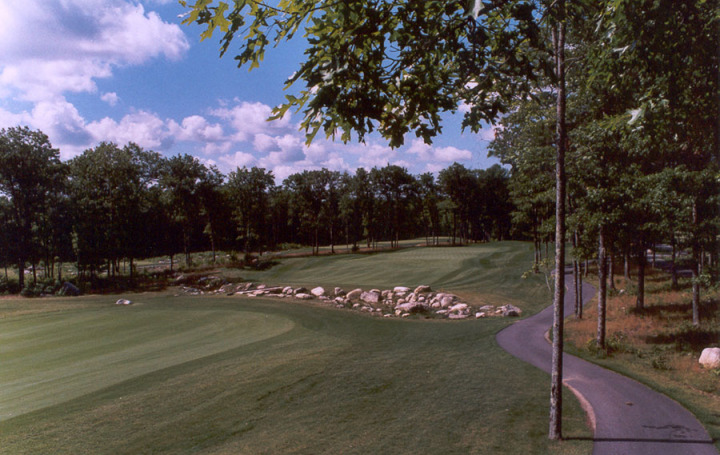
Here's the 17th hole's fairway view, before and after. Note New England style fescue bumps just off the fairway of this 420-yard par 4:

TPCBoston17fwyviewbefore.jpg 

TPCBoston17fwyafter.jpg
 

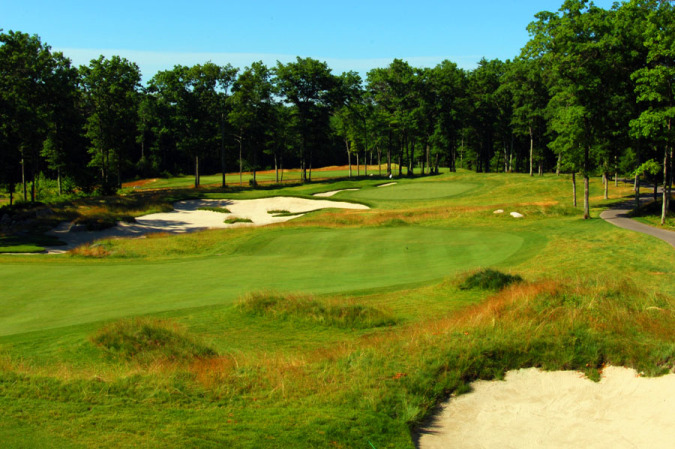
And the rear view of the 17th where the green has been reduced in size:

TPCBoston17th-before 

TPCBoston17th-after 

“When you’re embedded in the event, you’re TiVo proof"

22adco.190.1.jpgClaudia Deutsch of the New York Times looks at the FedEx Cup ad campaign and serves up a nice warning for New York businessmen prone to rolling their eyes. Or maybe people eat this stuff up? That wouldn't surprise me either.

If you are south of Greenwich Street in Manhattan between noon and 5 p.m. today, look for a weird miniparade: A guy carrying a “quiet” sign followed by a golfer, his caddy and an entourage of nattily dressed “fans.”

Don’t think it’s another bunch of aging hippies commemorating the 30th anniversary of the Summer of Love. The stunt is part of the endgame in a long and expensive campaign by FedEx to drum up frenzy over the FedEx Cup golf playoffs that start at the Westchester Country Club tomorrow.

Just think of the poor struggling actors who have to play these parts out...in public. Then again, people are paid to perform Cats, so anything is possible.
 But now, the race to the pin begins. FedEx has set up a 12-story, three-dimensional billboard of a golf hole on a building on Greenwich Street, the starting point for today’s golfer’s walk. It has cloaked its delivery trucks in a green plastic wrap that simulates grass and that advertises the FedEx Cup.

It is peppering telephone kiosks, Pennsylvania and Grand Central stations, and the Port Authority Bus Terminal with what it calls guerrilla stickers — messages suggesting excuses for skipping work from Aug. 23 through Sept. 16, the duration of the event. (“The dry cleaners lost all of my shirts.” “The copier is jammed.” “I am downloading a file on dial-up.”)

The hoopla will be replicated in Atlanta, where the finals will be held: another staged miniparade will go through the business district there; guerrilla stickers will decorate the airport, train and bus stations; and rapid-transit commuters will be treated to cheeky observations like “most golfers will have played in the rain longer than it takes you to commute to and from work.”

Many of the commercials that FedEx will run during the tournament will continue to promote the cup, but others will promote services like printing (remember that FedEx now owns Kinko’s), shipping and supply chain management. Since most people watch sports in real time, “when you’re embedded in the event, you’re TiVo proof,” said T. Michael Glenn, executive vice president for market development at FedEx.

Oh but you haven't seen me TiVo through a telecast before. 

And golf, marketing experts say, is likely to establish an equally strong track record as an executive sport.

“Golf is one of the fastest growing sports, both for watching and playing,” said Michael Watras, president of the brand consultancy Straightline International.

And who apparently just came out of a 5 year coma. 

Younger people, he suspects, embrace golf by choice; aging boomers turn to it by necessity.

“With tennis, your knees give out,” he said. “But with golf, you walk, you swing, you walk again. You can do that for a long time.”

Or take a cart. 

"...in the final analysis, the FedEx Cup is a classic example of the rich getting richer. The top players benefit the most by deferring money into their retirement accounts."

fedexillustration.jpgGolfweek's Adam Schupak offers a detailed and timely report on the PGA Tour's deferred compensation plans as they relate to the Fed Cup the most painfully obvious flaw of the event: the $10 million annuity for first place.

Lots to clip and paste here...
For those top FedEx finishers who make it to Champions Tour age, the miracle of compounding interest should ensure their golden years are lived on Easy Street. For Woods, or anyone else in his late 20s or early 30s, that’s likely more than 20 years of tax-deferred compounded growth.

Dave Lightner, a partner in FSM Capital, a Cleveland-based financial planning firm that represents 60 professional golfers, predicts the numbers will be staggering.  

“You could easily see guys with $250 million-$300 million in a retirement account,” he says.
That $10 million annuity isn't looking so huge is it?
The PGA Tour’s performance-based retirement plan is universally regarded as the most lucrative in sports (see story, page 48). It is not fettered by a maximum annual contribution; last year the average contribution for an exempt player exceeded $195,000, according to the Tour’s annual report to its membership. As first reported in Golfweek (March 24, 2001), a Tour member who sustains a lengthy career should be set for life thanks to his retirement account, which increases by at least $3,700 every time he makes a tournament cut.

This season, FedEx Cup bonus money has raised the stakes significantly. For instance, if Anthony Kim, the Tour’s youngest player at 22, wins the FedEx Cup and doesn’t dip into his retirement plan until he is 50, his $10 million bonus, compounding at 8 percent annually and doubling every nine years, would grow to $80 million.

Much about the PGA Tour’s retirement plan has changed with the advent of the FedEx Cup. What originally was devised as a safety net to compensate journeymen pros who never made it big has evolved into a tax shelter for the rich and richer. Though hardly anyone is complaining about competing for FedEx Cup purses (each of the four playoff tournaments is offering $7 million), several Tour members have protested that at least some of the bonus money, if not all, should be paid in cash – taxes be damned.

Those who want the money up front resent that the FedEx Cup was created to accommodate the Tour’s elite and not its rank-and-file. More significantly, the discord magnifies a growing schism between the Tour’s haves and have-mores. (Which can be defined as those who still fly commercial and those who travel in private planes.) Yet however one looks at the issue, there are more than 10 million reasons to compete in the playoffs.
Now to the fun behind the scenes stuff...
Unable to influence their stars’ schedules, Tour executives eliminated the two incentive plans, and instead reallocated the $16.5 million in these two programs as FedEx Cup bonus money. Into this pot they added $18.5 million, thanks in part to the sponsorship deal with FedEx, and ditched the vesting requirements that punished players for not playing enough.

“The guys generating the show, bringing in the sponsors and TV dollars – and they’re only getting 62 percent? That wasn’t going to last,” says Tour veteran Sean Murphy, playing on the Nationwide Tour this season. “But by rolling it into the FedEx Cup, it allows these guys to keep playing their same old schedule (assuming they play well enough) and vest at 100 percent.”

For a player such as Woods, well on his way to becoming the first billionaire athlete, that’s significant.

“He’s got a chance to have 40 percent of his net worth in the retirement plan,” says Joe Ogilvie, a player director on the Tour’s policy board.

Some players contend the FedEx Cup was designed to benefit the Tour’s elite in other ways, too. What had been golf’s endless season left little downtime to conduct off-course business. There are courses to design and openings to attend, commercials to shoot, and, of course, family time. (Mickelson skipped the 2006 Tour Championship in part so he could take his children trick-or-treating on Halloween.) In exchange for playing three to four events in a row during the playoffs, and perhaps as many as six of seven events between the World Golf Championships Bridgestone Invitational and the Tour Championship, the superstars can call it a year shortly after Labor Day.

Nevertheless, in the final analysis, the FedEx Cup is a classic example of the rich getting richer. The top players benefit the most by deferring money into their retirement accounts. At that income level, say financial advisers, elite players need all the tax breaks they can get.

But it's also important to note that is has been rumored that Tiger was against the annuity in place of cash as the FedEx Cup bonus. Was he looking at this from the fan perspective? These guys obviously weren't...
The decision to defer the FedEx Cup money ultimately rested in the hands of the Tour’s nine-member policy board, comprising four player directors (Stewart Cink, Joe Durant, Davis Love III and Ogilvie), four independent directors (Richard Ferris, Victor Ganzi, John McCoy and Ken Thompson) and the president of the PGA of America (then Roger Warren). According to an e-mail response from the Tour, the Tour policy board determined that a deferred compensation structure for the FedEx Cup was in the best long-term interest of the vast majority of players. That decision, in part, was based on the conservative premise that the Cup winner will have earned upwards of $5 million in prize money for the season – and likely wouldn’t be hurting for cash.

But according to several players who attended meetings to discuss the proposed FedEx Cup last year, the membership initially favored an immediate cash prize.

As talks progressed to the 16-member Player Advisory Council, an early show of hands produced a deadlock on the issue of how players should be paid. Then the Tour invited to PAC meetings several financial advisers who espoused the benefits of deferred compensation. Eventually, the PAC recommended retirement contributions to the Tour policy board. But the debate didn’t die there. The policy board, too, hashed out the pros and cons of deferred compensation at several meetings. They even considered paying half the bonus money in cash and deferring the other half to appease players who wanted at least some of the money up front. But the policy board voted unanimously in favor of 100 percent deferred compensation at a November meeting in Ponte Vedra Beach, Fla.