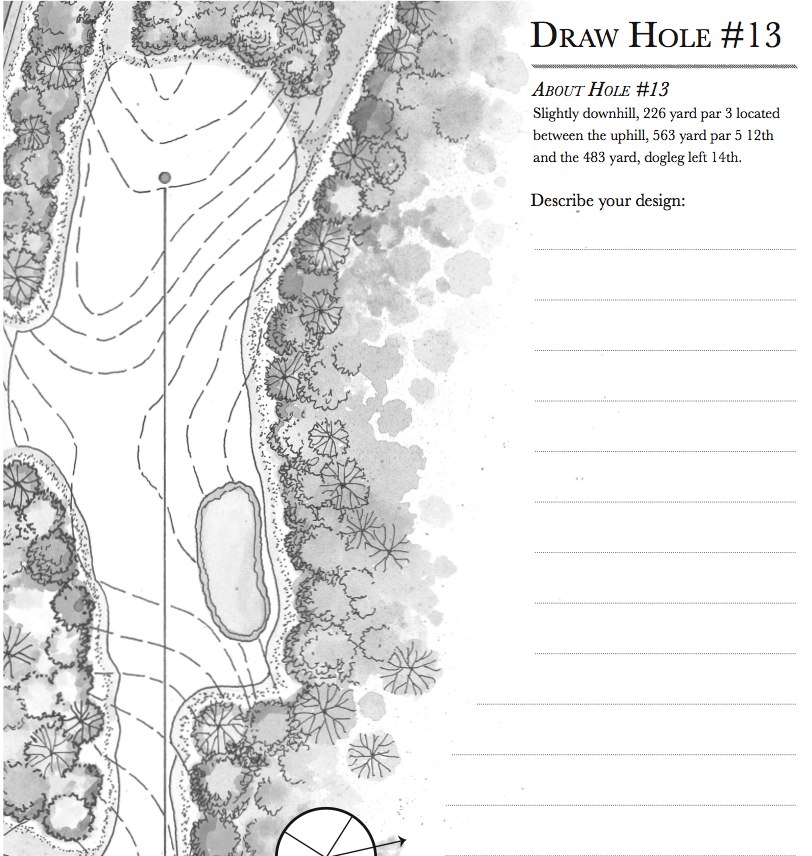
PGA Tour Offering Contest To Design Hole That Has Already Been Designed
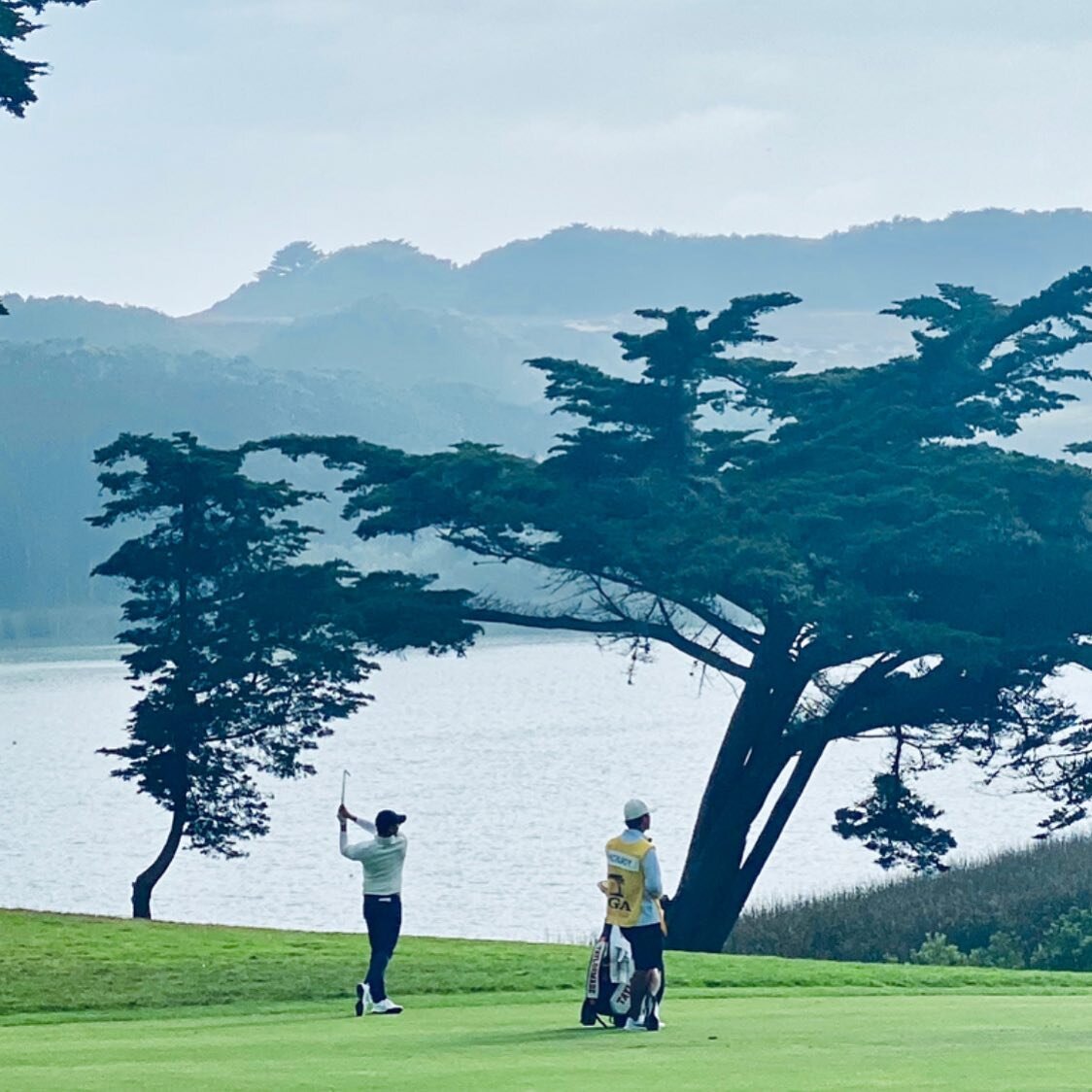
/ What can I say but, wow, what a canvas!
It’s back!
Twenty years later Tatra Press has kindly allowed me to bring back Grounds For Golf now that golf architecture is of more interest to the masses. A new Introduction looks at what’s driven the interest growth and two new chapters I had a blast adding (plus a few edits to keep things up-to-date).
The Amazon purchase page for the book arriving June 15, 2026.
 What can I say but, wow, what a canvas!
Steve Ellling posts his annual analysis of players making all four major cuts, with Padraig Harrington easily taking the low medalist honors. And Elling shares this from Robert Allenby:
And...Last weekend, the veteran Australian was grousing about the difficult playing conditions at the 90th PGA Championship at Oakland Hills, comparing the unusually harsh and critically panned setup to another major championship once known for its punitive traditions.
"Everybody is trying to be like the U.S. Open, except for the U.S. Open, which was the best major setup we had all year," Allenby observed.
So, then, are major setups getting harder? Allenby might have a point about their general difficulty, though there were some dire weather issues at times in 2008. The number of players who finished under par after playing in all 16 major-championship rounds has fallen from six to one to zero over the past three years.
I'm not sure if this is an appeal to the putter collectors and a way to get attention, but PGATour.com's Mike McCallister talks to Scotty Cameron about his putters and gets these two interesting quotes:
"I think I get red-flagged by the the USGA because I'm always trying to walk that fine line. I think if you're to buy my products, you want me to be on the edge, you want me to be barely legal. But if I'm well within the zone, then it's like we're not stretching the limits enough."And...
"People say there's no arc in the putter stroke. Well, is there an arc in a golf swing? Of course there is. ... There is an arc in the putter stroke. I wish there wasn't. But there is -- it comes from the lie angle of the shaft. The USGA says its must be at least 10 percent, not straight up and down. With that angle, there must be an arc. ... I wish we could putt between our legs, 90 degrees, square to square. But the USGA says we can't putt between our legs, so I design putters to fit those arcs so that it becomes almost effortless for the putter."
Great to see the positive early reviews on Sedgefield, new host of the Greensboro event and a Donald Ross design restored by Kris Spence.
Even more remarkable was Robert Bell getting Lee Janzen to talk.
In their Golf World recap of the USGA and R&A groove announcement,
In considering how the setup impacted the PGA Championship, we get a couple of different perspectives.
 It's fascinating to see a change in media assessments of a tournament's entertainment value and the influence of a course setup. It wasn't long ago that a U.S. Open setup would have been widely praised for putting the flatbellies in their place and that players are spoiled brats. But after so many of these extra narrow, over-ripe setups driven by a desire to pump up scores, the review are pretty consistently negative.
Rob Parker in the Detroit News:
First, there was no Tiger Woods, a blow to any event when the best golfer on the planet can't play because of knee surgery.
Then, the rains came and went, and came and went. For sure, it felt like monsoon season, not August in Michigan. For the most part, fans were more occupied trying to dodge rain drops than watching nifty shots.
Those things, plus the weak economy in these parts, also kept the crowds down. No matter what attendance numbers were announced, it just didn't feel like a major. There was more buzz about the mayoral mess in Detroit than the play on the course.Dick Friedman at golf.com analyzes the Tiger effect on ratings, looks at several anecdotal signs of a rough patch for the game and notes that the PGA was a Nielsen disaster:
Harrington's thrilling victory on Sunday at Oakland Hills, the overnight rating for the PGA Championship was 3.0, down 55% from last year's final round at Southern Hills — an event won by (surely you recall) Woods.Mark Whicker was another member of the media who was glad it rained to save the setup.
So the '08 PGA lived up to the texture of the ones that preceded it. But the trend of "Tiger-proofing" golf courses has turned into "birdie-proofing," without slowing Woods a bit.
The drill is familiar. Length the courses and keep par at 70. The 18th hole, a 498-yard par-4 with a landing area that could barely accommodate a model airplane, played to a score of nearly 4.8.
But the mania for artificial length hasn't made these tournaments better.Alan Shipnuck highlights Cameron Morfit's talk with Steve Flesch and hits at this excellent point that came up a few times during the PGA: you think you can grow the game with course setups like this? Think again...
Flesch, a thoughtful member of the PGA Tour's player advisory council, expressed more far-reaching concerns for a pricey leisure sport that during this economic downturn is seeing more courses close than open and the number of participants and rounds played continue to fall nationally. He didn't quite accuse this PGA Championship of killing golf, but he came close. "If we're worried about attracting people to come play, if they see how miserable we are out there, why would they go, 'I want to play that game!'?" Flesch told Golf.com's Cameron Morfit. "It's fun to watch guys make birdies. They smile. The PGA is committed to growing the game; is this how they want golf portrayed?
"The thing that bums me out is I don't know how many of our top 15, 20 guys got chased out of here this weekend. Do you think that's the leaderboard the PGA of America wants up there when they're fighting the Olympics? How are ratings going to be this weekend? People are going to look at Charlie Wi, myself — I'm not saying anybody doesn't deserve to be up there, but people are going to turn around and go, 'Well I've never heard of any of these guys, let's see what's going on with the Olympics.' The PGA has got to be careful. They're getting what they're asking for, is what I'm saying."And finally, I missed it on the telecast but Tony Pioppi posts Peter Kostis' telecast remark about the narrowness of Oakland Hills. Kostis, on Rees Jones's work there:
"He didn't give you much option in the way you can play the golf course." Then later Kostis said something like, "he's taken away a lot of angles Donald Ross intended."
Jack Nicklaus apparently thinks the U.S. can win the Ryder Cup, but Steve Elling isn't so sure after listening to Paul Azinger talk about how relieved he was not have to make his four Captain's picks Monday.
He's just postponing the pain, pushing back his root canal. The end of the American bench isn't any deeper than it was the last time around, when J.J. Henry and Vaughn Taylor were sent abroad to absorb a red, white and blue striping. In the two years since the 2006 matches, those two have six combined top 10 finishes.
The next wave of American possibles, 20-something players who entered the week in the top 16 in points, such as J.B. Holmes, Sean O'Hair, D.J. Trahan and Brandt Snedeker -- all in position to steal an automatic roster spot -- were summarily chewed up by the Oakland Hill Monster.
On the two weekend rounds, when the course softened and Harrington and Garcia were a combined 11 under, none of the four broke par. In fact, of the players in the mix for a spot on the U.S. roster, only Curtis broke par on the weekend. He was 1 under.
As for the old blood, the five players with Ryder experience who earned spots on Sunday night have a dubious record. Justin Leonard and Kenny Perry have never won a Ryder match and Phil Mickelson, Jim Furyk and Stewart Cink are a combined 18-29-10.Bob Harig also considered Azinger's plight, and offers this ounce of optimism from the American captain:
"For the first time in a long time, Europe is going to have everything to lose in these matches," Azinger said. "It's usually the other way around. Even though they've won five of the last six, they just seem to come in as the underdog. I don't know how that works. This time I think it's clear that we are the underdogs going into these matches."
Adam Schupak reports that times are tough for the equipment industry and of course, it's mostly the USGA's fault...if you ask the manufacturers.
Retailers and analysts say consumer spending domestically has stalled over concerns about an economy wracked by foreclosures and soaring fuel prices. Adverse weather has limited rounds played in key areas, which also is affecting equipment sales, they say.
Another persistent complaint: USGA restrictions are hindering product innovation. In an analyst report on Callaway, Casey Alexander of New York-based Gilford Securities wrote: “The U.S. market looks like it could produce a year where equipment sales come in down 7 percent to 8 percent, which may not sound that bad until you judge it against 10 years of equipment sales that were plus or minus 2 percent regardless of what the economy was doing.”At this point Schupak lists all of the ways the manufacturers have made things tougher on themselves:
Retailers also say they’re being hurt by shorter product life cycles. The growing practice of launching products in almost rapid-fire succession is conditioning consumers to wait, say six months, to buy a premium-priced driver because they know it will be marked down. That consumer behavior has become more pronounced during a sluggish economy.
Those darn consumers! Don't they know they exist to help each quarter's earnings? What is wrong with you people. Shop!
“That mindset has come back to bite us,” Marney says.
 Gene Park and B.J. Reyes report on Presidential candidate Barrack Obama's round of golf in Hawaii, while local station KGMB has video footage of his swing. It needs work, but hey, he's been a little busy.
Over at WorldGolf.com, William Wolfrum has fun with Cokie Roberts (I know, easy pickings) and her suggestion that if Obama wants to appear more American, he'd be vacationing in Myrtle Beach instead of elitist, foreign soil like...Hawaii. (Yes, you have to watch the YouTube video to believe it.)
Geoff Shackelford is a Senior Writer for Golfweek magazine, a weekly contributor to Golf Channel's Morning


Copyright © 2022, Geoff Shackelford. All rights reserved.