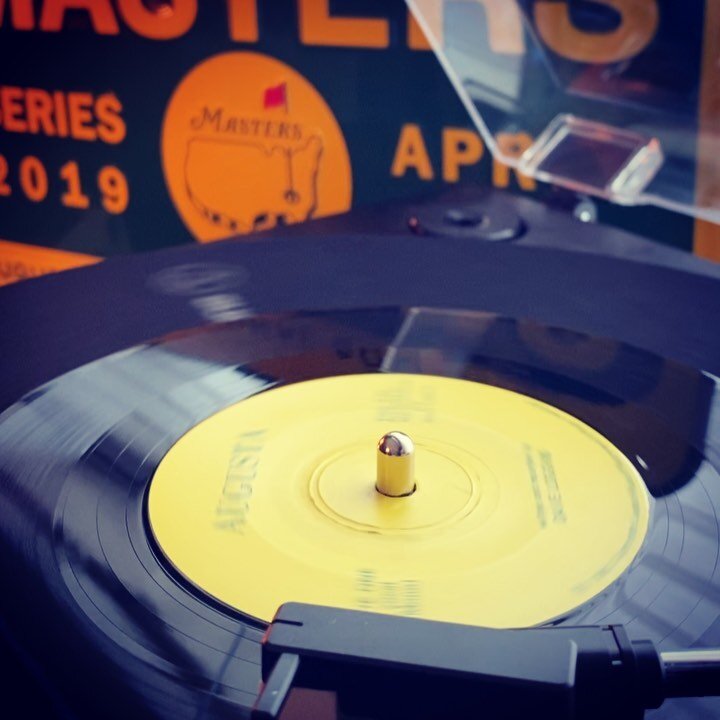
Masters iphone App Is Available
/As are the other mobile options.
When you come to think of it that is the secret of most of the great holes all over the world. They all have some kind of a twist. C.B. MACDONALD
Thanks to reader Chris for this Mike Aitken and Craig Brown story on the latest change in the name of growing the game in the British Isles: denim.
A campaign called "Love Golf? Join the Club", aimed at filling 10,000 vacancies across Scotland, has been launched with an emphasis on customer service and a more relaxed dress code.
The scheme was announced at Hilton Park, near Glasgow, by Scottish Golf Union (SGU) officials wearing jeans and T-shirts.
And...
Michael Williamson, an Edinburgh golf consultant, believes flexibility is the key to increasing membership. "Most clubs have a variation of 'smart casual', and a lot are being ever more flexible on the issue," he said.
"I think it comes down to definition: I've seen golf clubs were the code is jacket and tie, and you have old guys with soup-stained ties and jackets with patches.
"I don't think it's exactly what you specify, it's all to do with attitude. Tiger Woods wears a collarless T-shirt and he's the best golfer in the world, so why shouldn't people be allowed into golf clubs wearing that?"
With Paul Casey tied for the lead in Houston, The Guardian's Dan Roebuck looks at the early wagering and is looking prophetic in suggesting Casey's a bargain heading into the Masters.
 I always knew those lax rules on free equipment would finally have a positive effect. Jim McCabe reports that Titleist has outfitted the "Chicopee Six" survivors of US Air 1549, who lost their sticks when their flight landed in the Hudson.
Company representatives had heard the men were going to follow through with their Myrtle Beach trip and wanted to fit the men with new clubs. Plans were made for an April 2 visit and when the Chicopee Six arrived, they discovered that new FootJoy golf shoes were part of the package.
Rob Kolodjay could not hide his emotions.
“I’m a humble guy, but we’ve received so much media attention,” he said to Titleist club-fitters Karen Gray and Fordie Pitts III. “That’s been hard. We didn’t ask for the attention. But you folks (at Titleist) have been so good, I could cry.”
When it rains it snows, or, when it snows it falls hard. Ah hell. Tom Watson joins the chorus criticizing changes to Augusta National in greater detail than I've seen anywhere else. This is from a newly posted architecture-driven Q&A on GolfClubAtlas.com. The all caps would be Tom's:
THE LENGTHENING OF THE COURSE WAS ABSOLUTELY NECESSARY, EXCEPT FOR HOLES # 7 AND # 17. THE NARROWING OF # 7 WAS NOT NECESSARY AND THE ADDED LENGTH IS NOT APPROPRIATE CONSIDERING THAT GREEN. IT’S SIMPLY NOT DESIGNED TO HOLD A LONG IRON APPROCH SHOT.
WHAT’S MISSING IS THE OPENESS OF THE ORIGINAL ROUTING BECAUSE OF THE ADDITION OF SO MANY TREES. THE CHARACTER OF THE COURSE I BELIEVE IS DIMINISHED WITH ITS RECOVERY SHOTS MADE SO MUCH MORE RISKY.THE CHALLENGE OF AUGUSTA NATIONAL IS THE SET OF GREENS SO CAREFULLY AND MASTERFULLY CREATED BY MR. JONES AND DR. MACKENZIE. A MUCH MORE DIFFICULT APPROACH TO THE GREENS FROM THE WRONG DIRECTION WAS THE PENALTY OF AN ERRANT DRIVE.
 One of my favorites characters, Christina Kim, is tied through two rounds of the Nabisco. Though I don't like the sound of this chilling out stuff, which was posted on the LPGA's excellent notes and quotes recap page.
Q. Did you have an epiphany or a moment or incident where you felt you had to chill out? Was there something that happened?
CHRISTINA KIM: There is something that happened that I cannot disclose at this time. (Laughing). More than anything, you wake up, you go out, you play, you're grumpy out there, people are like, that's not you, that's not what you're normally like. You get off the course, your feet hurts, your back hurts, your head hurts. It really does take a lot more energy to be upset than it is to not.
I remember when I was at the prime of my game a couple of years ago, I was the person that would go to volunteers and say: ‘Thank you for coming out this week, without you we would not have an event,’ thanking spectators; instead of: ‘Get out of my way, you're in my line,’ or things like that.
Sometimes it just happens. You wake up one day and you realize, what on earth am I doing? This is not right; this is not who I am. That kind of happened on Monday morning probably around the same time I got the new putter actually.
I've been questioning Golf Digest's Resistance To Scoring definition since at least 1999. (BTW, checked with mom and I did not have issues with RTS at birth, so go easy on the bias accusations). But I have moaned about the evaluation process many times, including how clubs feel the need to pander to panelists.
And while I understand that the RTS concept dates to the magazine's founder and the initial list focusing on difficulty, I thought it would an interesting exercise to look at the magazine's definition of the category which Ron Whitten says vaulted Augusta National to the #1 spot in the latest ranking.
Here's what panelists are given to determine Resistance to Scoring:
RESISTANCE TO SCORING
How difficult, while still being fair, is the course for the scratch player from the back tees?What it means: A great course is designed primarily to challenge low-handicap
amateur golfers, not tour professionals.
Now, this is odd since Golf Digest has added people to its panel who are not low-handicap golfers. So how would they be able to evaluate a course from a scratch player's perspective?
Of course I think there should be people of all skill levels on the panel, with the RTS category dropped.
Anyhow, the magazine fleshes out the meaning of RTS this way:
How to determine Resistance to Scoring
The question is not whether a course is tough for the tour pro. On a calm day, no course is too tough for the tour pro. At last look, the course record is 62 at Pebble Beach, Pinehurst No. 2 and Prairie Dunes. And will soon go lower, no doubt.
And those 62s just came so easily to the player.
At any time, given the skill level of the average tour player, and the incredible equipment they use, even top courses set up in championship condition can be easy.
Ah yes, easy. Because anyone who has played the game will tell you it becomes easy more often than not.
Davis Love III’s 269 at Winged Foot West in the 1997 PGA did not mean that the course was toothless. Only five players broke par in that event and no one broke par in the 2006 U.S. Open. The 2006 winner, Geoff Ogilvey finished at four over par.
Is that Ogilvey guy a hybrid of Geoff Ogilvy and Joe Ogilvie?
We prefer to consider how testing the course is for a scratch golfer, a player who may be several shots worse than the average tour pro from the back tees. That’s because most courses, even those on our list of America’s 100 Greatest won’t be played by tour professionals. But they will be challenged by scratch players many, many times.
To deserve a high score in Resistance to Scoring, the course must be difficult but still fair.
A course that demands 260-yard carries over hazards from every tee is indeed difficult, but is not fair. Particularly if half of those tee shots are into prevailing winds.
So do you have to keep a checklist on tee shots into prevailing winds? And if less than half are under 260 does that mean the course is difficult but fair?
A course with every green guarded by water is difficult, but again it’s not a fair test.
If the course is tough but unfair, give it a lower score.
If it’s eminently fair but not particularly tough, give it a lower score.
What if it's just fair, not eminently fair? Who wrote this, Richard Tufts?
Only if it achieves that balance of being both testing but fair in its challenges, does a course deserve a high score in Resistance to Scoring.
Fair. People, it's your mantra.
The ideal in Resistance to Scoring
The ideal course must take into account various weather conditions. It cannot be brutally tough on calm days, because on windy days it then becomes impossible.
There's a newsflash from the city.
It can’t be tough only when tee markers are placed to the very back because on wet days it then becomes unreachable. It can’t rely only on pin positions tucked behind bunkers because pin placements must be rotated to spread out wear and tear.
Example: A model for Resistance to Scoring might be Harbour Town on Hilton Head Island. At 6,973 yards long, with smallish greens and all sorts of hazards, it can be a difficult course for a scratch player. Yet it is hard to find an unfair hole on the course.
Glad we're not seeding the panelists with any potential biases!
Even in windy conditions. Its routing is such that consecutive holes don’t face identical wind conditions. The greens provide approach options for windy conditions. Some of its greens accept low running shots. Others have hazards in front but no trouble to the rear. Only a couple are heavily guarded targets. Note: The highest average Resistance to Scoring in the 100 Greatest is Shinnecock Hills G.C. with an average of 9.08.
That's good to know.
Why we use evaluations for Resistance to Scoring rather than Slope Rating or Course Rating
The combination of USGA Course Rating and Slope Rating can be a good indicator of a course’s resistance to scoring, though not a perfect one. In general, a course with a Course Rating above 73 and the Slope Rating is above 130 can be rated above 7.5. A course would need to have a Course Rating above 74 and have a Slope Rating above 140 to be rated in the 8.0 to 8.5 range. Keep in mind that Shinnecock Hills has the highest Resistance to Scoring average in America at 9.08.
Yeah we got that about Shinnecock the first time.
So I don't quite understand how a Course Rating can't be automatically used when they are able to quantify what a Resistance To Scoring score should be based on that rating.
Of course, I still just can't fathom why the difficulty has anything to do with the merits of a course. Seems like Fun would be a whole bunch more important.
Lawrence Donegan looks at the caddy-miking issue and gets more player feedback. I suppose this could be the biggest negative of the entire exercise:
Perhaps the only foolproof answer is to live your life like Padraig Harrington, the tee-total, non-swearing Irishman who is as squeaky clean in private as he is in public.
"Personally, I would have no problems with my caddie wearing a microphone. In fact, I've worn one on the golf course in the past [during exhibition matches and the PGA Grand Slam of Golf, an end of season event featuring that year's major winners]," said Harrington.
"Obviously, you couldn't be as free and easy in your conversations with your caddie. But if I wanted total privacy then I would stay at home."
So sure, the guys who are miked might be more careful. But in the heat of battle, I suspect they will forget the mike is on. After all, those great NBC chats picked up by the sound guys lately have been done so with the sound man almost on top of the players at times, and the conversations were still pretty fun to listen in on.
Geoff Shackelford is a Senior Writer for Golfweek magazine, a weekly contributor to Golf Channel's Morning






Copyright © 2022, Geoff Shackelford. All rights reserved.