"Why would someone even consider trying to open a golf club nearly one-and-a-half times the size of Manhattan?"

I'm not sure where to start with Dan Washburn's fascinating account of the secret Mission Hills development under construction on Hainan. Here's primarily what you need to know:

In reality, this will be the world’s only self-contained golf city. Its 22 courses will cover every style imaginable – from links to desert to Augusta-like perfection – and include some decidedly non-traditional designs. Picture yourself playing into a waterfall, through a cave, around a volcano, or over a replica of the Great Wall. There will be multiple town centres with luxury homes and apartments, hotels and spas, shopping malls and streets lined with restaurants and bars. The Chus are turning countryside into suburbia, no doubt raising surrounding property values and creating thousands of jobs along the way.

And why 22 courses at one development on an island where there are said to be 3000 golfers?

But such quibbles may be missing the larger truth about golf course development in Hainan, and throughout much of China: the number of golf courses built has very little to do with the number of golfers available to play on them. With few exceptions, golf courses exist to help sell luxury villas. Developers do not worry if a course sits empty, as long as the properties around it sell. And so far in Hainan, selling homes has not been a problem. Wealthy bosses from Beijing, Shanghai, Guangzhou and central China’s coal belt fly in and buy up the villas, sometimes several at a time, often paying in cash. In China, to own a home on a golf course does not necessarily mean you play the game. It’s more about prestige. Golf, like luxury sedans and handbags, is just another way to project your wealth.

The concept sounds familiar. Anyone know how it's working out?

"Tiger helped golfers, like me, who passionately love the game but am ashamed of the its 'history.'"

John Strege first noted the passing of golf pioneer Bill Powell and while I don't want to look past his amazing life accomplishments as documented lovingly in this Richard Goldstein NY Times obituary, but reader Hugh noted my post last week asking what Tiger Woods had done to influence the everyday sport and offered this:
Read More

"The long-term effect on the tour from Woods’s loss of sponsorships, if any, will probably not become evident for years."

Larry Dorman makes that point in reviewing the year and decade. And it's a good point to remember since now every time the PGA Tour loses a sponsor Tiger will be blamed. In this economy, that's pretty ridiculous even though his potentially diminished appeal will surely sway some companies.

"I used to make a lot of Penal courses, but a Penal course is easier to play than a Strategic course. The Strategic school is one of my favorites."

Mike McAllister made my year by profiling aspiring architect Cody Carroll, a 10-year-old who has been drawing golf courses since he was 4 and has been eyeing 8 1/2 acres for his first design, all the while using Grounds for Golf as his "second bible."
Read More

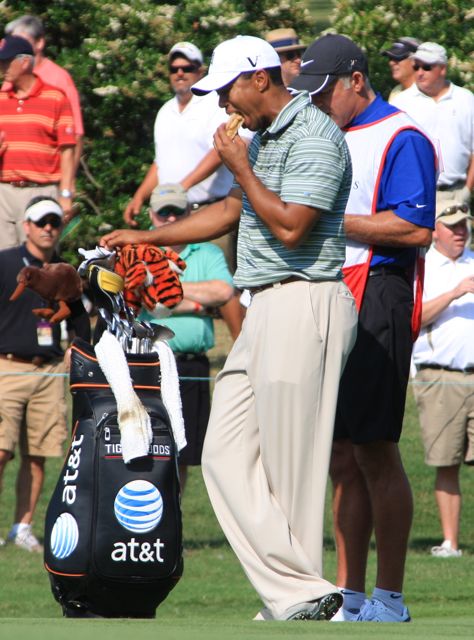
So Much For The Friday Afternoon News Dump: AT&T Drops Tiger**

Though I do think New Year's Eve is kind of your basic Friday afternoon no matter what day it falls on.

Some good news in the announcement: they are not dropping their sponsorship of Tiger's PGA Tour stop. Oh, and they wish Tiger well.

Tiger's Indefinite Leave Clippings, New Year's Eve Edition

I continue to be confounded by WESH 2's report quoting Sgt. Kim Montes about Tiger's interview with police almost a month after the FHP said it was done talking about the case. WESH reporter Bob Keeling's on air report can be seen here, an in it are a few more quotes from Montes about Tiger's condition and the rumor mill:
Read More