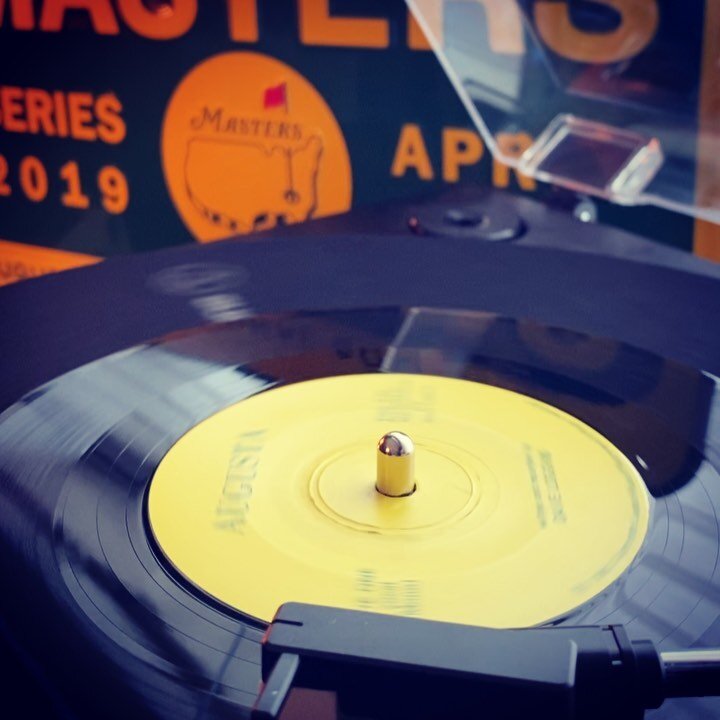
Video: Watch Victor Dubuisson Adjust His Lofts And Lies
/As we lead up to St. Andrews, I've been dipping into old books reading about the craftsmanship
Read More
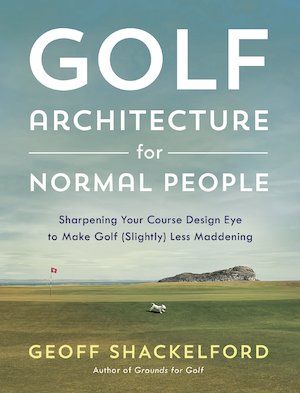
It’s back!
Twenty years later Tatra Press has kindly allowed me to bring back Grounds For Golf now that golf architecture is of more interest to the masses. A new Introduction looks at what’s driven the interest growth and two new chapters I had a blast adding (plus a few edits to keep things up-to-date).
The Amazon purchase page for the book arriving June 15, 2026.
As he heads into the U.S. Senior Open final round tied with Jeff Maggert for the lead, Bernhard Langer nears the end of his ability to anchor the long blade against his torso. And he's still unsure why it's happening.
 The Sacramento Bee's Mark Billingsley reports.
“I just don’t understand,” said Bernhard Langer, who shot a 4-under-par 66 in Friday’s second round at the Del Paso Country Club and is 3 under for the tournament. “I’ve been using (the long putter) for 18 years, and it’s a real issue. If it’s easier, then why are we not seeing more players use it? I don’t see anyone using persimmon woods. And who is using hybrids now? Everyone.”
As noted in this item for The Loop, the moment we've sometimes come to know at the U.S. Open where a player realizes he's won and is embraced by family, appeared lost behind a scoring trailer door at Chambers Bay. But Darren Carroll was working for the USGA and explains in this item how he decided to slide in just in case Spieth's moment happened. The rest is history, as this excellent slideshow reveals.
The Washington Post's Dan Steinberg sums up the post-U.S. Open comments of Under Armour CEO Kevin Plank, executive Ryan Kuehl and Spieth in the wake of a second straight major.
 Spieth's rise is only encouraging the company to expand their golf offerings as the industry shrinks.
“He’s a special guy,” Plank said. “He’s going to win a lot of golf tournaments, and that’s going to end up costing us a lot of money at some level, but I’d say it’ll probably be some of the best money we ever spent.”
Plank, in the interview with WJLA, also says this. Translations welcomed.
“Look, culture eats strategy for breakfast,” he said. “Culture isn’t something you just wake up and decide you’re going to be one day. It’s like trust; it’s built in drops and it’s lost in buckets. And you know the kind of people that will help add to that, that will add drops. And Jordan was one of those special, unique people who was a team sport athlete.
“When him and his father came up…two or three years ago, and we sat there having a conversation about how would you like to turn pro and be an Under Armour guy, he just said look I am an Under Armour guy. I am an athlete. He goes, ‘I’m your golfer.’ “
 Spieth is the cover boy and center of Golf Digest's July issue, with a pre-U.S. Open profile by Jaime Diaz worth a look. Especially now.
Like all game-changers, Spieth benefits from timing. Just as Palmer was a welcome change from the grim excellence of Ben Hogan, so is Spieth a respite from the distant reign of Woods.
"Tiger's time of domination was overall great for golf but difficult in terms of interaction with fans, sponsors and media," says Seth Waugh, former CEO of Deutsche Bank, sponsor of the Deutsche Bank Championship. "In his defense, as the biggest guy on the planet, he felt he needed a shield to protect himself from an invasive world. Everybody assumed that because he was winning everything, the model of focusing only on your game and not really engaging with people was necessary to be a champion. From a player's perspective, it was the perfect excuse not to do the harder stuff, like stick around to sign autographs. But then the financial crisis hit, and it became clear that the harder stuff was a big part of why a corporation would spend $10 million to put on a week of golf. When Tiger and the notion of universal entitlement simultaneously fell from grace, players realized another model might work better, not just for themselves, but for the game."
Geoff Shackelford is a Senior Writer for Golfweek magazine, a weekly contributor to Golf Channel's Morning


Copyright © 2022, Geoff Shackelford. All rights reserved.