Did Russell Knox's Comments Hurt His Ryder Cup Cause?
/There wasn't much drama in Captain Darren Clarke's Ryder Cup
Read MoreWhen you come to think of it that is the secret of most of the great holes all over the world. They all have some kind of a twist. C.B. MACDONALD
 Good spot by Kevin Casey at Golfweek.com to get your blood boiling, as we learn that Special Olympian athlete Keith Kee had his clubs and Special Olympics-marked bag stolen at a Bartlett, Tennessee golf course. Kee was there to play golf with his coach John Sprott.
“With Special Olympics on the bag, whoever stole them must have known who they belong to. For me, that’s more egregious than just stealing someone’s set of clubs,” Sprott told WMC Action News 5.
The full WBTV report from Chris Luther includes a full description should you live in the area and spot the heathen who committed this act.
If you've been around golf long enough, you know Ken Carpenter's name and work from the pages of Golfweek and Golfweek.com.
 While he had moved on to teach journalism at Valencia College, Golfweek's Jeff Babineau says Carpenter, who died Sunday at age 59 after a battle with cancer, left behind many friends in golf after he and his wife established a legacy of generosity and giving.
Carpenter befriended a caddie at Cruden Bay in 2000 that began a long friendship.
When former Golfweek senior writer Jeff Rude and I visited Scotland years later, it was Chris’ late dad who picked us up. Chris wrote Monday about Ken’s last trip to Cruden Bay, in 2000; he wanted so badly to break 80 that day, and was 3 over with two holes to play. But he’d finish 9-6 and shoot 80, managing to chuckle about it later, as only he would.
This morning, halfway across the world in Scotland, the flag flies at half-staff at Cruden Bay, an honor the venerable club usually reserves only for members. That’s how Ken Carpenter touched people.
Also warming are the many stories flowing in from his former students at Valencia College, where Ken was a journalism professor for 12 years. It was one thing to spend many years at newspapers and magazines pounding in agate, editing copy and writing catchy headlines. But as a professor, he truly was able to impact lives and steer kids toward a passion, his passion, bringing refreshing life to an industry most view as fading to black in a hurry.
Alex Miceli at Golfweek.com with the explanation from William Hill's Joe Crilly as to why they got suspicious and cut off bets on Darren Clarke's three Ryder Cup picks.
 Miceli writes of the action on longshot Luke:
The betting came not from its web or mobile sites, but from differing Hill retail locations throughout England, mostly in the northeast of England.
“They were only small bets, the biggest of which was I think 200 pounds,” Crilly said of the Donald bets. “They were only small bets but they were of the frequency on a special market like that that you wouldn’t necessarily see on a special market and thus somebody had an inkling that something was going to happen.”
Both Tim Rosaforte at Golf Channel and James Corrigan at the Telegraph are reporting that Donald will not be a pick. Instead, Lee Westwood, Martin Kaymer and Thomas Pieters will be the 2016 captain's picks. Clarke makes the picks Tuesday at 7:30 am ET.
We've known the governing bodies have been meeting for some time to work out simplification of golf's bloated Rules book, but it's a bit disappointing see from the initial rollout that this will be branded as a grow-the-game cause.
 I find that disappointing because (A) golf needs another grow-the-game initiative like another 72-hole stroke play even, and (B) the numbers of interested golfers staying away from the sport due the rules are outnumbered by those sitting out due to cost and time.
Brian Costa, writing for the Wall Street Journal, was the first to get to channel the hoped-for USGA message which is not, "we've made the rules a bloated mess and are fixing them." Instead, it's, "the rules can be intimidating to new players and we're here to change that. #growthegame"
“This is just a chance to reset,” said USGA chief executive Mike Davis. “The idea is if we get this right, many more golfers will embrace and understand the rules.”
The USGA is hoping to release a draft of the new rules for feedback from recreational players in 2017, though it could be another few years before they take effect.
John Bodenhamer, the USGA’s head of rules, competitions and equipment standards, likened it to the 1971 publication of the Living Bible, a more accessible version of the King James Bible. “I think it’s fair to say that some golfers, perhaps many, are intimidated in picking up the rule book,” Bodenhamer said. “We want to be able to help golfers with that.”
Again, I just don't think many golfers are sitting on the sidelines because of the density of the Decisions book. There are many golf fans on the fence right now about the governing bodies given the various TV rules situations. But beginners upset at the seven ways your can drop the ball as outlined in Decision 18-2? No.
There also is effort here by the USGA (in particular) to get the conversation away from their handling of situations like Dustin Johnson at Oakmont and onto an everyday game impacted by the rules. However, the USGA perception is no longer one of a body that doesn't care about the average man. Instead. it's viewed as one that is insensitive to all classes of player in the implementation of the rules. Fixing that perception will be beneficial from all of these closed door meetings with the R&A.
To understand their branding/PR issues, consider this quote from Daniel Summerhays, picked up by CBS/Golf Channel mics during Barclays round two play as Rory McIlroy thought his ball moved on the green.
"The @USGA has messed this all up" - Daniel Summerhays on Rory's ball moving on the green #LoveIt #DJ #USOpen
— TVG (@TVG14) August 25, 2016
At least in the minds of tour players, the USGA and R&A tried to fix the issue of balls moving on greens cut to absurdly low heights, and still didn't get it right.
The forecast--minus a possible Friday evening disruption--looks encouraging for The Barclays at Bethpage Black. You may recall that the two U.S. Opens and one Barclays played at the rejuvenated Tillinghast course have been tainted by excessive rains and really terrible course setups.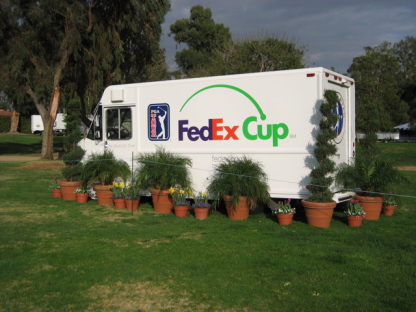 According to John Mutch, advance man at Bethpage for the PGA Tour, the course is in superb condition and the forecast finally offers hope that we'll get to see four days of golf where the only drama is created by the players. I could do without 3 1/2 inches of rough, but hey, we don't have to play it!
Of course, there is also the FedExCup playing out. In celebrating its 10th anniversary, Brian Wacker reminds us of this momentus anniversary (players who cash in remain the only known passionate supporters).
I still can't think of a major competition in the sports world that instills less passion or interest. But as long as FedEx wants to pony up $40 million or so a year for a non-playoff that could be oh-so-dramatic if it were an actual playoff, we at least have three fun upcoming courses to watch on TV (Black, TPC Boston, Crooked Stick).
Given the success of the Olympics and the many suggestions for intriguing Olympic formats offered over the last year, coupled with soft PGA Tour ratings of late, this year's playoffs may be in for a rough ratings ride. Perhaps the viewing public making an even stronger statement than normal about an algorithm-based competition will force changes that make this an actual playoff with actual tension.
Even if you have disdain for the Olympic golf concept or discussion of the Games at this point, the issue of what to do going forward in Tokyo 2020 is important for all to consider.
Why? Because the fallback excuse for golf not broadening its format horizons is consistently lame: 72 holes of stroke play is the most recognized format for deciding a champion. Therefore, we're stuck with it in the Olympics even though even the most casual fan can see it's not very Olympian. Stroke play is only the most recognized because any effort to introduce new formats has been strangled, trampled and bemoaned by players, who are paid not for their creativity and vision, but to display their golf skills. Yet as the Ryder Cup reminds us every two years when played with formats that most modern players would have torpedoed in a policy board meeting, the event produces consistency entertaining spectacles.
Olympic golf offering more disciplines and team fun should be our immediate priority, while weaving in other formats beyond the Games should also become a focus of the IGF. Showing fans the many ways golf can be played beyond card-and-pencil stroke play will do more good than any grow-the-game initiative.
Doug Ferguson of the AP declared Olympic golf a success in this story, quotes Peter Dawson mentioning how the IOC doesn't want a "trial format," and then gets to a possible solution that gets team play into the 2020 games.
The Summer Youth Olympics nailed it in China two years ago, though the field size was 32 players instead of the 60 players for the men's and women's competition in Rio.
The boys and girls each played the first three days for a 54-hole individual medal. Then, they played mixed team the next three days — 18 holes of foursomes, 18 holes of fourballs, and two singles matches to reach a 72-hole score. Sweden won the gold in a playoff over South Korea, while Italy won a playoff for the bronze over Denmark.
One idea being kicked around is to stage a mixed-team event the last two days between the men's and women's competitions. That could be either fourballs and foursomes on the same (long) day, or a 54-hole event with foursomes one day, and two singles the next day. That way, every shot would count.
My colleague Jaime Diaz made a valid point: the men’s event was such a success, that this actually frees the IGF to propose a bolder format tweak to Olympic golf instead of merely trying to keep it in the Games as is.
My polling of IGF officials, players and Olympic veterans suggests the following parameters must be kept in mind:
—60 player fields will probably not change. Even though many golfers, as expected, stayed outside of the Olympic Village because they traveled with family and spouses, golf still most can’t exceed that number.
—World Ranking points will likely remain for qualifying. But it sure would be fun to hear of a more creative way that introduces a "play-in" element that serves as a great way to create excitement going into the games. If team play is introduced, shouldn't players be able to pick their partners ala beach volleyball?
—Individual stroke play will remain, and it'll be 72 holes. A 36-hole final day could be interesting, but with five hour rounds that would be a long day for players, volunteers and the course maintenance crew.
--The IOC doesn't like competitions within competitions. Therefore three days of stroke play that determines a two-person team medal, followed by a one-day stroke play event, does not work for them. Unless its gymnastics.
—The Olympic format should be recognized in some international event of significance. Pointing to the Ryder Cup for Four-ball and Foursomes play makes our task easier. The WGC Match Play has added pool play, so that’s covered too. However, proposing rounds of less than 18 holes become an issue in this scenario.
—Mixed Events Are Big With The IOC. I haven’t thought of a way that a mixed doubles event works outside of the one outlined above by Ferguson, but the mixed team concept appeals to many. Though it would appeal more if players could select their partners and qualify (think Martin and Gerina Piller!). Golf would need to have a mixed event added to the PGA Tour, LPGA and European Tour schedules, something that is long overdue anyway.
—One week is enough for each gender. Keeping the golfers at the Games for all two weeks would be excessive. As would too many 36-hole days. Let them go enjoy the Olympic spirit. As we saw with Rickie, Bubba and the other golfers last week, having our game’s stars interacting with the other athletes not only gave a great impression, it positively changed their perspectives.
As I discussed with Gary Williams on Monday's Morning Drive, we have to get a two person team competition. Based on the feedback of those in Rio and in watching, I'd like to see one of two ideas considered (neither incorporates the mixed element).
--72 holes of stroke play, with the three low two-person teams awarded medals after 54 holes for best aggregate scores. Yes, some countries only send one player, but enough send two (or four) that world rankings could determine teams. Not a perfect concept and it's not introducing match play, but it's a competition that would spice up the first three days significantly.
--72 holes of stroke play, followed by two days of team match play. Award medals for individual performance and use the medal play days to whittle the match play down to the best 8 teams from the first four days. This gives players something to play for if they are out of the individual medal race. From the 8 teams qualifying, play a four-ball or foursomes match play event over two days to determine three more medals.
Geoff Shackelford is a Senior Writer for Golfweek magazine, a weekly contributor to Golf Channel's Morning





Copyright © 2022, Geoff Shackelford. All rights reserved.