USGA & R&A Declare Distance Gains Not Happening, And Positively No One Is Taking Them Seriously At This Point

These kids today? So cynical!

I remember the good old days when the USGA and R&A would dump one of their heaping piles of horse manure on our laps and it would be me, a few architects and the late, great Frank Hannigan calling them out. Well, thankfully while I was busy chasing some fun stories around Riviera today, others gave away time they'll never get back in their lives to point out just how absurd our governing bodies' latest report appears.

Before we get there, For Immediate Release:

USGA and The R&A Publish Research on Driving Distance in Golf

FAR HILLS, N.J. and ST. ANDREWS, SCOTLAND (February 15, 2017) -  The USGA and The R&A have published their annual review of driving distance, a research document that reports important findings on driving distance in golf.

Introduced last year, the review examines driving distance data from seven of the major professional golf tours, based on approximately 285,000 drives per year. Data from studies of male and female amateur golfers has also been included for the first time.

Key facts noted in the paper include:

Between 2003 and the end of the 2016 season, average driving distance on five of the seven tours has increased by approximately 1.2%, around 0.2 yards per year.

For the same time period, average driving distance on the other two tours studied decreased by approximately 1.5%.

Looking at all of the players who are ranked for distance on the PGA TOUR and PGA European Tour, the amount by which players are “long” or “short” has not changed – for instance, since 2003 the 10 shortest players in that group are about 6% shorter than average, while the 10 longest players in the group are about 7% longer than average. The statistics are not skewed toward either longer or shorter players.

The average launch conditions on the PGA TOUR – clubhead speed, launch angle, ball speed and ball backspin – have been relatively stable since 2007. The 90th-percentile clubhead speed coupled with the average launch angle and spin rate are very close to the conditions that The R&A and the USGA, golf’s governing bodies, use to test golf balls under the Overall Distance Standard.

Mike Davis, executive director/CEO of the USGA, said, “We appreciate the collaboration we have received, industry-wide, to access and review this data to benefit the entire golf community, which can be used to both educate golfers and advance the game.”

Martin Slumbers, chief executive of The R&A, said, “In the interests of good governance and transparency it is important that we continue to provide reliable data and facts about driving distance in golf.

“Driving distance remains a topic of discussion within the game and the review provides accurate data to help inform the debate.”

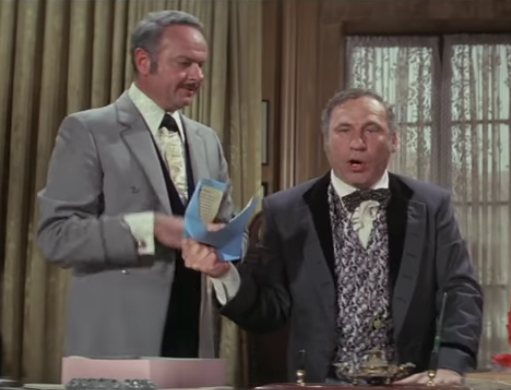
Furthermore, Governor William J. Lepotomane chimed in: "Gentleman, this study is the finest of its kind ever published!"

Now, I write to you from Riviera where, when I started hitting balls on the driving range tee in the late 80s, a 10-12 foot fence was in place. Then it went to 40 or so feet in the 90s, 80 feet in the 2000's and since 2012, for the PGA Tour's annual February visit, a special extension is added to raise the driving range fence to 120 feet.

The same fence extension will be needed this August when the U.S. Amateur comes to Riviera. Here's guessing the USGA would not appreciate an invoice to cover the cost of installing a temporary addition since, after all, today's report says recent distance gains are a figment of our imagination.

Reading today's report, GolfChannel.com's Will Gray writes more presciently than he probably realizes given that the USGA leans so hard on its outside PR firms to spin certain news:

As any PR firm can attest, statistics are a versatile tool. Choose the right data points, frame the right time period, and you can quantify support for nearly any argument. Such is the case with this study, the second in as many years released by the game’s governing bodies and one that simply continues to miss the point.

And I enjoyed this key point by Gray:

The study’s data focuses not on distance outliers, but instead on the large swath in the middle where, for the PGA Tour, the average drive reportedly lingers around 290 yards. But those top-end outliers have become increasingly noticeable in recent years as more and more marquee players launch towering drives.

A whopping 27 players cracked the 300-yard average last season on Tour, 15 more than the 2010 season and 18 more than in 2003. Individual drives over 300 yards, which made up just 26.56 percent of tee shots in 2003, accounted for 31.14 percent last season.

Then there’s Rory McIlroy tweeting out other-worldly Trackman data, Dustin Johnson bending Oakmont to his will and Henrik Stenson lifting the claret jug by relying not on his driver, but instead his trusty 3-wood.

And don’t forget about Ariya Jutanugarn, who powered her way to LPGA Player of the Year honors while barely touching her driver in 2016, mostly hitting 2-irons off the tee.

Those are data points that the study fails to address, although the findings insist that PGA Tour players hit driver on “measured” driving holes more than 95 percent of the time last year.

James Hahn even took to Twitter to agree:

Rex Hoggard talked to players and equipment reps at Riviera and noted the skepticism about the USGA/R&A launch conditions take.

According to multiple equipment representatives from various companies, the average golf ball spin for a driver on Tour is down about 500 rpm from ’03, while the average launch on drives is up between 2 and 4 degrees. Without getting lost in the science of the golf swing and new technology, lower spin and higher launch means more distance and it’s the players with the highest clubhead speed that enjoy the greatest benefit from this evolution.

Put another way, more clubhead speed is the byproduct of better athletes, not better equipment, and modern technology can be maximized for these players, which at least partially explains why the number of players averaging 300-plus yard drivers has tripled since 2003.

“You have kids like Justin Thomas who are using their bodies in ways that we weren’t taught and they swing for pure distance with their drivers,” said Johnson Wagner, who only half-jokingly refers to himself as a “dinosaur.”

“I think it’s working out, it’s launch monitors, it’s coaching. I don’t think it’s equipment; the clubs are what they are and have been for the last 10 years. It’s just everything and there’s nothing you can do.”

Oh don't be so sure!

Tiger Cancels Press Conference Due To On-Going Back Spasms

The Tiger Woods Foundation benefits from the Genesis Open proceeds and his TGR Ventures is running the tournament now.

Woods was scheduled for a Tuesday press conference even after he chose to miss the event due to back spasms. The presser was moved to Wednesday to coincide with appearances on the property related to his Foundation and Woods Jupiter restaurant's satellite location overlooking the 10th hole.

Late Tuesday night, however, the media received this notice:

After receiving daily treatment the last several days on his on-going back spasms, Tiger Woods has again been advised by doctors to limit all activities and will not hold a press conference Wednesday. It will not be rescheduled.

I never quite understood how Woods could appear and answer the inevitable health questions in a way that left anyone feeling good. Still, that his back is keeping him from sitting or popping in on-site takes the latest setback's seriousness to another level.

ShackHouse 27: Riviera Week And John O'Donnell

It's LA week on the PGA Tour so we talk some Riviera, some Spieth at Pebble Beach, some Tiger and to get in the LA golf mode, we interview Johnnie-O founder John O'Donnell fresh off of caddying for brother Chris.

As always, you can subscribe on iTunes and or just refresh your device subscription page. Here is the direct link to this week's show.

Here is The Ringer's show page.

Same deal with Soundcloud for the show, and Episode 27 is here to listen to right now!

As always, ShackHouse is brought to you by Callaway, who have unveiled the new Great Big Bertha Epic driver, Microhinge Technology-fueled Odyssey putters coming to stores this Friday.

And this week, promo code HOUSE employed at CallawayGolf.com for orders over $100 gets you free swag!

Bring your love for golf talk online to the Community where House and I debut a debate this week on the West Coast Swing vs. Florida Swing.

And if our coastal bickering bores you, you can always find out about testing and review products before they are in stores, get custom fitting advice and more at the FREE Community.

Perth Super 6 And Other Bold Formats: Too Much Too Soon?

Given the conservative nature of golf, I'm slightly concerned about the European Tour's effort to spice things up might a lot for the golf world to take in, as I explained to Damon Hack today on Morning Drive. Will it all just be a bit too much out of the chute?

That said, it's exciting to see outside-the-box thinking with events like the Perth Super 6 this week and May's just-announced GolfSixes outside London. But I'm thinking we could save the pyrotechnics for year...four. Or never.

Alex Noren and Louis Oosthuizen headline the Perth event this week. Here is the format:

After two days of strokeplay qualifying, the leading 65 players and ties qualify for the third round which is typical of most tournament structures. However, it is from that point on things begin to change.

Those players who have made the initial cut on Friday evening are all playing for a place in the final 24 who advance to a knock out match play contest on Sunday.

The leading eight players at the completion of 54 holes earn the right to sit out the opening round on Sunday with the winner of those first round matches advancing to face them in round two in what effectively becomes the round of 16.

Each match is played over six holes with a specially constructed playoff hole to decide tied contests.

The "Caddyshack" President

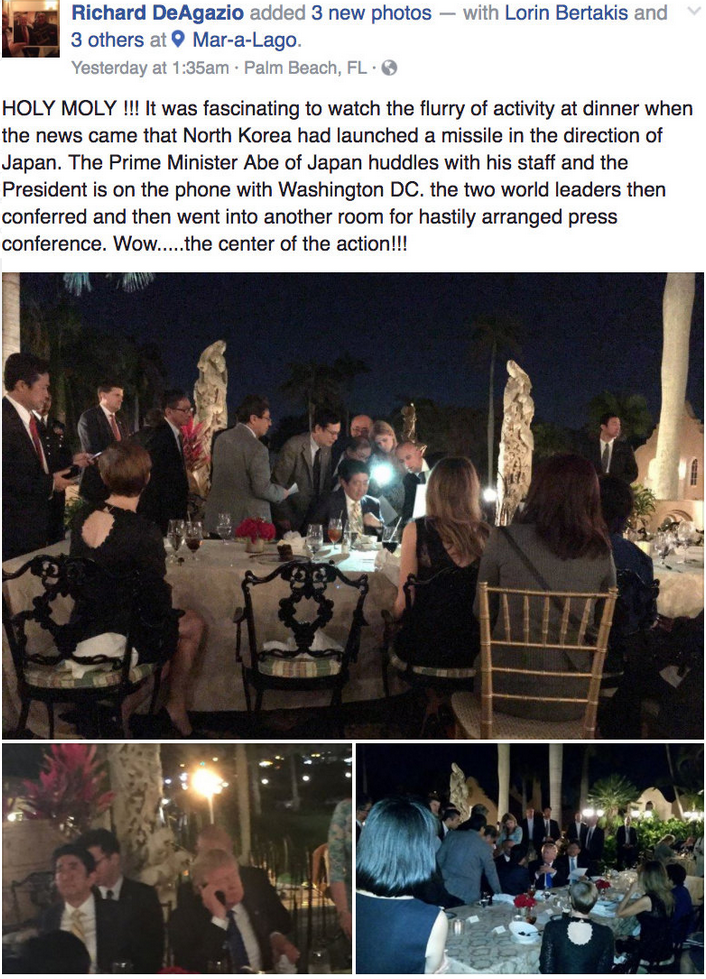
Elizabeth Williamson takes President Trump to task for turning the Mar-a-Lago ballroom into the Situation Room so that a response to North Korea's missile test could be sorted out.

As members shared photos of the man charged with carrying the nuclear codes on social media, the President openly discussed a proper response with Japan's prime minister. For this, Williamson invokes the Al Czervik metaphor.

Though President Trump never asked a bartender what time he was due back in Boy's Town or hit on Judge Smails' wife...

One would think leadership of the free world would have scratched Mr. Trump’s itch for publicity. But this is the man who called reporters using a fake name to generate stories about himself; who introduced a member of one of his clubs to a Golf Digest reporter as “the richest guy in Germany,” instead of by name; who looks pained when having to share the podium with anyone, from Sarah Palin to the prime minister of Canada. This is rule by Al Czervik, Rodney Dangerfield’s character in “Caddyshack”: a reckless, clownish boor surrounded by sycophants, determined to blow up all convention. But this is real life, and every time Mr. Trump strikes a pose, the rest of the world holds its breath.

Easy there, Czervik is no boor! Ok, maybe a tad...


The Real Rio Story Or Protest And Killings: Neil Cleverly Speaks

If you've been on social media you've probably seen Neil Cleverly's account of the "real" Rio he experienced as superintendent of the Olympic Golf Course.

Coupled with Stephen Wade's update on all of the Olympic venues in dilapidated shape, and it's amazing the course ever got built.

Regarding the protests outside the course, Cleverly says...

The protests started as a few and built up. The rumour was that a local politician didn’t like the developer so he was paying people – 100 real a day, which is about £25, to sit outside and throw abuse. That way you get people turning up, the most they could otherwise expect was £250 a month.

The sustainability ones were the most fanatical, they were saying we were killing animals, plants and removing indigenous plants and we weren’t doing any of that. The amount of times we invited them to see what we were doing– they never came in so we knew they were just there to cause trouble, they didn’t give a shit about the environment.

Proposal Made To Restore Musselburgh Links "To Former Glory"

Avril Campbell reports that an Edinburgh-based company has approached the East Lothian Council with a £10 million plan to restore Musselburgh's Old Course, six-time Open Championship host and arguably as important as any course in the development of golf. 

Campbell writes:

Blue Thistle Ltd, the Courier has learned, has approached council members to discuss “a bold and exciting proposition” which would see the nine-hole, par-34 course “regenerated, restored and recreated to the style and reputation of its former glory”.

East Lothian Council says it is “aware of a commercial desire” to “take over” the course.

A Blue Thistle Ltd spokesman said it hoped to capture the heritage of the course and “broadcast” it to a global audience. It wants to return the course to its 1896 set-up, with lost features recreated and placed in new positions.

He said: “This will challenge the modern golfer as well as the traditionalist who likes to play with hickory-shafted clubs. Some new tees and greens will be built. A course with the quality of an Open Championship venue is the goal.”

One councillor, John Caldwell, is already “vigorously” opposed to the plan. However, given that the course has been in danger from elimination, has been neglected at times and has recently seen plans approved that will alter the historic Mrs. Forman's, the plan should be considered.

Most of you know I think this is one of the great places in the game and a model for the kind of intimate community golf we need more of. Oh, and it's an immensely important place in the history of our sport and the golf business.

Spieth's Ballstriking Carries Him To AT&T Title, Carson Daly Wins Pro-Am

Kevin Casey of Golfweek.com has the notes wrap up of Jordan Spieth's 2017 AT&T National Pro-Am win.

Most striking Sunday was how Spieth's ballstriking seemed to carry him down the stretch as his putter cooled off. For someone often wrongly accused as being merely a great putter, the ballstriking display had to make his critics take notice. Ryan Lavner with a wrap of Spieth's ninth PGA Tour win, including this:

In 2015, Spieth ranked in the top 15 in strokes-gained driving, approaches, short game and putting. It was clinical. But Spieth’s ball-striking tailed off last season, and he said he worked as hard as he ever has during the offseason with swing coach Cameron McCormick.

“He’s always hungry,” Greller said. “He’s not somebody who is ever going to coast. It’s fun to work for a guy like that. Always hungry. Always driven.”

The hard work has paid off. Though he has bemoaned a cold putter – the middle two rounds boosted his confidence, pouring in putts on spongy, bumpy greens – Spieth has been one of the best iron players on Tour and ranks inside the top 10 in strokes gained overall.

“People think it’s only his putter,” Greller said, “but he’s incredibly well-rounded when you really break down the stats.”

In Pro-Am news, 10-handicapper Carson Daly (10!) teamed with Ken Duke to shoot 63 sunday and finish at -33 net to win. James Raia reports for the Monterey County Herald.

And flashing back to Saturday, Bill Murray avoided letting Phil Blackmar talked to him, and appeared to have a beef with the cameraman.

The final round highlights from PGA Tour Productions:


Golf Industry Show Wrap: VR, Recycled Sod, Digital Grass Printing And Other Fun Stuff

The golf industry convened in Orlando last week to compare notes, take in seminars, talk turf and debate who reports to the more insane membership.

As we have the last few years, field producer extraordinaire Donny Goertz and I roamed the floor hoping to stumble on some fun stuff and this year may have been the best set of innovative products yet.

We talked with GCSAA CEO Rhett Evans about the state of the industry.

We took in the insane construction job supervised by the Golf Course Builders that created an undulating area for mower testing and real bunkers showcasing products.

One of those products was recycled soccer field artificial turf now being used for sodwall bunker stacking, changing a bunker face lifespan from 5 years to 20 or more.

We saw an amazing Pixar-like company that can simulate what your renovated or new course would look like and now is adding VR to the equation as well. Amazing!

And maybe our favorite of all, the people behind this:


We talked to the founder of New Ground Technology, Pete Davis, who explained the designs you've seen in outfields around Major League Baseball and how you can expect to start seeing them on golf courses. With, of course, some imaginative steps taken by tours and sponsors to more cleverly plant sponsorship onto turf in a responsible way.