Deadlines! Tour TV Opt Out, Proposed Rules Of Golf Changes

Just a reminder to the folks down in Ponte Vedra, you have until September 1 to get out of your current network deal and imagine a new television future! Oh, right, you know this.

Of more interest to the majority of golfers is this week's deadline, also September 1, to submit suggestions for the upcoming Rules of Golf re-thinking.

I'm still not a fan of dropping the ball one inch from the ground or tapping spike marks, and we'll see if the governing bodies heard from many on those topics.

The SI/Golf.com gang had a good (and perhaps motivational exchange) on this and many other topics in golf:

Ritter: We're getting there, USGA! I like the proposed changes, but we still need to do more to address the one true scourge of golf: slow play. How about a shot clock on Tour—just for a trial period to see how it goes?

Sens: Hate to sound like Ritter's pet parrot, but I'll agree with him again here. I just played a weekend round that took five hours and 50 minutes. Inexcusable. And clearly the result of too many people emulating Tour pros in all the wrong ways. Put the pros on a tighter shot clock and enforce it. Playing quicker just becomes a necessary skill to be successful, like a QB who gets his passes off before the rush hits. In the meantime, that pesky stroke-and-distance matter could still use some addressing.

Shipnuck: Yeah, ditching O.B. and making all of it red stakes would be a great start. While we're at it, how about a free drop from sand-filled divot holes in the fairway, too?

Bamberger: The rule changes are so minor they will make no impact on the game as we play it and only a slight impact on the elite game. Getting out some red paint would have been a real change and I think an improvement.

NY Times Highlights Work Of The Bridge Golf Foundation

Nice work by the NY Times' Paul Rogers highlighting the state of New York's Bridge Golf Foundation in a lengthy Sunday piece (thanks reader BB for sending). Johnny Milano's images accompany the piece.

Designed to be a “model for progressive gentrification” through its work with underprivileged and mostly black adolescent boys, the foundation is the vision of The Bridge Golf Club founder Robert Rubin and former golf writer Farrell Evans.

And it's not all about golf...

Both the Bridge Golf Foundation and the Eagle Academies include character education in their curriculums to encourage students’ social and emotional development. This summer, for example, the Bridge students read “The Pact,” a memoir about three young black men who, while growing up in Newark, promised one another they would become doctors and overcame hardships to fulfill their dream.

DJ Beats Spieth In Energy-Light Playoff Opener

What a strange weekend at the immaculately groomed Glen Oaks, as the first Northern Trust to replace Barclays fell a tad flat despite a fantastic leaderboard.

Maybe it's the time of year on Long Island (better things to do), the venue (exclusive club), every fan turning into a documentarian (cell phone video and photos allowed), chip-out rough (ugh!), but for a showdown with two top players this one seemed a bit low on energy.

Your theories?

If I had to pick an order, I'd blame time of year impacting Long Island fan interest, player fatigue at this point of a long season and a lack of urgency in the playoff format that might inject some life. Plus, Glen Oaks Club did a nice job but it's hard to beat Bethpage energy.

Dustin Johnson picked up his 16th victory in a playoff under sunny skies and perfect conditions, holding off Jordan Spieth in week one of the FedExCup playoffs. Will Gray's roundup of notes from the week here.

Johnson took an aggressive line at 18 in sudden death, setting up a short sand wedge shot.


Jarrod Lyle: "I am in remission"

The golf news has paled a bit this weekend as Texas faces catastrophic hurricane-induced flooding but there is at least this piece of news about one of the best people in the game, Jarrod Lyle.

Social Media Police Disbanded: Tours Cave On Fan Phone Policy

The evolution of fan rules for cell phones at golf tournaments has shifted gradually everywhere but Augusta, Georgia. Still it was fascinating to see the PGA Tour and European Tour both allow fans to shoot photo and video this week (Casey/Golfweek).

As noted by Casey, the main hope here is more social sharing from fans.

For the PGA Tour, its new policy also allows spectator photo and videos taking during tournament days to be shared on social media platforms.

Live streaming and shot-by-shot coverage are still not allowed, and the new policy also states that phones must be on silent at all times and use of flash is prohibited.

But select media that dares to live Tweet a round in progress will still face losing their credentials, and don't you forget it, worthless non-PGATour.com scribblers!

The European Tour's video announcing the changing going forward:

Playoff Fever! Stars Looking Forward To The Off-Season

Maybe golf's Playoffs(C) are so rigorous and stressful that they invoke longing for a vacation. Or, not.

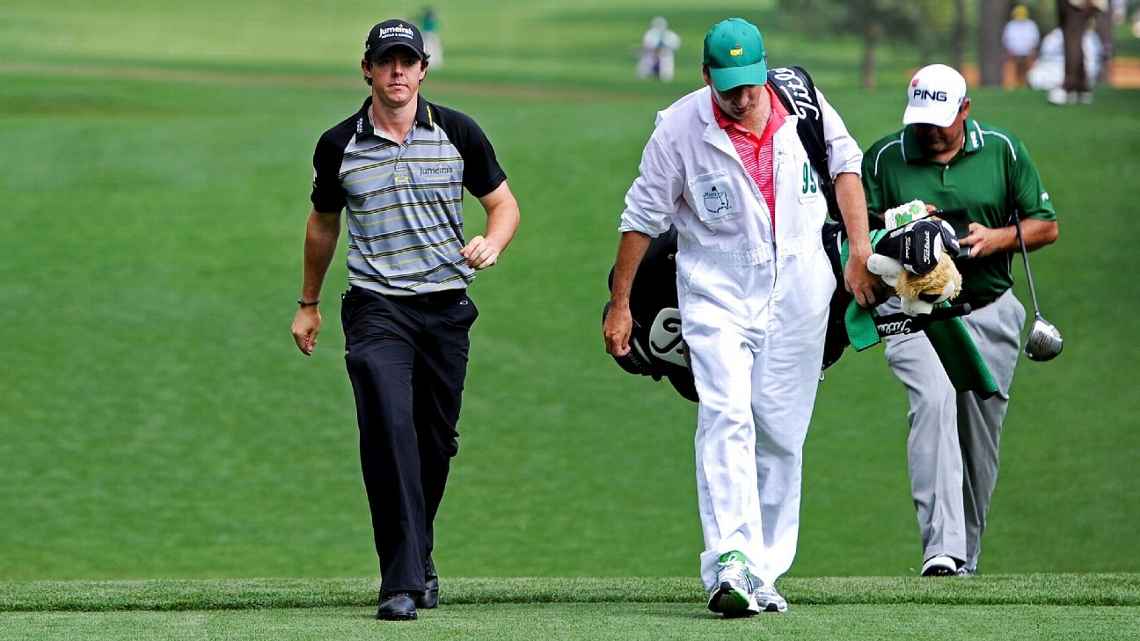
Nothing screams playoffs like athletes telling us how they are looking forward to a break. But this is the FedExCup, where stars are coddled by points resets that help get them through all of the stages. Something tells me if these were actual playoffs with traditional eliminations for poor play, that Rory McIlroy's and Bubba Watson's wouldn't be telegraphing their much needed breaks.

Rory on Tuesday, courtesy of Kyle Porter at CBSSports.com:

"I'm not at 100 percent, but I'm at a percent where I feel like I can still compete," McIlroy told reporters. "I want to get a win before I shut it down for the season, so I'm excited for the next few weeks, but I'm excited for the next three months after that. Because more than likely I'll take some time off and regroup.

"When's the last time I've been able to take that much time off and focus on myself and my game. We don't get an off-season anymore, so to be able to get that time to afford myself, I'm really excited about that as well."

After an opening 73 on top of many okay finishes by his high standards, might these playoffs be more interesting if they were sending McIlroy home early? And given that he's not getting any help from his caddie, as David Dusek at Golfweek points out following a day watching Rory play, might the urgency be there with a format that endangers his ability to advance in the playoffs.

Then there is Bubba Watson, who has worked twelve weekends in 2017 even after getting a major wake-up call a year ago when passed over for the Ryder Cup team. Still, he's ready for a break as soon as the playoffs are over.

From Rex Hoggard's Golfweek story:

“You know, truthfully, when I'm done with the playoffs, no matter where that is, I'm taking at least four and a half months off. I won't play until next year,” said Watson, who opened with a 3-under 67 and was tied for fifth at Glen Oaks. “I don't know about you, but traveling every week, my kids started kindergarten. ... If I had to choose golf or family, I'm going family every day of the week.”

Algorithm writers: let's figure out a points reset that helps these stars begin their hard-earned vacations early!

"Feeding off each other can have positive, negative effects for pros"

Jason Sobel takes on the tricky subject of pairings that go well or not so well.

The ESPN.com writer talks to a nice cross section of players and it's fascinating just how influential the momentum of a group plays in pro golf. Rory's comments on the impact of pairings was of most interest, but this was also fun (and not surprising):

Ask most touring professionals and they'll usually insist that there are extremely beneficial playing partners and ... other guys. Which is to say, when players receive their early-week text messages revealing first- and second-round groupings, most will celebrate the positive discoveries, but won't grouse about potentially negative ones.

"I usually play well when I have a fun group, guys who I like," Pat Perez said before the opening round of The Northern Trust. "This week is going to be fun as s---. I've been playing against [Charley] Hoffman since I was 7. [Brian] Harman is cool as s---. We're going to have a great group."

Roundup: Billy Payne's Legacy As Masters Chairman

Jaime Diaz of Golf World says Billy Payne's "accomplishments far outnumber the four previous chairmen who followed Jones’ and Roberts’ legacy" and gets an exclusive sitdown with the retiring Chairman.

Among the topics covered included the Masters ball idea...

“That would be a very drastic step, and we would hope before that was necessary, there would be a collaborative decision. We love to follow collaborative decisions. Not be a loner. But we reserve the right to do so if we think it’s needed. We retain options about our course. So, I would suspect we would exhaust those before we would unilaterally jump ahead of others.”

The Augusta Chronicle's John Boyette also talked to Payne about a range of accomplishments. The outgoing chairman offered this on his successor, Fred Ridley:

“I think he’ll be, as I tried to be, another great custodian,” Payne said Tuesday in an interview with The Augusta Chronicle. “I think all chairmen after our first two founders are custodians of their dreams and aspirations. We try to maintain it and, if we can, make it a little better. He’s going to do that beautifully.”

The Chronicle also ranks Payne's best moments and offers this history of the chairmen. Boyette also notes that Ridley will be the first chairman who has actually played in The Masters.

AP's Doug Ferguson leads by writing that "Payne ruled more with an open mind than an iron fist" and offers an extensive history of his tenure.

ESPN.com's Bob Harig focuses on the admission of female members and the many major construction accomplishments achieved during the Payne years.

Christine Brennan for USA Today on Payne's legacy of supporting women's athletics in general.

It was no surprise that the man who ran the 1996 Summer Olympic Games in Atlanta — an event known as the “Women’s Olympics” for the tremendous success of U.S. women in soccer, softball, basketball, gymnastics and swimming, among others — would be the one to bring staid, exclusionary Augusta National into the 21st century.

In fact, in the early 1990s, as the young leader of the upcoming Atlanta Olympics, Payne wanted to make golf an Olympic sport, with this kicker: staging the competition at Augusta National. He also was going to demand that the competition include women.

At the time he was not a member of the club, and he knew that women were not allowed to be members, but his idea was to show those old men of Augusta National what women could do.

Rex Hoggard for GolfChannel.com:

In many ways Payne – whose leadership style was born from his time as president and CEO of the 1996 Atlanta Olympic committee – was both a consensus builder and an autocrat, a leader who understood the challenges the game faced and Augusta National’s unique position as a conduit for change. That he was willing to use that influence was, quite simply, an act of leadership.

Hoggard also has player reaction, including the reactions from Phil Mickelson, Jordan Spieth and Bubba Watson.

Josh Berhow at Golf.com reminds us that Payne also pushed things on the television rights front.

During his tenure, Payne was behind the Masters' new TV contract with ESPN in 2008 — which broadcast and elevated the Masters Par-3 Contest —

On that topic, a statement from ESPN President John Skipper on retirement of Payne:

“It has been my pleasure to work with Billy Payne during his tenure as Chairman. He has wonderfully maintained the preeminence of the world’s greatest golf tournament while innovating effectively in digital media and expanding the footprint of the tournament, the club and the game of golf both literally and figuratively in Augusta and throughout the world. I wish him well-earned satisfaction in his accomplishments and pleasure in his deserved retirement.

“Billy’s last accomplishment was leaving the club in the capable hands of Fred Ridley. We look forward to working with Fred for many years.”


“Golf is trying to shed its image as an old man's sport and is luring bloggers to push that message”

CNBC's Michelle Castillo reports on the PGA Tour’s efforts to reach millennials and women, using the world “hired” to describe the bloggers helping to spread the gospel of PGA Tour golf.

Castillo focuses on fashion blogger and scarf purveyor Alexandra Dieck, proprietor of Lexicon of Style, who will be employed to cover The Northern Trust in New York.

Dieck, 26, is among a handful of social media influencers hired by the PGA Tour to tout the sport to younger audiences during the Northern Trust tournament this week. Dieck's social media peers will include other fashion writers, foodies and mommy bloggers.

"We are creating a totally new experience in addition to great golf that is inherently more social and fun, and we want more people to know about it," said Julie Tyson, PGA Tour's vice president of business development. "We are widening our circle of storytellers to include influencers we know our fans already look to for insights and information."

Widening the circle...

Billy Payne Steps Down As Masters Chairman

To be succeeded by Fred Ridley. The news comes as a bit of a surprise given that Chairman Billy Payne was almost finished overseeing a few final projects. However, with Hootie Johnson's recent passing and the growing success of so many other initiatives spearheaded by Chairman Payne and a bad back testing his spirit, perhaps the shift to Chairman Emeritus should not be a surprise.

The club's announcement:

Billy Payne, Chairman of Augusta National Golf Club and the Masters Tournament, announced today that he is retiring from his position at the beginning of the Club season on October 16. Payne will be succeeded as Chairman by Fred Ridley, who currently serves the Masters Tournament as Chairman of the Competition Committees.

Payne, 69, has served as Chairman since May 21, 2006. In retiring from this role, he will assume the title of Chairman Emeritus.

During his tenure as Chairman, Payne was a collaborative presence, bringing together golf’s leading institutions to implement new ways to expand the reach of the game, such as his vision for the Asia-Pacific Amateur Championship, Latin America Amateur Championship and the Drive, Chip and Putt Championship. He worked to make the sport more welcoming, including the addition of women into the Club’s membership and the creation of the popular Junior Pass Program during the Masters. In keeping with the tradition of constant improvement established by Clifford Roberts and Bobby Jones, Payne directed the significant expansion and development of the Augusta National campus, leading to the creation and improvement of numerous facilities and services enjoyed by the membership and visitors to the Tournament. He also encouraged innovation, especially through the development of digital media offerings and emerging television technologies, in an effort to help reach new and younger audiences.

“The privilege I experienced serving as Chairman of Augusta National and the Masters was far greater than I could have ever imagined,” Payne said. "Just as nothing can prepare you for the unique responsibilities and important decisions that come with this position, it is equally impossible to anticipate the many joys and, most importantly, the wonderful friendships that are the ultimate reward of service. This honor, however, is too great for one person to claim as their own for too long a period of time. I retire knowing it is simply the right thing to do – and at the right moment – to open the door and invite someone new to be called upon to lead, bring forth new ideas and craft a new vision that will honor our Founders and serve the game of golf for many years to come.

“I am now proud to call upon my good friend Fred Ridley to lead Augusta National and the Masters to a future that I am confident will hold new promise, while always being faithful to the principles of Bobby Jones and Clifford Roberts. Fred will be an excellent Chairman who will serve with my complete and enthusiastic support.”
Ridley will become the seventh Chairman of the Club and Tournament. Those who previously held the post are Roberts (1933-77), Bill Lane (1977-80), Hord Hardin (1980-91), Jack Stephens (1991-98), Hootie Johnson (1998-2006) and Payne.

Riviera Wants A Lakers Courtside-Seat-Style Ryder Cup

While the U.S. Amateur proved a good fit for Riviera given the weather and sensational match play setup by the USGA's Ben Kimball, it was not a big draw in LA. The miniscule crowds, even more miniscule member support and commitment to the possible 2028 Olympic golf all but rules out any return to the major championship world. The U.S. Open is also slated to return to Los Angeles in 2023 at The Los Angeles Country Club.

Apparently in the mind of the club's "corporate officer" Michael Yamaki, the amateur has positioned Riviera for the first ever boutique Ryder Cup. His reasoning? Folks in LA overpay for Laker courtside seats and gasoline at San Vicente and Allenford, so they'll do the same at Riviera for a massive-scale golf event like the Ryder Cup, PGA or U.S. Open

From John Strege's Golf World item:

“I’m still talking with the PGA of America. At some point they professed they’d like to see a Ryder Cup on the West Coast. I think we could do that event. I’d still like the PGA Tour [to consider] a Presidents Cup here.”

And this pearl...

“Its [the USGA] perception of us here in Southern California is that we’re just in our hot tubs or surfing,” Yamaki said. “They don’t think that we will support sports in the same way as the East Coast.”

Given the piles of tickets from the U.S. Amateur, I'm guessing the USGA's mind hasn't been changed.

Rio A Year Later And Golf's Place In The Games

Rex Hoggard filed a series of one-year-later GolfChannel.com stories and accompanying video report (below) on golf's Rio return. He looks at the state of the course, the increased funding in developing countries and the long term plans for the Rio course.

Some of the images of decaying venues are hard to see knowing that a year ago such joyful and memorable competitions were taking place, but it's a tribute to the new Rio course CEO Mario Galvo that Gil Hanse's creation is alive and well.

Here is Hoggard's story on the course, including this...

An Agence France-Presse report last November described a layout overgrown with natural vegetation and nearly devoid of players. But as the anniversary of that historic hand-over passes it appears the rumors of the layout’s death have been greatly exaggerated.

“The visions of an Olympic course that was going to be overgrown and left to waste didn’t occur. There seems to be a genuine desire to create white elephants when the Olympics are over,” says Mark Lawrie, the R&A’s director for Latin America and the Caribbean.

In April, when Lawrie returned to the Rio course, he found a much different reality. Although he admits the volume of play hasn’t been what officials hoped for, the course itself remains playable with conditions Galvão contends are better than what the world’s best competed on for medals a year ago.

This, for those inspired by Aditi Ashok's play last year in Rio, will serve as a statement backing what IGF organizers hoped would happen.

“Prior to golf coming back to the Olympics, there was very little that the [Indian Golf Union] got from the sports ministry in India,” said Dilip Thomas, the executive vice chairman of the Indian Golf Union. “Golf was also categorized as an elite sport and supposedly played by wealthy people. After the Olympics and following Aditi's performance in the early part of the event, the Indian government has started to look at golf through different eyes and now consider it to be a medal prospect for the country in the future.”

But if Ashok’s impact on golf in India, where an estimated 1 in 10,000 people play the game, was predictable, a year removed from Olympic golf’s return, it has resonated beyond the Rio leaderboard.

In underdeveloped golf countries the Olympics provided a unique opportunity to educate the public, which a recent International Golf Federation study suggests goes beyond the reach of even the game’s majors and other marquee events, as well as a chance to leverage the game’s newfound status as an Olympic sport.

The video piece with interviews from key figures a year later: