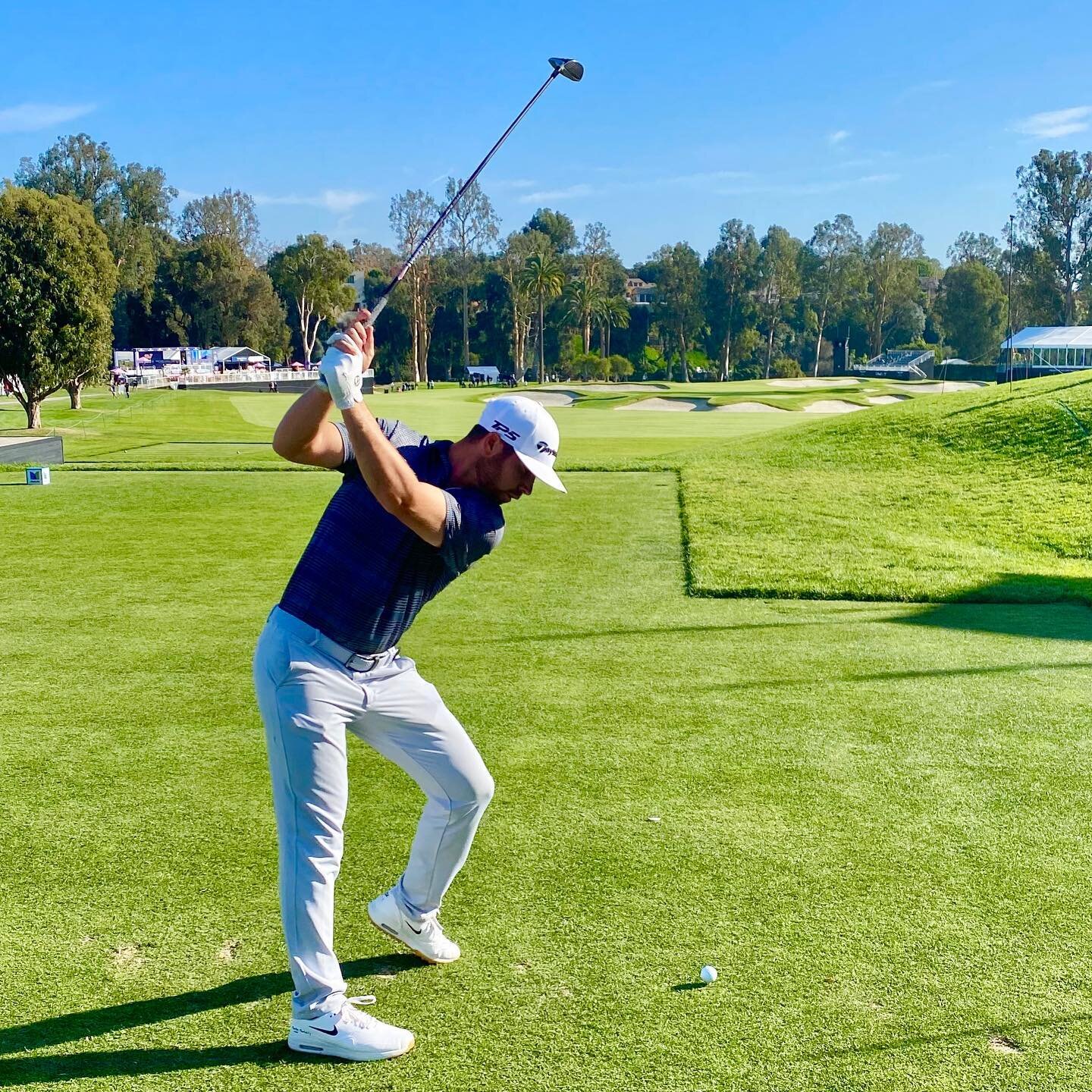
Watch An Elite Golfer Demonstrate Role Of Athleticism In Distance Gains
/For those insisting athletes and not engineers have done the heavy lifting over the last 20 years...

It’s back!
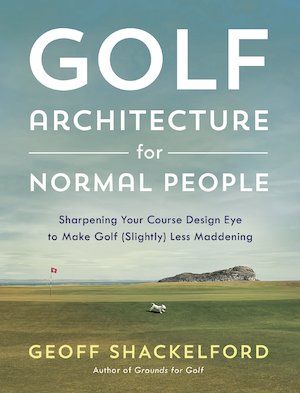
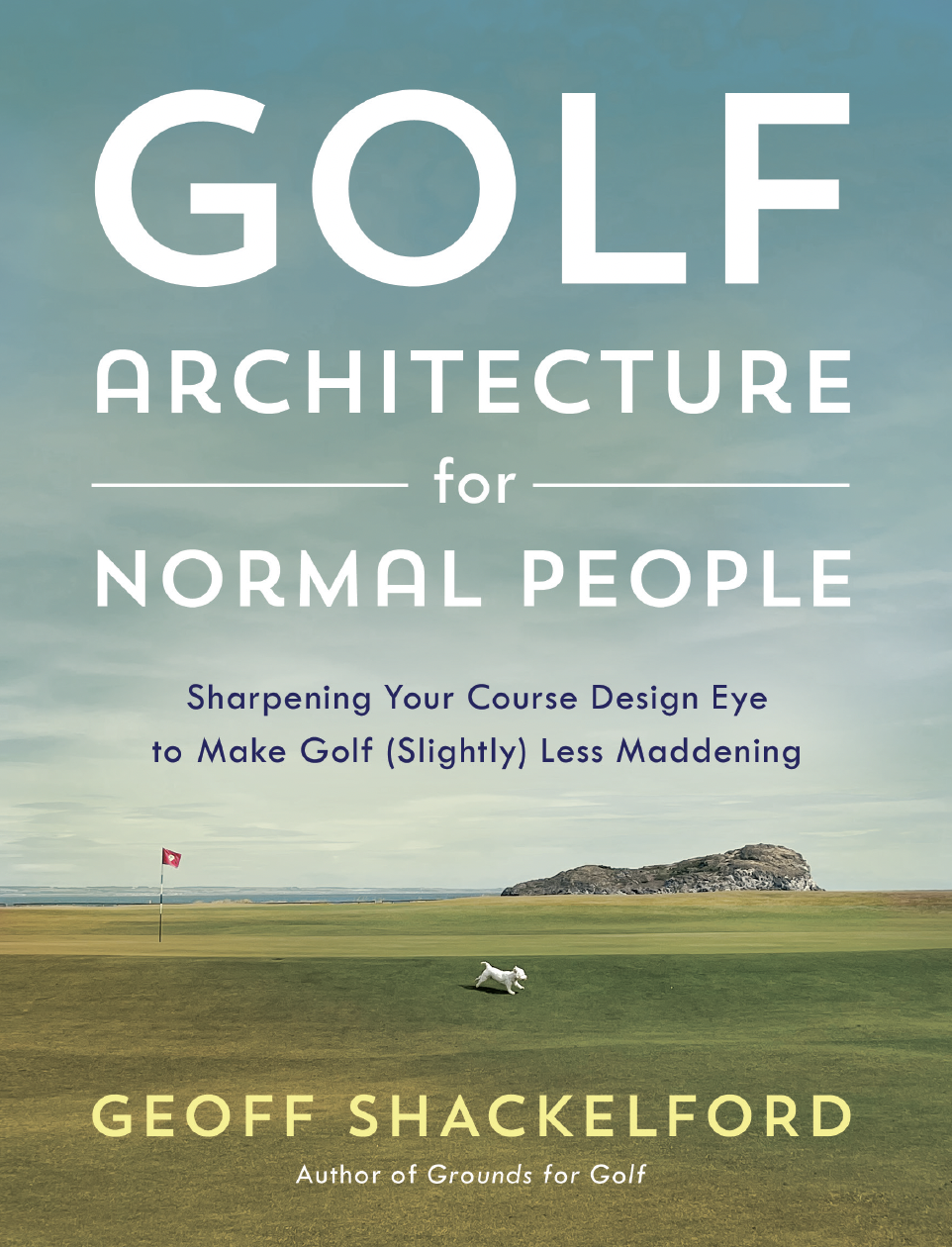
Twenty years later Tatra Press has kindly allowed me to bring back Grounds For Golf now that golf architecture is of more interest to the masses. A new Introduction looks at what’s driven the interest growth and two new chapters I had a blast adding (plus a few edits to keep things up-to-date).
The Amazon purchase page for the book arriving June 15, 2026.
For those insisting athletes and not engineers have done the heavy lifting over the last 20 years...
A Trackman comparison between a persimmon wood/balata ball and a modern driver/Pro V 😳🤔😜 pic.twitter.com/rOFU0rx3ZJ
— Jonathan Yarwood (@JonathanYarwood) May 7, 2018
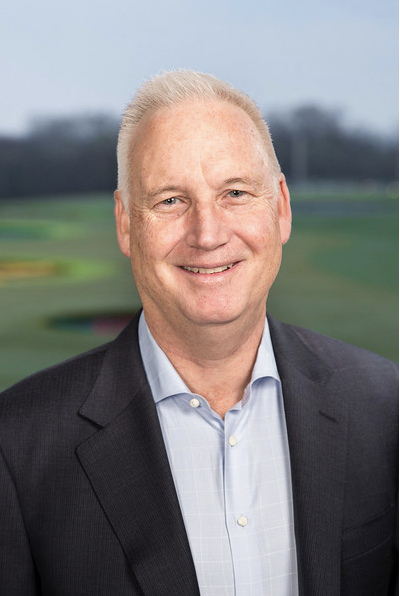
That sounds dangerous for any good thing. But so far Topgolf has grown quickly while seemingly maintaining quality experiences and just staggering numbers, as Golfweek's Martin Kaufmann notes:
These facilities combined to average 35,000 visitors per day in 2017. To put that in perspective, that’s roughly equivalent to the number of rounds an average 18-hole golf course will do in a year.
Of course, there's a big dose of B-speak and ambition for the company, which is looking to expand on its 41 by adding about one per month. Also high on the list is more Toptracer expansion and the SwingSuites "product" for arenas, hotels and other smaller locations, as is becoming a media company. Though what that part means is not yet clear.
But that’s just the launching point for the Topgolf brand. Erik Anderson, executive chairman of Topgolf Entertainment Group, uses terms such as “global brand” and “21st-century sports entertainment media community” to describe the company. That’s a reflection of the reach that he envisions for Topgolf.

Thanks to reader Chuck for spotting Robert Blumenthal's Golf Conversation with longtime Oakmont and Seminole professional Bob Ford, who covers a range of topics.
But given that he's been associated with two classic courses, the comments by Ford related to distance and the ball stand out.
GC: Speaking of Jack, Tiger has come out for scaling back the distance of the golf ball for the pros. The head of Bridgestone Golf said the same thing yesterday.
BF: For the elite game? I would tell you that in the last three months, I’ve never heard more comments about it and more people are getting on the bandwagon to do it. Mike Davis is a member here. He’s like, “My goal [by the end of] my career here is to get the ball rolled back.” So I would be very surprised if it doesn’t roll back.
So there's that. And more.
GC: Do you think anyone understands what “bifurcation” means?
(laughter)
BF: I hope so. It’s been a bad word. I don’t quite know how they’re gonna do it. You and I don’t want our ball to go shorter, we know that. Believe it or not, they have developed a golf ball that at our speed, it doesn’t change. At the speed of 108 or more miles an hour, it starts to go down.
I just want to see this supposed ball in action. In our lifetimes. Once.
Or, maybe roll them out at the Crump Cup or the Hugh Wilson or some other old school event and get some feedback?

Reading over John Turner's Golfweek account of the Wells Fargo Championship, it's hard not to be struck by a second win on a very limited schedule for Jason Day, and that shot of the day at 17.
No typos here...
The most stunning shot of the tournament came at its toughest (playing more than half a stroke above par Sunday): the par-3 17th. Following his birdie at 16 to pull one ahead of Wise, Day opted for 7-iron staring down at a green he said looks “real tiny” from 231 yards away with water short, left and long. The plan was to fly the ball into an upslope on the green, killing the momentum and letting it settle near the pin.
In Day’s words, here’s what happened next:
“When I hit it, it was on a cracking line, it was beautiful,” he said. “And then it just had this massive bounce, hit on the downslope and fortunately hit the pin, which was nice, and went to about two or three feet. Things like that are what you need to win golf tournaments.”
RIGHT on the number! 🎯 @jasondayofficial has his eyes on the prize @wellsfargogolf.
A post shared by PGA TOUR (@pgatour) on
The final round highlights from PGA Tour Entertainment:

Jonathan O'Connell, David A. Fahrenthold and Jack Gillum take a close look at the Trump Organization's shift from loans to cash or mostly-cash purchases in recent years.
The President's company has infused way more of his own money into golf than he has with is past real estate ventures. The Trump Organization did not dispute the figures listed in the story.
Of most note were the figures associated with Trump International Aberdeen ($62.5 million to date), Doonbeg and Turnberry.
He began buying up land near Aberdeen, on Scotland’s North Sea coast. Trump ultimately paid $12.6 million for the property. He’s spent at least $50 million more to build a golf course there, which was wrapped up in land-use fights and didn’t open until 2012.
In 2014, he shelled out $79.7 million for the huge golf resorts in Doonbeg, Ireland, and Turnberry, Scotland — both of which were losing money at the time.
The Trump Organization pursued pricey renovations of both courses, during which time the properties have continued to suffer losses. Under Trump, the two courses are at least $240 million in the hole so far, according to British and Irish corporate records.
While the story is obviously focused on the shift in philosophy, the expenditures at Turnberry involved an aging luxury hotel that is obviously far more expensive to renovate than the two golf courses there, both remodeled in stellar fashion by Martin Ebert.
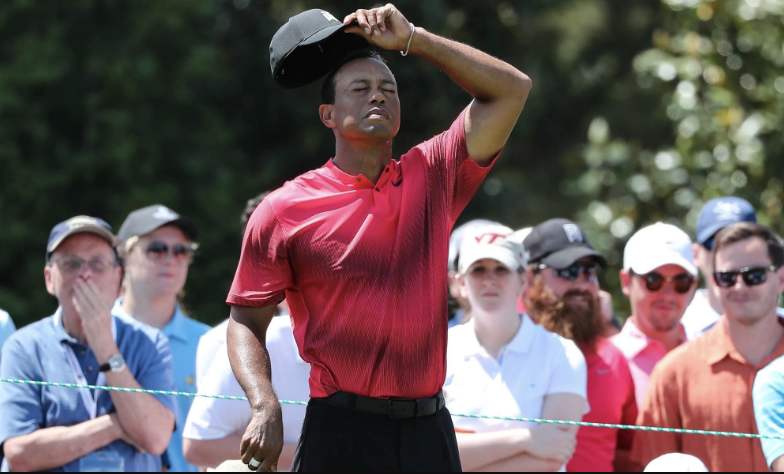
From Bob Harig's ESPN.com account of Tiger's mediocre Wells Fargo Championship appearance in advance of his return to the TPC Sawgrass, where Woods has a two wins, a runner-up and a U.S. Amateur win.
For the fourth straight day, Woods needed more than 30 putts in his round, taking 126 for the week. And after hitting 15 greens in regulation on Saturday, he managed just 10 on Sunday and hit only four fairways. He hit just 25 of 56 for the week.
As well as Woods is hitting the ball off the tee -- he averaged 313 yards from the tee -- he's not been accurate enough to give himself chances to hit it close. And when you're putting poorly, even hitting it close is no guarantee.
Statistically, it was Tiger's best ballstriking week in his return, writes Golfweek's Dan Kilbridge.
He was inside the top 20 in stokes gained: putting at Torrey Pines, PGA National and Bay Hill. He was 39th while playing Innisbrook for the first time as a professional at the Valspar Championship, but he pulled off a runner-up finish due to his superior iron play.
Woods set season highs in strokes gained: off-the-tee (2.997) and strokes gained: approach-the-green (4.530) at the Wells Fargo, which illustrates just how uncomfortable he was around the greens while finishing T-55.
Tiger Tracker's round-up of notes features a fairly blunt assessment: great distance off the tee, too many wayward drives and way too many birdies, an inability to adapt to the green speed, but great spirits after the round.
Now The Players awaits, where Tiger is excited to be playing with Phil Mickelson and Rickie Fowler, writes GolfChannel.com's Nick Menta and Rex Hoggard.
As for his light birdie week, including Sunday's shutout, master statistician Justin Ray offered this:
Tiger had 2 rounds this week with 1 or fewer birdies made. Woods went the entire 2000 and 2009 PGA Tour seasons without a single round making fewer than 2 birdies.
— Justin Ray (@JustinRayGC) May 6, 2018

Terence McDonald reports that Liberty National Golf Club is giving up on hopes to leasing 20-acres to add what would have been three incredibly-situated holes. The concept was to free up space for a First Tee facility.
The area in question sits in the small bay to the right of the 2017 Presidents Cup host's 18th hole and is essentially a bird sanctuary.
The club, which hosts the PGA Tour's Northern Trust in 2019 and 2022, had wanted 20 acres but was rejected by the New Jersey Department of Environmental Protection and is now apparently abandoning the ambitious plan.
Chidley's letter to Liberty National says the DEP rejected the golf course's bid as "nonresponsive" because it does not include a number of required items. Liberty National failed to demonstrate how its proposed rent — $10,000 annually or a one-time payment of $200,000 — was equal to the market value of the proposed use, the letter says. The bid also failed to specify the tangible public benefit of leasing the portion of the park to Liberty National, according to the letter.
It's not clear whether Liberty National will make a second attempt to lease the land. A request for comment from the golf course's spokesman was not returned.

On the golf desperation scale from 1 to Live Under Par, the second UK playing of GolfSixes registered a solid 8.
There was the entrance smoke.
The mascot playing becoming a human bouncey house as key final day development.
The children on the tee feeling suspiciously like they’d been coached to generate excitement.
The overall agony of having the telecast playing with volume of any kind.
Et. cetera.
Year two of this innovation all added up to a well-intentioned but at-times embarrassing effort to reach new audiences.
As with most of these attempts to show the advertisers that golf has shed the dreaded rich old demographic for the one that either can’t or won’t pay for anything, GolfSixes empties the bucket of "fun" ideas. The ”greensomes” team format seeks to replicate Twenty20 from cricket and make golf cool, fun and watchable. In other words, it’s another well-intentioned effort to speed up a game that has become a slog, with telecasts that can’t do much about the pace and often all-day sensibility of our sport.
But the combination of unheard-ofs, the excess of forcing elements for the sake of doing something different and the gratuitous attempt to have kids hit shots to let the precious little ones know they are part of the proceedings, added up to some of the worst professional golf “product” imaginable.
Simply unveiling the event's fresh format would have been enough innovation. But it’s all the other nonsense added on that announces to the world: golf is not comfortable enough in its skin. Oh, and the sport has not done much about the swollen scale of the sport so this is how we remedy that issue.
The latter problem is not European Tour Chief Keith Pelley’s fault. He and the team are trying their best to liven things up. They are just trying too hard.
Alistair Tait of Golfweek did find one positive in all of this: the quarterfinal appearances by the teams of Charley Hull and Georgia Hall and Mel Reid and Carlota Ciganda may inch closer to a legitimate format that combines men’s and women’s combined team play in a professional event.
That’s the kind of novelty GolfSixes should focus on going forward. If it goes forward.
The Guardian's Ewan Murray says all is not rosy between The Masters and Sky Sports--exemplified in part by this year's late renewal of the 2017 edition.
While this tussling is of seemingly no interest to American audiences, the move to a Sky/BBC split was part of a series of efforts by major championships and the people who own their rights to align with Sky and Fox for broadcasts. Both paid handsomely to strengthen their offerings, but have suffered financial losses and criticism for not reaching enough eyeballs. The Masters currently is seen live on Sky and on BBC for recap shows.
This all gains more intrigue when Fox and Comcast (Murdoch and Roberts) are attempting to purchase Sky, with Fox already owning a big stake and Comcast making what amounts to a hostile bid.
Murray writes:
The standoff for the 2018 Masters meant it took Sky until January to confirm it had secured rights. They were, however, only for a single year. When the Masters took place, Sky’s top brass – as was customary before – chose not to attend. If matters are to be patched up once more, it appears likely this will again be a late call.

The Houston Chronicle's Dale Robertson reports on Jim Crane's push to secure sponsorship dollars for the Houston Open, openly fearing the community impact if the event were to disappear.
The Astros owner says they have until mid-June to get a deal done.
Multiple sources, all requesting anonymity because they weren't authorized to discuss the matter publicly, have told the Chronicle that the Tour has given Houston until early-mid June to pull together a viable sponsorship package that figures to cost at least $12 million annually, much of that going toward ad buys during the NBC telecasts. Crane wouldn't confirm the deadline, saying only that it's in all parties' best interests "that something gets resolved soon ... July at the latest."
Wells Fargo first round leader John Peterson needs to make a few nice checks to earn his card off a major medical exemption, otherwise he's calling it a career.
A post shared by PGA TOUR (@pgatour) on
Tiger and Patrick playing the first together in pink? Nike scripters on vacation?
They claim May in Frisco is lovely, just not today for the LPGA Tour where the North Texas Classic round one was washed out.
Trick shot master Joshua Kelley with a gem:
A post shared by Joshua Kelley (@holein1trickshots) on
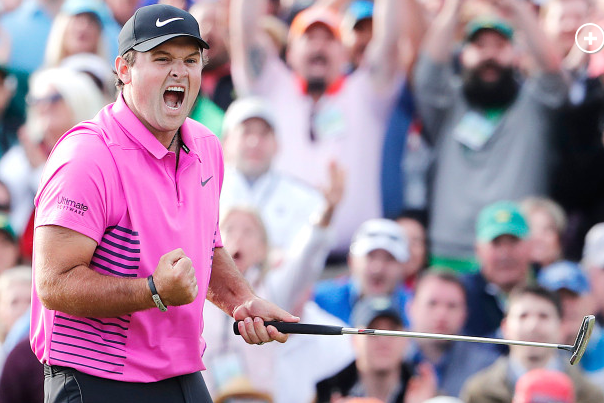
Mark Cannizzaro of the New York Post landed an exclusive interview with Patrick Reed, who discussed just how likable his pro-am partners find him. Bobby Joe Grooves is alive and well!
More fascinating, however, was Rickie Fowler's analogy for Reed's win. (Thanks reader Mike.)
Fowler said he notices the negative perception attached to Reed and called it “unfortunate.’’
“Not to compare it but, hey, Donald Trump’s our President,’’ Fowler said. “He got elected. Accept it. That’s our President. Patrick Reed, whether you like him or not, he won the Masters. He went out and won it. There’s no politics involved. He played better than everyone else that week. He beat everyone.’’

John Boyette and the Augusta Chronicle report on landscaping work around what will be a new property line by Old Berckmans Road. A photo gallery and details from the club's permit filings suggest a robust effort.
As The Forecaddie explains, this is pretty clearly the beginning phase to major work at the fifth hole. Once the new perimeter is established, the club will be closed and on-course work can begin.
While no changes have been announced, this will be a huge test of new Chairman Fred Ridley's devotion to MacKenzie and Jones. For Golfweek's April issue, I wrote about the Ridley's comments and fascinating omission of Clifford Roberts in favor of a rare MacKenzie reference, as well as what the future portends.
Which brings us to the 5th hole. Other than the 11th hole's awful pine nursery plantings in place of what used to be fairway, no hole was more perversely compromised to prevent a driver and sand wedge approach than the 5th. In 2002, fairway bunkers were pushed forward to pinch the landing area and force a lay-up off the tee.
Jones, however, described the intent of rewarding those who carried the left bunkers to shorten the hole and enjoy a better angle. He noted the danger looking for the left tee shot pulled into the woods but also the distinct difference in angle and distance for the second shot.
Here is the George Cobb rendering from Golf Is My Game and take note of the contours included by Cobb. There was a high spot down that left side where the best angle was obtained, as well as nice mounding in the right center that added visual deception for the safely played tee shot:

1960 rendering by George Cobb for Bobby Jones' Golf Is My Game
In one of his earliest renderings and comments, MacKenzie even equated the dogleg corner and overhanging trees to the Road hole's station masters garden and the green design's principles inspired by the Old Course's 17th.
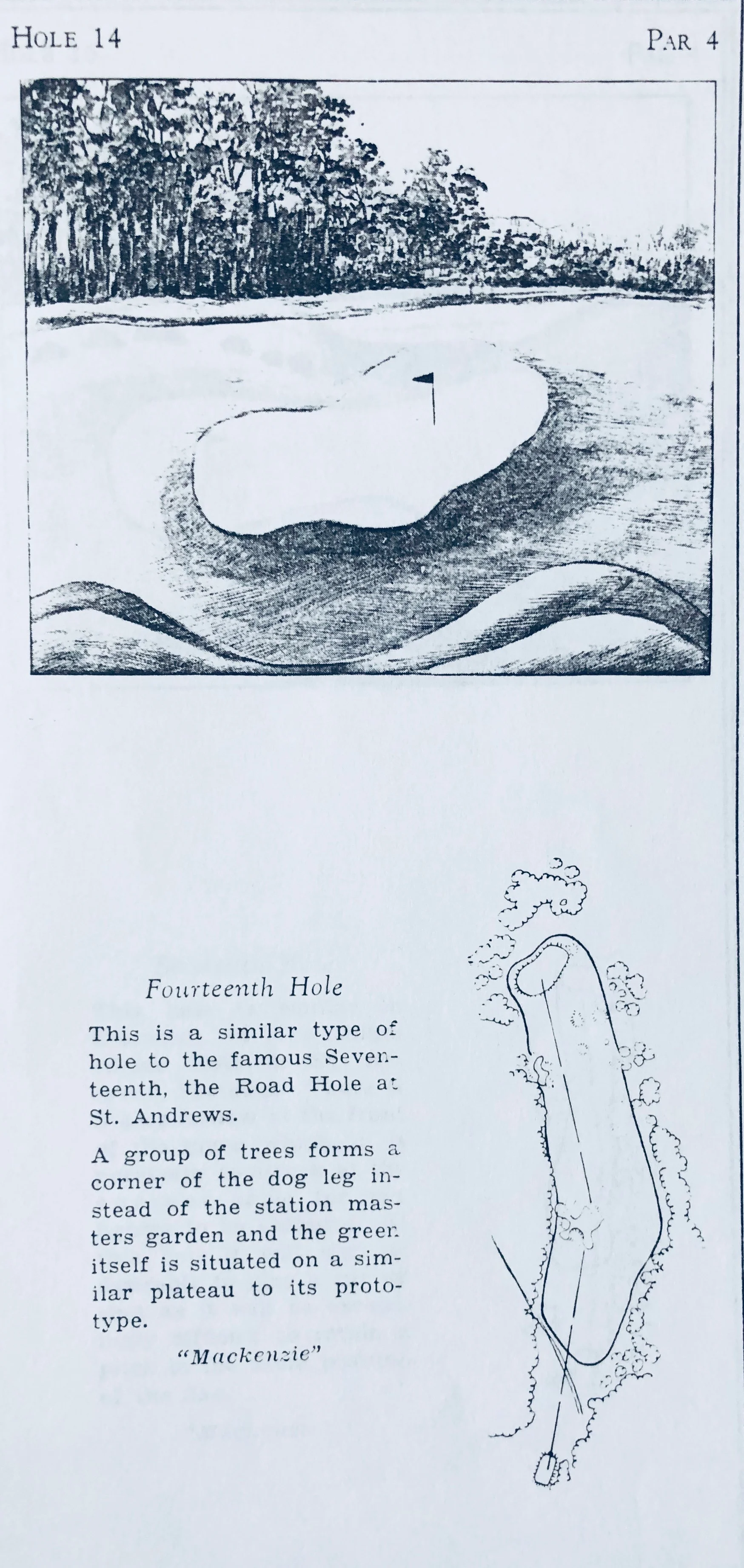
With additional space behind the tee to add length and Ridley's stated devotion to the original strategies, the fairway bunkers should come back a bit and the left side restored. However, with the tee possibly shifting to the right, this will change the view, angle and maybe effect the ability to restore the very classic risk-reward strategy.
Time will soon tell if the nuances so well documented by the architects and rooted in the Road hole, are reclaimed during this summer's fifth hole work.

Newsday's Mark Herrmann has the definitive account of Shinnecock Hills' last-minute narrowing.
Given USGA CEO Mike Davis's public concerns about the role distance plays in being able to present courses as the architects intended, the admission that last fall's narrowing of this year's U.S. Open course at least does not come with any aggravating spin. This was a reaction to Erin Hills, where the freedom to hit driver lead to incredible driving distances and low scoring.
Still, the expense to keep Shinnecock Hills relevant speaks to a very different version of the game.
“They did it almost overnight,” said Mike Davis, CEO of the USGA. “As someone at the club said, it was like a military exercise. When all is said and done, it looks tremendous. It fits your eye because these are the appropriate grasses.”
Herrmann notes that landing areas will still "be wider than they were for the previous three Opens in the modern era — in 1986, 1995 and 2004 — but slimmer than they had been after the club’s recent restoration project."
Three contractors were employed and the fairway grass taken out is resting comfortably at a New Jersey sod farm should the Shinnecock Hills members want it back.
“Some of the fairways had gone to 60 yards wide. It was great fun to play,” Davis said, adding that the average width had been 26 yards in 2004. “What we’ve done is come back and say, ‘You know what? You’re going to have to tighten it up some because accuracy is part of the test.’ ”
As absurd as all of this is to theoretically protect "accuracy", the real issue remains huge distance gains passing by the governing bodies. If the professional game were in balance, the width could be tolerated thanks to the green complexes serving as the defense. Angles would matter. A form of accuracy would be rewarded. Just not this year at Shinnecock. Again.
I was tipped to this new golf interview podcast with an emphasis on growing the game, but the discussions cover everything and make for very enjoyable listening. Paul Casey's episode was taped pre-Masters but is still an engaging listen about a nice array of topics, including Augusta National's architecture.
The R&A's Martin Slumbers goes into far more depth than normal, though he stops short of expressing his views on distance. The R&A Chief does, however, express his view that most architecture is too difficult for the every day game and has some excellent thoughts on some remedies. Though he's also very determined to see every club have WiFi for the kids so they can look at their phones.
Check out Hugh Marr's Talking Golf wherever you listen to podcasts.
For anyone with an interest in growing the game of golf the latest Talking Golf Podcast is well worth a listen. Hear Martin Slumbers of @RandA talk about where he sees the future of golf. https://t.co/ka9CFTfMqE
— Hugh Marr (@hughmarr) May 1, 2018
Geoff Shackelford is a Senior Writer for Golfweek magazine, a weekly contributor to Golf Channel's Morning

Copyright © 2022, Geoff Shackelford. All rights reserved.