LaCava On Tiger's Memorial Prep: "An Absolute Clinic"

Screen Shot 2019-06-02 at 8.50.23 PM.png

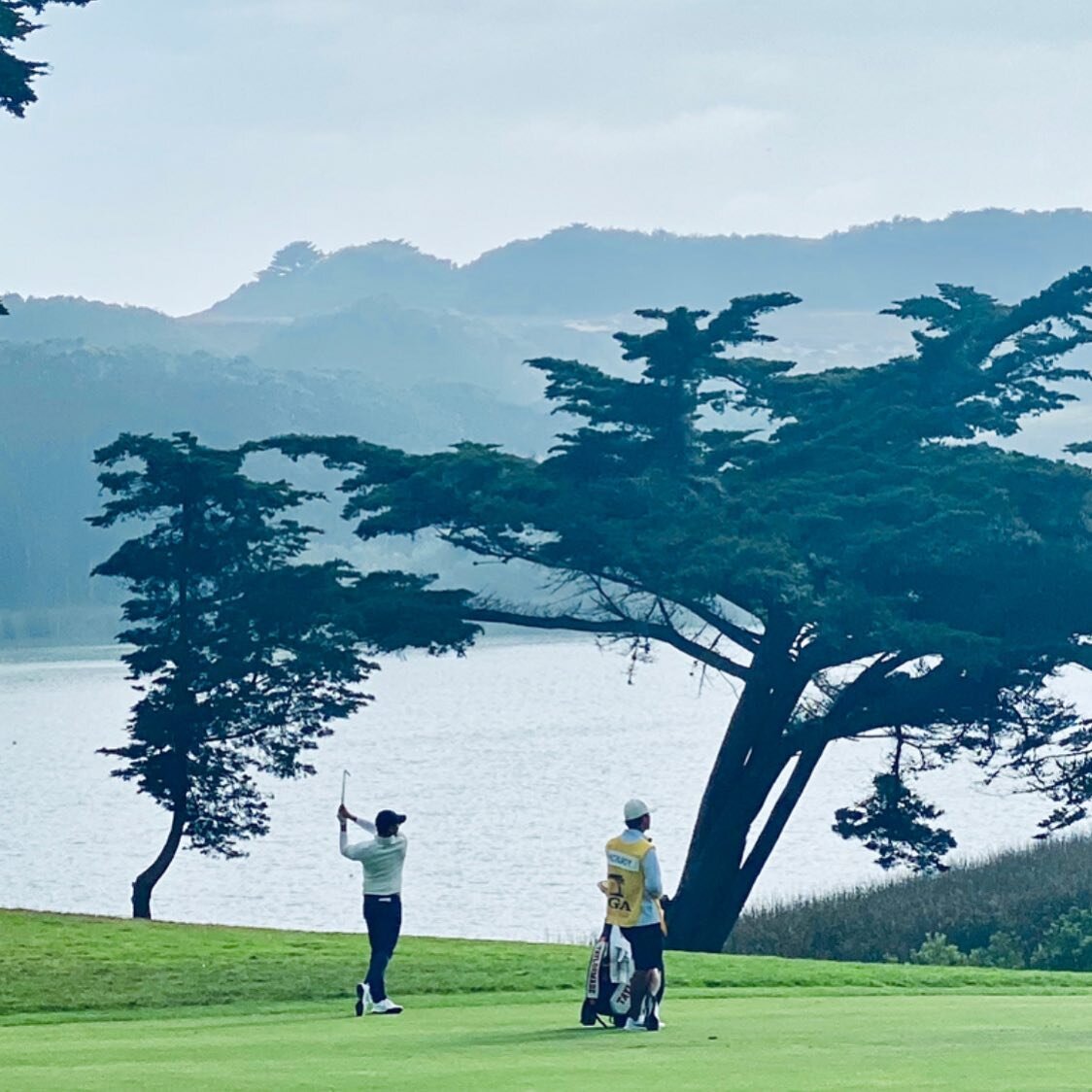
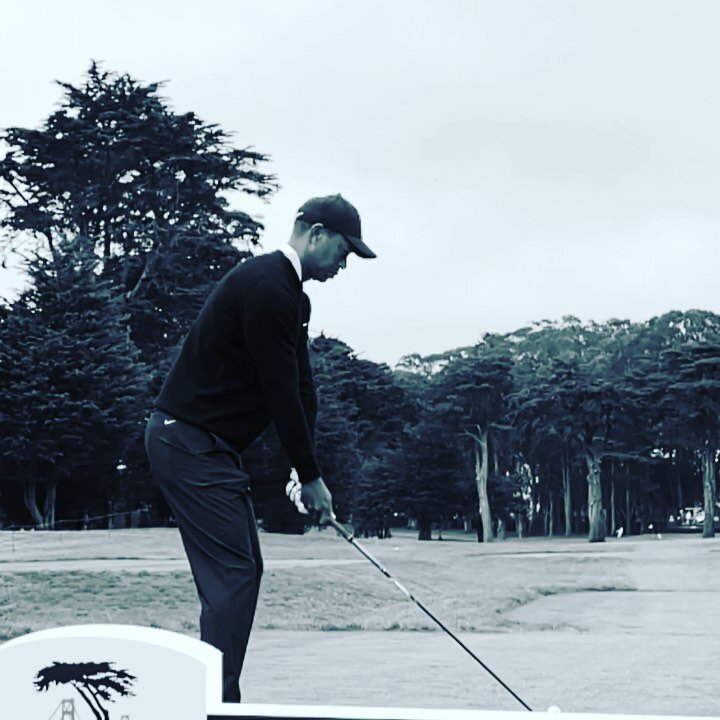
Tiger Woods appeared to calm those concerned after his PGA missed cut at Bethpage with birdies on 7 of the first 12 at Muirfield Village en route to a 2019 Memorial final round 67 and T9.

From Steve DiMeglio’s story for Golfweek and from Woods bagman Joe LaCava.

“First 12 holes were an absolute clinic,” said Joe LaCava, Woods’ caddie. He still hit some decent shots coming in. It wasn’t like he played poorly, he just didn’t get anything out of it the last five or six holes.

“He’s certainly going in the right direction with good momentum. I thought the iron play was top-notch today. Definitely some good momentum and positive vibes from both (weekend) days. The quality of shots on a scale of one to 10, I would say were a nine.”

Driving was a strength for the week, reports Bob Harig in his assessment for ESPN.com.

Woods hit 12 of 14 fairways and 14 of 18 greens Sunday, needing just 26 putts. For the week, he ranked ninth in strokes gained, approach to the green and 10th in strokes gained tee to green. For the week, he hit 75 percent of the fairways.

They Love Raynor! Women's U.S. Open Competitors Approve Of CC Of Charleston

Screen Shot 2019-06-02 at 8.23.13 PM.png

Bob Spear in a special to The State reports a runaway success for Seth Raynor’s CC of Charleston design, which came off beautifully on TV thanks to restoration work and super Paul Corder’s team pulling it all together.

Even the players, who were put through a tough test, raved after a tough weekend where Jeongeun Lee6 prevailed to win the 2019 U.S. Women’s Open.

Lydia Ko, who illustrated the notorious 11th hole can be conquered by making a hole-in-one there Sunday, called the Charleston layout “a great representation of golf courses. It’s not tricked up. It’s right in front of you, but it can play really tough. ... A great venue.” 

“Really tough” proved prophetic to those who started the day within four shots of the lead. Only Lee6 broke par. 

Ford, the general chairman, felt all pieces of the puzzle came together “as close to as perfect as it could have been. We wanted the players to have a great experience, and they have. And the golf course has proved itself to be a great test of championship golf.” 

No doubt about that, Paula Creamer said. 

“The crowds, the venue here, it’s been awesome,” she said. It’s a good U.S. Open venue for sure.” 

Said Gerina Piller, who shared fifth place: “It’s phenomenal. The place is great. The golf course is great.” 

The USGA likes its championship courses to play firm and fast, and Charleston certainly did. Superintendent Paul Corder and his staff drew accolades for the conditioning. 

Pebble Beach Flyover: Fifth And Sixth Holes

Jack Nicklaus watching Gary Nicklaus in the 2018 U.S. Amateur, fifth hole

Jack Nicklaus watching Gary Nicklaus in the 2018 U.S. Amateur, fifth hole

At last summer’s U.S. Amateur, I had the surreal experience of watching Jack Nicklaus watch his son play the hole he designed at the course where he’d won the 1961 U.S. Amateur and 1971 U.S. Open. There was a nice wait that day at Pebble Beach’s fifth, so I tried asking the architect if he was pleased with how it was playing. However, he was in full spectating mode and managed to something to the effect of “its done its job.”

The hole was added in 1998 and was a huge upgrade over the old 5th, a dreadful affair routed uphill because the oceanside property could not be acquired. The new hole plays slightly downhill with Stillwater Cove to the.

The green slopes away from the player, and you’ll notice in the flyover, has already shrunk a bit since the original creation (note the placement of irrigation heads).

The par-5 6th introduces the player to a magnificent meeting of land and sea, maybe one underrated a bit given how often this hole is forgotten in discussions of the best holes at Pebble Beach. The sixth is particularly interesting in the U.S. Open when the firmness heightens the design features off the tee. There has been a tendency of players to bail out way left here in recent events, including the U.S. Amateur, so we’ll see what the modern athletes do here (or what setup measures are taken).

Note in the flyover the juicy back right and back left hole locations lost due to green shrinkage over the years.

Be Careful What You Wish For: Tiger Longs For Old-Time U.S. Open Setups

Screen Shot 2019-06-01 at 9.31.33 PM.png

I chuckled reading Tiger’s post-third round remarks at the Memorial longing for the old style U.S. Open setups, and criticizing the shifting of tees for variety.

It’s funny how quickly the players have forgotten how much they loathed the Meeks years and high-rough, high-luck setups with little in the way of intelligence required.

From Dylan Dethier’s Golf.com report from Dublin:

“There was a time there where it was a brutal test, and then it became kind of a tricky decision you had to make, trying to bring in more options off the tees or into the greens. The Open has changed. I thought it was just narrow fairways, hit it in the fairway or hack out, move on. Now there’s chipping areas around the greens. There’s less rough. Graduated rough. They’ve tried to make The Open different and strategically different.

“I just like it when there’s high rough and narrow fairways, and go get it, boys.”

Woods singled out Chambers Bay and Torrey Pines as places he did not like the moving of tees from round to round.

Jack: Knee Height Drops Look "Silly"

I’m sure many of you saw this from his early week presser, but if not, add Jack Nicklaus to the list of those who mostly likes the new rules of golf (remember them when they were a thing!).

But about that drop from knee height, it’s not just the young guns who feel foolish taking a drop that way, notes Golf.com’s Josh Berhow:

“I think they’ll change the drop-it-from-knee-height rule,” Nicklaus said. “It looks silly. How about ‘Anywhere between the knee and the waist'”?

Amateur Hit With Slow Pay Penalty In Last Group Of U.S. Women's Open

Screen Shot 2019-06-01 at 8.45.16 PM.png

Fast and complicated greens mixed with threesomes is a recipe for slow play, yet it was still shocking to see three hours for nine with the last groups of the U.S. Women’s Open. The USGA’s time par system, in use at all championships BUT the men’s U.S. Open, earned Stanford’s Andrea Lee a warning and then a penalty, reports GolfDigest.com’s Christopher Powers. However, there was understandable social media outrage over an amateur getting singled out ala Guan at the Masters, reports Golf.com’s Jeff Ritter.

Full broken record mode here: but you combine modern players with faster-than-normal greens, threesomes, and reachable par-5s, and there is almost no chance of breaking 5:30 hours on any tour.

With 11 players within four strokes of the lead, it should be a stellar final round.

Golfweek’s Beth Ann Nichols on the improbable final pairing of Dukies and one-back Lexi Thompson’s adjustments that have put her in a great position to win.

Pebble Beach Flyovers: Third and Four Holes

Screen Shot 2019-05-31 at 11.24.22 AM.png

While we’ll get to the loss of a double fairway at the ninth and two greens offering maybe two palatable hole locations, a case could be made for the third as Pebble Beach’s most architecturally adulterated.

When I first played the course in the early 1990s and attended a U.S. Open there in 1992, the third was always the hole to hold up as an example of Pebble Beach’s inland holes asking top-notch strategic questions. This was before the out-of-scale, out-of-character righthand fairway bunkers were installed by the Palmer design group and today’s athletes began traveling with resistance bands.

Back in the good old days, players were free to bail out away from the corner bunker, trees and barranca. Such a tee shot left a hanging lie in rough to a green best approached from the left side. A flyer might go out-of-bounds.

Best of all, there were rewards for to turning a ball over, shortening the hole, and improving the angle of approach.

The combination of the landing area dynamics and the degradation of the barranca may change the approach at this year’s U.S. Open. Bomb-and-gougers face little trouble just cutting the corner, a play we saw in the U.S. Amateur when tees were at the 404 yardage. Even if the player finds rough, they are approaching from the best angle, lob wedge in hand and yardage under 100 yards.

But hey, enjoy the flyover…

The short par-4 4th is not a hole to drive but it can be a fascinating tee shot thanks to the fairway bunkering and conditions. The green has shrunk a bit over the years and lost a little shape as this 1929 to 2010 comparison shows. The surface is steeply pitched back to front, making it one of the more difficult to navigate from above the hole. Tree diseases have taken out many of the tall woody view-obstructors down the right side, unlocking wonderful views and more influence from the elements off Carmel Bay.

During last year’s U.S. Amateur, I asked Jack Nicklaus if he ever tried to drive the fourth in his youth and he looked at me as if I’d ordered an Arnold Palmer. He did later confess to trying in practice, but made clear it’s an idiotic play in any era, any conditions.

Pebble Beach Flyovers: First And Second Holes

Screen Shot 2019-05-30 at 10.16.43 PM.png

The countdown to Pebble Beach commences with two-a-days!

So here goes, the par-4 first, with a fairway narrowed and two trees lost this winter at the corner of the dogleg since this flyover was shot. Even then, the design elements here will still lead to a lot of irons off the first tee. In these crazy times, we might see a few players bomb-and-gouge a driver here, though I don’t know if the risk is worth it, particularly with an annoying cart path too close to play and potentially sending a ball in a less-than-appealing direction.

The second is reduced to a par-4 in the U.S. Open, but in firmer-than-February conditions with afternoon breezes, was still a short iron approach during last summer’s U.S. Amateur. The barranca is raked like a bunker these days, prompting some players to take daring goes at the green last summer from the rough or fairway bunkers. But that was match play.

The second green is tiny and one of the more deceptively difficult to read on the course.

Behaving Under Par: Nicklaus-Like Sportsmanship Values Fail To Show Up In Memorial Opening Round

Screen Shot 2019-05-30 at 9.39.39 PM.png

Where to begin?

Phil Mickelson said the USGA only gets setup right when it rains at the U.S. Open.

Matt Kuchar tries to claim multiple things in hoping to get relief from an old fairway pitch mark, asks for a second and third ruling, and in general, reminds you why it took El Tucan to get paid what he deserved.

Bryson DeChambeau whines about being put on the clock and seems to believe you are entitled to more time when deciding to go for a green in two, or not.

Most fascinating of all: the bratty behavior took place at the prestigious Memorial tournament, hosted by Jack Nicklaus.

Funny how players refrain from the nonsense one week at year at the Masters—no whining about lies, no backstopping, no rudeness to the field—and used to take their behavior up a notch or two when Jack and Arnold were on the grounds.

Not any more.

In Kuchar’s case, he appeared to walk back the long effort to get relief from a pitch mark that was not his, reports Golf.com’s Dylan Dethier.

Kuchar’s behavior was seen by many and called out by just as many, including European Tour player Eddie Pepperell. Mercifully, officials Robby Ware and Stephen Cox handled themselves well and with quiet confidence and authority.

The PGA Tour took down a video it posted on Twitter of the exchange. #liveunderpar

Mickelson, who made a fool of himself during Saturday’s third round of the 2018 U.S. Open, is back on the offensive and not exactly buttoning down the karma heading to Pebble Beach in two weeks. Alex Myers with Mickelson’s remarks and some of the backstory, including this:

“I’ve played, what, 29 U.S. Opens,” Mickelson told reporters at Muirfield Village. “One hundred percent of the time they have messed it up if it doesn’t rain. Rain is the governor. That’s the only governor they have. If they don’t have a governor, they don’t know how to control themselves.”

Says the guy who couldn’t put a governor on his emotions last year. Got it.

Not that it excuses bad course setup or the mistakes made, but you’d think someone who loves to pass on questions would have passed on this one.

As for Bryson DeChambeau, GolfChannel.com’s Will Gray spoke to him about being put on the clock. His rationale to official Brad Fabel for taking his sweet time was fascinating.

“He came up to me and told me I had a bad time. And I was like, do you realize I was deciding between laying up and going for it?” DeChambeau said. “And we’ve had struggles the past three holes in a row, hazards and making bogeys and all that. Was that not factored in? ‘Well, it’s just 40 seconds, it is what it is.’ Well, I don’t agree with that.”

Remember: the players largely believe they should break from the governing bodies and make their own rules. It’s almost tempting to encourage such a scenario just to watch that boondoggle unfold!


Even After Apology, Haney Suspended From SiriusXM Show, Status Under Review

Screen Shot 2019-05-30 at 8.30.48 PM.png

Hank Haney’s insensitive and dreadfully short-sighted comments regarding the current state of women’s golf have gotten him suspended by SiriusXM and its partner.

The offending conversation with Steve Johnson when discussing this week’s U.S. Women’s Open:

Haney: “Oh it is? I’m gonna predict a Korean.”

Johnson, laughing: “OK, that’s a pretty safe bet.”

Haney: “I couldn’t name you six players on the LPGA Tour. Maybe I could. Well … I’d go with Lee. If I didn’t have to name a first name, I’d get a bunch of them right.”

Johnson: “We’ve got six Lees.”

The PGA Tour, which has its name on the channel, was part of the decision to suspend Haney, reports USA Today’s Christine Brennan:

“Mr. Haney’s comments on women’s professional golf were insensitive and do not represent the views of the PGA TOUR or SiriusXM,” the statement read. “The PGA TOUR is committed to and proud of the increasingly diverse makeup of our fan base, not to mention the power and accomplishments of the game’s world-class, global players – both on the PGA TOUR and LPGA, whom we are working with more closely than ever before.

“SiriusXM proudly covers and supports both women’s and men’s golf and the athletes that make them great. At the PGA TOUR’s instruction Mr. Haney has been suspended from the SiriusXM PGA TOUR Radio channel.  SiriusXM is reviewing his status on SiriusXM going forward.”

While I agree with and understand the outrage over Haney’s remarks, particularly from players in this week’s U.S. Women’s Open at a terrific venue with strong fan support, I’m conflicted about the characterization and direction of the outrage that quickly turned to some very strong words.

One: in my dealings with Haney, few are more passionate about the game and seeing people of all ages, races and sex succeed. He wouldn’t have become a golf instructor otherwise. Hank Haney is not a racist or a sexist. Is he on too many hours talking about a sport where there is only so much one can discuss? Maybe.

Two: the flippant comment he made on his satellite radio show, which was in response by a remark from his co-host apparently referring to the number of women named Jeongeun Lee (there are six), is, one that I’ve heard mentioned hundreds of times over the years—including jokingly from Koreans or Korean-Americans—about the number of women with similar sounding names from Asian countries dominating the game. Sometimes it’s a compliment to the incredible depth and the devotion to craft by these women. Sometimes it’s not. This does not make Haney’s comment acceptable when expressed in condescending fashion and his disdain for the state of women’s golf may be tinged with some sexism, but the leap to racism seems like just that: a leap. I’d lean more toward ignorance of the LPGA Tour or international cultures than anything else.

Three: the LPGA currently lacks a dominating-star the same way the PGA Tour, PGA Tour Champions and European Tour have also dealt with at times (and maybe even in the present). We happen to be in the midst of a parity era in women’s golf not long after eras dominated by epic star power from legends Se Ri Pak, Annika Sorenstam and Lorena Ochoa. Fields are deep, maybe deeper than at any time in the modern era. And we have injuries to some star players too.

Of course, Haney didn’t mention all of this and that’s on him. But his problem is not one of race, sex or bigotry. We live a celebrity-obsessed, marketing-focused world demanding stars who play well all the time or else. Anything less breeds apathy. That’s a shame and ignorant of how cruel golf can be at times. But taking such a stance is also not racist or sexist.

Tiger: "I forgot how small the green complexes are" At Pebble Beach

Besides relishing the return to a course where precision iron play is rewarded, it was interesting to see Tiger’s reaction to the state of Pebble Beach after a recent practice round.

From Will Gray’s report at the Memorial:

“I forgot how small the green complexes are. Add a little bit of firmness and speed to them and they get really tiny,” Woods said. “But seeing some of the new greens that they had re-done, taking a look at some of the new pins was nice to see. So come next week when I start concentrating and focusing on Pebble Beach, it will be nice to have those images.”

Part of Tiger’s forgetfulness has to do less with eroding brain cells and more with encroaching bunkers and the continued shrinking of Pebble’s greens since the last Open.

Once Again Team Match Play Highlights Golf At Its Best: Stanford Beats Texas For 2019 NCAA Title

Screen Shot 2019-05-29 at 9.00.19 PM.png

Olympic golf is about to be on our radars and players will be forced to pretend how excited they are about the possibility of playing a purse-free WGC event at a greater Tokyo country club, the 2019 NCAA Championships once again reminded how much more compelling team match play is than 72 holes of stroke play.

Nothing about this year’s college golf should have been that compelling other than seeing a historic team cap off their season. They didn’t so two other top ten teams faced off in the final. Still, it featured players largely unknown to most watching, a course featuring an odd set of often buzz-killing green complexes and less than ten hour turn around to beat storms. Yet Stanford and Texas put on another stellar match play era show.

Everything about the modern NCAA’s TV-friendly format continues to be fan friendly and a constant, pesky reminder of Olympic golf’s refusal adopt a team format. Seeing players fight for their team in a sport where lone wolf types generally excel, and watching coaching and team components juxtaposed with match play makes for the ultimate “grow the game” theater. It also helps to have a telecast free of promos, thus allowing more time to listen in on player-coach conversations or to simply let announcers set up situations.

Anyway…

Stanford, taking its ninth title, looked soft last fall and made a change in approach, Brentley Romine writes for GolfChannel.com:

After Stanford finished eighth or worse in each of its three stroke-play events in the fall, Ray knew his squad needed to toughen up. He added a Friday morning workout to the team’s weekly training schedule. The high-intensity conditioning, led by assistant coach Matt Bortis, likened to a boot camp for golfers, so the team coined the hourlong sessions, “Bortis Camp.”

Bortis, who played three years at Arkansas before becoming an All-American at Texas as a senior, spent eight years in the Marine Corps prior to taking the Stanford job last October.

“Without a doubt, I’d say that we were the underdogs, but I think some of the stuff that we’ve been doing together has proven guys otherwise,” Bortis said. 

Speaking of Bortis, he touched all bases today. Winning on the course he once played at, coaching against the alma mater he played for after transferring to Texas and helping lead Stanford to a title. Adam Woodward with the details of a wild journey.

The highlights:


Rory On USGA: "If they can’t redeem themselves at Pebble Beach, then there could be a problem.”

Screen Shot 2019-05-29 at 8.36.14 PM.png

The man who was said to be ready to boycott the U.S. Open but was not given a chance to deny that claim by a fellow player sounded much more forgiving today.

Speaking at the Memorial, Dave Shedloski reports McIlroy’s view of the USGA headed to Pebble Beach following last year’s setup issues at Shinnecock Hills.

“They’re trying to do as good a job as they can,” McIlroy, No. 4 in the world, said Wednesday at the Memorial Tournament. “And I think they’ll admit they’ve made a couple of mistakes over the last couple of years. Everyone does. And I think we should give them the chance to redeem themselves. If they can’t redeem themselves at Pebble Beach, then there could be a problem.”

Like a boycott?

Finchem Rakes In $10.6 Million Bonus And Then A Some In First Year Of Retirement

Screen Shot 2019-05-29 at 1.59.00 PM.png

Maybe this explains why they’ve got mandatory cost cutting down in Ponte Vedra Beach. Still, even after retiring in 2016, PGA Tour Commissioner Tim Finchem was well compensated in 2017. Maybe Jay Monahan found some uncashed paychecks in the top drawers and Finchem took them down to the local Suntrust ATM.

My math has him at $18,886,755 in 2017 baesd on this report from Roxanna Scott of Golfweek.

Two More Looks At Seth Raynor, CC Of Charleston

Screen Shot 2019-05-28 at 9.26.26 PM.png

The USGA’s George Waters does a nice job summarizing who Seth Raynor was, what the template holes meant to his work and seizes on the clever ways Raynor compartmentalized his green complexes.

The golf course architecture of Seth Raynor provides plenty of surprises. His work is built around concepts from classic holes that he never saw in person. He never played much golf, yet managed to design some of the most highly regarded golf courses in the U.S. His designs contain elements that are harshly penal and extremely forgiving. Perhaps most importantly, Raynor managed to provide a great golf experience for the best players and for those with more modest abilities.

And don’t miss Andy Johnson’s look at CC of Charleston as the venue you’ll most want to enjoy on the 2019 calendar (at least domestically!), and as he notes, the first Raynor design to host a men’s or women’s Open.