Prairie Dunes At Dusk
/Rand Jerris writes about the beauty of Prairie Dunes and golf's ties to the environment.
When you come to think of it that is the secret of most of the great holes all over the world. They all have some kind of a twist. C.B. MACDONALD
Heres what Phil Mickelson had to say about his club selection on 18 at Winged Foot while meeting with da medja in Chicago:
Fortunately what I have found has helped me play well or have that type of performances these past years in the majors is that I've done the prep work beforehand and I know what club selection I'm going to hit off each tee, given weather conditions, whether it's raining, whether it's hot or not. I already know and have known for weeks in advance what clubs I'm got to hit off each tee, so it's helped me approach the tee box with confidence knowing what club I'm going to hit.
It helped me when I hit the driver on 18 at Baltusrol on the last hole and ended up making a birdie. It helped me at The Masters knowing what club and what driver I was going to hit off each tee, and it helped me at the U.S. Open. Unfortunately I didn't execute the way I wanted to.
But it has erased a lot of the doubt as to the decision-making, what club am I going to hit, what club should I hit. I already know weeks in advance, and it helps me hit those shots and visualize those shots in practice before I ever show up the week of The Open.
Now, we have debated Phil's two-driver concept at Augusta here and here and here.
But I'm wondering if his ability to select clubs in advance says something about the state of the game.
This is not a technology question, but I believe one about the state of course setup and course design.
Is there something wrong with setups and designs when a player of his magnitude (and others like him) know what they will be hitting on holes well in advance of tournament time?
Or to put it another way, is the golf more interesting and testing if the design and setup create decision-making situations that can not be made in advance?
Wind and the player's philosophy play a role in this, but isn't there something seriously wrong when some spontaneity is missing from the major championship equation?
I was both elated and troubled by Mike Davis's decision to announce the alternating of tees during the U.S. Open. Elated that he was doing it, troubled that he was giving everyone advance notice.
Don't we learn who is most skilled by finding out who can handle a club selection and playing strategy question under pressure?
Enough rambling...your thoughts?
"It's just a work of art, nothing short of a work of art," said Crenshaw, the tour's resident historian. "It's so unique. There's nothing like it in this country, really. With this course, any person from the British Isles would come and say, 'Oh My God, I'm home' with all these undulations and sandhills."I'm not so sure about this though...
Crenshaw, like Tom Watson, loves the setup of the course with its narrow fairways, high rough and slick, unforgiving greens. Now the only thing missing is the wind, which kicked up to about 20 miles per hour at midday but was about half that strong in the early evening when the players and fans were called off the course because of the threat of severe weather.
For some reason when I copy a link from the Globe it reverts to the premium subscribers nonsense that won't let you read the story.
So in the future, FYI, if you want to read Lorne's latest, just search his stories on Google Canada. I'll include a reminder too.
Most who read GolfClubAtlas.com saw this courtesy of Brian Ewen, but just in case you didn't, it's a wonderful short clip of Willie Auchterlonie talking about the Old Course in 1949.
Gary Baines looks at the technology debate and talks to the tournament director at The International, who has some interesting things to say.
Winged Foot, a course dating back to 1923, proved anything but obsolete. It played plenty long (7,264 yards for a par-70 layout), but it was obvious that wasn't the main reason that the Open produced its highest score relative to par (5 over) since 1974.Oh yes, you can see where this is going.
Instead, the key to protecting par was narrowing the fairways and growing the rough so that the long bombers on tour have to think twice before ripping a driver as hard as possible on every hole over 300 yards. Winged Foot did that with many fairways 25-28 yards wide and rough as deep as 51/2 inches.
Larry Thiel, executive director for the International tournament in Castle Rock, was at Winged Foot during U.S. Open week and liked what he saw in the way of a course set-up for the Open.
"I thought the set-up was fair," Thiel said. "You don't have to have 7,800-yard golf courses. The rough is supposed to be penal, and I don't think it was overly penal. If you can't drive the ball straight into a 30-35-yard-wide opening, you ought to do something to your game, downsizing your club until you can."
Of course that was the U.S. Open, a once a year event designed to be a unique test. The International, with its Stableford scoring meant to elicit heroic play, would never look to Winged Foot for inspiration, would it?
They don't want to see the players always swing as hard as they can from tees on par-4s and par-5s because the reward is so great and there isn't a big downside.
That's why even at Castle Pines the fairways have been narrowed over the years. That's undoubtedly part of the reason the winning scores at the International have come down in the last couple of years. After cumulative winning totals of at least 44 points in every year but one from 1997 through 2003, the winning numbers have been 31 and 32 the last two summers. Other things that have factored in are additional water hazards and the lengthening of the par-5 eighth hole.
As Thiel said several years ago, "We don't want it to be a lay-down course."
No, because God know, the ratings aren't low enough yet. We've got to get them into the NHL's league before we can rest assured.
On many courses on the PGA Tour, players "can stand on the tee and whale on it," Thiel said this week. "We're guilty of it too. The players aren't penalized for errant shots. What you think is a monstrous hole is far from a monstrous hole for these guys."
Thiel estimates the fairways at Castle Pines are mostly 30-50 yards wide, which is generous but not as wide as they used to be.
"We've gradually worked them in," Thiel said.
Oh good!
"We're always thinking about what makes the course more competitive and fair. We're trying to neutralize guys just stepping back and going at it as hard as they can without any fear."
Because the game is just so easy for those flat belly Tour boys! And then Thiel offers this from William Flynn:
"He believed a good shot should be rewarded and a bad shot penalized," Thiel said. "It's a pretty simple formula."
You know...eh forget it.
 John Huggan says Geoff Ogilvy's win was an important victory for golf because the Australian has "the potential to be just the sort of wise, high-profile spokesman the professional game needs if it is to rescue itself from the technological black hole into which it is currently headed."
So many great quotes to pull here, so just read it. Some you've read before in other Huggan stories, but to see them all together really makes a powerful statement about Ogilvy's fresh take on things.
And after you read it, contrast it with this nonsense.
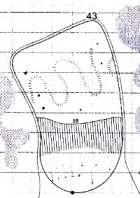
That sounds like our USGA! Take a work of art and ruin it so they can treat all the greens the same for four days once every 20 years! Oh yeah, real logical.
Hewitt also reported the well known rumor that they plan to play No. 8 at Oakmont at 280 next year.
John Hopkins considers Ron Whitten's Golf Digest criticism of Hoylake as a modern day major venue, and offers a rebuttal from the R&A's own in-house designer, Peter Dawson.
It is safe to predict that a few eyebrows would have been raised at Royal Liverpool Golf Club on The Wirral yesterday when word reached it of an astonishing attack in the present issue of Golf Digest, the world’s biggest and best-selling golf magazine. The course that will stage the Open next month is fiercely criticised by Ron Whitten, the architecture editor of the magazine, who calls it “Royal Out of Bounds” and says it is no place for a major championship in the 21st century.And...
Hoylake is regarded as one of the sternest of all links, and the club has a wonderful history in golf. It slipped from the rota of Open courses after 1967 because the Royal and Ancient Golf Club of St Andrews, organisers of the Open, felt that there were too many problems meeting the requirements of an Open.
Some of Whitten’s displeasure is based on his belief that the course does not have a par five that cannot be reached in two with an iron and many of its par fours are not as long as they look on paper. He also does not like the rerouting of the course. It was done because the R & A wanted a more gentle start than the old 1st, which had out of bounds on both sides, and a stronger finish than the old 18th. The 17th has now become the 1st, the old 1st is the 3rd and the par-five 16th is the 18th.
“I simply don’t agree [with the criticism],” Peter Dawson, the chief executive of the R & A, said. “Those who have played Hoylake have been very complimentary about it.”
The only thing astonishing about the "attack" is that Whitten didn't even focus on the most egregious change of all: Donald Steel's mangling of the old H.S. Colt designed road-perched green on the par-4 17th (No. 2 in the Open).
It's also a bit disconcerting to read about a 7,200+ course being outdated and questioned as a venue for failing to "keep up with the times," with no mention why this happened or whether this is a reasonable occurrence. The message seems to be: modernize your design at all costs.
The Wall Street Journal's Carrick Mollenkamp considers the cult status that Tom Doak's Confidential Guide to Golf Courses has attained:
In the book, Mr. Doak reviewed the design features of more than 800 courses, from little-known links to some of the world's most famous and exclusive courses. He gave each a ranking of zero to 10 on what he called the Doak Scale. A zero, Mr. Doak wrote, is "a course so contrived and unnatural that it may poison your mind." But a 10 is "nearly perfect.... If you haven't seen all the courses in this category, you don't know how good golf architecture can get."
Mr. Doak never imagined it back then, but the book has become a cult classic -- a haven of bluntness in a sport that is often so clubby that it rarely criticizes itself. Its fame stems in part from the fact that only about 13,000 copies were printed back in the '90s and the book has been out of print for years. Due to the scarcity, available copies of the most recent edition are going for as much as $350.
But while Mr. Doak's strong opinions resonate with golfers, they also have put him in somewhat of an awkward spot: Mr. Doak is now a high-profile part of the establishment he once unabashedly critiqued. And it's that reality that keeps him from reprinting or updating the sought-after book.
"I pulled no punches at all," Mr. Doak says in an interview. "I'm not sure I want to put myself in that position now."
I just love how the LLC that wants to build a housing development on Donald Ross's Rackham GC calls itself Premium Golf LLC. What a world.
John Huggan's Sunday in The Scotsman ;) column looks at the European Tour's scheduling dilemma, the Fed Ex Cup, and Ernie Els' redesign work at Wentworth. Naturally, he's skeptical.
The biggest thing on O'Grady's mind is easy to identify. Next year, America's PGA Tour will embark on a radical new schedule climaxing with something called the Fed-Ex Cup, a 'play-off' series modelled on the mystifyingly-successful NASCAR, in which cars drive round and round in endless circles to no obvious purpose.Regarding the European Tour...
With more and more of Europe's leading players spending more and more time in the US, the traditional European Tour schedule will have to adjust. For instance, the British Masters, which was held at the Belfry three weeks ago, will move to September to avoid a clash with the Players Championship, which will switch from March to May.
"It will become readily apparent when we refine our 2007 dates where we're trying to focus ourselves. We spent a lot of effort with various players to find the right period to put tournaments in. We are examining where we are with the PGA Tour, because they bring a welter of marketing muscle and money to any situation."
Allow me to decode. Without actually saying so - the man is a diplomat - O'Grady is alluding to the fact that the PGA Tour in the shape of commissioner Tim Finchem is a classic bully, who couldn't care less about the effect of his actions on anyone other than his members. For the good of the game is not a phrase that the former Washington lobbyist is too familiar with.
On the upside, many doubts remain about the long-term success of the Fed-Ex series thingy. The suspicion here is that, as with so many things in golf, it will come down to the level of interest that one Tiger Woods can muster. If the world No.1 decides that he has better things to do, like winning the major championships that history will actually remember, the whole thing will quickly fold.
Which would not be good news for Finchem. If recently- released viewing figures are anything to go by, America's ever-shortening attention span is causing many of Uncle Sam's nieces and nephews to reach for their remotes when a golfer appears on their TV screens - Tiger or no Tiger. Should the Fed-Ex series fail to deliver - sorry, couldn't resist that - it is hard to imagine where the PGA Tour would go next. China, probably. Still, all of that is for the future.
As for Wentworth...
Even at the new, turbo-charged Wentworth, misgivings remain. Take Ernie Els's new fairway bunkers - one left, one right - on the opening hole. While O'Grady enthused about how their presence would provoke players into thinking on the tee, it was hard not to shake one's head inwardly.
Rather than encouraging thought and choice, the traps dictate only how the hole has to be played. As things stand, the drive is now merely a test of execution - can you hit it between the bunkers?
Had Els placed one or more bunker up the left side, which offers the more favourable angle into the distant green, and merely left the right side as it was, the players would have been offered a genuine option. Driving close to the bunker would bring reward in the shape of an easier approach; playing safe down the right would take the sand out of play, but leave a more difficult second shot.
That's called strategy, folks.
Come to think of it, a bunker stuck right in the middle of the fairway would have been better. That really would have made the players ponder.
PHIL MICKELSON: Over at Winged Foot, it's tough. It's a very tough golf course. Obviously we know the USGA is going to make it difficult. The rough is thicker and deeper than I've seen it. But I really like the layered rough. In the past you were rewarded for missing a shot with a larger margin of error. If you could hit it into the people, you were much better off than missing the fairway by a yard. Now with the layered rough it's imperative that you keep it, if you do miss a fairway, just off the fairway, because that thick rough is so high that there were sometimes it would take two or three shots just to get it back to the fairway. We'll see a lot of doubles and triples out of that rough, especially given the fact that they're going to keep the people further away. That thick rough won't get trampled down.
Q. (Inaudible.)
PHIL MICKELSON: I can always reach the people. If you reach the people now you'll be in the trees and it will be much more difficult to get it back to the fairway, because you have to chip it over the chick rough and get it stopped in a narrow fairway under the trees.
Q. (Inaudible.)
PHIL MICKELSON: It wasn't like Carnoustie like it wrapped around and they hadn't cut it for 1 year. They've ^money it perfectly right across the top, probably six inches, just like they said. Very consistent. But the third cut is. But it was thicker than I've seen it. It looks like when the ball would go to the bottom, the grass would just grow over it. It was very difficult.
Q. (Inaudible.)
PHIL MICKELSON: Well, yeah, the guy who wins won't be hitting it there. He'll be hitting it in the short stuff or if he ^dismiss it in the shorter cut. However, that thick grass was all around the green, they didn't layer it around the green, the six inch rough around the green.
Q. Do you like it?
PHIL MICKELSON: Do I like it? I'm not in favor of it around the green as much, because it takes the short game out of play. But I think that if you miss it right or if you hit a number of greens you'll be okay.
Q. (Inaudible.)
PHIL MICKELSON: Yeah, oh, yeah.
Q. (Inaudible.)
PHIL MICKELSON: No, but I have a hard time seeing it being anymore difficult than Shinnecock in '04 on the weekend. And I think the USGA can make it as hard as they want. Winged Foot is such a good course that it won't require ridiculous things to keep par a good score. In looking at it now, I don't see how guys are going to shoot under par. Of course I say that every open, and every open guys are under par the first couple of rounds.
Q. The sand traps, they're going to do something different for the first time here at this tournament, the raking. It's really going to be a penalty. What do you hear about that, what are your thoughts?
PHIL MICKELSON: It is a hazard and nothing says that the bunkers need to be immaculate. Bobby Jones, back in the 20s, I believe, played Oakmont when they were using those furrowed rakes, and he said that he didn't like it, because it took the skill out of the game. Now, it just depends how bad a lie. Is there a chance we can hit a shot out of it? Or is it going to be just ridiculous where you're lucky to get it on the green, and it takes the skill out of it? So it's a fine line between the two. But I don't mind making a bunker a hazard, because it is.
Well said. It's almost like...na!
Geoff Shackelford is a Senior Writer for Golfweek magazine, a weekly contributor to Golf Channel's Morning


Copyright © 2022, Geoff Shackelford. All rights reserved.