"Even an idiot can't mess this up"

bildeTiger announced and new design in North Carolina Tuesday, and while I haven't seen many detailed articles, reader did find this video clip of the press conference where he refers to what "Perry" did at Southern Hills (so much for Mr. Maxwell!) and of course a proverbial it's "right in front of you" comment.

Pete Iacobelli writes:
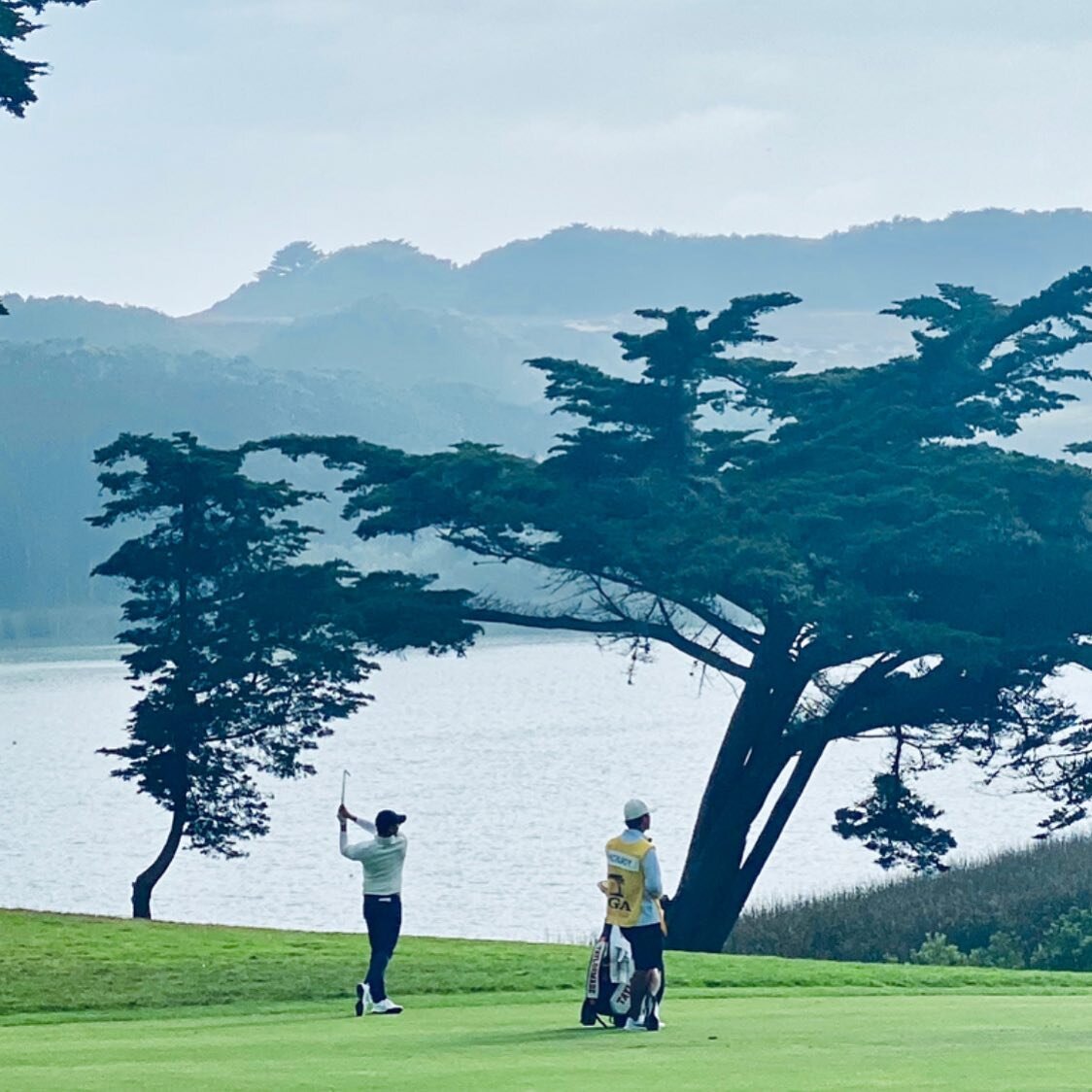
Woods wants the scenic land to dictate the proposed layout and hopes the course give golfers a fair test and a chance to connect with nature. He visited the location earlier Tuesday and raved about the land.

"Even an idiot can't mess this up," he said. "I think I'm a little above that."

Woods took his time before launching his design business, he said, because he wanted a feel for what makes the best courses by playing the top layouts from around the world.

He said he likes layouts where golfers can the hole ahead of them along with well-placed bunkers that require careful shot selection.

Woods described himself as a "minimalist" designer and repeatedly said he didn't expect to move a lot of dirt during construction.

Woods and The Cliffs' owner Jim Anthony said they wanted High Carolina to be a walking-only course during the news conference. Afterward, Woods clarified they'll "strongly encourage" golfers to walk, but won't require it.

Anthony had Woods' drawings of a proposed golf course he mapped out at age 11. "I don't believe there's any golfer that has more desire," Anthony said. "He takes us to another level."

Woods' company took on a project in Dubai for his first course. He expects to gradually grow his golf design business, selecting projects that fit within his crowded schedule as a competitor and father.

Ed Seay R.I.P.

One of the game's great characters has left us...

Golf Course Architect Ed Seay Dies at Age 69
 
ASGCA Past President and Winner of ASGCA Distinguished Service Award
Was Design Partner to Arnold Palmer for 35 Years
 
Ed Seay, a past president of the American Society of Golf Course Architects, died August 14, 2007 at his home in Ponte Vedra Beach, Fla., after a long battle with cancer and related health problems.  He was 69.
 
Born in Dade City, Fla., Seay served as ASGCA president in 1976-1977 and was given the ASGCA Distinguished Service Award during the organization of golf course architects’ 2006 Annual Meeting. During a career that spanned five decades, he was responsible for nearly 300 new golf courses and more than two dozen golf course renovations, including Bay Hill Club. Most of his designs were created in partnership with golf legend and ASGCA Fellow Arnold Palmer, with whom Seay began working in 1972 and formed Palmer Course Design Company in 1979. Designing a golf course in Communist China in 1981, Seay was among the first American golf course architects to work outside the United States.
 
Among Seay’s representative golf courses are Sawgrass C.C., Ponte Vedra Beach, Fla.; The Tradition G.C., LaQuinta, Calif.; The K Club, Straffan, Ireland; Four Seasons Resort at Peninsula Papagayo, Costa Rica; Kapalua Village Course, Maui, Hawaii; Aviara, Carlsbad, Calif.; Old Tabby Links, Spring Island, S.C.; Tralee C.C., Tralee, Ireland; and Adios G.C. in Coconut Creek, Fla.
 
“ASGCA is saddened with the loss of Ed,” said President Steve Forrest, ASGCA.  “He was one of a kind as a person and did so much for the profession of golf course architecture.  For 40 years, he was one of ASGCA’s great leaders and contributed greatly to the growth and recognition of ASGCA.  He will be missed.”

A graduate of the University of Florida and a retired Commissioned Officer of the United States Marine Corps, Seay began his work in golf course architecture in 1964 near Pinehurst, N.C., where he worked for ASGCA Past President, Ellis Maples, a noted golf course architect Seay called one of the finest golf course architects ever knew.
 
Seay is survived by his wife, Lynn, and adult children Mason Seay and Tracy Raymond.
 
A memorial service is scheduled for Saturday, August 18, at 10 a.m. at Christ Episcopal Church in Ponte Vedra Beach, Florida. It will be followed by a reception at the Ponte Vedra Inn and Club at 11 a.m.
 
In lieu of flowers, ASGCA members may make donations to the ASGCA Foundation, 125 N. Executive Dr., Suite 106, Brookfield, WI 53005. Others making donations are encouraged to donate to the Marine Corps Law Enforcement Foundation, P.O. Box 37, Mountain Lakes, NJ 07046.
 
More information on Mr. Seay’s career, as well as video clips of him discussing his work, is available at the ASGCA “Architects Gallery” on the internet. Simply visit www.asgca.org and click on “Inside ASGCA” then “Architects Gallery.”

For Immediate Release, Vol. 9,812

Another in the priceless press release division:

Peter Thomson, five-time British Open Champion and principal of Thomson Perrett and Lobb Golf Course Architects, has signed an agreement in St Andrews with UAE based Al Qudra Real Estate, to design the company's first signature golf course in the Middle East.
 
Thomson Perrett & Lobb will design a traditional, classic style championship golf course at Ain Al Emarat, an award-winning residential and leisure development being built near Al Ain, the second city of the Abu Dhabi Emirate and known as 'The Garden City of the Gulf.'
 
Peter Thomson, said: "The growth of golf in the Middle East has been phenomenal and TPL is honoured to contribute to the growth of the sport in the region by creating a unique, traditional style course in a groundbreaking city, that will set international benchmarks for sustainability, healthy living and sporting opportunity."
You know, somehow I don't see Peter Thomson talking about international benchmarks for sustainability and healthy living. But I could be wrong. 
In a ceremony held at The Old Course Hotel in St Andrews overlooking the world famous 'Road Hole,'

Wouldn't Old Tom be proud...

Peter Thomson signed an agreement with Mr Victor E.J. Orth Jr, CEO and General Manager of Al Qudra Real Estate – a subsidiary of Al Qudra Holding – for the design of the golf course, which is set to be a major attraction for residents and visitors at Ain Al Emarat.

I wonder if The Old Course Hotel is as close to the site as Peter will get?

Victor E.J. Orth Jr, said: "TPL has a commitment to excellence in golf course design that mirrors our corporate ethos and we look forward to creating a golf course that will thrill the residents of the UAE and its international golfing visitors."
 
TPL has joined forces with global architectural practice HOK, creators of the new Wembley and Emirates stadia in London, to design the golf course as part of this groundbreaking city.

Plans for the residential and sporting development have already won a prestigious award. HOK won the award for 'Best Masterplan' at the recent Building Exchange Awards 2007, held in Valencia, Spain in June. The award recognised HOK's success in creating a sustainable, innovative design in collaboration with key partners, in particular Thomson Perrett & Lobb.

 They do love their awards over there.

The TPL golf course will act as a centrepiece for the development alongside a landmark 40,000-seat indoor sports and entertainment arena, which will be built to the same standard as HOK's acclaimed Emirates Stadium, home of Arsenal Football Club.
 
The championship golf course will harness natural topography, including rolling sand hills and views to the nearby mountains, as well as benefiting from TPL's expertise in sustainable golf course design. The use of recycled effluent will reduce water requirements and will be offset by minimal use of excess turf to keep the golf course in harmony with its natural desert environment.
 
Al Qudra Real Estate is the successful real estate division of Al Qudra Holding, an important strategic partner for organisations looking for investment opportunities in the UAE. The development at Ain Al Emarat is set to redefine 21st century living through its appreciation for the balance between work and leisure.

Sign me up! 

Is This Any Way To Treat The Road Hole?

230136-956147-thumbnail.jpg
(click image to enlarge)
I know that ABC used their 2005 Open aerials for Sunday's Women's Open (because there was still that ribbon of rough down the right side of the hole). But the rest of the fairway contour was the same, including two former fairway bunkers surrounded by a sea of rough.

Now, let's forget the pros and just think of the everyday golfers who play this most of the time. The hole isn't tough enough without choking off the fairway? Is taking driver out of the best player's hands really so vital that everyday golfers have to suffer year round? I guess so.

230136-957188-thumbnail.jpg
(click image to enlarge)
Note in the second image how the golfer wanting to layup just right of the green (our left) to secure a pitch into the length of the surface (and those feisty back hole locations), is now told no way.

Taking away options on the Old Course. It's not right! 


Sergio and Shark Win Award Before Course Opens!

How I love Dubai, they're doling out development awards and the thing isn't even built yet!

Jumeirah Golf Estates, the exclusive villa project in the heart of New Dubai has netted the prestigious CNBC Arabian Property Awards 2007, in the Best Golf Development category. The award will be given away at a gala dinner at the Madinat Jumeirah in Dubai on Tuesday, October 23, 2007.  

Entries for the award were judged by a highly-distinguished panel of professionals, chaired by Eric Pickles, British Shadow Secretary of State. Jumeirah Golf Estates is owned and maintained by Istithmar PJSC, the real estate investment unit of Dubai World. David Spencer, chief executive of Jumeirah Golf Estates, said of the forthcoming award: “It’s always fantastic to be recognised by the best in the industry.  At Jumeirah Golf Estates we’re aiming to create the best golf development in the region and one of the best in the world.  Today’s announcement shows that we’re on the right track.

Jumeirah Golf Estates brings together the world’s leading golfing and course design superstars to create Dubai’s premier residential golfing community.  Greg Norman, Vijay Singh, Sergio Garcia and the father of modern golf course design, Pete Dye, are working on creating one of the world’s most distinctive golf developments. The 4 courses; Fire, Earth, Water, & Wind; pay tribute to the power of nature, each employing the distinctive characteristics of its own surroundings to deliver a unique challenge.  They will be surrounded by the most desirable residential communities in Dubai, with luxury homes with beautiful space both inside and out.


Take that Tiger! 

Huggan Scoop: Crenshaw Regrets Brookline 17th Green Antics!

...and next week, John Huggan learns from Roberto De Vicenzo that regrets signing an incorrect card at the 1968 Masters!

Sheesh, now I know why Ben has avoided the Senior Open Championship!

Seriously, once we cleared up the earth shattering revelations from three Ryder Cup's ago, Huggan got Crenshaw to say some interesting things about the state of the game, technology, the PGA Tour and Augusta.

"What mystifies Bill and myself is seeing courses being built that hardly anyone can play properly," he observes. "We want our courses to be enjoyable for as many people as possible. We would not know how to set up a course for a high-end tournament. That would just mystify me. If you do that, how can you reach anyone else?

"In America the set-ups are becoming unbelievable. They are trying to stay ahead of technology, and sometimes that doesn't produce enjoyable golf. The danger is that the PGA Tour can become stylised a little bit. They are just so difficult week to week.

"The road we are on is a dangerous one. It's one thing to build five different tee boxes, but somewhere along the line you lose the feel of the hole, and what makes it interesting. You compromise the hole. If you don't go straight back and start changing angles, things get a bit off.

"We are trying - and failing - to come up with interesting ways to combat how far the ball goes. You put obstacles out there at certain distances, and players just fly them. I don't know what you do. We try to make doable holes. I like players to shoot really good scores. That's fine with me."

How Crenshaw would definitely not go about tackling the technology issue is by the mindless growing of long grass, which is how the green jackets at Augusta National have chosen to 'protect' their course.

"I heard this a long time ago, although I'm not sure who said it first: 'Interest supersedes length.' If a course is not interesting and you don't bring people back, what is the point? I look at the way Augusta was set up this year, and everyone was forced to play more defensive golf, no question about it. There's now a limit to what the top players will try there.

"To an extent, I can understand what is being done. I'm not saying all of it should be thrown away. There is no question the course needed to be lengthened. But I've never really agreed with the growing of the rough. That is so entirely different from the way it used to play.

"To get players to try shots they maybe shouldn't try was what used to set Augusta apart. Now it's different. A lot of the places I used to aim for off the tee are now in the rough. Those spots used to open up angles to the pins. But now the course is more prescribed. All the shots are decided for us.

"That's not what [Bobby] Jones and [Alister] Mackenzie intended. They wanted it to be reminiscent of St Andrews. To open up those angles, you had choices to make. And to have choices, you need width. There's no choice when the fairway is narrow. I can't believe some of the set-ups on the PGA Tour. Everything is so narrow."

Still, one thing too much rough and longer holes cannot affect is the famed Crenshaw putting stroke. Into his 50s, he has retained the silky touch that carried him to those two Masters titles - most of it anyway. Only last month he was runner-up at the US Senior Open.

"I don't putt quite as well as I used to. I have days where I feel just a little tentative. At my age I sometimes lack the authority you need to putt well. I hit a lot of nice putts that have about a foot less speed on them. That often makes the difference between making and missing."
 

“It’s just so amazing. It’s just breathtaking."

You have to give Michelle Wie points for this one liner, talking about the Old Course, as quoted by Alistair Tait at Golfweek.com:

“It’s the most interesting golf course I’ve ever played,” Wie said. “You actually aim to hit another fairway. This year I’ve been doing that by accident – now I’ve been doing it on purpose.
And of course, you know I'm swooning reading this. Big points:
“It’s just so amazing. It’s just breathtaking. It’s quickly become one of my favorite golf courses.”

"One more time, it's not technology that makes golf courses obsolete. It's a lack of imagination on the part of the architect."

Blooper and Gaffe over at GolfDigest.com apparently had nothing better to do so one of them put together a "Ryder Cup-like" team of short hitters to compete with the other one's team of semi-bombers to prove that, uh, apparently a Ryder Cup squad can include any nationality!

Oh, and it's a completely useless opportunity for their bi-weekly subliminal message that distance isn't harming the game, we don't need to regulate the ball because our friends in the equipment industry must be free to create more products to boost third quarter earnings.

Of course, it's fascinating to read B&G they break out their pom-poms for the new USGA groove regulation, which is being forced on the golfing public because the USGA claims there is no correlation between success and driving accuracy on the PGA Tour (remember that when you buy a new conforming wedge in 16 months).

Even more fun is this post about how it's all the architects fault that courses are becoming obsolete, not the equipment.

The model that architects should be following to allow grown men to continue to shop unfettered by common sense regulation?

Brown Deer Park! Where they say some Parks and Rec dude had the vision to see it all coming and designed a bunch of holes that take driver out of your hand.

One more time, it's not technology that makes golf courses obsolete. It's a lack of imagination on the part of the architect. You don't need 7,400 yards to test the best. Last week, 6,759 proved more than enough.

Yes, legions of viewers will tune in to watch the Brown Deer Parks of the world. That'll really lift the PGA Tour ratings to new heights!

Oh, and Tiger doesn't play the Brown Deer Parks of the world boys. So give it up.

Trump v. Parsinen

asset_upload_file591_2512.jpgWhile we're in the mood for links golf--including this week's Women's Open Championship at St. Andrews--check out Gil Hanse's Links Magazine story on constructing a links style layout. (You may recall the Castle Stuart videos linked here and here.)

Meanwhile Golfweek's Brad Klein authors a fascinating piece Castle Stuart developer Mark Parsinen and Donald Trump's competing projects.
Mark Parsinen and Donald Trump are worlds apart in terms of their golf aesthetics and taste, but a revival of Scottish course development has brought the two men here to embark on their most significant projects yet.

Oddly, they never have met though they share a common address, 57th Street in Manhattan; Trump’swhotrumpswhom.jpg office is a mere two blocks from Parsinen’s part-time dwelling there. But their ambitions seem destined to clash, intentionally or by fate, given the limited nature of the upscale Scottish golf travel market that both are targeting. Parsinen has examined Trump’s Aberdeen site and has some concerns about the locale, while Trump recently dispatched his deputies to size up his rival’s plans. The outcome of their matchup almost certainly lies in their distinctive approaches.

Parsinen, best known for his acclaimed creation of Kingsbarns, is working along the Moray Coast just west of the Inverness airport. He’s a devoted student of ground-hugging links golf, someone who makes every effort to incorporate local traditions and vernacular forms in his design, grassing and modest clubhouse buildings.

Trump, by contrast, is a jet-setting casino and real estate magnate with an insatiable appetite for self-promotion, whose golf preferences lean heavily toward manufactured signature holes, elaborate waterfalls, and scrutiny of course rankings to make sure his layouts get the plaudits he’s convinced they deserve.

“Don’t even call me if my course doesn’t get No. 1,” he once told a golf course critic.

"Hay-like rough, like that at Muirfield this week, is 'pointless and boring,' by the way."

John Huggan writes about the worst caddy nightmare of them all: rain, and lots of it. All during his two day stint looping for Mike Clayton at the Senior Open Championship:
The low moment actually came a couple of holes later. By that time the rain had gone from merely torrential to monsoon-like and my man had vindictively decided to hit his tee-shot at the short fourth into the bunker on the left side of the green. After he had splashed out to four feet or so, I had to rake the sand. Standing there, everything already soaked and with 14 holes still to play, it was hard to think back to the time when this caddying thing seemed like a good idea.
He also writes about Clayton's playing companions and this exchange:
Over the course of the two days, Russell and Clayton must have covered most aspects of golf course architecture and course set-up. Hay-like rough, like that at Muirfield this week, is "pointless and boring," by the way.
Meanwhile Clayton had plenty of positive things to say about Muirfield even though on television it looked terribly confining and excessively defined:
In an age when architects like Bill Coore and his partner, Ben Crenshaw, Tom Doak and Gil Hanse are building some of the most beautiful bunkers since the nineteen twenties and thirties, Muirfield has some of the least impressive looking bunkers of any great golf course. Some like the bunker short and left of the 10th green would not be out of place on the most basic of public courses yet every single bunker is perfectly placed to influence both shots and decisions.

The greens are one of the best sets to be found and they are brilliantly tied into the surrounding ground and without being overly severe they demand that you putt from the right side of the hole and approach from the correct side of the fairway.

The holes are routed unusually with the opening nine going clockwise all the way around the outside of the inward nine but unlike Troon it's difficult to determine which half is the more difficult which is a comment on how well the course is balanced so that it favours no particular type of player.

Length is of no great advantage, rather placement and the ability to make the right decision are rewarded at Muirfield and whilst it may not appear so special at first glance it is one of the purest golf courses one can find and its promise is that it will ask fascinating but different questions every day and one never grows tired of the rare and special courses that do that for us.

Newsflash! Kostis: Links Vulnerable When Wind Is Down

In light of Carnoustie's recent Open Championship where apparently the course wasn't hard enough those times the wind died down and temperatues rose enough players were assure that frost bite wouldn't be an issue, Peter Kostis observes:

When the wind is calm, good players can shoot low scores, but on foul-weather days (which are frequent along the coast of the North Sea) the course can be a real brute. The design flexibility of links courses is often limited because designers have to factor in worst-case scenarios with regard to weather so the golf course remains playable. But when the weather is not there, the golf is less demanding.

Ah the flaws of links golf. Amazing the game survived those less demanding dogtracks!

"When golfers have options, they also have the potential to make mistakes."

img20060524_2.jpgSam Weinman on the restored Wykagyl, home to this week's HSBC Match Play:
Among the intriguing elements of the match-play event's arrival is it comes on the heels of an extensive renovation to the club - one that has changed not just the aesthetic of the storied course, but how it will play.

By almost every account, those changes are particularly conducive to match play, where golfers have to constantly choose between a conservative or aggressive line. And after the renovations last year by the celebrated design team of Bill Coore and Ben Crenshaw, the difference between the two has been brought into sharper focus.

"The biggest difference is there's a lot more strategy involved," said Ben Hoffhine, Wykagyl's head pro. "And in match play, it's a lot more apparent because how you play is dictated by what your opponent does."

Said Chuck Del Priore, one of the club's top players and a member of its greens committee: "A lot of the weaker players will say the course got easier, and the better players think so, too. But what they're also finding is they're getting themselves in more trouble."

That a golf course can simultaneously be more accessible and more challenging is a reflection of the sheer volume of options players are now presented with. Trees have been cut down. Greens and fairways have been expanded. Once a string of 18 wooded holes in which target lines were quite obvious - i.e. just hit it between the trees - the sheer openness of holes means players this week will have new ways to attack them. Which also means they'll have new ways to mess them up.

"It used to be like a one-way street, but now you have tons of different options and lines," Hoffhine said. "And when golfers have options, they also have the potential to make mistakes."