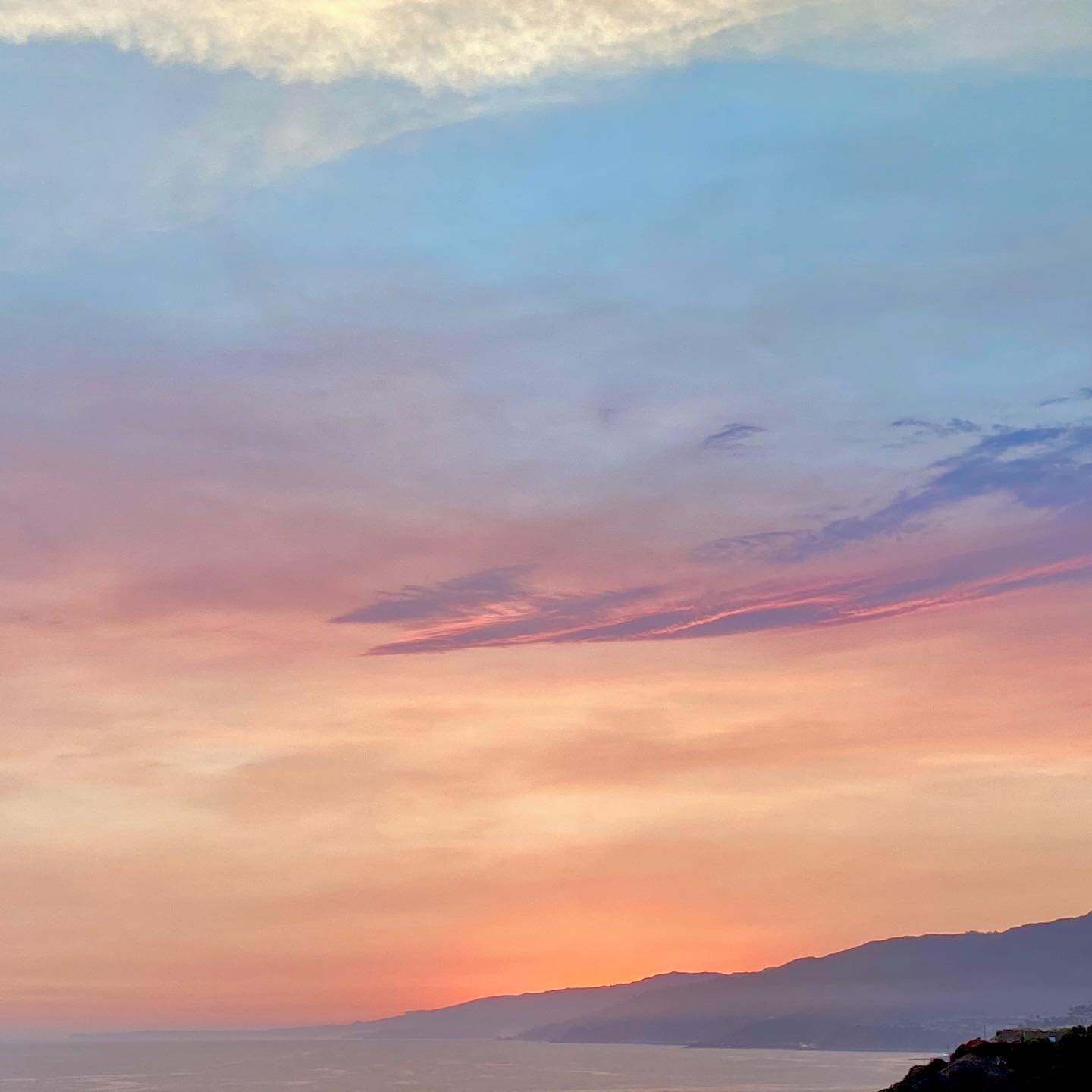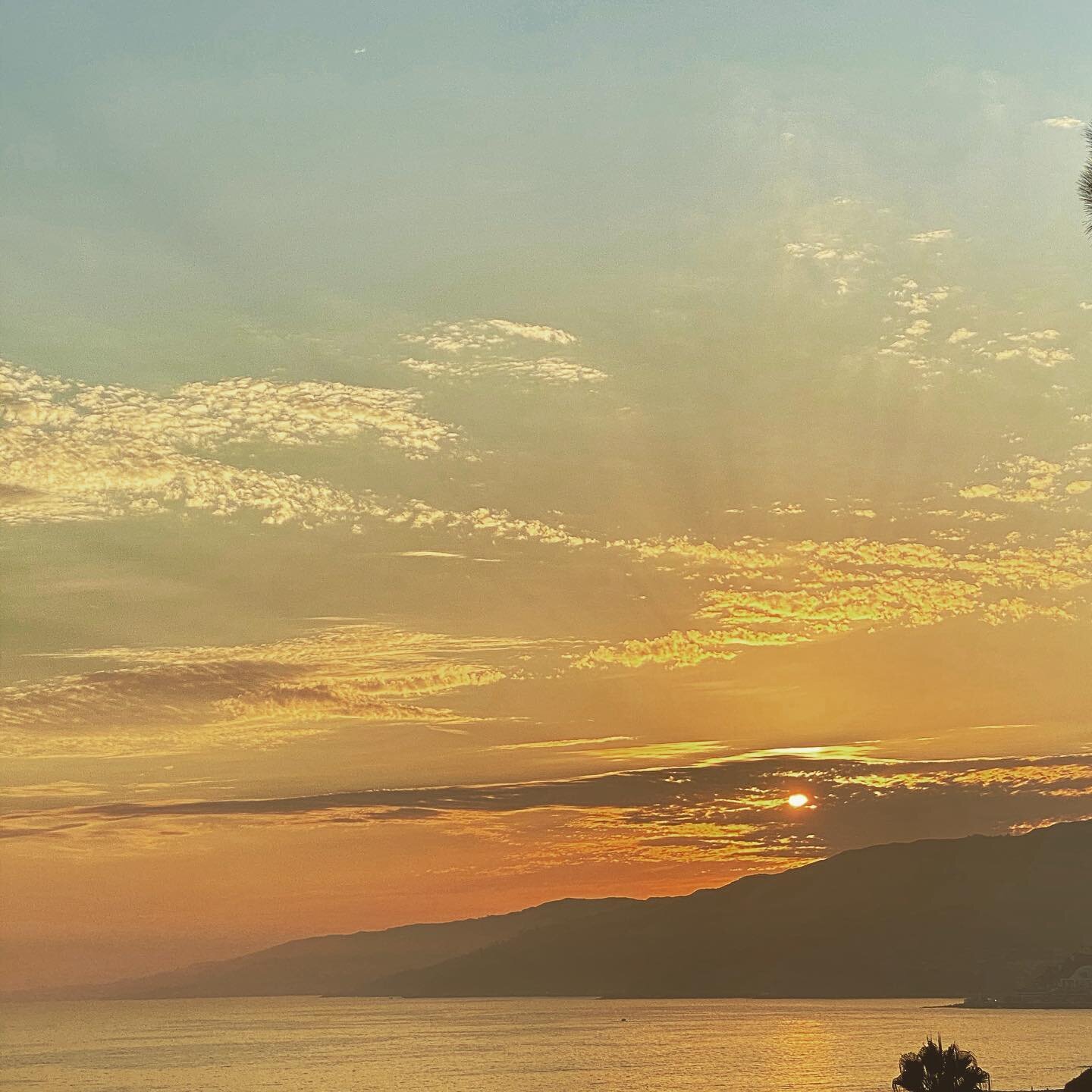
"When the market goes south, you can't support a golf course that costs who knows what - maybe $1.5 million to $2 million a year - to water and seed"

Regarding the status of Escena, the new Nicklaus course in Palm Springs, this Desert Sun story suggests that the shutdown is all Lennar's doing and a result of the sub-prime meltdown.

During an inspection of sprinklers by The Desert Sun on Tuesday, the fairways, roughs, tees and greens appeared not to be watered. Only the outlying landscaping appeared to have drip irrigation.

"When the market goes south, you can't support a golf course that costs who knows what - maybe $1.5 million to $2 million a year - to water and seed," said McCulloch, an avid golfer.

Marshall Ames, a vice president in investor relations with Lennar, said Tuesday his company is "very challenged to answer questions about individual communities."

I was in the desert Monday and drove around. I've never seen a nearly complete development essentially abandoned, so I pulled out my video camera... 

Golf Digest Best New 2007

bestnewcourses_470.jpgNow posted at GolfDigest.com, Jack Nicklaus and Tom Doak's Sebonack takes the private category.

The Best New Public With Hot Beverage Cart Girls Over $75 goes to Virginia's Highland Course at Primland by Donald Steel and Martin Ebert.

Best New Public Where You Might Have To Change Shoes In The Parking Lot Under $75 goes to another Virginia course, Ed Carton's Spring Creek.

The Best New Public Remodel, Lester George's restoration of The Greenbrier, beats out in stunning fifth place position, the horrid Industry Hills, aka Misery Hills, oh, wait, it's been rebranded as Industry HIlls GC at Pacific Palms Resort. I think the rebranding put it in the top 5.

Best New Private Remodel, goes to Gil Hanse, Brad Faxon and Jim Wagner for their revitalization of TPC Boston, edging out Rees Jones remodels of Bellerive and Atlanta Athletic Club as well as Jack Nicklaus's work at Ohio State.

And Best New Canadian goes to Muskoka Bay by Doug Carrick.

Stephen Szurlej's exclusive photos of the winners are posted, but other than the aerials of Sebonack I wouldn't waste your time unless you want to see a bunch of TPC Boston ground views from behind greens guarded by lakes. Not as horrific as his photo of Rustic Canyon when it won, which actually was taken by a blind ground squirrel. However, considering how easy the two courses are to photograph (I know, I'm biased) and considering the landscape photography work of folks like Lambrecht, Dost, Brown, the Henebry's, Cuban, Furore and Scalletti, Golf Digest should farm this assignment out.

While not award winning, at least some of these images give you a sense of why TPC Boston edged out some tough competition. 

"From the 1997 Open to the 2005 Booz Allen Classic, when you used the Shot Link, the players hit it 49 yards longer over that period."

Larry Bohannan talks to Rees Jones about all things Rees. On Torrey Pines:

Not everyone is going to like the course. The ones who don't play as well won't like it as much," Jones said. "I think in the case of Torrey Pines, the players are going to be enthralled by it."

Specifically, Jones said the players should like the Open greens at Torrey Pines far more than the Opens in recent years.

"(Torrey Pines) doesn't have the pitch to the greens like Oakmont did (this year)," Jones said. "So if you get above the hole you really get a chance to make the putt a little bit more."

This next part really speaks to why we need drug testing since we know this is all thanks to the extra lifting:
Jones said in his research and work on renovating the courses for Opens and PGA Championships, his understanding grows of how good top professional players have become.

"We did Congressional over for 1997 (the Open), and now we are having to add a lot of tees for 2011," Jones said. "Atlanta Athletic Club, we did for the 2001 PGA. For 2011 we had to push the bunkers out, re-bunker the course and add length."

Jones says statistics back up the need for stretching golf courses out for major championships.

"From the 1997 Open (at Congressional) to the 2005 Booz Allen Classic, when you used the Shot Link (measuring system), the players hit it 49 yards longer over that period," Jones said. "In championship golf, we had to upgrade the golf course. We just took Oakland Hills back 350 yards. And now it is a challenge for these guys."
I found this odd: 
Scores are almost guaranteed to be more under par at Torrey Pines than at other recent Open courses, but for a reason Jones himself discounts.

"They are going to play it a par-71 at Torrey. The last couple of years it has been a par-70," Jones said.

Now, according to my PGA Tour media guide, they've always played Torrey at par-72. Eh, minor details!

"So it will be a chance to be more under par, which doesn't mean much.

Much.

"Still, the greens at Torrey are challenging. There can be this little terrace in the back that can be hard to access because they spin the ball so much."

Having the high-profile nickname of the Open Doctor and having his work critiqued and criticized by the game's best players isn't a burden, Jones believes.

"It's very beneficial. I've got three of the next four Opens, I've got three of the next four PGAs," Jones said. "The scrutiny of the golfing world is intense. If you do a good job, you get a lot of credit."

Escena On Hold?

7197671_BG3.jpgThanks to reader Scott for noticing this Palm Springs TV station story and Escena web site notice that would seem to indicate a very strange turn of events for a much anticipated desert course with some huge names in the golf course and home development business apparently backing out just weeks before a scheduled opening.
David Young, a subcontractor with MK Development, said he worked on the Escena clubhouse. "Three weeks away from finishing the job and the general contractor told me that Lennar had told them to shutdown," he said. Young said he was never paid for the work. "They owe me $72,000 dollars and they're not talking to me. I'm following up with an actual lien."

Meanwhile, golf course operations are closed. Troon Management oversees the golf course. They would not confirm if the closure is for temporary reseeding or if it's indefinite.

Frank Winsor, a potential homebuyer, is currently in escrow. Winsor said he had remained optimistic until he heard the news about the golf course. "[I heard] the management company running the golf course turned off the water. They're turning off the power tomorrow," he said. "[I'm] still confident someone is going to pull it together," he added.

One Escena prospect said it's not Lennar that is planning on pulling out of the project. He was told that it was the community's master planner who was pulling out.

"Each home will be between 367 and 700 square metres, with turf and pebble roofs."

2007-6-25-the-hills-house-credit-mark-hill2.jpgSarah Matheson in the Epoch Times looks at this week's New Zealand Open host site and developer Michael Hill's planned underground housing, along with its almost entire underground clubhouse. Almost.

Meanwhile, Craig Better at Golf Vacation Insider questions the wisdom of the concept and says it gives new meaning to "living in a bunker."

According to GolfChannel.com, coverage begins with the first round Thursday morning at 6:30 a.m. Pacific.

One More MacKenzie Design Out There?

Granted, it needs to be built, but...

Thomas Dunne pens one of my favorite stories of the year in the November/December T&L Golf on an Alister MacKenzie design that was never built.

The course that the Good Doctor drew up for Anchorena turned out to be something special, even by MacKenzie’s standards. Though it would bear many hallmarks of other great courses he designed, it was in one way compellingly different: It features nine double greens of the sort that distinguish the Old Course at St. Andrews. The routing was an ingenious intertwining of two nine-hole loops, somewhat similar to that of Muirfield. MacKenzie apparently scouted the grounds, drew up the plans, handed them over and presumably collected a fee—but then the course was never built.

Why MacKenzie’s design for El Boquerón wasn’t executed remains a mystery. Instead, Anchorena hired Dentone to build a nine-hole course on the estancia grounds that, although situated in the location that MacKenzie had in mind, was only loosely based on his design. It too was called El Boquerón, it had a clubhouse, and golf was played on it for a generation by the Anchorena family and their friends. But after the patriarch’s death in 1951, the property was divided among his heirs, and the course gradually disappeared.

One of those heirs was Enrique Anchorena Jr., who turned the clubhouse into his permanent home and kept the original MacKenzie plans in a frame above the fireplace. There the document languished for the rest of the century, a faded star in the Englishman’s glittering career.


"I'm hoping to make it for the opening."

Thanks to reader who spotted this post on The Golf Forum. Apparently a Herald-Sun piece on golf included this list (not available online):

'In one of the centre spreads, [Robert] Allenby lists his top five favourite golf courses'

1 - Royal Melbourne (Sandringham)
2 - Augusta National (Georgia)
3 - St Andrews Links (Fife)
4- The Forest Resort (Creswick)
5 - Riviera Country Club (Pacific Palisades)

I couldn't help but notice the explanatory paragraph for number 4 on the list

"It's in this list because I've just designed it. I based it on Royal Melbourne. I can't wait to play it. I'm hoping to make it for the opening. It's about an hour's drive from Melbourne, near Ballarat, just a lovely part of the world."


I'm constantly astounded by the devotion of these players architects!

“The classic model of houses ringing a golf course is dying"

16golf600.1.jpgSallie Brady of the New York Times looks at emerging trends in golf course housing development and lists some of the cutting edge communities of note.

Got to love the frank lede:

There's never been anything terribly sexy about living in a golf community. Imagine cookie-cutter spec homes dotting yet another dull par 4 in Myrtle Beach, and you get the picture. Even if you like the game and are in the market for a vacation home, you may never have considered buying in one of these old-style resorts.

Fast forward...

“The classic model of houses ringing a golf course is dying,” said John Kirk, an architect with the New York firm Cooper Robertson & Partners, who designed homes at WaterSound, a beachside golf community in the Florida panhandle. “Instead the golf course is like a big public green,” he said, adding that “people want to be able to walk to the post office or to get their morning coffee.”

Vacation home buyers continue to get younger — a median age of 47 in 2006, down from 52 in 2005, according to a survey by the National Association of Realtors — as more families move in next to the retirees at golf communities. Developers have responded by offering more design options, holiday kids’ clubs and summer camps, and myriad recreational activities beyond the driving range.

But the question is whether there are enough buyers for these new golf retreats. “The long-term demographics are favorable,” said Walter Molony, a spokesman for the National Association of Realtors. “It would not be surprising if we saw the vacation market hold its own while the rest of the market declines.”


"So I'm proud to be mentioned with Old Tom. If we played each other? Well, I'd have the edge, because of my fashion sense."

MORRISSETT_10_439x600.jpgI managed to put three minutes aside for my monthly power flip through Golf Magazine and actually stumbled upon  something worth reading in the form of Connell Barrett's look at innovators.

Granted, a couple of them I trust as far as I can throw them, but at least Ran Morrissett got some nice recognition.

"I think of GolfClubAtlas.com as a museum. Architecture is an art, and a course is like a 200-acre canvas. My Web site gives like-minded people a place to discuss and debate these works, to keep the discussion happening. People on the site are regular guys who want to protect great courses and preserve classic architecture. The dialogue can get pretty intense. Things got personal a few years back when Tom Fazio redid the bunkers at Merion. A lot of name-calling. Some thought that changing the bunkers was akin to drawing glasses on the Mona Lisa. It's funny — the nicest, kindest gentleman can become a pit bull online! But that's part of the passion. It's my passion, too. This is a nonprofit site. Since I started it in 1999, I've gotten a lot of offers to sell, but I never will. It's like those commercials. Annual cost of running a web site: a few thousand dollars. Helping to keep architecture debate alive: priceless."
Actually, priceless was Greg Norman fawning over himself in arguably the most nauseating paragraph of self promotion ever published in a major golf publication.

NORMAN2_9_600x532.jpgHere's Greg, on himself:
"This January, I'll be honored with the Old Tom Morris Award, for giving back to the game. For one, I feel that golf should be more compatible with the environment. Courses elevate property value and create jobs as well as provide green spaces, filter air, and create a wildlife habitat. Doonbeg, in Ireland, was built with shovels, not bulldozers. We moved just 26,000 cubic yards of soil and protected a microscopic snail species. In addition to that, my tournament, the Merrill Lynch Shootout, has raised more than $10 million for CureSearch National Childhood Cancer Foundation. So I'm proud to be mentioned with Old Tom. If we played each other? Well, I'd have the edge, because of my fashion sense. I'd wear something from my Greg Norman Collection, which is comfortable and stylish. How can you make a full turn wearing a double-breasted three-piece wool suit?"


"Predictable Courses That Dull The Drama"

Lorne Rubenstein considers why the PGA Tour plays so many drab courses. He quotes former Tour player and architect John Fought, who gets to the heart of the matter (at least in some cases):

"The golf courses they play on tour aren't as good [as they should be]," former PGA Tour player John Fought, now an architect, said in Toronto the other day. "They don't play wonderful old courses, generally. They play the latest development deal that a guy is trying to sell."

TPC Las Colinas Update

An unbylined Dallas Morning News story looks at the TPC Las Colinas redo by D.A. Weibring, with plenty of insights into the project. Most interesting of all is this note, which would seem to indicate that the PGA Tour is taking its architecture seriously these days.

 PGA Tour commissioner Tim Finchem stamped his approval on the project's status last week after touring the facility with Henry Hughes, the Tour's chief of operations. Officials from EDS, Four Seasons and the Salesmanship Club also gave a thumbs-up.


Technofitting

Ryan Ballengee, prompted by posts here and on Golf Digest about their Panelist Summit, makes several interesting points on the restoration debate, particularly related to Tom Fazio's remarks. Though Ryan loses all credibility when he labels me a Great American but could win some points for the creation of fine new term to describe the Fazio/Jones approach to classic courses: technofitting.

"Why would anyone bother trying to design a course for us?"

For those of you new readers who haven't followed the technology debate and its impact on the game, John Huggan offers a juicy primer that is also filled with some fresh quotes and thoughts for those of you who have tracked this key issue.

The other day, former US Open champion Geoff Ogilvy played a round with friends at the splendid Kingston Heath course in his home city of Melbourne. When they came to the 567-yard 14th hole, which was playing downwind, admittedly, Ogilvy hit a good drive... before striking a 7-iron approach through the green.

That's not a misprint. How long does a hole have to be before one of the game's leading exponents is unable to reach the putting surface with two full-blooded shots? Given that Ogilvy hit a drive and 7-iron around 575 yards, he was capable of reaching a green about 200 yards further on with his 3-wood.

Let's make the hole 800 yards in length, just to make him think a little. As the world No.11 asked companions rhetorically: "Why would anyone bother trying to design a course for us?"
Fast forward... 
"I don't pay too much attention to distance statistics, because most of my courses are not being built for the professionals," says leading designer Tom Doak. "But I try to stay abreast of what's going on, because the governing bodies don't!"

Wow, the Doakster finally speaking out forcefully! Better late than never.

And from Huggan: 

The typical response to this new breed of tour player has been predictably, and disappointingly, one-dimensional. Most courses have resorted to golf's most boring hazard - longer and thicker rough - and ever-increasing length, and in the process have destroyed any semblance of strategic choice for players who are supposed to be the best.

In other words, thinking and planning have largely been eliminated from the game at the highest level. On almost every hole there is but one choice of shot, with the creation of interesting angles for the approach something those old guys did before technology ran amok. It is tedious and heartbreaking to watch and, no doubt, to play.

The danger is that the average golf club committee will imagine that growing more and deeper rough and creating longer holes by way of more back tees offer the way forward for their course. Big mistake. That approach ignores the fact that the average golfer gains little or no advantage from modern technology. Largely starved of the club-head speed that is yardage's fuel, his drives have "stretched" by only a few measly yards. Besides, there is a better way.

"On most of the courses we work on, we put in back tees for the good player only on those holes where the green size is appropriate," says former European Tour player Mike Clayton, now a much-respected course designer. "We would not, for example, make a 310-yard hole 40 yards longer just because we could.

"In fact, par-70 is the answer to many tour course design questions. By reducing the par by two shots, you create two less vulnerable holes. Throw in a couple of great short par-4s and a short par-3, and it is possible to keep a course around 7,000 yards in length while still making it both difficult and thought-provoking for the professionals, and playable for the members without having tees they never go anywhere near."

Of course, all of that could be achieved by hauling the ball back 50 yards. Come on guys, get it done!


50? Shoot, I'll take 20 at this point. 

"Well, it's a simple issue. You just fix it. You do it."

Bob Carney does a super job summing up the various debates and vigorous give-and-take that took place during the Golf Digest Panelist Summit, and offers this from Tom Fazio on his work at Augusta National. I missed his presentation today while flying the unfriendly skies. But it was a typically masterful blend of Fazio rationalization:

Fazio, who did that remodeling, was having none of it. "Put yourself in Hootie Johnson's postion. You are in charge. And you have the best players in the world and you have a venue that used to contain long, strong par 4s--No. 1, No. 5--that required a long drive and a mid-iron. What do you do. Well, it's a simple issue. You just fix it. You do it."

Yes, and it's been so well received.

Length, yes Tom. Rough, silly tree planting, no optional tee flexibility and an overriding emphasis on protecting egos through other contrived features?  Not working.

Fazio suggested another exercise in imagination. He said imagine Donald Ross, today, watching Tiger Woods tee off on Pinehurst No. 2. The ball explodes off the tee. "Donald Ross has never seen anything like this, says Fazio. "What do you think he thinks? He's going to say, 'If that's the way golf is now, we need to look at that.'"

Yes, on the regulatory side. But since Fazio has openly encouraged the distance expansion, it's clear he has his own best interests at heart over the health of the game. What a shame.