Player Reactions To TGC Deal

Thanks to reader C for the heads up on Doug Ferguson's notes column from earlier in the week. A few eye opening comments:

"If we're trying to reach out to non-golf fans, how you leave out ESPN is beyond me." - David Duval, on the PGA Tour giving exclusive cable rights to The Golf Channel in a 15-year deal. 

And... 

"It would be nice to know what's going on," Brent Geiberger said. "It seems like we find out just like everybody else. And it's our tour."

The tour has a 16-man Players Advisory Council and four players on the nine-member policy board.

"But when those players get in the room, they're already outnumbered 5-4," Paul Azinger said. "I wish the players had a little more say."


Bubba Drives Interest In The Game

Tim Rosaforte writes:

If you stayed up late Sunday night to watch David Toms blow out the field at the Sony Open, you were looking for something to keep you from going asleep. Nothing against Toms, who won by five strokes; it just wasn�t much of a final round for drama.

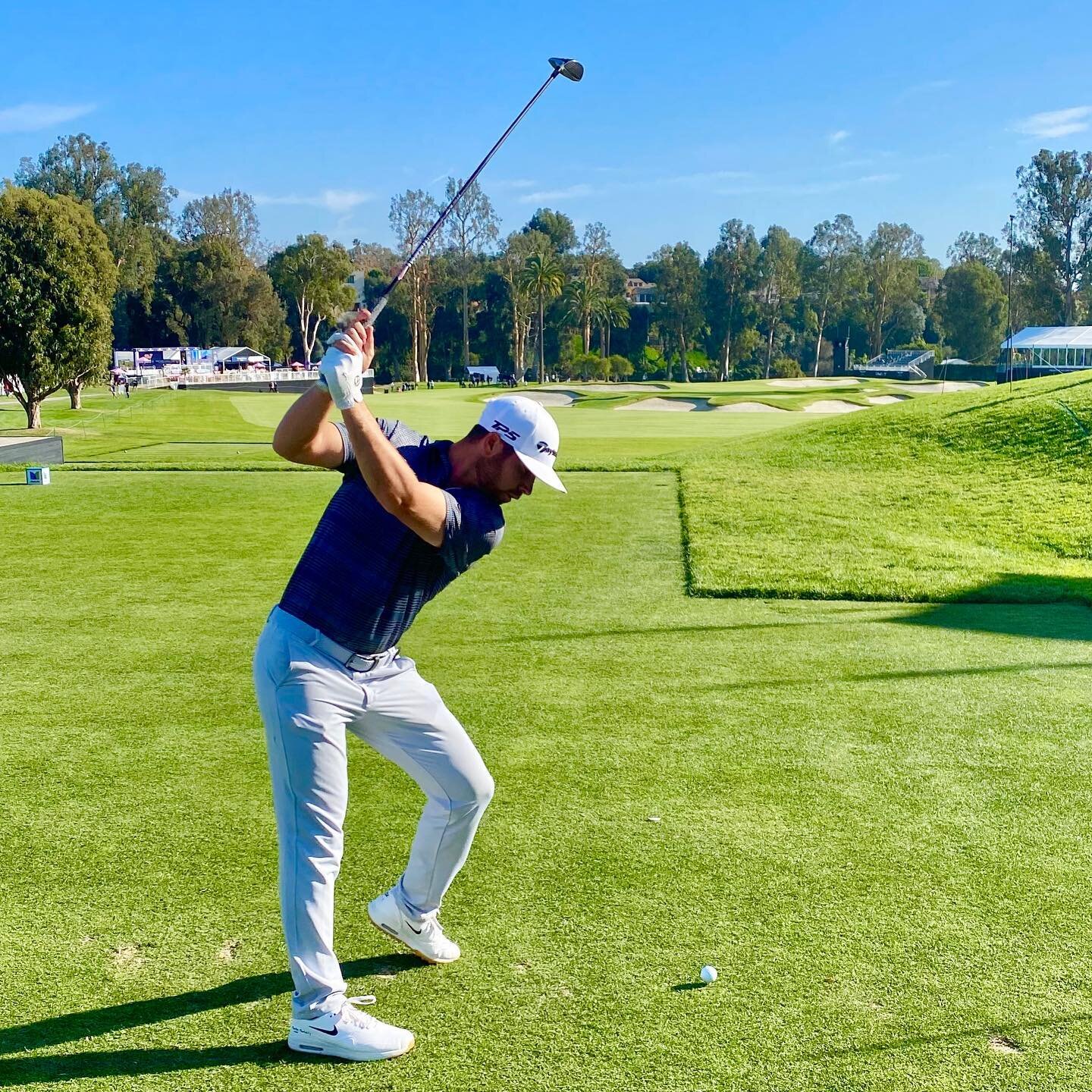
Thankfully, there was Bubba Watson. The purists may think distance is ruining the game. In truth, distance drives the interest in the game.

Distance drives interest in the game? Hmm...so is that why ratings are in the toilet and play is way down? I knew it!

Watson is more than a circus act experiencing his 15 minutes. He is the reason why Tiger Woods went to graphite and why Mickelson was experimenting with a 47-inch shaft this off-season. Watson is the future. He is 6-foot-3, 180 pounds of elasticity, and he didn't appear the least bit nervous on the weekend, finishing with an eagle on Sunday for a check of $244,800 that represented job security.

Bubba is the reason Tiger went to graphite?

Huh, wonder why Tiger's never credited him? Shameful Tiger, shameful.

Exec VP of International Affairs!?

Ty Votaw's new PGA Tour title:

Executive Vice President, International Affairs

The Executive part is fun because it vaults Votaw to the same all-important title plateau as Charlie Zink and Ed Moorhouse, who are each making over $1 million a year. (Zink made $17 more than Moorehouse last time the numbers were reported, so I wonder if Votaw will be $17 less than Moorhouse?)

Anyway, the Vice President part is fine too because, why not? Everyone else is a VP down there.

be195b1f.jpgBut International Affairs? For someone who had an affair with an international
player, creating problems at his last job? Surely a wordsmith like Tim Finchem could have done better.

Oh and in case you were wondering, Votaw will be the Commissioner's lapdog will report to the Office of the Commissioner.

Another Vice President

The worst kept secret in golf is out: Ty Votaw has been hired by the PGA Tour because they so desperately need another executive salary feeding some vague position ("strengthening the tour's profile in the global sports marketplace").

The over-under on Tim Finchem deciding to spend more time with the KB Homes board and to pursue other board seats just moved up six months, to November 2007.  

Potter Interviews Finchem

The USA Today's Jerry Potter interviews Tim Finchem about the state of the Tour and the game. It's pretty dull, except this bit on technology.

Q: A question now about technology. It's a big issue. I know you guys have done a lot of research on that through ShotLink. There are people saying they should roll back the golf ball, make other changes. Do you have any information now that will give you a better idea about how you should react to this?

A: I think we're not ready to pull the trigger on that decision just yet. The USGA is experimenting with some new golf balls that actually do that, or are intended to do that, to curb distance a little bit. We'll see where they go with that work.

Now, if I'm not mistaken, the USGA scoffed at the accuracy of Frank Hannigan's 2004 "Miracle Ball" exclusive. The USGA/R&A have said they were collecting balls for study, yet Dick Rugge has said that the USGA does not believe the ball should be rolled back. And the USGA has said that they nor the R&A have received rolled back balls from manufacturers for study.

Yet the commissioner says they are experimenting? Encouraging if true. Continue...

The other changes that have been made to revise the overall distance standard, and put a limit on what happens with the configuration of the face of the golf club, and things of that nature we think have had a good effect. I do think that we need to continue to look at distance. We're meeting with the other elements of the industry — the USGA, the R&A, Augusta National, the PGA — on a regular basis. And we recognize that regardless of what you do with limits on equipment, the players continue to get bigger and stronger. ... And even if you don't do anything at all with equipment to enhance it further, which I don't think will happen, that athleticism that's coming into the sport is going to continue to create a situation that these golf courses are challenged in ways that they haven't been in the past. It forces us to set them up in different ways, which in some cases may not be advantageous. So it's something we've got to look carefully at. 

Not sure what you all think, but Finchem was much more clear two years ago:

"There is some point -- nobody knows where it is -- when the amateur player feels divorced and really doesn't appreciate the game at this level, just because it's so different that it doesn't become particularly relevant," Finchem told the Palm Beach Post. "The second thing is, if everybody is driving every par 4, it's not particularly interesting to watch.

"We are anxious, because we are continuing to see some distance enhancements in a short period of time. Unless something happens, we may have to move toward bifurcating the equipment specs for amateurs and professionals. In that case, we would be more involved."

Anything's Possible!

From PGATour.com:

"These Guys Are Good," the longest running and one of the most recognizable tag lines in professional sports marketing, gets a fresh look through a new round of advertising from the PGA TOUR’s longtime agency, GSD&M of Austin, Texas.

It's amazing how long that campaign has lasted considering it was a replacement for "Anything's Possible," the slogan that outlived its purpose when the Tour took Casey Martin to court (and proved not quite everything was possible).

"THE PROFESSOR" campaign will include as many as 10 different TV brand and tune-in ads along with print, radio, internet and retail.

Brand and tune-in ads? Eh, I don't want to know.

The new ads put a spin on the different dimensions of competition in sports. Most sports are largely man vs. man. In golf, however, players not only compete against each other, they face equal and sometimes greater challenges of man vs. nature and man vs. himself. To highlight this idea, the campaign features a mock professor describing fictitious clinical scenarios of various life obstacles that are also realities that both TOUR players and recreational golfers can relate to, such as man's inner demons and the forces of nature.

Hey, is Max Behr sitting in on those rivetting brainstorming sessions?

 “TOUR players are confronted with a new set of obstacles with every shot, with a fine line between success and failure. That creates a great deal of intrigue, drama and excitement among golf and sports fans,” said Ric Clarson, senior vice president of Brand Marketing for the PGA TOUR. “There's a story in every shot, and every shot counts.”

In other words, this is why you should tune into the Thursday telecast from Memphis. You might see a shot you will then get to see over and over again on Sportscenter.

In one of the ads, "Pressure Seeker," the professor describes a person who derives satisfaction from extreme pressure situations. While most people succumb to pressure, TOUR players are the best in the world at coping with it. The professor suggests these type of individuals, even when dealing with extreme situations, can often appear "cool as a cucumber."

"Dendrophobia" has the professor discussing the fear of trees, rare among the general population but very common in even the best golfers. The professor suggests "…those afflicted with dendrophobia seek open grassy spaces.”

... 

38% of Almost A Billion...

In the Golf World story on the new Tour TV deal, Stu Schneider writes:

The source said the tour would likely reduce its subsidy of purses from 62 percent to "somewhere in the 50s," putting pressure on tournament directors to get that revenue from other areas.

Now if 38% of the television money over the last four years stayed in Ponte Vedra, and it was valued at "almost" a billion dollars, would that mean the PGA Tour takes somewhere between $75-95 million a year for executive salaries, marketing and overhead? 


Kostis On Lack Of Young American Talent

Peter Kostis explains why he believes there are so few burgeoning American stars compared to the rest of the world.

He doesn't mention the sense of entitlement guiding most American youth. Nor does he bring up the lack of diversity in playing conditions they face, particularly firm ground and thought-provoking designs. Nor does he mention the overall lack of imagination that American golf presents, thus failing to provide our kids with the kind of experience that European and Australian golfers are exposed to.

Mostly he blames the state of American college golf programs. (Actually, after reading about coaches endorsing a brand of rangefinder, maybe he's on to something.) He also believes the Tour school structure is an issue too.

Collegiate golfers who do turn pro are often met with the harsh reality of Q-school, where changes are needed as well. Exemptions past certain stages of Q-school should be abolished. Everyone should go through three stages, thus evening the playing field for the younger players (only 10 of 32 Tour cards earned this year went to players who survived all three stages). 

Lorne on Pressure

Lorne Rubenstein gets to the essence of what we love about some tournaments, and why all of these no-cut, rich-get-richer affairs aren't doing the Tour much good.

Real tour golf should be intelligently designed, then. Only then are golfers forced to be strong and to see if they have what it takes to survive.

The game has always been about getting it done without the security blanket of a guaranteed cheque. Little by little, that's changing, sure. Anybody who wins a tour card will make at least a couple of hundred thousand dollars from equipment contracts and other endorsements. But that disappears if the player doesn't keep the card.