In golf construction art and utility meet; both are absolutely vital; one is utterly ruined without the other. GEORGE THOMAS

It’s back!
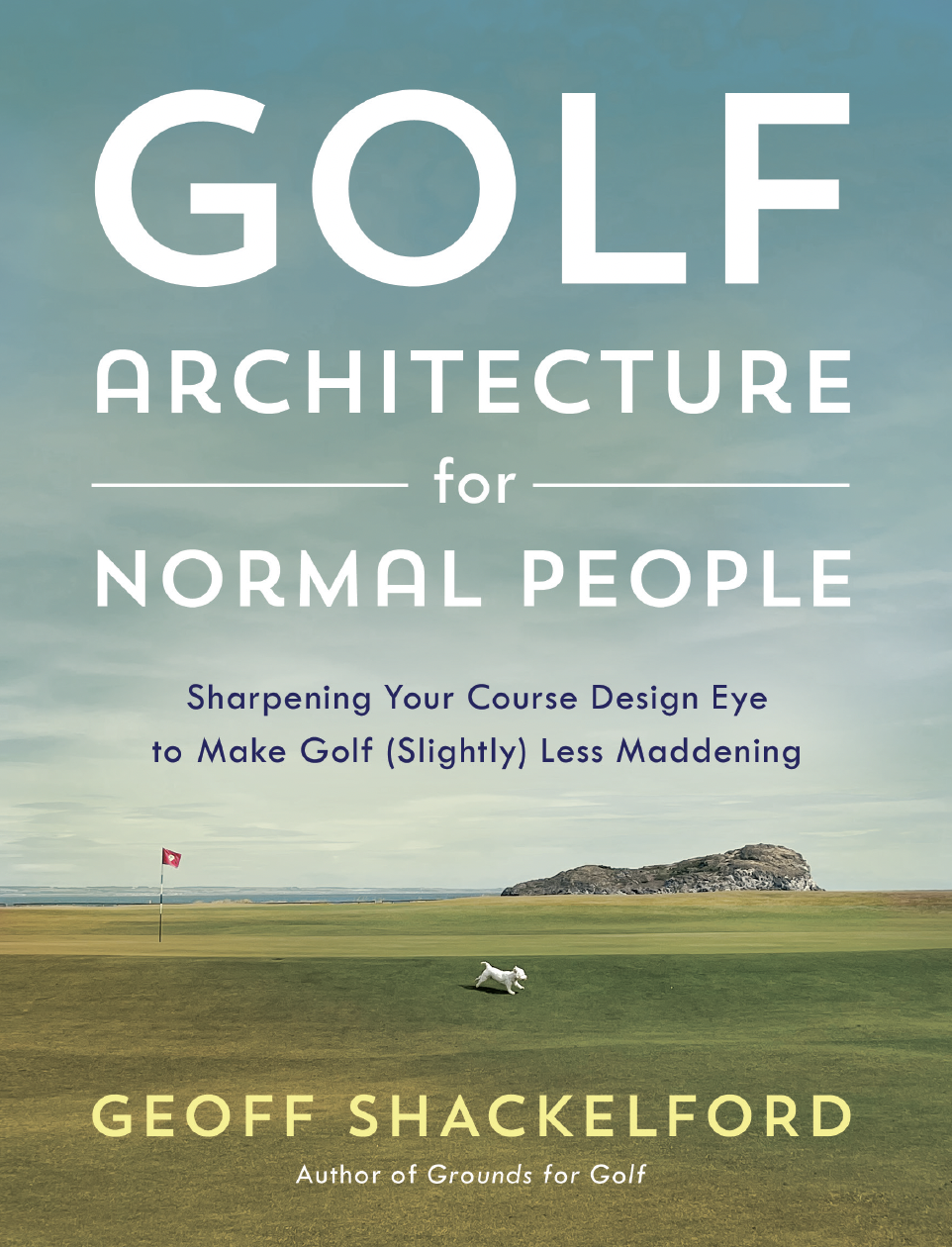
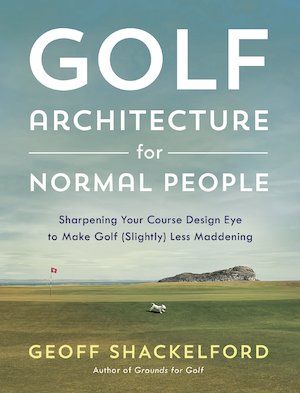
Twenty years later Tatra Press has kindly allowed me to bring back Grounds For Golf now that golf architecture is of more interest to the masses. A new Introduction looks at what’s driven the interest growth and two new chapters I had a blast adding (plus a few edits to keep things up-to-date).
The Amazon purchase page for the book arriving June 15, 2026.
USGA's O'Toole: "The health of the game is in trouble."
/Dan O'Neill looks at the state of the game
Read MoreBloomberg: The Golf Economy Is Back!
/Bloomberg's Thomas Black reports that the
Read MoreGary Player To The R&A: "You are oblivious"
/Bill Fields covered
Read MoreState Of The Game Podcast, Episode 7: Masters Preview
/No guests this time, just Rod Morri, John Huggan and I talking about the Masters for about forty minutes or so. Note: this was recorded before Hunter Mahan's win Sunday in Houston, so when we discuss favorites, my "Hunter Mahan flying under the radar" may sound a bit silly. Oh, and yes my predictions were based on last week's weather forecast, which was much more upbeat than the current one.
As usual, there are a few options for listening if you don't want to keep this webpage open. There is the State of the Game page, a direct play option, and the iTunes option where you can also subscribe.
State Of The Game Podcast, Episode 6: Gil Hanse
/Gil Hanse joined Rod Morri and myself for the latest
Read MoreNGF: 19 Course Openings V. 157.5 Closings In '11
/It's always hard to
Read MoreLanger: It's The Ball!
/Someone (not me!) teed Bernhard Langer up for a technology discussion at the Toshiba Classic and the normally controversy-resistant dared to suggest the ball has the biggest influence on the distance explosion of late.
BERNHARD LANGER: I am definitely surprised. I watch it on TV and know some of these courses. And, you know, was it Bradley last week at the 8th hole into the wind at Doral, he had like 251 into the wind, and he hit a 3 wood and flew it over the green. So he flew it 260 into the wind, so he carried it probably 275 or 280, if there had been no wind, with a 3 wood. That's just unheard of. Or used to be. But it's a common thing nowadays.
I think what happened is when we switched from the balata round ball to the two or three piece balls, whatever they are now. If you swing the club 10 miles faster than the other guy, you used to get about 10 yards for every mile about a yard.
Now if you swing it 10 miles faster, you get about 20 to 25. So you get a lot more out of the equipment than we used to.
So the guys who swing it faster or harder have, you know, even more of an advantage and that's where these tremendous distances come from.
He went on to mention better athletes too. But coming from a guy who looks just like he did 20 years ago and who clearly takes care of himself, I'm thinking he places athleticism a distant second to advancing technology. Just a guess.
State Of The Game Podcast Episode 5, Slow Play Cures!
/Episode 5 looks at the slow play epidemic on the local and professional levels. Rod Morri hosts yours truly, John Huggan and special guest John Small, a tournament organiser and inventor fom Australia whose Solution 240 product is achieving remarkable results in eliminating slow play at two Sydney golf clubs.
As always, you can listen via the player below, on iTunes directly, or more conveniently via an iTunes subscription. It's free! In fact, for good measure, I'll throw in a link to David Owen's Slowest Member blog rant. While supplies last.
Nice, Fun Muni Faces Closure Because Of Bad Greens!?
/ Thanks to reader Tom for Mark McGregor's disturbing look at the possible demise of Snyder Park, a 1929 muni that Tom says "is 6,300 yds. from the tips" and is "a wonderful old style course and a delightful walk."
City finances and no direction on how to fix bad greens may cause the city of Springfield, Ohio, to close the place. Perhaps this would be a nice salvation job for the USGA to tap its surplus and the expertise of the Green Section to save a quality place for everyday golf? Oh there I go again.
City Manager Jim Bodenmiller said in a January commission meeting that the city challenged the park district to make Snyder and Reid Park courses self-sufficient. National Trail met that goal in two of three years, but a subsidy was necessary in 2011.
City Finance Director Mark Beckdahl said in the meeting that without the subsidy, the district’s bills and vendors would have gone unpaid.
“We had a rough 2011, there’s no denying that,” Smith said. “It’s tough when you’re dealing with the weather. Not everything you do (to fix turf) works.”
Early estimates to repair the greens range from $15,000 to $20,000. National Trail will know more in a few weeks once a golf turf expert examines the course, determines why conditions deteriorated and how much it will likely cost to restore them.
The city hasn’t decided whether it will pay to redo the greens or if it will instead close the Snyder Park course.
State Of The Game Podcast, Episode 4: Greg Turner
/After a week off, episode four of State of the Game covers our favorite topic, golf architecture, with hosts Rod Morri and Mike Clayton quizzing the always fascinating former touring professional-turned-golf course architect Greg Turner, who joined in via Skype from his New Zealand home.
Read MoreFinchem: Number Of Golfers Is Growing
/Tim Finchem joined NBC's Dan Hicks and Johnny Miller for the traditional WGC-contractually-obligated-visit-by-the-Commissioner and perhaps sensing no one really expects him to say much of interest, threw out a stunning assertion.
Read MoreBrandel Likely To Get A Visit From Camp Ponte Vedra Police
/There were new set pieces (more cactus!) and a little more spunk in this year's State of the Pro Game discussion from Tucson. The first by-product of last year's marriage between NBC and Golf Channel managed to address the everyday game in a rushed final segment last year and though they didn't get that far this year, once they got past the tedious Tiger talk the discussion must have had the monitors in Ponte Vedra picking up the red phone.
Read MoreTiger Talk Alert: Golf Channel's State Of The Game II
/Last year they convened the Dan Hicks, Johnny Miller, Nick Faldo, Brandel Chamblee and Roger Maltbie to talk about the state of the game and it became a roundtable about Tiger. With Maltbie taking a pass this year, they are promising to "discuss golf’s biggest issues in a roundtable format" at 8:30 p.m. ET. Friday night. So that means at least two segments devoted to Tiger.
Read More