Golfers Prefer Well-Conditioned Courses...

How about that newsflash from the city!

At the sixth annual Golf 20/20 Conference last fall, attendees heard a variety of presentations on how to deepen the connection between the game and its best customers, as well as how to further golf among the corporate community...Among the presentations was a detailed look at a survey of avid golfers presented by Jon Last, vice president of research and development for the Golf Digest Companies. According to Last, there are a number of key factors that affect participation by golf's best customers – those defined as avid and core golfers. (Avid golfers play 25 or more rounds a year, core golfers play 8 to 24 rounds.)   Among those factors, the work of golf course superintendents ranked right at the top. When these groups were asked, "Do you generally prefer to play a course that is very challenging, not top condition" or one that is "challenging but in very good condition," 88 percent of them said they'd choose the course in very good condition.   

Really? You don't say? So hard-and-lousy condition lost out to not-as-hard and in great shape. Okay.

They were also asked to rank conditioning against course design in a decision to pay 25 percent higher green fees. The two key groups selected "better course conditioning" twice as often as "better architectures and layout." 

Better architectures? 

Finally, golf's best customers ranked the factors that drive their enjoyment of the game on a scale from 1 to 7. The conditions, people and their own performance received the following mean scores:   

Well maintained greens & bunkers - 6.34
Well maintained fairways & tees - 6.28
The people you play with - 6.24
Playing well on the course - 5.84
Availability of practice facilities - 5.68
Beautiful surroundings and scenery - 5.74
Scoring well - 5.65
Challenging course - 5.65
Fast pace of play - 5.39
Knowledgeable marshals and starters - 5.38

And they forgot to ask about the design of the course...score another one for architecture(s).  

So conditioning is why everyone is going to Bandon? We know it's not because of the weather.

Thanks to reader Josh for this. 

Chase For That Kind Of Money

Larry Bohannan in the Desert Sun:

But as the current negotiations drag on, and as players such as ABC and USA walk away, the questions of how the tour is dealing with the networks and sponsors grow. The final six or so weeks of the 2007 season are being sacrificed to cable to avoid the NFL.

If the tour is negotiating to maintain current revenue levels, it's now clear that won't work. If in the chase for that kind of money the tour is alienating sponsors, television networks and even its individual tournaments, the tour might be doing a remarkable disservice to the fans and the game. 

To Go Or Not To Go?

Listening to LA sports talk radio shows slam Pete Carroll over the decision to go for it on fourth down of yesterday's national title game, I got to thinking how rare it is in modern golf to have those essential do-or-die moments that are debated for days, weeks, or even years after. 

It should happen every few weeks. We're lucky if it happens once a year.

A reader told me today about watching Jack Nicklaus at Pebble Beach during the 1982 U.S. Open final round. Nicklaus was debating whether to go for No. 6 in two, concerned that he could not get the ball high enough to clear the hill that bisects the par-5. After an agonizing few minutes, Nicklaus finally decided to go for it. When he pulled his 3-wood headcover off, the crowd went wild.

How rare have those moments become when the player stands in the fairway, actually fretting and debating between a lay-up or go-for-broke shot as we fans debate the situation. How unusual are those memorable events (Curtis Strange at Augusta in 1985 and Chip Beck in 1993 come to mind) when the anticipation is so great that there is an emotional release from the crowd when a decision is made to go-for-broke?

It should happen a lot more in tournament golf, but sadly seems relegated to the times someone drives a par-4. 

Bland architecture is part of the problem, but mostly, the game is just played differently. With trajectory and questions of having enough distance so rarely part of the equation for today's player, we rarely see the golfing elite placed in that tempting, awkward, annoying but possibly rewarding situation that can make golf viewing so captivating.

Well, this rambling rant is just something to remember when you wonder why all of the questions here about the wonders of technology. Or if you wonder why television networks have trouble justifying an investment in televised golf, which just isn't the "product" it could be if the sport was in balance.

Elling Previews 2006

Boy, you just can't pick up a newspaper these days without these technophobes spreading the message of the devil! In spite his extremist views on technology, Steve Elling delivers an entertaining read. This time he previews 2006. (I love the "dump-and-chase" hockey metaphor for what has become of PGA Tour golf, and I don't even follow hockey).

What's it going to take for someone in a position of authority to take a real stance on runaway technology?

Driving distances are up a whopping 16 yards since 2000 on the PGA Tour, a massive increase that has rendered the game into a one-dimensional display of dump-and-chase hockey. The tour's driving leader averaged 319 yards -- and the first third of the season was played on slow, sloppy tracks because of rain.

Courses such as Augusta National have been forced to stretch (read: desecrate) their storied courses repeatedly, because the USGA is afraid of the equipment companies, and the PGA Tour won't get tougher with its course set-up.

And this on the USGA and PGA of America. Such cynicism. ;)

Place your bets. Which organization will screw up their major championship worse, the U.S. Golf Association or the PGA of America?

The USGA is the safer wager, having ruined so many U.S. Opens over the past decade that it was a huge surprise when absolutely nobody complained last year at Pinehurst.

The PGA, however, capitulated to the broadcasting whims of television and failed to react when rainy weather was in the forecast at the PGA Championship. Because tee times weren't moved up, rain delays pushed the end of the final round to Monday morning, robbing ticket-holders and weekend viewers of a terrific ending when Mickelson birdied the 72nd hole to win by a shot.

Whatever happened to common sense, guys?

Potter Interviews Finchem

The USA Today's Jerry Potter interviews Tim Finchem about the state of the Tour and the game. It's pretty dull, except this bit on technology.

Q: A question now about technology. It's a big issue. I know you guys have done a lot of research on that through ShotLink. There are people saying they should roll back the golf ball, make other changes. Do you have any information now that will give you a better idea about how you should react to this?

A: I think we're not ready to pull the trigger on that decision just yet. The USGA is experimenting with some new golf balls that actually do that, or are intended to do that, to curb distance a little bit. We'll see where they go with that work.

Now, if I'm not mistaken, the USGA scoffed at the accuracy of Frank Hannigan's 2004 "Miracle Ball" exclusive. The USGA/R&A have said they were collecting balls for study, yet Dick Rugge has said that the USGA does not believe the ball should be rolled back. And the USGA has said that they nor the R&A have received rolled back balls from manufacturers for study.

Yet the commissioner says they are experimenting? Encouraging if true. Continue...

The other changes that have been made to revise the overall distance standard, and put a limit on what happens with the configuration of the face of the golf club, and things of that nature we think have had a good effect. I do think that we need to continue to look at distance. We're meeting with the other elements of the industry — the USGA, the R&A, Augusta National, the PGA — on a regular basis. And we recognize that regardless of what you do with limits on equipment, the players continue to get bigger and stronger. ... And even if you don't do anything at all with equipment to enhance it further, which I don't think will happen, that athleticism that's coming into the sport is going to continue to create a situation that these golf courses are challenged in ways that they haven't been in the past. It forces us to set them up in different ways, which in some cases may not be advantageous. So it's something we've got to look carefully at. 

Not sure what you all think, but Finchem was much more clear two years ago:

"There is some point -- nobody knows where it is -- when the amateur player feels divorced and really doesn't appreciate the game at this level, just because it's so different that it doesn't become particularly relevant," Finchem told the Palm Beach Post. "The second thing is, if everybody is driving every par 4, it's not particularly interesting to watch.

"We are anxious, because we are continuing to see some distance enhancements in a short period of time. Unless something happens, we may have to move toward bifurcating the equipment specs for amateurs and professionals. In that case, we would be more involved."

Anything's Possible!

From PGATour.com:

"These Guys Are Good," the longest running and one of the most recognizable tag lines in professional sports marketing, gets a fresh look through a new round of advertising from the PGA TOUR’s longtime agency, GSD&M of Austin, Texas.

It's amazing how long that campaign has lasted considering it was a replacement for "Anything's Possible," the slogan that outlived its purpose when the Tour took Casey Martin to court (and proved not quite everything was possible).

"THE PROFESSOR" campaign will include as many as 10 different TV brand and tune-in ads along with print, radio, internet and retail.

Brand and tune-in ads? Eh, I don't want to know.

The new ads put a spin on the different dimensions of competition in sports. Most sports are largely man vs. man. In golf, however, players not only compete against each other, they face equal and sometimes greater challenges of man vs. nature and man vs. himself. To highlight this idea, the campaign features a mock professor describing fictitious clinical scenarios of various life obstacles that are also realities that both TOUR players and recreational golfers can relate to, such as man's inner demons and the forces of nature.

Hey, is Max Behr sitting in on those rivetting brainstorming sessions?

 “TOUR players are confronted with a new set of obstacles with every shot, with a fine line between success and failure. That creates a great deal of intrigue, drama and excitement among golf and sports fans,” said Ric Clarson, senior vice president of Brand Marketing for the PGA TOUR. “There's a story in every shot, and every shot counts.”

In other words, this is why you should tune into the Thursday telecast from Memphis. You might see a shot you will then get to see over and over again on Sportscenter.

In one of the ads, "Pressure Seeker," the professor describes a person who derives satisfaction from extreme pressure situations. While most people succumb to pressure, TOUR players are the best in the world at coping with it. The professor suggests these type of individuals, even when dealing with extreme situations, can often appear "cool as a cucumber."

"Dendrophobia" has the professor discussing the fear of trees, rare among the general population but very common in even the best golfers. The professor suggests "…those afflicted with dendrophobia seek open grassy spaces.”

... 

38% of Almost A Billion...

In the Golf World story on the new Tour TV deal, Stu Schneider writes:

The source said the tour would likely reduce its subsidy of purses from 62 percent to "somewhere in the 50s," putting pressure on tournament directors to get that revenue from other areas.

Now if 38% of the television money over the last four years stayed in Ponte Vedra, and it was valued at "almost" a billion dollars, would that mean the PGA Tour takes somewhere between $75-95 million a year for executive salaries, marketing and overhead? 


Sal, Others Weigh In

Sal Johnson writes about the rumored TV deal, why it became a money loser for ABC, the loss of work for a lot of talented people and he wonders how the Tour will spin this.

Since NBC doubling its golf coverage would mean going from 5 to 10 events, Johnson seems to feel CBS will be doing a lot more golf and wonders how viewers will feel about that (especially since their telecasts seemed a bit tired when they did just 17 events last year).

Here's the AP story on the Golf World story with its own confirmation from another source, and here is Golfweek's rehashing of the Golf World story without attribution.   

Follow-Up On Reported Tour TV Deal

Lots to cover, and I know you've planned your day around my thoughts on the matter, so here goes. First, in case you missed it, here's the link to Stu Schneider's GolfWorld.com exclusive, with reporting from Rosaforte, Sirak and Hawkins.

Golf World has learned the tour will be traveling with one fewer passenger, as ABC Sports, which broadcast its last Monday Night Football game a week ago, has opted for a similar decision for golf, leaving it to CBS, NBC and ABC's cable partner, ESPN.

Just when someone was getting the hang of making televised golf entertaining again, they yank the A-Team. Hopefully Faldo, Azinger (it doesn't sound like it), Tirico, Rankin, North, Baker-Finch and Alliss will appear on ESPN with Loomis in the truck to beef up their dreary telecasts. But don't bet on it.

It is hard to imagine losing the network that covered the second most tour events this year (16). And ESPN still isn't the same as one of the big three networks, especially with its current production values. (I know, I know...the ESPN brand, the impactful marketing reach, they're a lifestyle, yada, etc, yada, etc.)

The one bit of good news about ABC bowing out? Maybe Faldo-Azinger-Tirico will not give a hoot this year and really have fun by saying what is truly on their minds.

While the length and value of the new deal are still being negotiated, two sources familiar with the talks told Golf World that one proposal on the table called for a six-year contract, instead of the traditional four-year deal. "It is one way for [Commissioner] Tim [Finchem] to get the kind of numbers he wants to announce," said one source involved in tournament management.

Tim, are we ripping a page from David Stern's Putting-Vanity-Before-Common-Sense: The Modern Approach to a Commissionership?

The source said the tour would likely reduce its subsidy of purses from 62 percent to "somewhere in the 50s," putting pressure on tournament directors to get that revenue from other areas.

Or, they could just reduce the purses by 12% since the big names have made it clear this week that tournament timing, the venue and of course, family, are all more important than the purse. Psychotic.

Schneider also reports that USA Network is out on weekdays, while ESPN, The Golf Channel and someone willing to fall for the "but our demographics are great" argument will take over. 

The Players will be moving to May while Doral, according to Golf World, will become the WGC-American Express Championship (Ford bowing out!?). This leaves Harding Park one less opportunity and may mean the International did not get its wish to become a WGC event.

"I knew a week ago that ABC was out," Paul Azinger told Golf World. "I'm highly disappointed, for a lot of people. Not for me, because I have a golf career. I'm disappointed for all the people behind the scenes that you're never going to see or hear of. I feel bad for [ABC golf producer] Mark Loomis, too. He took a big chance with Faldo and me, and it worked. Unfortunately, the network was unwilling to write the check."
Beyond 2006, the status of its golf production team, including veteran analysts such as Peter Alliss and Judy Rankin, is unclear. Azinger said he planned to return to competitive golf and play a full schedule in 2007, using his career money list exemption.

Sigh. And it gets worse. Looks like we'll be getting more of Roger Maltbie than we can stomach imagine.

NBC...will double its commitment starting in 2007, by adding two West Coast tournaments (believed to be Phoenix and the WGC-Accenture Match Play), and three of the four FedEx Cup events (Boston, Chicago and the series-ending Tour Championship in Atlanta; the fourth FedEx Cup stop, in Westchester, N.Y., returns to longtime home CBS). NBC also will keep the Florida swing and the last event before the Masters, which may be Houston in the new schedule, taking over from the BellSouth Classic near Atlanta, which will move to a post-Masters slot.

And this, which probably has several tournament directors losing sleep, just wondering if their event has been given a virtual-death sentence better known as a post FedEx Cup date:

The negotiations were ongoing throughout the last part of December and surprisingly remained as secret as Tiger Woods' cell phone number -- most of the players, tournament directors and sponsors are still not aware of all the details. In fact, some aspects of the contracts -- such as which events will make up the post Tour Championship part of the schedule and which networks will broadcast them -- are ongoing. 

The players don't know. Eh, why should they? It's only their tour. The commissioner works for them. Right?


On Site Training

LOVEmain.gifLinks has posted my January cover story on player architects Love, Lehman, Faxon, Faldo and Mickelson. The five were included because they are devoting plenty of site time to their projects.

I know, that's not saying a lot when we can count the number of minutes certain legends spend trying avoid getting dirty. But these guys are looking to changethe image and practice of the typical modern player architect (you know, the whole impersonation of an orchestra conductor, designer sunglasses, fawning entourage, Rolex, film crew and design associate whispering-the-owner's-name-in-their-ear motif). 

The Links posting includes my top 5 player architects of all time (and I can already here Jack squealing about coming in fifth behind Weiskopf, Jones, Crenshaw and Old Tom). There is also a short sidebar that looks at Tiger and other young players' possible entry into design.

The Year In Courses: A Preview

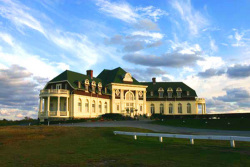
newportclubhouse.jpgMy latest Golfobserver.com column is now posted.

2005 really spoiled us in terms of unique, exciting, and must-see courses hosting major events.  Still, there's Newport, Winged Foot and Prairie Dunes. Thank God the USGA Executive Committee still picks courses they want to play the day after.

I know, that doesn't explain going to Rees-stored Torrey Pines. But sometimes you have to pay the bills.