Don't Close Down Those Courses Just Yet

bildeThanks to reader Scott for what we can only hope does not become a trend: golf courses closed for housing developments, only to sit there festering due to the sudden downturn in the real estate market.

Gerald Carroll in the Visalia Times-Delta reports on the abandoned Sierra View Golf Course, once slated for development and now going to seed.

Challenging The "Conventional Wisdom"

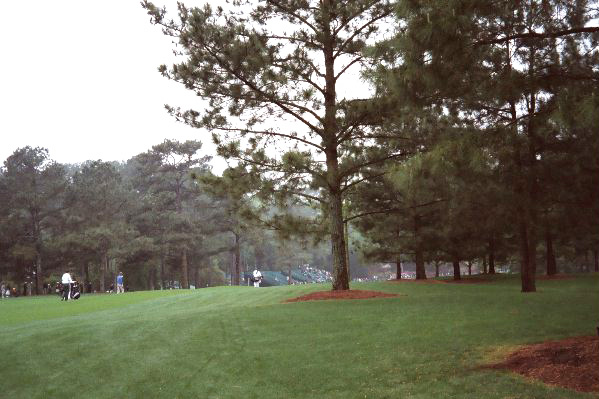
augusta15trees.jpgBob Carney summarizes and supports two stories suggesting that nothing is wrong with Augusta National and that those who feel the course changes have radically altered the soul of the Masters are just not getting it.

Interestingly, Carney notes the "conventional wisdom" that the course has become a U.S. Open style, defensive test. The notion that the majority of views have turned on the course changes is telling considering that the renovation has been praised, even passionately defended by media folks like this one who like many, has changed his mind after seeing how it plays.

There is no doubt that the latest accounts noted by Carney make great cases using statistics while noting select highlights from the last few years to seemingly write off the criticism.

However, two areas remain problematic for those trying to claim all is well at the revamped Augusta.

First, the people actually playing the course are telling us that something intangible has been lost. Touring professionals aren't always the best judges of architecture, but the critics have played the course many times and remember the unique tension of the old Masters. They are consistently telling us things are not the same.  Keep in mind too that there is one tournament that players are reluctant to criticize, it's the Masters.  A celebration of golf, as Ben Crenshaw once said.

We are no longer hearing many (any?) players defending the direction it has headed.  So you can bet that if we are hearing critical statements publicly, imagine the nature of the comments made over corn fed beef at the Champions dinner.

The other issue going against the remaining course change supporters is the pace of play disaster. We can argue all day long about roars, birdies and what's exciting, but there is overwhelming evidence that course now takes way too long to play. This speaks to the excessive difficulty of the design, which is now unplayable in any significant wind. But more than anything, the once perfect ebb and flow of the routing has been lost. The segments of the course that once provided some let up have all been altered, eliminating the catch-your-breath nature of holes such as 7 and 8 or 15 and 17.

More intriguing will be the steps they take to address the dismay of patrons, players and (probably) members? The actual task to fix the course is remarkably simple (tree removal, installing alternate tee options, restoration of width). However, politics and other sensitivities involved will make it one tough job for Billy Payne.

But he does have conventional wisdom on his side.

"This is the place for my anatomy links"

theswing_main.jpgThanks to reader Rob for Jolee Edmondson's Delta Sky profile of French golf architect Robert Berthet, who is taking the art form to new, uh, places.

Take, for example, the time in 1986 that he presented a plan to build a golf course in the shape of a woman. “They stopped breathing,” he says, recalling the reaction.

As perhaps only a Frenchman would, Berthet (pronounced “bare-TAY”) had long entertained the notion of imposing a female figure onto an appropriate parcel of land, with elevations, bunkers and rough representing anatomical features mentionable and unmentionable. His vision was realized when he was commissioned to fashion an 18-hole layout in the white wine–rich Mâcon region of Burgundy. It was amour at first sight when he surveyed the rolling, verdant, vineyard-framed property. What better canvas for his fairway femme than this lush, sensuous wine-growing hub?

“I suddenly told myself, ‘This is the place for my anatomy links,’” recalls Berthet with the intensity of a master sculptor. “‘It is here. I have to do it here.’”

The project’s board of directors fell silent when he proffered his blueprint, their faces etched with bewilderment. “But in 15 minutes,” he says, “I got them to grasp my concept. I had to prove to them that it was not a complete madness of sexuality.”

Or just madness.

And good news...

“I will someday do a butterfly course,” says Berthet, who feels that such a layout would be ideal for Taiwan, known as the “Kingdom of Butterflies,” where these creatures have special meaning. “The clubhouse will be the body of the insect, and the holes will spread out from there like wings, with round greens symbolizing the ocelli, or eyespots.”

butterfly.jpgDamn, I always dreamed of doing one of those!

So unconventional is Berthet’s philosophy on golf course design that he turns up his nose at the works of revered American counterparts Tom Fazio, Jack Nicklaus and the late Robert Trent Jones.

Well, he's not so bad after all.

“You can instantly recognize their golf courses by certain characteristics,” he says dismissively. “That, I think, is a weakness.”

Uh, Robert, I think they could say the same about you. The guy who makes Desmond Muirhead look rational?

Among the avant-garde designer’s current projects is an 18-hole course in the flourishing aerospace center of Toulouse in southwestern France, long known as “Ville Rose” (Pink City) for its distinctive brick architecture. Berthet’s reluctance to divulge his intended theme for the Toulouse track sparks a flurry of wild imaginings. Will there be bunkers filled with pink sand? Or maybe tees resembling launch pads for space capsules? Fairways shaped like the Concorde and a clubhouse that serves as air traffic control for flying golf balls?

One thing’s certain: It won’t be like any golf course France has seen before.

Don't You Wish There Were More Places Like This...

bildeDave Hackenberg tells the great story of 3 couples buying and turning around Cherrywood Golf Course in Ottawa Lake, Michigan.

Three months after Germain got his tip, Cherrywood had six new owners. They also are Cherrywood’s only six employees — Ben and Kara, the Germains, and Hire and his wife, Kathy.

It’s a 24/7, sunup to sundown thing for Ben and Kara, who live on site and run the show. But it’s truly a second home for the other four. Everybody takes turns behind the counter, or pulling weeds, or servicing machinery, or grabbing a paint brush, or planting flowers, or washing down the carts, or spreading fertilizer, or cleaning the clubhouse, or picking up brush after a storm, or, well, you name it. You tend to take things seriously when you’ve taken a deep dip into your savings account and there’s a mortgage call every month.

The 72 Club

Thanks to reader Al for passing along Alistair Tait's Golfweek.com rant on slow play, which includes a description of his home club's 72 Club getting in 72 holes in a day thanks to 3 hour rounds.

Then he turns his attention to the Masters pace of play.

Immelman and Brandt Snedeker teed off at 2:25 p.m. in the final round, and I clocked them completing the 18th hole at 7:26 p.m. Five hours for a round of golf? Are you kidding me?

I know conditions were tough at Augusta. I know both players were chasing their first major, but five hours for a two-ball is unacceptable. It’s so unacceptable that many people on my side of the pond didn’t see Immelman slip on the green jacket.

I conducted a quick straw poll of members of my club and found many of them turned off the television and went to bed. With the five-hour time difference, it meant staying up past midnight to watch the drama unfold.

There was a common refrain from everyone I spoke to: Play was too slow.

Yet neither Immelman nor Snedeker was penalized for slow play. That’s not surprising. It’s been 16 years since a player on the PGA Tour was handed a one-shot penalty for slow play. Dillard Pruitt holds that distinction. He’s now a PGA Tour rules official, with responsibility for making sure players get in a round in good time.

You couldn’t make that up, could you?

EDS, PGA Tour Back In The Saddle Again

I know, I know, they were never that far apart.

But it's fun to see EDS CEO Ron Rittenmeyer talk about being "jerked around" on Monday and re-upping Nelson Classic sponsorship through 2014 on Wednesday.

"We believe in this tournament and appreciate the tremendous impact it has in the Dallas community, and we are excited about the opportunity to play a key role in its future," said Ron Rittenmeyer, chairman, president and chief executive officer of EDS.


"When the time comes, McKenzie will have the fairways like slender ribbons around the 320 to 340-yard mark with a view to throwing the longer-hitting Americans."

sgmair123.jpgLewine Mair reports on the re-perfection of Celtic Manor, 2010 Ryder Cup site and where they already seem to know the makeup of the U.S. team.

Ross McMurray, the architect, yesterday admitted that he had already had conversations with the European Tour and Jim McKenzie, the course manager, about how it will be set up to the Europeans players' advantage.

When the time comes, McKenzie will have the fairways like slender ribbons around the 320 to 340-yard mark with a view to throwing the longer-hitting Americans.

Isn't that impressive? What soul, what integrity, what vision!

Again, he will be leaving the area around the greens so shorn that they will not be able to play any of their usual flop shots if they fail to find the target. Instead, they will have to do as the Europeans do in improvising with long putts and chip-and-runs from the swales which will swallow up anything even marginally off line.

"We need to concentrate on getting more affordable golf for people to play.”

I'll pass on Doug Ferguson's numbers-heavy case that the Masters is pretty much the same because he didn't even acknowledge the avalanche of negative player feedback. So instead, let's focus on the positive from this week's column.

From Tom Watson:

FINAL WORD: “We have our Olympics – we have our major championships. And to add another layer in the Olympics, I think is the wrong thing to do. We need to concentrate on getting more affordable golf for people to play.”

"It is a tribute to the incredible bench strength of our executive team that we can quickly assign responsibilities when opportunities for change are created."

Wednesday was VP promotion day in Ponte Vedra. Let's see who can't ride on the same Falcon as Tim Finchem any longer. (You know, protecting that line of succession stuff should, God forbid...).

The PGA TOUR Announces Executive Appointments

April 23, 2008(Ponte Vedra Beach, FL) — The PGA TOUR announced today that Ron Cross, Executive Director of THE PLAYERS Championship, has accepted a position as Director of Corporate Affairs for Augusta National Golf Club.

Take that Cliff Roberts!

“Ron Cross has significantly impacted each of the areas he has worked in at the PGA TOUR over the past 19 years,” said Tim Finchem, PGA TOUR Commissioner. “His contributions have helped the PGA TOUR immensely. He served at a time of great momentum and growth for the tournament. We are delighted this opportunity has been presented to Ron and although we will miss his leadership role with THE PLAYERS, we wish him well in his new position with Augusta National.”

And we really hope he can get us on the course from time to time.

The PGA TOUR further announced that Henry Hughes has been appointed as Chief Executive Officer of THE PLAYERS Championship, where he will continue to report to the Office of the Commissioner.  Hughes’ responsibilities will include long-term positioning for the event, as well as chairing the search committee to select Cross’ replacement.

Boy, that sounds fun. By the way, I thought we were lower case on The and all caps on Players. Did I miss a press release?

“Henry and I have been discussing a succession plan for the PGA TOUR for some time,” said Commissioner Finchem. “With Ron Cross’ departure we saw an opportunity to execute an effective change in the management of THE PLAYERS and maintain Henry’s key position as a member of the Executive Committee.

Henry will focus on the development of a management strategy to ensure the continued growth of the event. For 25 years, Henry’s leadership and vision have made an indelible mark in every department he has led.  He is held in the highest regard by everyone in the golf industry, especially the players, the tournaments and the sponsors. His appointment as CEO indicates the significant magnitude we place on the future of THE PLAYERS and the role we have asked him to take on with the event.”

Well, I think we need to hear from Henry about how thrilled he is with this uh, C-level restructuring.

“It’s been thrilling for me to witness the significant growth and expansion of THE PLAYERS Championship over the course of my career,” said Hughes. “I look forward to providing the leadership and strategic development of the TOUR’s flagship championship.”

And now, drum roll please, who has just moved into chair No. 2 where he can dream of someday raking in the millions as Commish?

With the appointment of Hughes as CEO of THE PLAYERS, Rick George, currently serving as President of the Champions Tour and Executive Vice President Championship Management, will move into the PGA TOUR Chief of Operations position, formerly occupied by Hughes. With George’s move to the PGA TOUR, Mike Stevens has been promoted to President of the Champions Tour. David Pillsbury, currently serving as President, PGA TOUR Golf Course Properties, will expand his operational oversight leading the Championship Management team.

Two of my favorite corporatespeak specialists will have even more opportunities to humor us. All in all, a good day for the blogosphere. Especially with sports -metaphor laced gibberish like this:

“It is a tribute to the incredible bench strength of our executive team that we can quickly assign responsibilities when opportunities for change are created,” said Finchem.

Wow, that was special. Sorry, continue.

“I want to commend Rick George on the exceptional job he did elevating and growing the stature of the Champions Tour as well as the leadership he provided to Championship Management. He brings an array of talents and experience to his new role with the PGA TOUR. The work Rick and Mike Stevens have done together on the Champions Tour will result in a seamless transition. David has performed admirably as the President of Golf Course Properties, strategically repositioning the operations of the PGA TOUR’s Tournament Players Clubs and overseeing the complete renovation of the TPC Sawgrass facilities. David brings with him a creative vision, marketing and operational expertise that will propel Championship Management events to new heights.”

These appointments are effective June 1.

Got all that? 

The Hardest Mile(s) In Golf?

In the post about Greg Norman's new Dubai course ripping off La Costa's unofficial distinction as the hardest mile in golf, I was wrong.

It seems the Shark is stealing from himself!

Just to remind those of you who haven't memorized it yet, here's what the press release for Jumeirah Golf Estates's "Earth" course says:

The last four holes will measure exactly a mile, 1760 yards.  I expect it will be considered one of the most challenging and exciting miles of golf, in terms of risk and reward."

golf_norman_course.jpgHowever reader Rich noticed this website claim for Lansdown Resort's Norman-designed course in Virginia:

The last four holes measure exactly 1,760 yards—equal to one mile—creating, according to Norman, “the hardest mile in golf.”

It's a wonderful world. 

Tiger Knee Talk

gwar01_080425tiger.jpgI was chatting with a fellow writer today about Tiger Woods' injury and the accusation made by Derek Lawrenson.  You may recall that Lawrenson suggested the press obediently reported his 4-6 week recovery time without skepticism about the severity of his knee condition.

Or maybe Tiger just doesn't really like to play that often anymore?

The rehab provides him a nice window to rest up and prepare for the U.S. Open while skipping Wachovia and The Players, two courses he's probably seen enough of (really, how many times can you say they're "all right in front of you"?).

Interestingly, Thomas Bonk speculates in the L.A. Times that Woods is not likely for the Memorial either and Bonk usually is spot on when it comes to guessing Tiger's schedule.

I find it hard to believe Tiger would not want one tune up event prior to Torrey Pines, but as Bonk points out, the weather at Memorial and the chance for a knee re-injury might scare him away.

Meanwhile Golf World's Tim Rosaforte files a lengthy piece on Tiger's knee. He points out the sensitive subject of whether Tiger tweaked the knee during his awkward PGA Championship fist pump, and also brings up something I've been wondering about: can Tiger really continue to keep running on the back streets of Isleworth?

Being in Las Vegas allowed him to check in with strength coach Keith Kleven, who is based there. According to sources, Kleven has been working with Woods for some time, rehabbing the knee and trying to get the game's best player to cut back on his running and heavy training -- not to mention high-impact activities such as parachuting and skiing ("the ballistic workouts," Bradley calls them), which Woods enjoys. The golfer has listened. He did not go on his annual Christmas-break trip to the slopes. In this period Woods' productivity has not suffered -- but his pain level has not subsided. Now begins the tediousness of rehab. As Woods said on his website, "The upside is I've been through this process before and I know how to handle it."

"Golf’s omission from the federal relief package served as a wake-up call to industry officials"

Golfweek's Gene Yasuda reports on the golf industry delegation convening upon Washington to talk up the sport and help Powell-Tate justify even more lobbying fees. A couple of items stand out:

Industry executives also made the trip to Capitol Hill to ensure their sport wouldn’t be overlooked as it was during the 2005 natural disaster that left New Orleans in ruins. Golf’s omission from the federal relief package served as a wake-up call to industry officials, who concluded many in Washington knew little about the game’s economic, environmental and societal value.

“That was a public relations black eye for golf,” said Steranka, who spearheaded the legislative initiative. “Golf has never been more a part of America’s popular culture, but what is not understood and not appreciated is the tremendous economic impact of our industry and the scale of our environmental management practices.”

Somehow I think had golf been part of the federal relief package, that would have been a public relations black eye.
 

The environmental stuff sounded better:

At a conference at the National Press Club, Steve Mona, former CEO of the Golf Course Superintendents Association of America and new chief executive of the World Golf Foundation said: “Golf has been involved in what we would term the ‘green movement’ for 2 1/2 decades.”

He provided little-known facts such as:

• Golf course irrigation accounts for 0.5 percent of the 408 billion gallons of water used per day in the U.S., as estimated by the United States Geologic survey.

• On a typical 18-hole course of 150 acres, only six acres – dedicated to tee boxes and greens – are considered intensively maintained.

• Nearly 30 percent of 18-hole courses are involved in a formal, voluntary environmental stewardship program.