" I don't know how you measure that, but that's good stuff."
/Remarkably, Tim Finchem

It’s back!
Twenty years later Tatra Press has kindly allowed me to bring back Grounds For Golf now that golf architecture is of more interest to the masses. A new Introduction looks at what’s driven the interest growth and two new chapters I had a blast adding (plus a few edits to keep things up-to-date).
The Amazon purchase page for the book arriving June 15, 2026.

Remarkably, Tim Finchem
I finally get the whole LPGA's learn-to-speak-English-or-you're-outta-here thing.
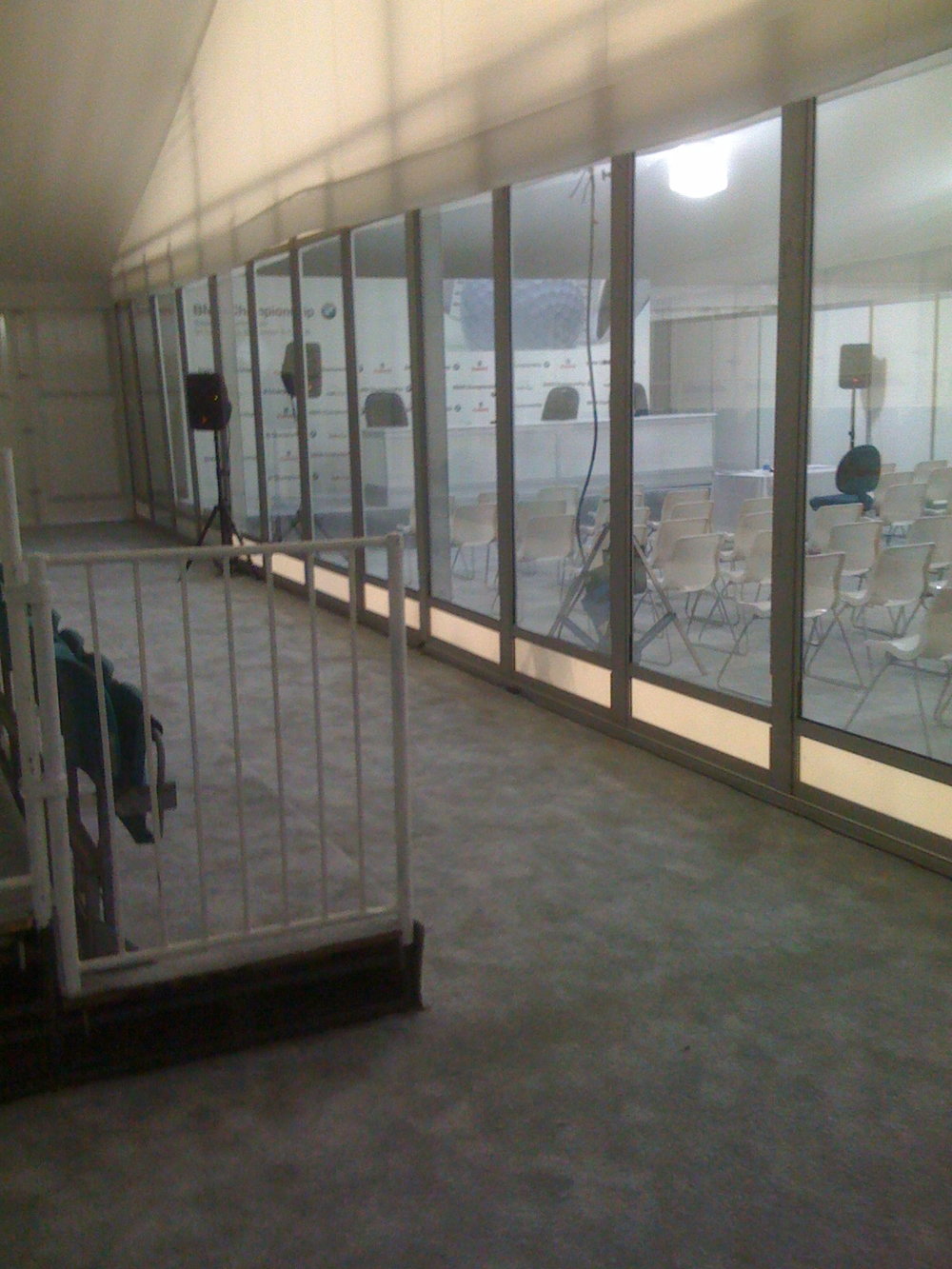
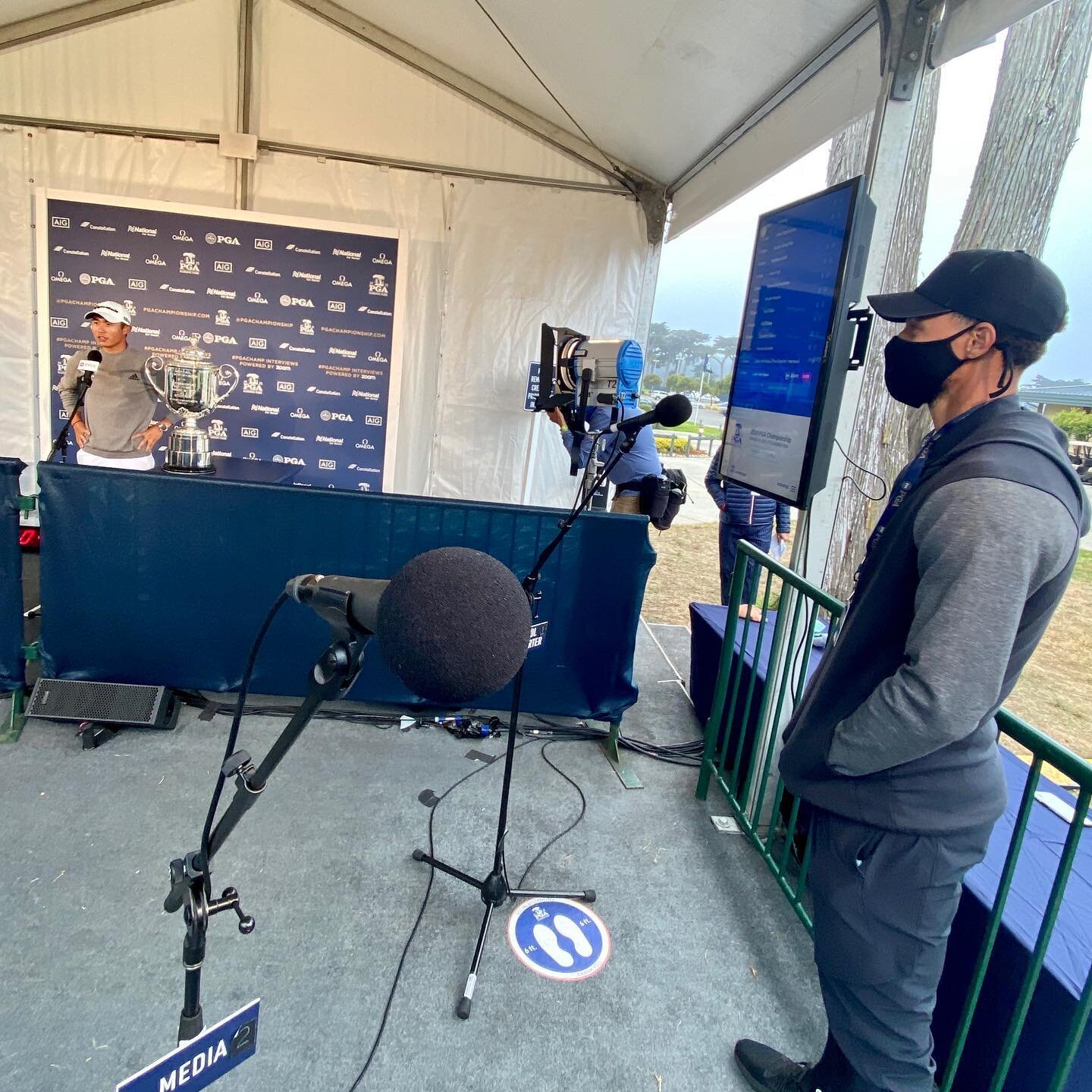
The spectator friendly press room at the BMW Championship does have a San Quentin feel, no? Kind of a leftover set piece from The Green Mile? I was wrong, this makes watching golf at Bellerive look exciting.
Doug Ferguson considers the state of the PGA Tour's FedEx Cup points volatility and includes this item which is precisely why I think the new points system is working (if a "playoff" is what they are after):
The biggest headache in all this is Padraig Harrington. You remember him as the British Open and PGA champion, a feat accomplished only by Tiger Woods the last half-century. Then he missed two cuts in a row and won’t get to East Lake unless he finishes fifth in St. Louis.
“Do you want a two-time major winner not in the Tour Championship?” Furyk asked.
It’s a fair question, but it’s missing the broader point.
The Tour Championship is no longer a reward for a great season. It’s a reward for a great month. That’s what the PGA Tour Playoffs are all about this year because of the volatility. And volatility is what the players wanted last year.
At least some of them.
“It’s a fight between the haves and have-nots a little bit, like in everything else,” Furyk said. “All the guys in the top 40 are complaining it’s too volatile, all the guys at the end are saying it’s great. Last year, everyone in the top 40 said, ‘This is great,’ all the guys at the other end said, ‘This (stinks).
“Where do you get the happy medium?”
Some nice Ryder Cup reporting today,
Jim McCabe offers this from Deutsche Bank CEO Seth Waugh:
Waugh's assessment of what the economic climate means for the PGA Tour and the FedEx Cup in particular: "The good news is, the deals for four- to six-years are signed. I'm a little more optimistic that we'll get through this, but if the contracts were not signed and were up, you'd lose a lot of folks. We've got the best product with a world presence, but we can make it better instead of waiting for it to be fixed."
Considering he's a student of the game and a shrewd guy, wouldn't you love to know what exactly he'd like to see fixed?
It was only a matter of time before some of the LPGA Tou
 Matty G takes time out from his ambushing bloated losers with sleeves of logoed balls to file a productive piece on the status of Bandon's Old Macdonald, and even includes a few photos of their "Hell" bunker.
Even picking Chad Campbell over
The great branding never stops when it comes to the LPGA Tour's desire to penalize Korean players who can't tell their pro-am partners the difference between a Pro V1x and Platinum One, with Lorena Ochoa calling the new policy "a little drastic.”
Evan Rothman at Golfweek.com offers an excellent day-by-day primer on the key phrases Korean players will want to learn. Here's his Wednesday pro-am round list:
Wednesday: Pro-am round(to male pro-am partners)
“You’re in the [insert partner’s profession here] business? How fascinating.”“Nice drive. . . . Does your husband play golf?”
"Hit it, Alice.”
"You got all of that one!”
“A swing tip? You’re standing too close to the ball . . . after your shot.”
“Yes, Lorena really is as nice as everyone says. . . . No, I haven’t met Tiger Woods.”
“Another tip? Take two weeks off, then quit.”
“I don’t understand why Michelle Wie isn’t playing out here, either. I guess you’d have to ask her.”
“Don’t worry, we’ll get it back on the next hole.”
“Don’t sell yourself short. You’re a tremendous slouch.”
(at round’s end)
“Hey, how about a little something, you know, for the effort?”And finally, because I always feel the need to give back, I offer this Korean translation for the SAT like-example provided by the Commissioner for learning English. To refresh your memory, here's the brilliance in English and Korean:
“Sorry, I don’t give out my phone number.”
An LPGA Tour member was paired with a senior level executive of a global corporation. Neither had English as their first language. They were not from the same country. However, English was their common language, their common bond. They were able to effectively communicate in English throughout the entire 18-hole round, and to this day they are in discussions for a sponsorship opportunity. This would not have been possible if they could not effectively communicate in English. The player was equipped to harness this potential earnings opportunity. This is what the LPGA wants for its members. To be as prepared as possible to succeed both on and off the course.
LPGA 투어 일원은 세계적인 기업의 고위급 행정관과 한 쌍이 되었다. 어느 쪽도 아니에는 그들의 첫번째 언어로 영어가 없었다. 그들은 동일한 국가에서 이지 않았다. 그러나, 영어는 그들의 공통 언어, 그들의 일반적인 유대이었다. 그들은 효과적으로 둥근 전체 18 구멍을 통하여 영어로 교통할 수 있고, 후원 기회를 위한 면담에 현재까지 있다. 이것은 그들이 영어로 효과적으로 교통할 수 없던 경우에 가능하지 않ㄹ을. 선수는 이 잠재적인 수입 기회를 마구를 채우기 위하여 갖춰졌다. 이것은 LPGA가 그것의 일원을 위해 원하는 무슨이다. 둘 다 이따금 성공하게 가능한 한 준비되는 이기 위하여 과정.
See how easy it is to deal with the two languages.
 Golfweek reports the passing of the golfing great.
For the best of Bolt, check out his Golf Digest My Shot from six years ago.
Thanks to the reader who passed this along, and do make sure you hit the link for the "background" on the policy.
To: LPGA Constituents
From: LPGA Commissioner Carolyn F. Bivens
Date: Sept. 2, 2008
Subj: LPGA overview regarding the effective communication in English policy
A great deal has been written this past week about the LPGA’s initiative to help members attain minimal English language skills. For those of you who want more details and background, please go to http://www.lpga.com/content_1.aspx?pid=17137&mid=4 where you will find an extensive overview. Please feel free to respond and offer comments.
Let's start with a key point of clarity: we are not suggesting, nor will we implement, an “English only” policy. The LPGA does not, nor will we ever, require English fluency, or even proficiency, from our international players.
As a U.S.-based tour, more than 65% of our events are held in our home country. For those events, we need our members to attain a level of communication in English so they can:
A. deliver an enjoyable experience in the pro-am events at tournaments,
which are the lifeblood of the LPGA business model;
B. conduct their post-round interviews in English for the media; and
Sounds like English-only to me!
C. deliver a short acceptance speech after winning an event.And here I thought it was to allow women to display their incredible golfing skills! What was I thinking!
None of this is new. The LPGA has had a program for more than three years whereby we dedicate substantial resources for the transition and education of our international members. This program includes an on-line learning program, tutors and translators with the expressed goal being a functional ability to communicate in English within two years after an international member has joined the LPGA.
The aspect which is new and received the vast majority of coverage last week is the penalty, which would be assessed after two years if a player didn’t achieve the minimal ability to communicate in English. We do not view this as punitive but rather as underscoring the importance of a core value on which the LPGA was founded: engaging and entertaining our customers and fans.
Without this most basic ability to entertain our customers, we will not maintain the current levels of events much less grow. Nor will our international members have the skills necessary to maximize their individual earnings potential by being able to communicate with prospective sponsors.Here's the part where we let it be known that Paula Creamer had better learn to say vachchuneta!
I’d like to offer a brief word about our events outside the United States.
As part of our Board-approved strategic plan, we are producing cultural briefings for each tournament beginning this fall. Among items shared with members will be key phrases for communicating in the native language of the country in which the event is held. Additionally, we have a number of members already using our on-line language services to learn other languages.
I believe, as do the majority of our domestic and international members, the program we have implemented will benefit the LPGA and every Tour member individually.
Please feel free to send us your thoughts and comments.
Best regards,
Carolyn F. Bivens
Finally, a reason to wish Tiger would take more time off: the relentlessly redundant fatherhood questions will be returning...so soon. They'll make questions about the knee seem fun!
Tiger, how does it feel to be a father for the second time?
Tiger, now that you are a father for the second time, does this allow you to relate to your father, who had two children himself, one of whom was you?
Tiger, do you see yourself cutting back your design work from two projects at a time to one now that you have two children and one bum knee?
Tiger, does this your change your perspective towards life in any way that I can write about so I don't have to write about your knee for the third time this month?
Tiger, have you reached out to anyone like Phil Mickelson or Michael Jordan or Barack Obama about the ways having a second child might impact your schedule?
Tiger, now that Elin has provided you with another child, does this make Steve Williams any less of a jerk?
Geoff Shackelford is a Senior Writer for Golfweek magazine, a weekly contributor to Golf Channel's Morning


Copyright © 2022, Geoff Shackelford. All rights reserved.