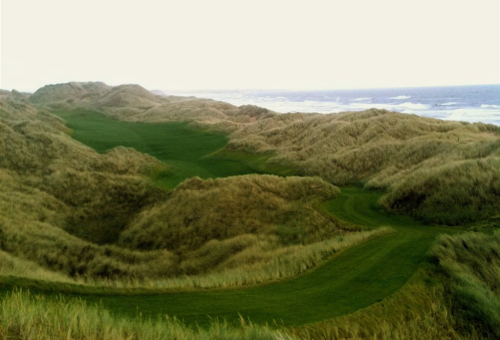
"Let the transcontinental tour ragging begin anew"
/Steve Elling analyzes and posts the top 30 events of 2011 based on appearances by world top 200 players and the PGA Tour stomps on the European Tour 7&6.
Read More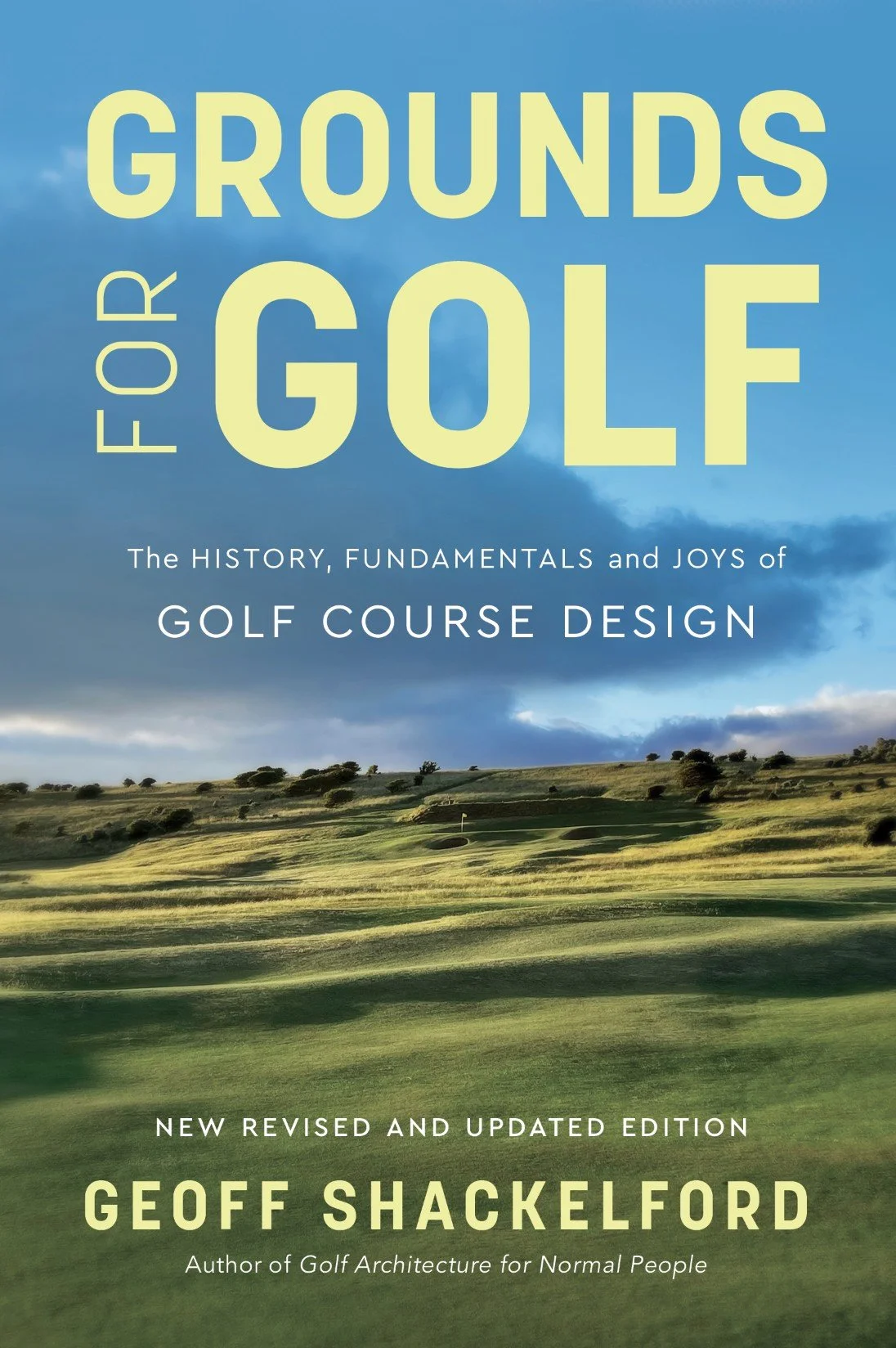
It’s back!
Twenty years later Tatra Press has kindly allowed me to bring back Grounds For Golf now that golf architecture is of more interest to the masses. A new Introduction looks at what’s driven the interest growth and two new chapters I had a blast adding (plus a few edits to keep things up-to-date).
The Amazon purchase page for the book arriving June 15, 2026.

John Daly was in the group at 69 along with Lee Westwood, Retief Goosen, Y.E. Yang and Robert Karlsson.
"With a small field like we have here, and I think I may get in trouble for saying this, but I'm kind of glad it's not sanctioned by the European or PGA Tour," Daly said. "It shows that China is doing something on their own. They're saying, 'Hey, we may not need the PGA Tour or European Tour, no disrespect."
When did China become IMG? Or IMG become China?
 Greg Stoda covers an array of topics with Jack Nicklaus who spoke at a charity event.
Two of interest in the architecture world:
On the weak global economy and its impact on golf ...
- "China, for example, is shut down right now golf-wise. We were over there about a month ago with a course two weeks from being finished that was shut down. They put a satellite up to monitor it to see that nobody was working."
Or maybe they just played the Ritz Carlton Dove Mountain and don't want you to get carried away again?
On the situation in the United States ...
- "I haven't been to a country in the last year where the outlook is as bad economically as it is here for us."
So we got that going for us. We're at the top of the bottom of the charts.
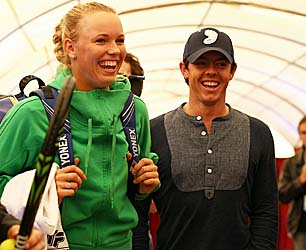
 Norman Dabell reports that Graeme McDowell is claiming no role in Rory McIlroy's decision to leave Chubby Chandler, saying McIlroy's split "seems pretty amicable" before citing Corleone family philosophy.
 Slate's Seth Stevenson tries to better understand why Rolex would sign Tiger Woods and ends up profiling the company, revealing many interesting and surprising things about this $5 billion company.
Privately held since its formation in 1905, Rolex is a notoriously tight-lipped company. It doesn't release revenue figures, or explain leadership transitions. (It had a total of three CEOs from 1905 until 2008, when then-CEO Patrick Heiniger resigned under mysterious circumstances.) Even the corporate structure is a bit murky. Rolex founder Hans Wilsdorf died childless in 1960, leaving control of his company to a charitable foundation he'd established. The Hans Wilsdorf Foundation runs Rolex to this day. When I emailed a polite-but-elliptical media-relations woman to ask whether Rolex is essentially a nonprofit, and who the foundation’s major beneficiaries are, she responded with this sentence: "The principal focus of the foundation is to support a variety of philanthropic endeavors."
And regarding the Tiger signing, Stevenson concludes it all comes down to the Asian markets.
Instead, he argues, this move is in large part about Asia. That’s where the growth in luxury watches will come from in the future. Right now, Rolex’s nemesis Omega dominates China—Omega is the other “mass class,” entry-level luxury timepiece—simply because it’s better-established there. Rolex hopes that Tiger, with his Thai mother, will be demographic catnip for the golf-obsessed Asian market.
Steve Elling reports that Luke Donald called the PGA Tour's decision to delay a Player of the Year ballot mailing "sketchy."
Ryan Herrington analyzes the new USGA/R&A rule allowing amateur golfers to enter into agreements while retaining their amateur status and explains that it came about because of an R&A desire, with the USGA capitulating in the name of maintaining civilized cocktail receptions and next year's San Francisco Golf Club four-balls.
The reality of the situation, however, was that many elite golfers were already having discussions with agents, outside the view of the public and sans the signed contract. The new RAS rule at least tries to keep such practices from becoming too shady by keeping them in the open to help attempt to control them.
According to officials I've spoken to, the RAS rule change was something proposed and pursued by the R&A in an attempt to offer young amateurs golfers outside the United States (and thus less likely to enroll in American colleges and use the college golf to developing their games while remaining amateurs) some incentive to keep from turning professional too soon in their careers and without the right guidance that could help them make the transition more successfully. It might not have been what USGA officials desired, but to be a good partner they went along with it.
And now, college coaches must deal with the consequences.
Geoff Shackelford is a Senior Writer for Golfweek magazine, a weekly contributor to Golf Channel's Morning








Copyright © 2022, Geoff Shackelford. All rights reserved.