
Music Video: #StopDropAndMakeA12Foota
/"Matty" is a self-described 11-year old Vermonter who believes he's going
Read More
It’s back!
Twenty years later Tatra Press has kindly allowed me to bring back Grounds For Golf now that golf architecture is of more interest to the masses. A new Introduction looks at what’s driven the interest growth and two new chapters I had a blast adding (plus a few edits to keep things up-to-date).
The Amazon purchase page for the book arriving June 15, 2026.

It'll come as a massive shock that the hyper-expensive, uber-gawdy, totally-unsustainable version of golf exported to China appears to be slowing down.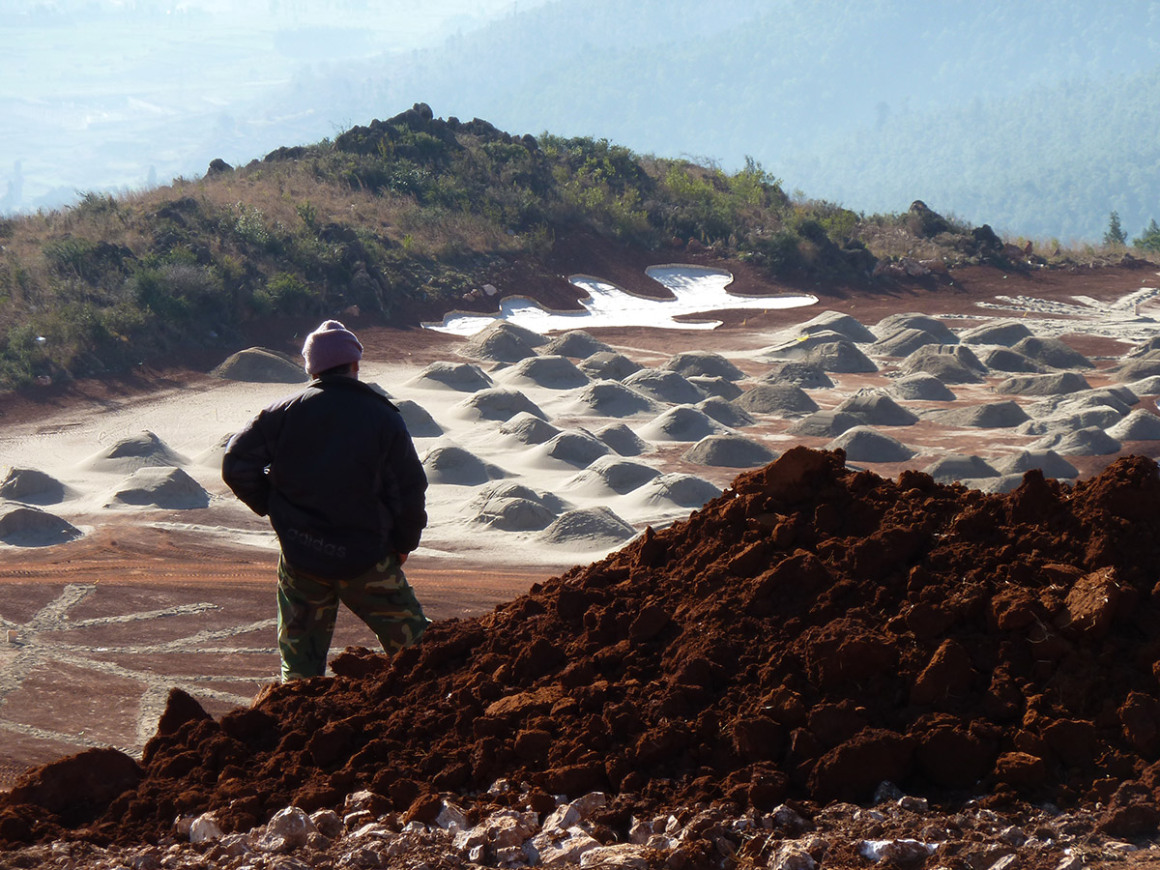 Andrew Browne, writing for the Wall Street Journal (thanks to JB and Bertie for sending), writes:
Just a few months ago, members of a newly opened Jack Nicklaus signature course in the Beijing suburbs woke up to discover the venue had been ordered shut amid a government audit of all of the city’s clubs. It was allowed to reopen after a few weeks, but only for members, not their guests. A nearby club didn’t get off so lightly: it had to plow up its immaculate greens and close permanently.
This isn’t a passing shower. Golf, as it’s now played in China, doesn’t have a promising future.
Browne cites Dan Washburn, guest on State of the Game and author of the best golf book of 2014, as his background for golf's history in modern China.
Washburn recently visited and offered this on his website:
But during my recent two weeks in China, I encountered more pessimism and uncertainty from those in the industry than ever before. Everyone quoted the rumor that up to 100 courses would soon be shut down, a process that perhaps got kickstarted with the closure of a handful of courses this summer. Beijing then, as it had a handful of times over the previous decade, reiterated its oft referenced but rarely enforced ban on golf course construction. It did so again just this week. Things do appear to be ratcheting up.
What to make of it? Who knows. Maybe this is truly the end of the boom. Maybe it’s just another bump in the road. Either way, it seems a good time to share with you a recent email I received from a China golf course industry veteran.
That email is worth checking out (many paragraphs). And as you might suspect, all of the reasons for the slowdown were predictable.
I've hit the replay button too many times on this Golf Fail video linked by Luke Kerr-Dineen (and memorialized by him in a Vine).  But even as steep as his backswing is, it's impossible not to question how someone could do what this poor lad pulls off in embarrassing (and painful) fashion.
Safe to say, he needs some better release point reps.
The full clip:
As the United States and Cuba move to officially "normalize" relations, developers will understandably be looked to for their thoughts on bringing resort golf back to the country where there were once two Donald Ross courses.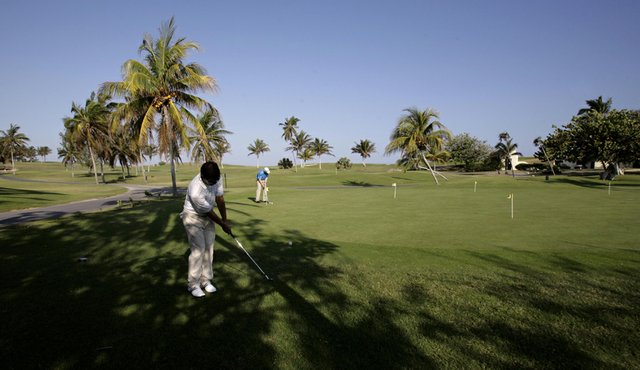 But before everyone gets excited about the Bandons of the Caribbean, Golfweek's Bradley Klein says it'll take a while to get the infrastructure up to modern standards before any serious development takes place.
The one hopeful sign of development, now more than 15 years old, is Varadero Golf Club, which was designed by Canadian Les Furber. It was home to the European Challenge Tour Grand Finals in 1999 and 2000.
Varadero sits on a peninsula that is pinched by Cardenas Bay to the south and open waters to the north. It's land that would be the envy of any course architect, only 90 miles east of Havana. But access roads to Varadero still betray considerable neglect. They also reveal that the obstacle to development of such dramatic land is basic infrastructure – mainly highways and utilities. Eventually that will come. And when it does, the coastal region will become a haven for luxury-goers, mainly from Latin America – the same folks who have been parking their surplus capital and Rolls Royces in Miami.
Geoff Shackelford is a Senior Writer for Golfweek magazine, a weekly contributor to Golf Channel's Morning








Copyright © 2022, Geoff Shackelford. All rights reserved.

