Nicklaus Calls For Special Golf Balls For Courses, But Why Won't He Make The Ball?
/Jack Nicklaus' consistency on golf ball regulation
Read MoreWhen you come to think of it that is the secret of most of the great holes all over the world. They all have some kind of a twist. C.B. MACDONALD
The media has been blamed for many things, but I'm fairly certain architect David Kidd took things to another level in suggesting his much-derided, since-renovated Castle Course at St. Andrews was the fault of others.
I was seduced by the 'harder is better' Tiger proofing ethos sold by the media, incremental alterations are improving playability https://t.co/NZSjDaQBRg
— David McLay-Kidd (@DMKGolfDesign) November 29, 2016
Kidd was challenged by "the media", starting with former Golfweek publisher Alex Miceli:
I will own it I'm just telling you where the influence came from, many mag rankings use difficulty as a major factor and I tried to please https://t.co/fb8yHlaYK4
— David McLay-Kidd (@DMKGolfDesign) November 29, 2016
This would suggest he designed to play to a ranking. While many architects have surely been influenced in some way by ranking criteria, blaming it for an unsuccessful design seems out of line.
And this reply to Golf World's John Huggan:
And did @BandonDunesGolf before and @GambleSands after & @Sand_Valley now https://t.co/u4bZ3ueKNo
— David McLay-Kidd (@DMKGolfDesign) November 29, 2016
It is an unfortunate state of affairs when resistance to scoring is a ranking criteria. And the golf ball quickly outdated some pretty stellar courses. But blaming such outside forces appears short-sighted and, at best, should at least spark discussion toward remedying both blights on the game.
Alfred L. Malabre Jr. is a retired WSJ editor playing golf in Charleston and not really caring much for the USGA's anchoring ban or its rules against posting solo rounds for handicap purposes.
 Given that the Journal is the paper of record for Executive Committee members, this one no doubt caused internal calls for a rebuttal. The handicapping complaint was compelling.
For those of us who play most of our rounds alone, that means fewer rounds will count toward calculating a handicap, which very likely will mean a less accurate handicap. That’s no small thing on those rare days when I do compete against friends for a few dollars.
Writing of the joys of solo golf in The Wall Street Journal in 2013, I noted enthusiastically that a solitary golfer, using however many handicap strokes may be allowed, may compete quite happily “against the course” and “record an accurate score.” This score, in turn, may be submitted, I wrote, so as to maintain an accurate handicap.
But no more. Now I am instructed that I must bring along at least one “companion” to verify my score before submission. Would my 10-year-old granddaughter do if she knows the rules? If the purpose of this new ban is to keep me honest, why not let me simply post my score and then agree to a polygraph test at the 19th hole? Or better yet, why not just keep counting on the honesty of golfers?
To kick off Morning Drive's Design Week, we had to discuss the sad news out of Rio that not a thing has changed with the ownership, operational obstacles and overall state of affairs.
 And I spoke with Gil Hanse to get the architect's side of things. Having seen just about everything imaginable there, he offered that he was bitterly disappointed but also said this for our Monday Golf World.
“We witnessed this type of brinksmanship during the construction of the course, and we are hopeful that this is another example of having to hit a low point before things get better.”
A friend emailed to say he debated the Rio golf course situation and came down on the side of letting it fail, with a quick return to the capybaras and many birds that have taken up residence. Given the poverty issues in Rio, the corruption of its government and the well-documented troubles of the past, I get that point of view.
In fact, I'd support walking away if the golf course and Brazillian Golf Federation had given things a shot and things just didn't pan out. But since we learned the course does not have signage, a website or any sign that an attempt is being made less than four months since golf made a magnificent return to the Olympic Games, it just doesn't feel right for the course to not have been given a chance to excite young players, test burgeoning ones or take the money of folks who want to test a brilliant design amidst a thriving natural environment.
If you've been busy with the holidays and unable to watch the ISPS Handa World Cup from Kingston Heath, you've missed out on some glorious golf architecture and pretty good golf. The stakes figure to get a lot more intersting Friday when the players go back to foursomes play. The event wraps up Saturday night at 5pm on Golf Channel as four-ball play decides the title.
Since the Zurich Classic received a very warm reception for its move to a two-man team format, the momentum seems to be headed toward team play in the Olympic Games.
 Adam Pengilly of The Age reports on the first hopeful sign of progress, from that progressive Commissioner his ownself, Tim Finchem.
"The feedback is very positive [on team-based formats]," the PGA Tour's Commissioner said. "We're looking at the formats for 2020 and we like individual competition, but we'd also like to mix in a different competition or two and we're looking at different possibilities.
"We might end up saying, 'we'll keep it the way it is', we might recommend a couple of changes on certain days where we do a different type of competition. And it also affects scheduling so we're looking how that all works."
So we know individual competition is staying because this game of individualists is addicted to 72-holes of stroke play. (Even though until the last days, golf came off as a painful slog in the context of the higher, faster, stronger Games).
But we know two-person team match play would be superb. Two days, at least, are needed for that.
So if you factor in individual stroke play, we're up to at least six competition days. With the PGA Tour showing no interest in ceasing play for two weeks every four years, the pressure to keep things as tight as possible could actually be used to Olympic golf's advantage.
Because right now, by adding team competition of some kind, we're looking at 12 days of competition between men and women. That may be too much for officials, fans and volunteers.
There is a final key caveat as explained to me by IGF officials who will create and present any changes: the IOC does not want to see two medal competitions in one.
Translation: a team medal cannot be awarded from the stroke play competition.
So here is my final offer:
72-holes of stroke play from a field of 60. Three medals will be awarded just like we saw in 2016. If you want to shorten the competition days to ten overall between men and women, make the first day a 36-hole first and second round. (Rio could not handle that due to shorter winter days, whereas Tokyo, Paris and Los Angeles will all have plenty of daylight.)
From that competition, the low eight two-person teams (based on country with pairings pre-determined by world rankings), advance to a two-day match play event. They are broken up into Pools A and B based on seedings from the stroke play competition. (Countries that only send one player or an odd number of three will not be included, sorry.)
Day one of the two-person team match play is a 27-hole day, with three 9-hole foursomes matches played by each team within their pool. With nine-holes and foursomes, you may be looking at some very quick matches, addressing the speed issue that plagues the game.
The two top teams advance from those pools to an 18-hole gold medal match, with the runners-up playing an an 18-hole bronze medal match. How ties in the pools are decided, I'm not sure. But sudden death playoffs would be fun.
So to recap: five or six days of competition, with stroke play while team foursomes match play introduces a shorter, faster, high-pressure format. Both nine-hole rounds and alternate shot are put on an international stage for the world to see golf is not the slog it can sometimes be.
What do you think?
The membership question for Europe's next Ryder Cup captain and European Tour chief Keith Pelley may include Spain's Jon Rahm, a burgeoning talent who is saying all the right things. But he has made clear he will devote himself the PGA Tour while trying to get his career established. That means an unlikely European Tour membership, putting him in the same class as Europeans like Paul Casey and Russell Knox, writes John Huggan from the World Cup in Melbourne.
“I’ve thought about the Ryder Cup a lot,” he said, after the Spanish pair combined for an opening foursomes round of 69, three under par and one shot ahead of the United States, France and China. “I so want to play in the matches; who doesn’t? But right now I need to establish myself on the PGA Tour. Hopefully, I will do that and make it into the top 50 in the world. Once I do that, I will be able to play in the eight tournaments that count towards the PGA Tour and the European Tour -- the majors and the WGCs. That is the ideal scenario."
Laura Douglass and David Sinclair of The Pilot pen a nice remembrance of a true golf pioneer, who passed away at 95 Wednesday night in Southern Pines.  Great lede:
Bing Crosby serenaded her in the Pine Needles bar. Perry Como played her course. Jimmy Carter stayed at the lodge during the National Governors’ Convention. Rudy Vallee was a guest and she played with Jackie Gleason, Michael Jordan and Supreme Court Justice Sandra Day O’Connor.
This characterization from Jim Dodson is superb:
Jim Dodson, editor of PineStraw Magazine and one of the foremost writers on golf in America, called Mrs. Bell the female Arnold Palmer for her impact both as a competitor and teacher. She was at the vanguard of women’s golf whose career predated the LPGA. Together with her husband Warren, the Bells bought the Donald Ross-designed Pine Needles Resort and Golf Course. Together they raised a family amid its lush-green grounds and comfortable familiar environs that today still draws thousands of golfers each year, including hundreds of women who regularly attend the “Golfaris” that Bell started and continued to participate in up until a couple years ago.
Andrew Barksdale in the Observer talks to her son Kirk also noted her role in Southern Pines' development as a golf community.
David McNeill, the 62-year-old mayor of Southern Pines where Mrs. Bell called home, said she was a resident celebrity who elevated the game of golf for many people.
"She would light up a room when she walked in," Mr. McNeill said, "and in short time would be seen giving a golf tip."
"She solidified Southern Pines as a golfing destination," Mr. McNeill said. "Golfers from around the world return each year to Pine Needles and Mid Pines, because Ms. Bell treated everyone like royalty and made golf fun."
Mr. McNeill said his town hosted the U.S. Women's Open three times in an 11-year span, thanks to Mrs. Bell's leadership.
The Golf Club Atlas reviews of Mid-Pines and Pine Needles serve as nice tributes to Mrs. Bell's lasting place in the game.
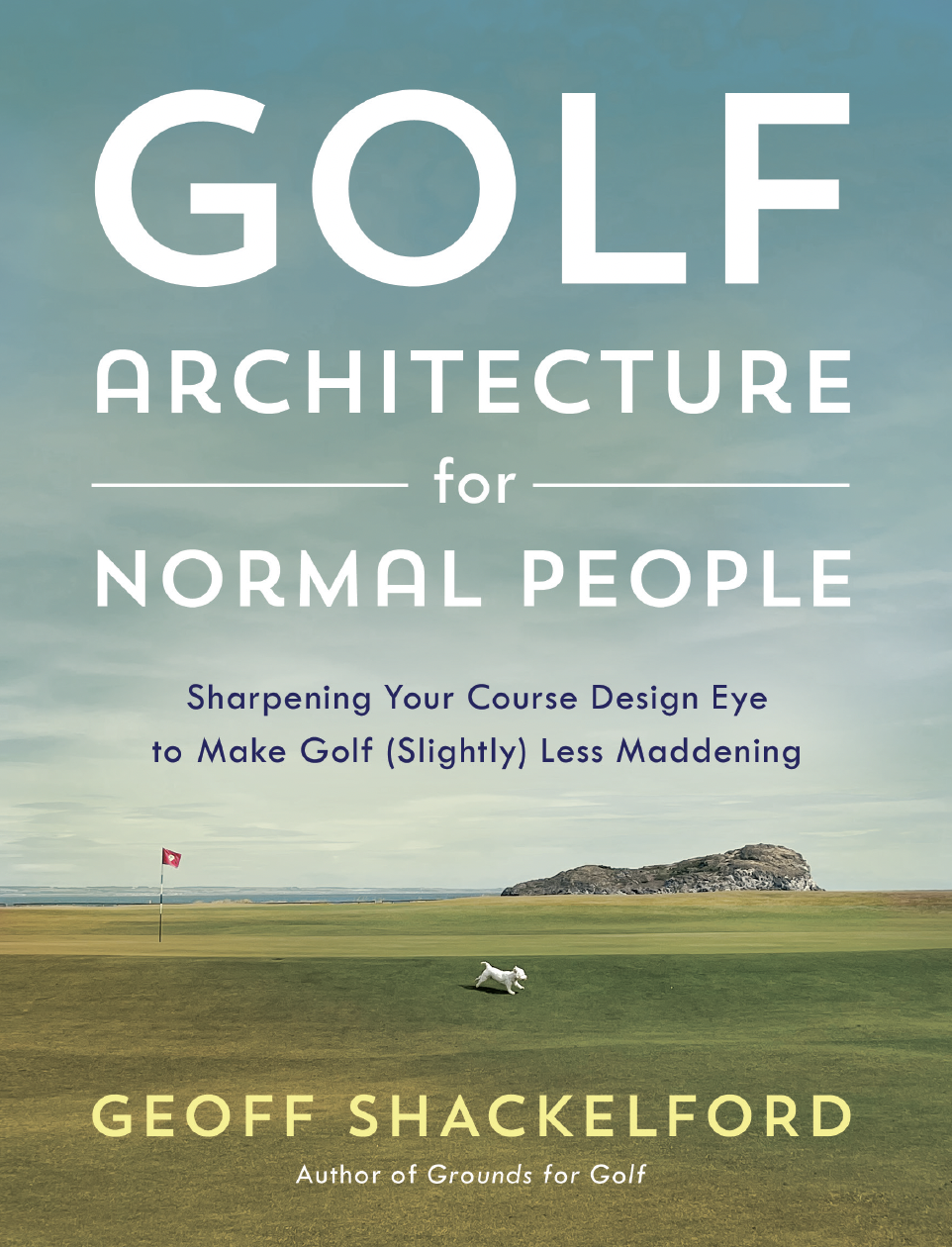
Geoff Shackelford is a Senior Writer for Golfweek magazine, a weekly contributor to Golf Channel's Morning

Copyright © 2022, Geoff Shackelford. All rights reserved.