
Love's Sea Island Plantation Course Redo Sports Some Travis, Raynor And Macdonald Charm

Screen Shot 2019-11-18 at 7.34.09 PM.png

Sea Island’s Seaside Course remains the primary venue for the PGA Tour’s RSM Classic, but the first two rounds of play will be split with the newly remodeled Plantation Course.

PGATour.com’s Sean Martin looks at Davis Love, Mark Love and Scot Sherman’s effort to recapture traces of the course’s past, with nods to Walter Travis, original architect, and Seth Raynor/CB Macdonald.

From Martin’s extensive look at the redo:

Plantation’s historic feel had faded after nearly a century of play and a renovation in the late 1990s. This latest renovation draws upon the designs of architects like Travis, Seth Raynor and C.B. MacDonald.

Those men designed some of Love’s favorite courses, including Chicago Golf Club, Mountain Lake in Lake Wales, Florida, and two courses in Charleston, South Carolina: Yeamans Hall and Country Club of Charleston. It was a collaboration between Love, his brother Mark, and Scot Sherman, an architect with Love Golf Design who worked closely with Dye for many years.

They replicated those classic courses by creating sharp angles and straight lines, producing a look that was distinctive from the neighboring Seaside course and its big, bold bunkering.

The Sea Island YouTube page featured construction flyover updates, including this last one from August:


Golfer Expectations For Bunkers: Still Silly After All These Years

Screen Shot 2019-11-18 at 7.59.16 PM.png

The minimalist architecture movement has helped deliver many sustainable elements to golf maintenance, but it still has not made a dent in golfer expectations for perfect bunker lies.

The Fried Egg’s Garrett Morrison considers the importance of groomed hazards for golfers and the cost to the game through the eyes of USGA agronomist George Waters.

To avoid player complaints about bunkers, courses have to increase spending. In turn, green fees go up. This is a vicious circle that sometimes leads to closure.

“What I think would surprise many golfers is that there are definitely courses that spend as much—or even more—per square foot on bunkers as they do on greens,” George Waters told me. Waters is Manager of Green Section Education for the USGA and wrote Sand and Golf: How Terrain Shapes the Game. “And it’s golfer expectations that drive that spending.”

Just as pressing as financial issues, according to Waters, are opportunity costs. The more time greenkeepers devote to bunker maintenance, the less they have for other tasks.

“The list is basically endless,” Waters said. “For lower- and mid-budget courses, the extra time can make a big difference in improving conditions on greens, approaches, and fairways. That could be more time spent hand watering, more time making irrigation repairs, more time nursing weak areas back to health.”

The story notes that current wokester-darling Sweetens Cove treats all bunkers as waste areas, meaning you can ground your club and maintenance is not as diligent about daily rakings.

The golf course industry generally misses opportunity to make a show of how these things affect cost. Because I’m pretty sure we’d have heard by now of a course knocking 10-20% off their green fees for a week while bunkers go unraked. I’m pretty sure golfers would not mind, but then again, I forget how much people demand perfect lies in hazards.

The 2020 Olympic Golf Projected Field...

Screen Shot 2019-11-18 at 7.48.43 PM.png

…which would not include Tiger Woods by this assessment.

Maybe because Rio offered the first Olympic golf in over a hundred years, the run-up featured far more coverage than the upcoming Tokyo 2020 golf. Or maybe there just isn’t much interest in golf at the next Games because the unimaginative format remains. Anyway…

Courtesy of Twitter’s mysterious Nosferatu, here is the field as it stands currently, though many significant tournaments will be played between now and then.

Video: CBS Sunday Morning On Renee Powell, Clearview And St. Andrews

CBS Sunday Morning viewers will enjoy this James Brown helmed feature produced by Alvin Patrick about the life and work of Renee Powell. The LPGA pioneer is continuing her father’s legacy, her work with female veterans using golf as a therapeutic pastime and her work in St. Andrews that includes membership in the R&A. (There are also some rare looks inside the R&A clubhouse, btw.)

Henley Nobly Admits To One-Ball Violation, Laments Excessiveness Of Penalty

Screen Shot 2019-11-17 at 7.42.17 PM.png

This is a tough one, as you have to admire Russell Henley’s honesty and clarity in admitting he spotted a problem signing golf balls for his walking scorer and standard-bearer after a Mayakoba Classic second round 69. Henley detected that he may have violated the one-ball rule. And he was correct.

An 8-stroke penalty ensued after much consultation and while it is a harsh result given his need to make cuts and get much needed dollars/points in his accounts, Henley should take immense pride in turning himself in when he very easily could have ignored the matter.

Frankly, I don’t fully understand how 8-strokes was determined as his penalty, or how Henley thinks there should be a max of 4. Either way, Adam Schupak at Golfweek with the story and Henley’s view that the penalty didn’t fit the crime.

“Do I think eight shots is extreme in this situation? Absolutely,” said Henley, who said he was still processing the unusual circumstances. “I think there should be a max of four. I hope eventually we can have some conversations and change the rule. I came from such an innocent place, you could call it a careless place, and given there was no intent I think it’s a pretty harsh rule. It can be debated both ways and I’m aware of that. It’s unfortunate when you’re playing well and in contention, like I was, to you’re missing the cut. It’s tough to swallow.”

As we know, the Golf Gods work in mysterious ways and Henley will ultimately enjoy a reward for his honesty.

FedEx Won't Have Any Trouble Paying Their PGA Tour Bills After Tax Code Change Reduced 2018 Tax Bill To "Less Than Zero"

Screen Shot 2019-11-17 at 7.26.16 PM.png

The New York Times’ Jim Tankersley, Peter Eavis and Ben Casselman explain how FedEx lobbied successfully for corporate tax cuts that effectively lowered their tax bill from a hefty $1.5. billion in 2017 to “less than zero” in 2018.

In other words, if you were wondering how they could justify that big FedExCup boost in prize money, not to worry!

As for capital investments, the company spent less in the 2018 fiscal year than it had projected in December 2017, before the tax law passed. It spent even less in 2019. Much of its savings have gone to reward shareholders: FedEx spent more than $2 billion on stock buybacks and dividend increases in the 2019 fiscal year, up from $1.6 billion in 2018, and more than double the amount the company spent on buybacks and dividends in fiscal year 2017.

A spokesman said it was unfair to judge the effect of the tax cuts on investment by looking at year-to-year changes in the company’s capital spending plans.

“FedEx invested billions in capital items eligible for accelerated depreciation and made large contributions to our employee pension plans,” the company said in a statement. “These factors have temporarily lowered our federal income tax, which was the law’s intention to help grow G.D.P., create jobs and increase wages.”

And that they did on the PGA Tour!

Amateur Golf Is Doomed, Files: Players Choosing Symetra Tour Life Over Competing For An NCAA Title

Screen Shot 2019-11-17 at 7.09.44 PM.png

I’m loathe to pick on Sierra Brooks for turning pro hot off her Q-Series T-62 finish, guaranteeing Symetra Tour status. A perk she will take while conceding her final few months at Florida where she’s one of college golf’s best players on one of its best teams. But I will anyway.

After all, Brooks is one of many players—male or female—choosing to end her college career to turn pro even if the awaiting opportunities pale in comparison to the college golf structure.

Brooks talked to Golf.com’s Dylan Dethier about her decision despite not securing LPGA Tour status.

Golf is just the latest sport to, in seemingly sound ways, to address the desire of athletes and those around them to test the professional waters with rules that allow players to retain their amateur status while playing at Q-School.

And you know the drill: they do so, and even when faced with long odds or signs that more time in college would serve the athlete well, get convinced that cashing in is the way to go. Just like so many other sports, golf is piling up the cases of can’t-miss prospects who miss, diminishing the interest growth in college golf while not doing what’s best for young people who were often just given bad advice.

In the case of women’s golf, the LPGA’s noble effort to make sure they are open to new talent while also ensuring athletes are ready to perform, all while preserving the health of an important feeder tour in the form of college golf, appears to have failed.

Beth Ann Nichols considers the situation for Golfweek and concludes that allowing amateurs to test those professional waters at Q-School (Series), is not working.

It’s not a bad thing to make these players face a decision that has consequences. The thought process for going to Q-Series and taking that next step without a safety net looks completely different to the current landscape.

Amateurs haven’t always been allowed to participate in Q-School.

Why not go back to that?

It’s up to the LPGA to make some changes that will benefit all of women’s golf. Deferral was a good idea in theory, but there won’t be many Kupchos and Fassis who follow.

College golf isn’t the tour’s responsibility, but it is the main feeder system for the LPGA and Symetra Tour, and the lifeblood of American women’s golf.

Once again, there’s got to be a better way.

It Must Be Nedbank Challenge Week: Mongooses Attack Tommy Fleetwood's Ball

The Gary Player Country Club annually plays host to the Nedbank Challenge with dynamic wildlife on course and in the nearby Pilanesberg National Park.

During round one of the 2019 event, Tommy Fleetwood’s golf ball was attacked. Attacked! This time mongooses converged.

El Tucan Is Back: Lands Rob Oppenheim's Bag At Mayakoba

Screen Shot 2019-11-14 at 9.41.06 PM.png

El Tucan, short-changed a year ago, has landed Rob Oppenheim’s bag for the rain-delayed Mayacoma PGA Tour event. Round one play will commence Friday.

Granted, this would not normally be news except given the international headlines made by Matt Kuchar not paying his fill-in bag man what he deserved after winning the Mayakoba.

Brian Wacker with how the caddie for Kuchar last year finally landed work this week.

“I needed a caddie,” Oppenheim told Golf Digest. “He lives there, was available and aside from everything that has gone on I was looking for the best opportunity to play well. He knows the course and has had success here.”

Boca Blues: City Asks for New Architects Of Proposed Project Over Cost

Screen Shot 2019-11-14 at 9.13.16 PM.png

The day many always thought would come arrived in Boca Raton. Maybe there have been previous examples, but it’s hard not to read about Boca’s kibosh on architects Tom Fazio II and Nick Price over the $13 million budgeted for their creation of 18 holes and a par 3 course.

Despite winning the project bid over many other architects, the city said the price was simply too high and will be asking for new bids. All over price, reports Christina Hristoforidis.

On the Tuesday night joint meeting between the City Council and the Boca Beach and Parks District, the idea for an RFP was approved.

In regards to the current project’s architects, Price/Fazio can submit in the new RFP and have the option to be compared to the resented from the RFP for the best golf course design.

According to WPTV, this decision left the President of Golf Association Greg Galanis, feeling betrayed.

For years the sport has been told the economics of building a new course was spiraling too far out of control. So it should come as little surprise that a city finally said not to the price of a golf course.

A story from February, 2019 broke down why the cost of the project was so high and while USGA greens weren’t mentioned, the overall cost to build a course has become unsustainable when coupled with infrastructure costs.

Building the golf course alone will cost about $15 million, said Wayne Branthwaite, spearheading the project for Price/Fazio Design.

“But there are several other costs from items that have to be done: Landscaping, irrigation pumps ...” Branthwaite said. The district also has to build the clubhouse (about $3.4 million), a maintenance facility (about $2.6 million) and a tunnel to cross Northwest Second Avenue, which cuts through the golf course (about $2.4 million), according to a Price/Fazio report.

Golf Inc's Most Powerful People In Golf Continues As A Peculiar Compilation Of Outdated Stock Photos

Screen Shot 2019-11-13 at 8.44.25 PM.png

It’s hard to take any list seriously that includes David Pillsbury—in the No. 2 spot no less—but Golf Inc. has published their annual compilation of golf’s most powerful people. At least, powerful in terms of the golf development world, which would explain how Tiger Woods lands 7th and PGA Tour Commissioner Jay Monahan slips to 4th behind company-killer and former PGA Tour exec Pillsbury as well as the Topgolf CEO.

I don’t know why you would want to invest much time in the least diverse list of lists—all male and only two who aren’t white guys—other than to see who has submitted the most awkward, outdated, airbrushed stock photo.

Stunner: Jason Day's Rotating Bagman Strategy Has Not Worked

Screen Shot 2019-11-13 at 8.37.02 PM.png

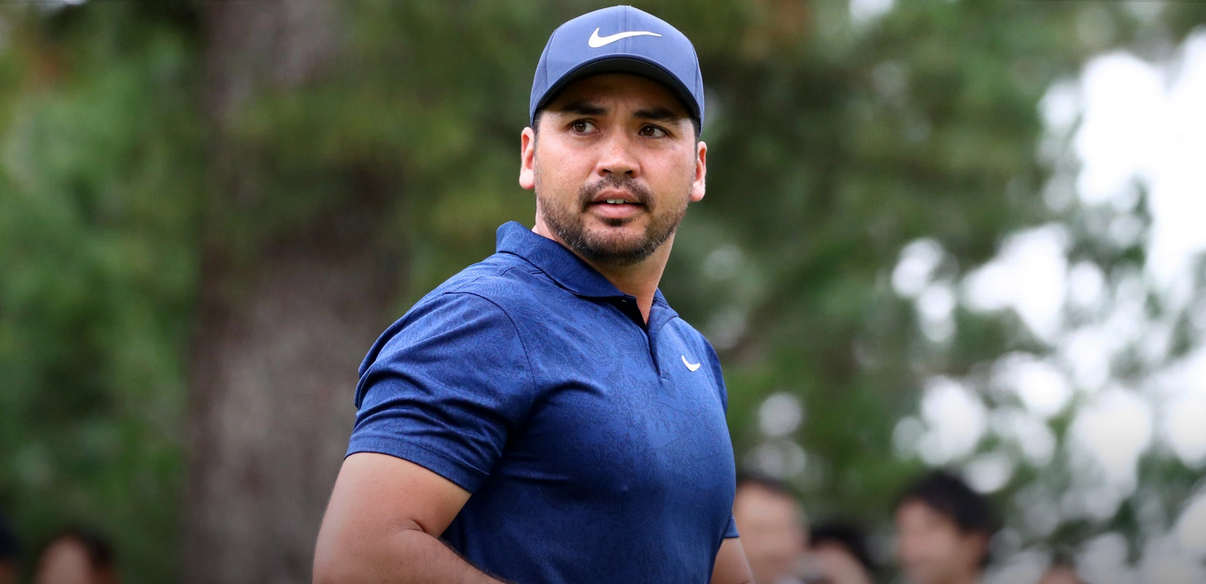
He had a steady presence in Colin Swatton on the bag who remains his swing instructor, and while there have been more catastrophic caddie firings in golf, Jason Day’s replacement effort has fueled a decline in the former World No. 1’s game.

While Day did win twice in 2018, he has since struggled while having an array of loopers this year—four in his 21 starts—while also dealing with some nagging injuries. But as he explained in pre-Mayakoba Classic comments, the revolving caddie situation has been a problem. From Julie Williams’ Golfweek report:

“When you go through changes like that, trying to find the right makeup, the right chemistry, it takes some time,” Day said of his frequent caddie change-ups. “But I feel like with what I’m doing with David (Lutterus) out there, I think we’re slowly working on the communication and things are working and they’re coming around.”

Bevacqua Bullish On NBC/Golf Channel Retaining PGA Tour Rights: "I’m thinking about how we’re going to improve."

Screen Shot 2019-11-13 at 8.24.51 PM.png

As we near the projected date of the next PGA Tour television rights deal, NBC Sports Group President and former PGA of America CEO Pete Bevacqua chatted with SBJ’s Abe Madkour and John Ourand.

Among the topics? Playing golf at Bel Air with Al Michaels and where NBC will target resources with the NFL and other sports properties.

The money needed to retain the NFL has many observers wondering what might get scrimped on by networks. Bevacqua made clear golf is not one of those sports.

Bevacqua said there is a "plan in place" for which non-NFL deals NBC is hoping to maintain or add going forward. He said, "I know in my mind what we feel we need to bid on, what we would like to bid on and what we probably won’t bid on. That can always change." Bevacqua was bullish on NBC and Golf Channel's chances to keep its PGA Tour package. "I’m not thinking about what will happen if we don’t get them," he said. "I’m thinking about how we’re going to improve." He also noted there will be a better sense of the landscape on the future of Tour rights "by the end of the year." SBJ has reported that Tour execs want to have a new deal in place by the end of the year, despite the current deals running through '21.

The full interview that is worth a listen despite the tragic microphone placement (come on SBJ, up your game!):

Collegiate Stars Graduating From LPGA Q-Series Again Choosing Pro Golf Over School

Screen Shot 2019-11-12 at 8.31.27 PM.png

The rush to turn pro continues to be an ongoing theme for men’s and women’s college golf—followed by the inevitable coach quotes saying how happy they are for the players.

With four of five 2019 LPGA Q-Series participants deciding to turn pro instead of finishing the 2019-20 season—and Andrea Lee undecided—the situation stinks for women’s college golf and next spring’s Augusta National Women’s Amateur losing five marquee players. There is also the mixed record of players leaving school early and the societal pressures to rush into a pro career.

But as Ryan Lavner notes in his Tweet, it’s a no-win all the way around:

Kuchar In Mayakoba: Frugalgate Was A Teaching Moment For His Family

Screen Shot 2019-11-12 at 8.14.10 PM.png

Matt Kuchar spoke to the Mayakoba Classic media gathered and as Adam Schupak reports for Golfweek, says last year’s win and ensuing controversy over caddie pay was hard on him. But Kuchar said his stubbornness in refusing to pay his fill-in caddie a reasonable chunk from the $1.3 million winner’s check provided a teaching moment for his children.

“It’s a moment I’m not proud of, but it’s one of those things you do your best as a father to teach kids lessons, and there’s no better thing than to show them – taking the lead and showing them the right steps to take. When you have moments you’re not proud of, you make amends for them, you do your best to make it right and try to keep moving forward and staying positive,” he said on Tuesday.