Old Course Is The Centerpiece Of Climate Change Study

Screen Shot 2020-01-12 at 7.20.27 PM.png

This unbylined Sky Sports story looks at St Andrews university Professor Bill Austin's planned three-year study of coastal erosion and the impact on golf. An R&A grand as part of its Golf Course 2030 initiative.

"This research will allow us to consider all climate-related factors that will have an ever-lasting effect on the home of golf."

The Coastal Change Action Plan is a key component of the R&A's Golf Course 2030.
It was established in 2018 as an industry initiative to consider the impact of the changing climate, resource constraints and regulation on golf course condition and playability.

Researchers estimate almost £400m worth of property and infrastructure around Scotland's coastline is at risk due to erosion.

Waugh, PGA Making Last Ditch Effort To Save West Palm Beach Muni

Screen Shot 2020-01-12 at 7.23.11 PM.png

Tony Doris files an in-depth Palm Beach Post piece on PGA of America president Seth Waugh trying to get the city of West Palm Beach to not develop its shuttered muni.

With the city’s latest effort to nail down a redevelopment deal ending unsuccessfully, PGA of America CEO Seth Waugh, a longtime Palm Beach County resident, has urged West Palm Beach leaders to let the organization restore the course, run programs there and still have it affordable for city residents, he said in an interview Monday night.

“The city has to make a fundamental choice,” he said: “Do we want this to be about real estate and finances or about golf? ... We just want it to be golf, not another development.”

A two year effort to find a savior for the golf course has failed, so Waugh has offered to get the PGA involved along with instructor Mike McGetrick and investors. It would seem a no-brainer given this:

Former City Commissioner Shanon Materio, now president of the South End Neighborhood Association, said Wednesday the city should acknowledge that the site was given to the city on the grounds it remain a golf course.

“For over five years, the golf course has remained in disrepair while the prior and current city administrations failed to complete the most basic of reviews by issuing a legal opinion regarding the question, can anything other than a golf course even be allowed on the property,” she said.

“The land was given to the city for a single purpose, a municipal golf course. Not for housing, not for hotels, and not even as a city asset.”

If the city fails to honor that restriction, it could lose the property, under the terms of a reverter clause, she said.

Trinity Forest Out As Nelson Host After This Year

Screen Shot 2020-01-11 at 9.21.43 PM.png

The Dallas Morning News’ Tim Cowlishaw explains why the 2020 AT&T Byron Nelson will be the last at Trinity Forest. The bold Coore-Crenshaw design was just one issue, along with the courses location, the lack of shade and a huge decline in tournament revenues.

We have learned that it’s over, that the 2020 Nelson will be the final one held on the south Dallas course. Eventually, the tournament will move to PGA Frisco but it may need to make a stopover back at the Four Seasons TPC for 2021, which is sort of like telling your ex-wife: “Hey, things didn’t work out with my new partner, but I need to come home and crash before moving on to my next one, is that OK?’’

The tournament was expected to eventually move to the PGA of America project in Frisco, but that is at least two years away, meaning the Nelson may have no choice but to return to the TPC it left. Indeed, as Cowlishaw notes, that’ll be an awkward reunion.

It’s a shame. Trinity Forest may be the most eccentric Coore-Crenshaw design of all and one of their more amazing accomplishments given the not-thrilling landscape. But without the lively bunkering they are known for, an emphasis on the ground game (except during Nelson week when things were kept softer), and an awkward clubhouse/course/range setup for a big tournament, this was going to be a tough sell in May date prior to the PGA.

(The course would be the perfect Open Championship tune-up test, but the club is closed by July when players are prepping for the last major.)

The only good news in this case? From the start, sponsor AT&T was involved in the tournament move and former AT&T executive VP Ronald Spears is a club co-founder with Jonas Woods.

Alistair Johnston Gifts Golf's Greatest Private Library To The R&A

Screen Shot 2020-01-10 at 9.19.04 AM.png

Amazing news out of London and St. Andrews: longtime agent Alistair Johnston is gifting his incredible 30,000 golf book collection, easily the most complete and remarkable private collection today.

From a Reuters story:

“We are very grateful to Alastair for this generous gift,” Martin Slumbers, Chief Executive of The R&A, said.

“We are excited to continue his vision and support his desire to display this collection in its entirety in Scotland. I can think of no more appropriate place than St Andrews to create the world’s most comprehensive library of golf books.”

The goal is to have the library in place by the Open’s return to St. Andrews in 2021.

Having seen some of the great private collections broken up by auctions or failures to protect them in one locale, this is a great day for the R&A and a remarkable contribution from Johnston. Giving future generations access to essentially the entire story of the game and in St. Andrews, is a very special thing for golf and golf history.

Global Golf Post’s John Steinbreder profile of the collection is available here for Global Golf Post subscribers.

The above Gigapan was captured by Darren Carroll.

Patrick Reed's Lawyer Tries To Silence Chamblee's Suggestions Of Cheating

Screen Shot 2020-01-10 at 7.50.05 AM.png

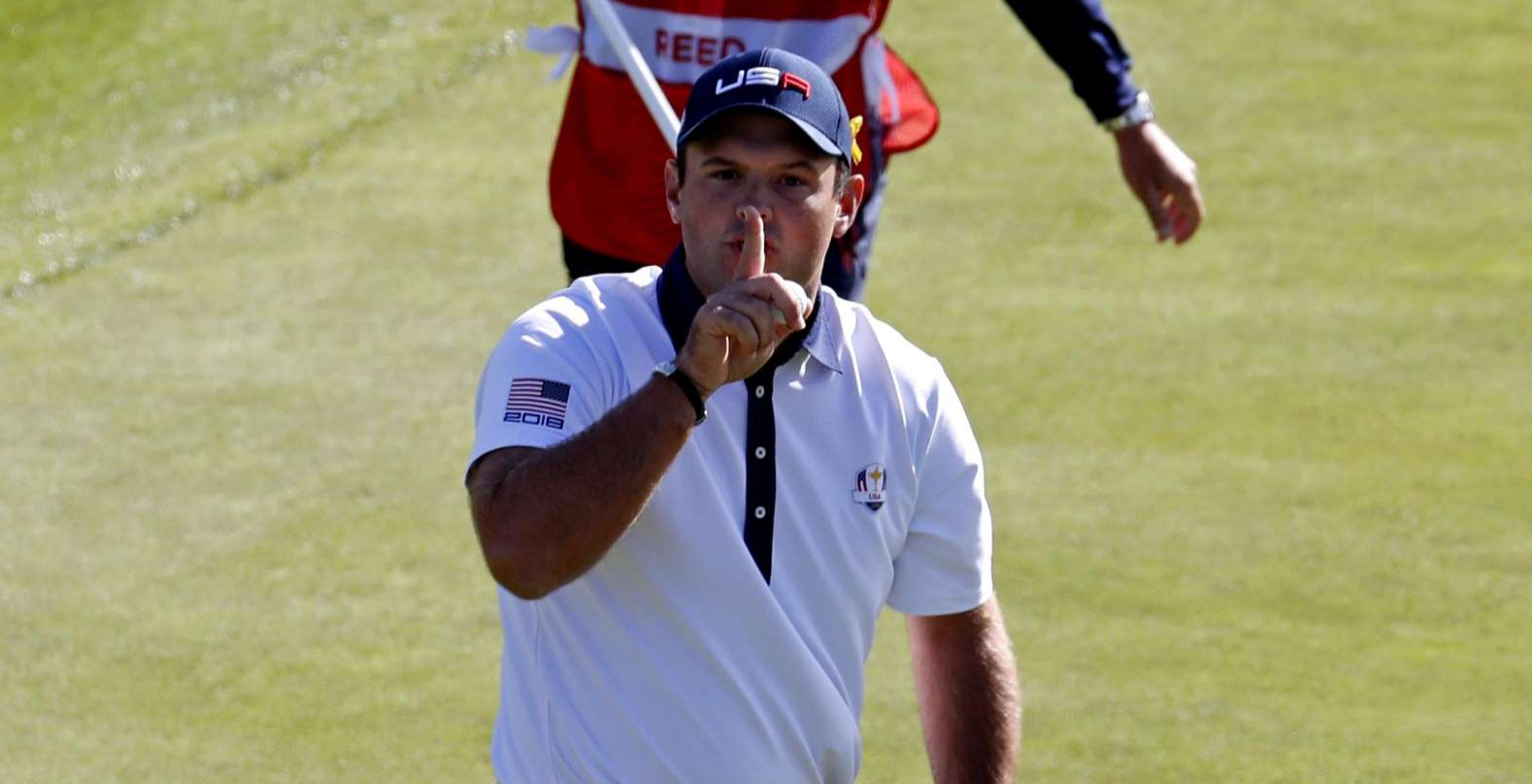
While anyone who has played the game is uncomfortable with the actions of Patrick Reed—at best—his obvious effort to improve his lie at December’s Hero World Challenge has also involved behind-the-scenes efforts to squash free speech.

Eamon Lynch reports on a cease and desist letter Reed had his attorney send to Golf Channel analyst Brandel Chamblee demanding and end to accusations of cheating.

“The purpose of this letter is to obtain assurance that you will refrain from any further dissemination, publication or republication of false and defamatory statements concerning Mr. Reed, including any allegations that he ‘cheated’ at the Hero World Challenge in the Bahamas,” wrote Peter Ginsberg, a partner at the New York City law firm of Sullivan & Worcester.

Ginsberg, who previously represented Ray Rice and has sued the PGA Tour on behalf of Vijay Singh and Hank Haney, confirmed to Golfweek that he represents Reed and sent the letter.

Chamblee’s comment drawing the most ire from Team Reed: “To defend what Patrick Reed did is defending cheating. It’s defending breaking the rules.”

Since the letter was sent in December, fans have continued to taunt Reed at the Presidents Cup and in his first 2020 PGA Tour start. Having served no suspension and having been deemed a gentleman for accepting his two-stroke penalty presumably for not trashing the scoring trailer, appears to have only outraged a majority of fans who value the integrity of professional golfers.

Sending such a letter on top of whatever other efforts Team Reed are pursuing behind the scenes would seem to only be keeping memories fresh of Patrick Reed’s recent and distant past issues with the law.

The rest of the story includes comment from Chamblee on the apparent claim by Reed’s lawyer, Peter Ginsberg, that video captured by Golf Channel cameras exonerated his client. This, even though it was the video that became the only way we learned of Reed’s nefarious actions.

Roundup: First Pete Dye Tributes And Remembrances From The World Of Golf

Screen Shot 2020-01-09 at 7.35.49 PM.png

What a perfect headline and New York Times obituary from Richard Goldstein, where Pete Dye is fittingly remembered as a mad scientist and golf architecture’s Picasso from of a perfect quote from Arthur Hills.

Rarely using a set of grading plans for construction, relying instead on his instincts as he laid out a course, walking it in khakis and work boots or sitting atop a tractor, Mr. Dye emphasized strategy over raw power.

“I think of Pete like Picasso, somebody that has created a nontraditional design, whether it’s a painting, a sculpture or a golf course,” the prominent course designer Arthur Hills was quoted by ESPN as saying. “He was so innovative in a profession that is very traditional.”

Ron Whitten nails it with his GolfDigest.com tribute, especially this:

Before Pete, golf architects mass-produced their products. Assembly lines of bulldozers stretched from coast to coast and chugged out facsimiles of the latest fashions. Some would eventually be deemed top-flight tests of golf, but all bore trademarks of one another.

Pete was a disruptor 50 years before that became a corporate buzzword. We called his style of design “target golf,” for it embraced abrupt change in its landforms, its sink-or-swim choices, its death-or-glory options, its my-way-or-the-highway reasoning.

Ran Morrissett penned this salute for Golf.com, including this:

Dye famously remarked that he didn’t need to produce plans because he would be on site every day. That practical, hands-on approach spoke to his Midwestern roots. It also made an impact on people who worked for him, including Bill Coore and Tom Doak. Those two headline the Dye Tree of architecture, and their firms have gone on to produce more World Top 100 courses as selected by GOLF Magazine than any other architects over the past 25 years. Other notable designers who are quick to acknowledge Dye’s influence include Rod Whitman, Tim Liddy, Brian Curley, Lee Schmidt and Bobby Weed. The list goes on.

Jack Nicklaus:

View this post on Instagram

The golf world lost a great friend today in Pete Dye. I first met Pete when I was 16 years old. Pete was 30, and we played an exhibition with Sam Snead in Urbana, Ohio. We became friends; we played a lot of golf together; and we designed courses together. It was Pete who inspired me to start designing courses more than 50 years ago, and so in many ways I owe my second career to him. I think Pete Dye was the most creative, imaginative and unconventional golf course designer I have ever been around. Pete would try things that nobody else would ever think of doing or certainly try to do, and he was successful at it. If there was a problem to solve, you solved it Pete’s way. In the end, Pete’s way usually turned out to be the right way. I followed Pete. I loved Pete. Barbara and I loved Pete and his wife Alice. We lost Alice less than a year ago and now Pete today. We have lost two wonderful people. Pete was the most innovative golf course designer in my lifetime, and certainly the golf world should mourn the loss of this great man. It is the end of the era, but Pete’s legacy in golf course design will endure because of the courses he has designed and the courses people will play for years and generations to come. They will enjoy them, perhaps copy them, and certainly be inspired by them. @asgca1947 @pgatour @rbcheritage @seapinesresort #HarbourTownGolfLinks (Photos courtesy of @jimmandeville and @nicklauscompanies)

A post shared by Jack Nicklaus (@jacknicklaus) on

PGA Tour Commissioner Jay Monahan:

We are deeply saddened to learn of the passing of Pete Dye, a true friend of the PGA TOUR and one of the most important course architects of this or any generation. 

A 2008 inductee into the World Golf Hall of Fame, Pete’s influence is far-reaching, leaving a global imprint on both the amateur and professional games. He designed some of the best known golf courses in the world, though none more recognizable than THE PLAYERS Stadium Course at TPC Sawgrass. It was here that Pete masterfully brought Commissioner Deane Beman’s revolutionary stadium golf concept to life, melding Deane’s vision with a brilliantly designed course that is celebrated annually as one of the game’s great strategic courses during THE PLAYERS Championship.   

Pete, though, was always quick to credit his beloved wife, Alice, with his success, including the concept for his most famous hole, the 17th island green at TPC Sawgrass.  Together, Pete and Alice made a formidable team in golf and life, and with sons Perry and P.B., themselves successful course architects, they are recognized as one of the most accomplished families in golf.

Our thoughts and prayers go out to the entire Dye family.

Developer Herb Kohler in Doug Ferguson’s AP obituary.

“While Pete designed to torment the most accomplished professional, his forward tees allowed the most inexperienced to play,” said Herb Kohler, who brought Dye to Wisconsin to build courses such as Whistling Straits and Blackwolf Run. “He would challenge the professional both physically and mentally, while remarkably accommodating the raw amateur who was learning the game..”

The USGA’s Mike Davis:

With PGA West on the PGA Tour schedule next week, Larry Bohannan considers Dye’s desert legacy that actually started in a big way with La Quinta resort.

Dye was an active but not terribly well-known architect when he was first summoned to the Coachella Valley. Two Oklahoma club pros, Ernie Vossler and Joe Walser, wanted to build a couple of golf courses around the La Quinta Hotel. They had worked with Dye before and felt he was the guy for the job.

The result of the collaboration of Dye, Vossler and Walser were two amazing golf courses, the Mountain and the Dunes courses at what is now La Quinta Resort. The courses, opened in 1980 and 1981, were like nothing the desert golf world had seen before. They were dramatic, featuring big lakes, Dye’s trademark railroad ties, an island green set in the middle of the desert and the Santa Rosa Mountains as a backdrop.

This from Rory McIlroy:

Gil Hanse’s tribute:

And this short slideshow from photographer Fred Vuich:

The Legacy Of Pete Dye: How He Changed Golf

Screen Shot 2020-01-09 at 3.28.19 PM.png

Pete Dye will be remembered in so many ways that it’s hard to pinpoint where golf would be had he not come along.

The ace golfer turned-insurance salesman turned-restless artist forever changed the sport with his extreme links-inspired features and hybrid of strategic and penal elements, all delivered with a dry, Midwest-rooted wit to squelch the haters.

Tributes will flow over the coming days from the many architects he brought into the business. Flags will be lowered at the venues where his legacy is so profound every day they are open for play. And we will hear tributes from the tours whose tournaments have been forever made more compelling thanks to Dye re-imagining how a “championship” venue should play.

While his work has aged in both beautiful and bizarre ways, Dye’s design legacy will never be rooted in one particular course. This, even as the impact of TPC Sawgrass and “Stadium golf” alone made him World Golf Hall of Fame worthy. Instead, the real genius of his work is almost overwhelming to contemplate. Dye put a stop to the runaway craze of 1950’s runway banality built to punish and all with so little character. This, after playing the great links of Scotland and Ireland and giving up his career to pursue better ways to design a course. And his brilliance was not merely in copying a few features or bringing back “template” holes when he returned. Dye expanded on what he saw overseas, pushing the art of course design places well beyond anything seen before.

Sure, some of it didn’t work, some of his designs were excessive and he had to remedy problems that surfaced on the tournament stage. But like any of the great anarchists and outliers, that Pete Dye could jam railroad ties against lake walls, force offensive blind shots from the middle of the fairway and get away with building other unmaintainable features, spoke to his artistic eye. Pete Dye courses inspired golfers to test their skills against him even when they knew he’d get the best of them.

Pete Dye broke the cardinal rule of timeless design by making about himself instead of a battle against nature. Yet he got away with the outlandishness. It was that wink of his eye and self-deprecating manner which, when combined with oddball touches—like the noose hanging from a dead tree that he left behind from the construction process—that made Dye lovable even as his designs violated most of the time-honored traditions of the great works. Alice’s editing, questions and golf savvy also should never be underestimated in making Pete what he was.

Pete Dye’s hands-on approach to construction also began a renaissance in the building of courses, His attention to detail and willingness to shape features approach took longer-than hoped to break the model of contractor-built, assembly-line golf courses that appeared stamped on the landscape by a blueprint. Eventually, however, his disciples have returned elite golf architectural creation to the field and away from the office.

And it is those Dye-inspired legacy of acolytes that have taken his lead in a renaissance of links golf, an emphasis on fun, and rekindling elements of design whimsy to offset the sport’s cruelty. Even the restoration movement responsible for rejuvenating so many classics, can almost entirely be tied to the awareness Pete Dye brought to the works of those who came before him. At heart, he was a traditionalist who played up his simpleton Midwest roots, but deep down inside there was a rebel, a nutty genius and imagination like no other. I hate to think what the game would look like had Pete Dye decided selling insurance was not for him. Thankfully, we don’t have to.

"MyGolfSpy...has become like a Consumer Reports for golf equipment."

Here’s a sensational read from ESPN.com’s Tom VanHaaren on the rise and prominence of MyGolfSpy as golf’s most trusted voice for equipment reviews.

As always, please hit the link and enjoy the story in its entirety, but a couple of parts stood out. This on MyGolfSpy’s testing:

Beach and his 12-employee staff have a dedicated test facility in Virginia, where they conduct thousands of hours of tests on balls, clubs, shoes and even golf bags.

The testing is vastly different from what has been done in the past, where a blogger or reviewer testing a new club set to hit the market typically would hit a few shots and review the results for an audience. Beach and his staff, whether they're testing a ball or club, run through 10,000 shots with humans and a robot, a process that can take up to three months.

The story also addresses MyGolfSpy’s look at the Callaway Chrome Soft in 2019 and the resulting change in production after revealing poor, uh, core concentricity.

Callaway happened to be three-and-a-half years into a $50 million golf ball plant renovation that the company believes will ultimately end up with Callaway making the best-performing golf ball in the world. But Toulon admits that because of MyGolfSpy's tests and reviews, Callaway has altered certain aspects of the renovation and even pushed the update along.

Ensuring core concentricity -- that the cores are in the center of the ball -- is one focus. Another is improving the testing and quality-control process.

"We had initially planned on one or two extra X-ray machines, not testing every single golf ball but testing definitely enough that you could come up with a metric that you could look at and judge quality against that," Toulon said. "Now, every single golf ball, I think we'll be at at least five X-ray machines, which will allow us in the United States, coming out of our Chicopee, Oklahoma, plants, which is all of our Chrome Soft business, we will now X-ray every single golf ball. That definitely has, we've been impacted by MyGolfSpy in a really good way and we're thankful for that."

Just A Few Reasons Not To Care About The USGA Hiring Don Cheadle As A Frontman

In a dated and dreadfully timed rollout, the USGA announced the hiring of actor Don Cheadle to serve as U.S. Open “brand ambassador” and as its spokesman on environmentally sustainable public golf.

Golf.com’s James Colgan reports the big news here.

A few readers wondered why I had not acknowledged this circa 2005 news of an ambassador signing on to front PSA’s. Wonder no more.

—$trategic alliances would be the only reason some golf news organizations reported Cheadle’s hiring. Even clickbait-desperados would have no other reason to report his hiring as news, just as they would not post a Q&A with the new USGA President unless someone ordered them to do so while holding a pen and checkbook in hand.

—The USGA took voluntary staff buyouts last fall laced with an incentive that would make anyone over 50 a fool to stick around. What better way to show new fiscal responsibility—brought on by the apparent need to trim costs—than to hire an actor to front PSA’s whose greatest purpose is to let FOX announcers can have a bathroom break.

—The ball still goes too far. Not even Don Cheadle can’t fix that.

—Legions of great old muni’s needing restoration could use some of the USGA’s money or remaining non-buyout expertise. Don Cheadle PSA’s won’t help those courses.

—The announcement came after the new World Handicap system debuted to five days of non-function and online griping. Here’s guessing not too many golfers feel the handicap system will improve with Cheadle’s hiring.

—Don Cheadle is a smart, accomplished actor and activist. He will soon learn he’s wasting his time. One Annual Meeting should do the trick.

—Golf rounds take too long. Not even Don Cheadle can’t fix that.

PGA Tour: Data Sales A Big Part Of Sports Betting Push

Screen Shot 2020-01-07 at 8.35.59 PM.png

We’ve previously learned that the PGA Tour hopes to reap 1% of the billions projected on sports betting. Based on estimates, that would put their annual haul at $7.5 million, or the price of one above average event’s purse.

Not much given the headaches that could come with legalized sports betting in golf.

But of further interest is this reveal in an unbylined AP story regarding the PGA Tour selling ShotLink data in lieu of a more direct partnership with betting houses.

The leagues argue that they are creating new betting products by enhancing the data that they sell to gambling companies. That is part of the reason these companies have been willing to pay for a product instead of simply writing the leagues a check.

The PGA Tour says it is creating new betting opportunities through its complicated (and expensive) ShotLink technology.

“ShotLink gathers data from every shot; there are more than 30,000 shots in a golf tournament,” said Andy Levinson, senior vice president for tournament administration with the PGA Tour. “We’re collecting multiple data points, and they are going to be potential betting points. There’s going to be opportunities over a season to have millions of markets created in golf. You’re talking about distance, ball location, whether it’s on the fairway or in the rough. If a player has a 10-foot uphill putt, there’s going to be historical data on that shot. Our sport is perfect for it.

“That requires 60 people every week; we have to lug 5 miles of cable,” he said. “We have cameras, laser systems around our greens. It’s an extremely expensive process.”

Volunteers man a majority of the Shotlink towers that gather information, though increasingly the Tour is leaning on an automated setup. Nonetheless, I do wonder how volunteers will feel about their job when it’s better known they are working to fill Tour coffers on the back of sports betting. Most probably won’t know or care, but it certainly is another element of the efforts to incorporate betting into PGA Tour golf.

Americans Have Not WD'd From European Tour's Middle East Events, But That Was Before...

europeantourschedulemiddleeast.jpg

Joel Beall reports for GolfDigest.com that, as of Tuesday morning, the likes of Koepka, DeChambeau, Johnson, Mickelson, Reed and other top stars had not withdrawn from any of the European Tour’s upcoming Middle East events.

But, that was before Iran sent ballistic missiles toward American troops in Iraq and also threatened to “unleash Hezbollah” on Dubai, home to the Dubai Desert Classic, January 23-26.

Given that the events offer significant appearance fees, we’ll see just how determined these players are to head overseas for pay.

Bryson DeChambeau, while playing Twitch, Twitching, Being A Twitcherer—please, I have no idea and won’t try to figure it out—says he’s “really not sure” now about his planned trip.

Topgolf Targeting $4 Billion Valuation, IPO May Come In 2020

Screen Shot 2020-01-07 at 7.53.24 PM.png

Gillian Tan, Scott Deveau and Kiel Porter all contribute to a tidy Bloomberg report on Topgolf’s long awaited march to an IPO, with banks selected and the all-important valuation targeted: $4 billion.

The Dallas-based company is working with banks including Morgan Stanley, JPMorgan Chase & Co. and Bank of America Corp., said the people, who asked to not be identified because the matter is private. Its IPO could come as soon as this year, they said.

Topgolf, led by Chief Executive Officer Dolf Berle, has $525 million in outstanding debt, according to data compiled by Bloomberg.

Given the incredible success of Topgolf, it should be interesting to see how much the state of the golf industry is characterized during the process, and after the official launch.

Kapalua Ratings: Going Against NFL A Bad Idea, Finishing Against Golden Globes Worked Better

As Sports Business Daily notes, the NFL’s Saturday Wild Card games were up, with massive peak audiences of 31.4 million for Titans-Patriots and 29.4 million for the Texans-Bills overtime thriller on ESPN.

The NFL saw gains for both of its Wild Card games on Saturday. CBS led the way with 31.4 million viewers for the Titans’ win over the Patriots, which is the best audience for the Saturday primetime Wild Card since Saints-Eagles drew 34.4 million in ’14 on NBC.

Third round play at Kapalua went up against the Patriots game and did not rate among the top 150 cable shows, where a .3 minimum was needed to rank.

The news was better Sunday as NFL games ended earlier, freeing up eyeballs for the 2020 Sentry’s conclusion, won by Justin Thomas in sudden death playoff over Xander Schauffele and Patrick Reed.

Sunday’s live PGA Tour coverage on Golf Channel ranked 79th, with only the Golden Globes as major competition. The Sentry drew a .09 with an average audience size of 634k, 319k were 18-49 year olds. That means the peak audience was significantly higher during the exciting conclusion.

Still, there may also be viewers lost to a pair of NFL games already played and limits to how many hours one can watch television in a day. Not to mention, most Sunday night, Monday coverage centered around the NFL games.

And circling back to Sunday’s reader poll asking about Monday finishes for the entire Hawaii/La Quinta swing, 68% of you voted in favor of such a setup to avoid football. As always, thank you for voting!

GWAA: Writers Name Brooks Koepka, Jin Young Ko, Scott McCarron 2019 Players Of The Year

Screen Shot 2020-01-07 at 10.37.05 AM.png

On the wings of his T2-1-2-T4 finish in the 2019 majors, Brooks Koepka was named the Golf Writers Association of America player of the year. Also on the ballot with Koepka were Rory McIlroy and Tiger Woods, who made strong cases for the award. But Koepka’s consistency in the majors ultimately got him the nod, it would seem.

McIlroy was named player of the year by his PGA Tour peers.

The full release:

KOEPKA, KO, MCCARRON VOTED 2019 GWAA PLAYERS OF THE YEAR

HOUSTON (January 7, 2020) – World No. 1 Brooks Koepka’s impressive record in last year’s majors propelled him to his second consecutive Golf Writers Association of America’s Player of the Year Award, while Jin Young Ko and Scott McCarron won their respective 2019 Player of the Year honors.

Koepka is the first player to win back-to-back since Tiger Woods won back to back in 2006-2007 (he also won in 2005).  Koepka got 44 percent of the vote to world No. 2’s Rory McIlroy’s 36 percent while Woods, who has won the Player of the Year honor 10 times, was third.

Koepka, who was sidelined with a knee injury in the fall, crushed the majors in 2019. In addition to winning his second consecutive PGA Championship, he finished in the top four at the other three majors. He was tied for second at the Masters, second alone at the U.S. Open and T-4 at The Open. In addition to the PGA, he won the WGC FedEx St. Jude Invitational and T-2 at the Classic, T-3 at the TOUR Championship and fourth at the AT&T Byron Nelson.

"I am extremely humbled to receive this award for a second year in a row,” said Koepka. “The GWAA does so much for the game we all love, so to be their Player of the Year again is a real honor.’’

Ko, in just her second season on the LPGA Tour, ran away with the Female POY race with Nelly Korda finishing a distant second. 

The South Korean star won four times, including two majors and swept every major LPGA award. She won the ANA Inspiration and Evian Championship and posted 12 top-10 finishes and ended the year winning the Rolex Player of the Year, the money title and Vare Trophy. Her 69.052 average was the second-lowest mark in LPGA history to Annika Sorenstam’s record of 68.697 in 2002.

She made headlines, too, for playing 114 holes without a bogey, besting Woods’ record by four holes.

"It is a great honor to win this prestigious award,” said Ko. “To be recognized by golf writers, who cover our sport of golf all year long, makes it even more special. I'm really proud and excited to be named alongside all the other recipients of this award in the past."

 McCarron won three tournaments and the Schwab Cup and had 14 top-10 finishes in 26 events to edge twin-tour wizard Steve Stricker. The 54-year-old McCarron won The Mitsubishi Electric, Insperity Invitational and Mastercard Japan.

 "To be selected Senior Player of the year by the Golf Writers Association of America is truly a great honor," said McCarron.

Koepka, Ko and McCarron will receive their awards at the 48th ISPS HANDA GWAA Annual Awards Dinner on Wednesday April 8 in Augusta, Georgia.

Foreplay Pod: "Old Man" Media vs. Barstool

Screen Shot 2020-01-07 at 10.22.46 AM.png

After going on the Foreplay pod to discuss last December’s Presidents Cup spat between “old” media and the Barstool boys, I’ve come to realize my use of fanboys that so riled their base was in fact, unnecessary and short-sighted.

While I’ll continue to contend everyone with a media pass and signing the same forms should work under the same rules—no matter how outdated—the notion of a fanbase following the sport vicariously through media personalities dates to the earliest days of coverage. Darwin had fanboys who lived for his tournament accounts even a month after there had been a conclusion. Certainly Dan Jenkins elevated the art of fans living vicariously through his SI expense-account maneuvering, both in print and books. And by posting the things we do today on social media (golf, food, sites), all of us take audiences of different sizes on the road with us in different ways, just as the Barstool group does for their audience.

Anyway, with that apology out of the way, here’s the discussion below or as always, you can find on your favorite podcast platform or iTunes, and near the end we do also talk about the extra-fun finish at Kapalua.