Players Say The Darndest Things: Reactions To The Prospect Of Rules Bifurcation

Paul Casey: “There’s an argument for this. I’m not saying it’s right or wrong. But the golf courses became longer because the golf developers said if we can make the golf courses longer, we can get four more houses on that hole and two more on that hole, etc. That’s more money. And that’s when the manufactures and the players – including the amateurs – rose to the challenge. They had to start hitting the ball longer. I don’t like us players and the manufactures[SP] getting the blame. We’re not the only ones to blame.”

Billy Horschel:

Brandel Chamblee: “The golf ball can easily be constricted by raising the fairway heights, growing the rough and firming up the greens,” he explained.

Distance Report Closer Look: "The performance of golf balls has changed significantly over the last 25 years, with many of those changes contributing directly to hitting distance increases."

Screen Shot 2020-02-04 at 11.33.15 PM.png

What I have read so far adds up to one impressive piece of documentation and yes, at times, subtle maneuvering. Before finishing the entire Distance Insights Report compiled by some smart and very talented folks at the governing bodies, I can’t help but highlight parts that get at prevailing debates.

The USGA and R&A have come at this issue from many angles, with the early portion of the report laying the groundwork to get at key questions related to primary causes of sudden jumps in distance, the increases at different levels and around page 22, the role of equipment in distance gains.

For those keeping an open mind, the report’s detailing of aerodynamics related to the golf ball and driver heads builds a case before concluding that a disproportionate advantage is enjoyed by elite players as the golf balls have grown, gulp, stiffer.

From page 34 of the report:

The performance of golf balls has changed significantly over the last 25 years, with many of those changes contributing directly to hitting distance increases. The most significant change in golf balls in this period has been the replacement of the wound-core golf balls used since the early 1900s with the multi-layer, solid-core balls that are ubiquitous today. Multi-layer solid construction golf balls is not a new innovation, but many golfers continued to use wound golf balls until as late as the beginning of the 2000s. Typically, multi-layer, solid-core balls spin considerably less than wound-core balls at typical driver impact angles (R20 - Effect of Equipment on Distance - Golf Balls). This is an important factor for driver shot distance because decreases in spin can directly contribute to increases in distance. For example, referring to Figure 27, a decrease of spin of around 250 rpm can lead to an increase in distance of as much as five yards at a swing speed of 120 miles per hour.

A comparison of a popular, older, wound-core golf ball and a popular, modern, solid-core golf ball suggests that the latter has both improved aerodynamics and is optimized for a lower spin rate. It can be seen in Figure 27 that for the impact speed typical of elite male golfers, at a spin rate of 3000 rpm, the aerodynamic improvement of a modern solid-core ball was calculated to be worth approximately ten yards over a traditional wound-core ball.

Couple that with what happens at impact and you have, well elite players getting a bigger boost from recent advances than the rest of us:

The coefficient of restitution of the impact between the club and the ball, previously discussed in Section 3.2.1.1, is also dependent on ball material and construction. As impact speed increases, more energy is lost in the collision between the clubhead and the golf ball resulting in a lower coefficient of restitution. However, the stiffness of a golf ball can significantly reduce this decrease in coefficient of restitution, especially for the impact between the ball and a clubhead having significant spring-like effect. A golf ball with a lower stiffness will have a lower coefficient of restitution reduction at higher clubhead speeds (R19 - Effect of Equipment on Distance - Driver, Figure 28).

It can be seen in Figure 28 that the difference in the coefficient of restitution (and thus the resulting launch speed and distance) between a soft ball and the stiff balls (A-C) is much greater at high impact speeds than at low ones.

While certainly not warm and fuzzy language, this case is an important part of the debate over possibly tightening up certain equipment rules. Many average golfers believe possible elite player equipment rule changes will cause them to lose all of their hard-bought distance gains. The science says otherwise.

Agent On Current PGA Tour Structure: "Tiger Woods can sell a million dollars' worth of tickets...and he has to shoot scores to get paid"

Bob Harig of ESPN.com provides an “everything you need to know about the league trying to challenge the PGA Tour” perspective. Of note, he focuses in on the building sense that top players and their agents see the stars in golf as severely underpaid, something the Premier Golf League appears to have tapped into.

Said an agent who wished not to be identified: "How can an organization negotiate hundreds of millions of dollars of TV contracts and someone like Tiger or Rory goes out and has the same chance of making the same money as some guy who has come off the Korn Ferry Tour? There is no arbitration panel. And no judge would say that is a fair economic model."

Right or wrong, that has always been a successful model of the PGA Tour. Golf fans have enjoyed the democratic nature of the sport, including the occasional unknown taking down a star. In return, the star has benefited from the opportunity to play via endorsement income that the Tour does not see one penny of after giving them a platform.

But in recent years a few things have changed. The schedule is now year-round and the stars are increasingly asked to tee it up more, including “playoffs” after major season when they would like to be recharging their batteries. The top players are called up every year to play a Cup event. In return? A small donation to their pet cause and free merch they’ll never wear again.

With this added “inventory,” the sense of obligation to play has swollen to untenable levels in the eyes of the elite. Which is how we’ve gotten to this messy place where the Premier Golf League can come along and look attractive to top players by countering the current model.

NY Times On Seth Waugh Not Wanting To Give Donald Trump Deutsche Bank Loans

Screen Shot 2020-02-04 at 9.34.09 PM.png

David Enrich files a lengthy New York Times look at President Donald Trump’s relationship with Deutsche Bank and two of his key efforts at funding golf projects: Turnberry and Doral.

Former CEO and current PGA of America president Seth Waugh comes up as a key player who consistently opposed lending the Trump organization for projects after having been burned during his time at Merrill Lynch.

In 2000, Waugh joined ­Deutsche Bank. Perma-­tanned and with long, floppy hair, Waugh developed a reputation among some ­Deutsche Bank colleagues for being a bit of a lightweight. They derided him for spending more time on the golf course than he did in the office. (Today Waugh is the chief executive of the Professional Golfers’ Association of America.) But he enjoyed the confidence of one of ­Deutsche Bank’s highest-­ranking executives, Josef Ackermann, who helped recruit him from Merrill Lynch. In 2001, Waugh learned that ­Deutsche Bank was planning to lend Trump about $500 million to use as he wished — basically an unrestricted cash infusion to stabilize his flagging finances. Having witnessed up close the carnage that Trump could inflict on imprudent financial institutions, Waugh was in no hurry to repeat the experience.

The bank ultimately provided a loan for Trump’s purchase of Doral at a bargain price, and how Waugh was no longer in charge of the American operation when the future president returned for a 2016 loan request to pay for work at Turnberry.

While the story is a fairly devastating look at the losses left behind by Trump in several instances, the Enrich account of Waugh, the current PGA President, seems tough early on but ultimately paints the picture of a shrewd banker knowing the tendencies of the customer in question.

PGA Tour, PGA of America Sing Fresh Tunes After Distance Report Release

The PGA of America had no comment on the USGA/R&A distance report opening the door to rules bifurcation, while the PGA Tour issued this statement, as reported by ESPN.com’s Bob Harig:

"Since 2003, we have been working closely with the USGA and The R&A to closely monitor distance, and this latest report is an expanded and thorough review of the topic, and others, which are all important to the game," the PGA Tour said in a statement. "The R&A and the USGA are our partners, and the PGA Tour will continue to collaborate with them, along with all of our other industry partners, on the next steps in this process.

"We believe the game is best served when all are working in a unified way, and we intend to continue to approach this issue in that manner. The PGA Tour is committed to ensuring any future solutions identified benefit the game as a whole without negatively impacting the Tour, its players or our fans' enjoyment of our sport."

While hardly endorsements, it’s noteworthy that both organizations have shifted from the recent stances of distance-is-everything, to saying nothing (PGA), or sounding quite respectful of the process ahead of us (PGA Tour).

Ultimately both organizations may revert to recent form and battle the governing bodies. But as has been noted here and elsewhere, their cases that distance helps sell golfers on taking up the game to the benefit of PGA of America teaching pros, or puts people in the seats at PGA Tour events, seems worthy of deeper consideration.

Bill Fields Named 2020 PGA Of America Lifetime Achievement Award Winner

Screen Shot 2020-02-04 at 9.50.00 AM.png

Great news from the PGA of America arrived today on recognizing Bill Fields as their latest Lifetime Achievement Award winner in journalism. I am a longtime admirer of his work, and as someone who got to work with Fields at Golf World, I can attest that his passion for the sport is unmatched. He is an equally talented editor whose deft touch and insights always made the work of talented writers that much better.

The full story on Bill’s sensational career can be read here at PGA.com includes this:

Fields, 60, is the 31st recipient of the PGA Lifetime Achievement Award in Journalism, which recognizes members of the media for their steadfast promotion of golf. Fields’ work spans 109 men’s major championships, eight Ryder Cups, more than 60 women’s and PGA Tour Champions majors, and more than 800 Golf World issues.

He will be honored on April 8 at the ISPS HANDA 48th Golf Writers Association of America (GWAA) Awards Dinner.

USGA, R&A: "Golf will best thrive over the next decades and beyond if this continuing cycle of ever-increasing hitting distances and golf course lengths is brought to an end."

Screen Shot 2020-02-03 at 9.44.24 PM.png

The USGA and R&A issued an embargoed statement summarizing their Distance Insights Study and handed it out to select folks, who then shared it all over the place. The shoe shine guy at Dulles probably has a copy by now.

Here is my summary of the Distance Insights Study “conclusions”: the report features the strongest language in the sport’s history regarding the state of affairs as the governing bodies see distance. While not an all-out admission of regulatory malfeasance, the report opens the door for bifurcation of the rules via a local rule that would open the door to different equipment. While that idea is not the least bit original, it has been resisted by the organizations until now.

The report also delivers lines about distance such as how it must be “brought to an end” and how the governing bodies intend to “break the cycle”. There is even an early reading of 2002’s Joint Statement of Principles” to confirm that the line has been crossed as suggested in that document. There is a sound synopsis put forward explaining why the sport has been harmed in recent years by a distance pursuit and why a continued effort will do no one any good.

Certainly it’s a far cry from the old “nothing much to see here” stance.

The bad news?

Now we spend the next year under a review.

Until the full summary and report is made available online, here are the highlights from the 15-page document, starting with the bold “brought to an end” line.

In summary, we believe that golf will best thrive over the next decades and beyond if this continuing cycle of ever-increasing hitting distances and golf course lengths is brought to an end. Longer distances, longer courses, playing from longer tees and longer times to play are taking golf in the wrong direction and are not necessary to make golf challenging, enjoyable or sustainable in the future.

Again, not newsworthy to a portion of the population who knew this long ago, but a stunning reversal for these organizations. As is this, the most newsworthy component and only about 30 years overdue.

1. We will assess the potential use of a Local Rule option that would specify use of clubs and/or balls intended to result in shorter hitting distances. The concept is that equipment meeting a particular set of reduced-distance specifications – for example, a ball that does not travel as far or a club that will not hit a ball as far – might be a defined subset of the overall category of conforming equipment. This could allow committees that conduct golf competitions or oversee individual courses to choose, by Local Rule authorized under the Rules of Golf, whether and when to require that such equipment be used. Such a Local Rule option could be available for use at all levels of play, and golfers playing outside of a competition could also have the option to make this choice for themselves.

There also will a new look at the Overall Distance Standard.

2. We will also review the overall conformance specifications for both clubs and balls, including specifications that both directly and indirectly affect hitting distances. The intended purpose of this review is to consider whether any existing specifications should be adjusted or any new specifications should be created to help mitigate the continuing distance increases. It is not currently intended to consider revising the overall specifications in a way that would produce substantial reductions in hitting distances at all levels of the game.

Here’s the timeline on action that will excite no one except outside counsel for the manufacturers:

This paper provides notice to equipment manufacturers of this overall area of interest under the Equipment Rulemaking Procedures. This means that we are identifying research topics that have the potential to lead to an Equipment Rule change but that no proposals are being made today. We invite input from manufacturers and other stakeholders in the golf community concerning potential equipment-based options to help achieve the objectives identified above. To facilitate that input, within 45 days we will publish a more specific set of research topics. It is anticipated that this important step of gathering input will take at least 9-12 months. After the research is completed and comments are evaluated, if we then decide to propose any rule changes, manufacturers will receive notice of these proposed changes (including a proposed implementation plan) and an opportunity to comment under the Equipment Rulemaking Procedures. The time allotted for this step in the process leading up to a final decision on any proposed rule change would depend on the nature of the proposal.

Waste of time. The remedies have been decided, even the shoe shine guy at Dulles knows that. Let’s just get to the whining and litigation stage now.

I’m reluctant to copy, paste and comment on the narrative surrounding golf courses and the “altered skill challenge” artfully presented in the paper. But this was profound and speaks to the shift toward a power game, discriminating against those with less power but other skills.

The unifying principle is that success should depend on a golfer’s skill and judgment in choosing among 14 different clubs for tee shots, long and short approach shots, bunker shots, pitching, chipping, putting and a wide variety of recovery shots. This involves many elements of skill, such as hitting distance, distance control, accuracy, shape of shot, trajectory, spin, bounce and roll, and how to play from all types of lies. The player needs to use his or her imagination and judgment in making constant strategic choices about which type of shot to play among many options that differ in style, difficulty and risk/reward potential. Being challenged to display this wide range of skills is part of golf’s essential character, giving players of very different sets of abilities and relative strengths and weaknesses a chance to compete and succeed.

As for courses, this was a noteworthy paragraph:

Increasing distance can ultimately have a serious effect on where golf is played in elite male competitions, and the game is already seeing this begin to play out. It is unfortunate that courses that once held the highest-level competitions are no longer doing so because they are not considered long enough. More pressing for the future, many more of the most renowned golf courses around the world face a similar risk because it may not be practical for them to get much longer. Such courses may try to retain their challenge by adjusting other course conditions, but this can only go so far given a course’s nature and design integrity and, in any event, such changes eventually can still be outmatched by increasing hitting distance.

Line left out of this but I’M SURE MADE THE FULL REPORT: and we were the primary drivers of the idea to make those poor courses add all that length.

This was a more subtle point about how the yardage of a course may impact the bottom line, or even viability of some courses. Not a point the governing bodies would normally be expected to make, but it’s an important one for everyday courses and clubs.

For a course of, say, 6000 to 6500 yards, the issue is not about hosting elite male events, but about potentially losing the ability to attract and keep golfers who may come to perceive the course as too short from the longest tees. Even if not widely known or used for premier tournaments, such courses can be highly valued by local golfers and communities and are at risk from increasing hitting distances.

Distance is relative, and somewhere Dr. MacKenzie is cussing under his breath…

The game’s essential character and test of skill do not depend on the absolute length of a golf shot or a golf course; the relative relationship between hitting distance and hole length is what matters most. Continuing increases in overall hitting distances will not make golf a better game as a whole. For example, while it is remarkable that long-drive competitors can hit a ball as much as 400+ yards, golf would not be a better sport if anything close to that became a norm for play or if course lengths increased to match it. Similarly, the fact that male golfers on average can hit the ball farther than female golfers does not make the game of golf played by men inherently better than the game played by women.

This concept of relative distance has broader implications for the non-elite game.

Here’s the “break the cycle” language that’ll have ‘em raging in some parts.

For all the reasons stated above, we believe that it is time to break the cycle of increasingly longer hitting distances and golf courses and to work to build a long-term future that reinforces golf’s essential challenge and enhances the viability of both existing courses and courses yet to be built. In reaching this conclusion, we recognize that some have the view that the governing bodies might have done more in addressing the implications of the continuing increases in hitting distances and course lengths.

Yep, there is that.

There are always uncertainties about the future, and an inherent part of our role is to incorporate the lessons of experience, continue to monitor and assess ongoing developments, and develop consensus on issues that should be addressed.

Whew, scared me there for a minute. Thought they might say we screwed the pooch. Oh well, wrap it up…

Our views have evolved as events have unfolded and new information has become available, just as they may evolve in the future, and we believe that it is never too late to do the right thing for the future of the game. By stepping back to take this long-term view in the Distance Insights Project, we believe that we are in position to address this set of issues from all perspectives and to search for effective long-term solutions.

Let the whining about possible lost distance begin!

Golf Saudi CEO Confirms Interest In Premier Golf League, Past Discussions With PGA Tour

Screen Shot 2020-02-03 at 8.29.03 PM.png

Martin Dempster reports from the first ever Saudi Golf Summit in King Abdullah Economic City where CEO Majed Al Sorour revealed several intriguing nuggets.

After just wrapping up the hosting of the European Tour, the CEO suggested a second Euro event is on the agenda as are hopes for visits from the Asian Tour, the LPGA Tour and even the PGA Tour where discussions involved a World Cup.

"We have the Ladies European Tour and they merged together with the LPGA, so hopefully we get to the point where we have an LPGA event.

"And, of course, we’d love to have a PGA Tour event. One and a half years ago, I sat with Ty [Votaw, the PGA Tour's chief marketing officer) and had a great conversation on having an idea of putting a PGA Tour event in Saudi Arabia.

"One of the things that we also want to discuss with him is a World Cup and how we’re going to do that in Saudi Arabia, if that’s possible."

You may recall it was just last week that PGA Tour Commissioner Jay Monahan emailed players about the hostile Tour siphoning players away and highlighted that funding was coming from Saudi Arabia, home to public beheadings, among other human rights violations. A more cynical person than I might suspect he was suggesting the money was, uh, not clean.

As for rumored backing of the Premier Golf League from the Crown Prince and his Kingdom-backed Golf Saudi, Al Sorour sounds excited.

“We can address it in multiple ways," he said. "Is it good for the game or not? This is what we’re thinking. If something is good for the game, we should just listen to the people who are leading it, sit down with the PGA Tour if the time permits.

"We’re just here to listen. We love the game and our love for the game will do whatever it takes to make the game great."

That is, if the time permits.

If the CEO were to speak to Monahan this week, he’d have to do it in between rounds of the AT&T National Pro-Am where the Commish is taking a working vacation.

Take Note Golf: MLB Faces Class-Action Suit From DraftKings Players Over Astros, Red Sox Cheating

Screen Shot 2020-02-02 at 7.42.10 PM.png

Thanks to reader F.X. for seeing the below story and recalling back when Patrick Reed was knocking away sand last December that some saw such a cheating effort as pretty terrible.

And it will be exponentially worse when America legalizes betting. As the opportunities arise to gamble on golf—with the PGA Tour actively encouraging the action—gamblers will not be comforted that Reed took a 2-sroke penalty like a gentleman when he goes on to keep contending in an event he should have been disqualified from.

(Reed’s case is just one example of the potential issues arising from controversial rulings by a tournament staff.)

Carson McCullough of Courthouse News writes about DraftKings players suing MLB. While some will laugh off the suit, expect these shenanigans when questionable behavior during competition is not addressed properly.

What fantasy players were not aware of, according to the lawsuit, was that despite this wholehearted support of DraftKings and their competitions, the MLB was hiding the fact that the games themselves were anything but fair.

“Throughout this period, MLB was well aware that its member teams were engaging in corrupt and fraudulent conduct that rendered player performance statistics dishonest and undermined the validity of its fan wagers on DraftKings’ fantasy baseball contests,” the complaint states.

The suit claims that the MLB failed to inform their fans and player base of the truth behind these games, leaving devoted players to put money and time into contests the MLB knew or should have known were corrupted.

MLB also has a partnership with DraftKings.

Greg Norman On Proposed World Tour: "I saw it 25 years ago, but maybe the time is right now"

Screen Shot 2020-02-02 at 2.45.09 PM.png

Few refute that Greg Norman’s vision for a world tour was shrewd, but as he noted in comments Sunday, he did not have all of the pieces of the pie aligned.

This makes Norman’s suggestion that the World Golf Group’s proposed tour having “more legs” eye-opening. (That Norman is not involved but still complimenting the idea is notable. Then again he knew who his hosts were in Saudi Arabia, rumored investors in the league.)

From The Scotsman’s Martin Dempster, reporting on the Golf Saudi Summit in King Abdullah Economic City.

"It’s just a matter of getting all the right components together, whether players stay together," said the 64-year-old as he reflected on his own bid, which he tried to push through at a time when he was the world No 1.

"With my original concept, some players loved it and others didn’t like it. I had corporate, I had television, but you need 100 per cent of the pie to be together before we can bake it. From what I’m seeing here, this one has every chance of getting off the ground."

And this is particularly noteworthy given the sense players will not defect.

“Today is that way for sure now. Restraint of trade is not as prevalent - you can’t do it basically in this day and age - so that’s why this one probably has a little more legs.”

Brooks Koepka Only Sure Of One Thing After A Week In Saudia Arabia: No In-Round Interviews

The soon-to-be-former World No. 1 as of this week, Brooks Koepka traveled to Saudi Arabia for a huge appearance fee, changed drivers, changed putters and finished T17 after a final round 72.

So while Brooks Koepka works out his bag and what to do with the Crown Prince’s cash before resurfacing at Riviera, he has no doubts about the kind of in-round chat that flustered GMac enough to put him on the clock.

From Martin Dempster’s Scotsman report:

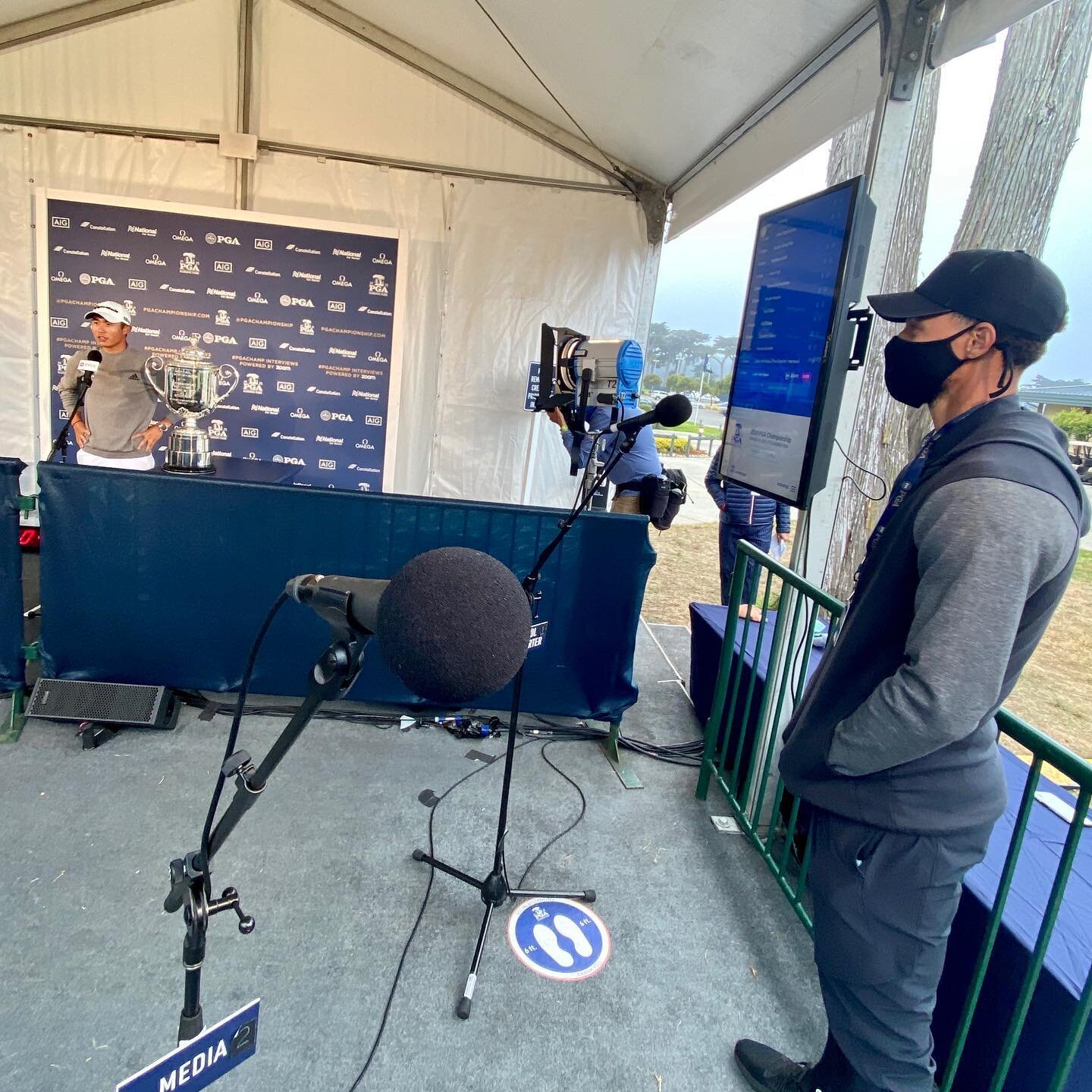
“To be honest with you, I don’t know any other sport that does interviews in the middle of play,” said Koepka, inset, a four-time major winner, in offering his view after catapulting himself into the top ten in the $3.5 million event on the Red Sea coast with a five-under-par 65.

“I know in football you’re not doing it, unless it’s in the Pro Bowl basketball you’re not doing it unless it’s half-time. This is the only sport where you’re talking to people while they are playing. I won’t do it. I’m not interested in talking about what just happened or the difficulty of the holes ahead. I’m just focussed on one shot at a time, where my ball’s at. I understand why it might be beneficial for the fans, but I don’t get it.”

As the first world turns…

We discussed today on Morning Drive:


Premier Golf League: Gary Player Laments Greed Of Today's Players While Appearing At Saudi Golf Summit

Screen Shot 2020-02-02 at 2.00.02 PM.png

Gary Player undoubtedly flew to Saudi Arabia for the Golf Saudi Summit hoping to better the game. Free of charge.

I also have no doubt that if Player were in his prime he’d have already denounced the idea of accepting massive up-front money to join the proposed Premier Golf League for the opportunity to make less money.

And of course there was some shock in seeing Player lament the proposed golf league, even though some of its funding is rumored to be coming from the same folks hosting the Golf Saudi Summit. (And Golf Saudi is part of Crown Prince Mohammad bin Salman sportswashing effort.)

From John McCauley’s report:

"I find a lot of greed in the sport now,” Player added. “When someone comes along like this, what do you do?

“Do you discard the PGA Tour where you've played all your life? Are you just going to say ‘to hell with you now?’ I don't like that. It is crazy to say you don't like money, but it's not as though they are struggling.

"I think Rory McIlroy made $23 million last year without even taking in his contracts. How much money do you want? Loyalty to me is very big."

Player did question the idea of a tour with just 48 players, though his suggestion of the current 125 PGA Tour card limit not being enough seems a stretch given ratings for events featuring non-top 100 types.

Player said: "I don't know all the intricacies, but I'd say it is not for me. It might happen, but it doesn't mean to say it is right. I hope it doesn't come to this as I don't want to see a tour with just 48 players.

"Why are we getting so selfish that it is down to 48 players? Next, some guy will come in and make it 20. What we have just now with 125 players is not enough."

Homework Assignment: Brush Up On 2002's Joint Statement Of Principles In Preparation For Tuesday's Distance Report

Screen Shot 2020-02-02 at 8.22.49 PM.png

This blog started shortly after the USGA and R&A issued their Joint Statement of Principles. That was in 2002 and while I know most of you have memorized the key lines, I’m suggesting there could be a pop quiz on it Tuesday when the governing bodies release their Distance Insights findings.

For the fun of it, I’d suggest giving it a read and ponder what’s happened since the issuing in 2002.

Of course there are those pesky key paragraphs. Will they somehow ignore them again?

The R&A and the USGA believe, however, that any further significant increases in hitting distances at the highest level are undesirable. Whether these increases in distance emanate from advancing equipment technology, greater athleticism of players, improved player coaching, golf course conditioning or a combination of these or other factors, they will have the impact of seriously reducing the challenge of the game. The consequential lengthening or toughening of courses would be costly or impossible and would have a negative effect on increasingly important environmental and ecological issues. Pace of play would be slowed and playing costs would increase.

The R&A and the USGA will consider all of these factors contributing to distance on a regular basis. Should such a situation of meaningful increases in distances arise, the R&A and the USGA would feel it immediately necessary to seek ways of protecting the game.

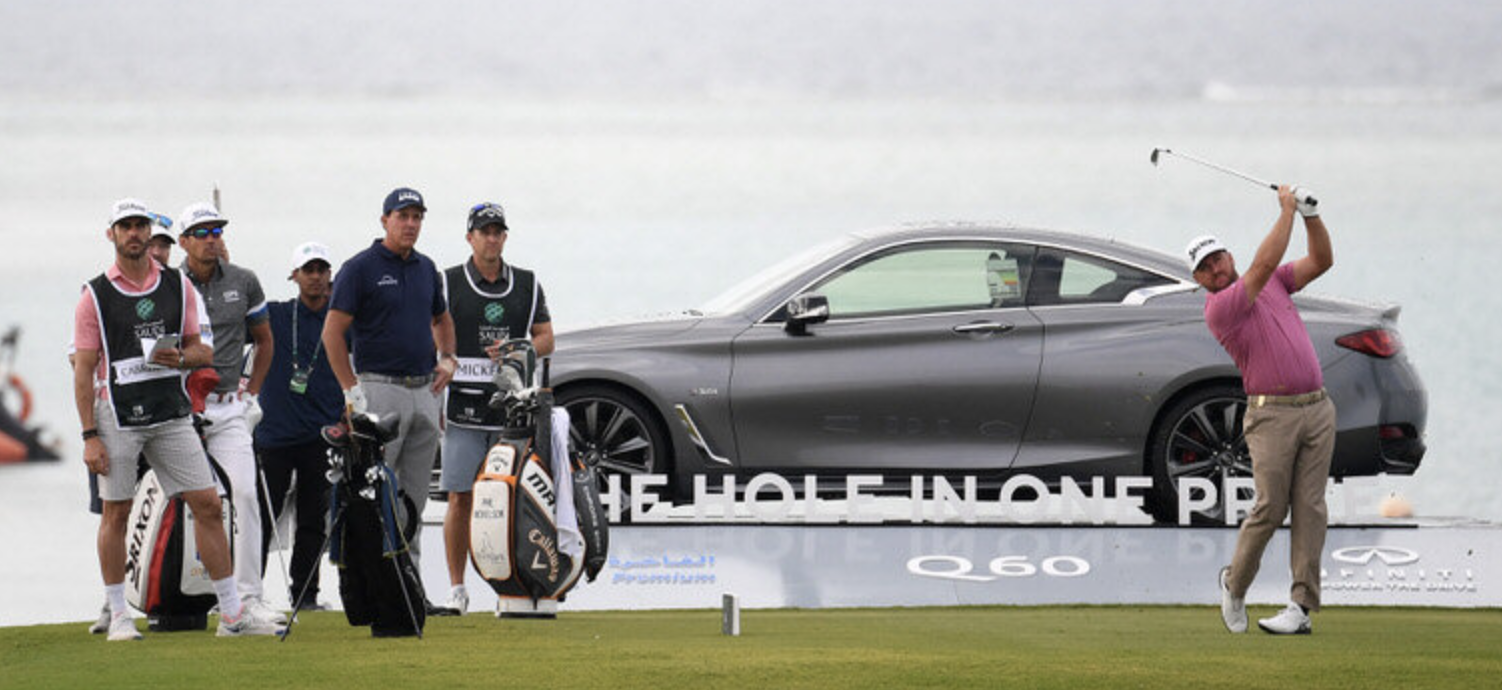
After TV Interview-Infused Slow Play Warning, McDowell One Bad Time Away From Penalty As He Leads

Screen Shot 2020-02-01 at 8.36.51 AM.png

Graeme McDowell holds a one-stroke lead over Victor Dubuisson heading into the finale of the Crown Prince Classic in Saudi Arabia. But as part of the European Tour’s crackdown on slow play, he faces another twist in search of his first ET win since 2014: a penalty.

Under the new guidelines recently updated after the PGA Tour announced an updated policy, McDowell’s warning earlier in the week means he’s one more away from a stroke penalty. Adding to his frustration? The warning came after doing a mid-round interview with Sky’s Tim Barter.

Brian Keogh at the Irish Golf Desk with all the details. This was particularly wild:

Under the new regulations, he could have called to the referee during his allotted time and asked for a once-per-round "time extension" and an extra 40 seconds.

"I actually jokingly called a time out after the shot because I thought he'd have given me the benefit of the doubt, but he was like, 'no, that's a bad time’,” he told reporters. “I'm like, brilliant mate!"

Feeling rushed as he played his approach on the seventh, TV cameras caught him grumbling loudly.

"Such a rush to hit this shot!" he said as he sized up his approach from the rough. "It's a joke.”

And we wonder why players are resistant to mid-round interviews. This won’t help the “product.”