From The Met: "The golf industry has to re-imagine old practices before the recovery can begin"

Screen Shot 2020-04-19 at 8.38.33 PM.png

The Journal News’s Mike Dougherty files a lengthy and informative piece on the state of golf in the “Met”.

Given that the area is home to this year’s U.S. Open, some America’s most famous clubs and a huge number of others who influence the golf world, the overall Met golf region is still uncertain how things will play out.

Dougherty covers many aspects of the business, but this was of note:

The demographic is generally secure financially. While most respondents expect to curtail spending due to the corresponding economic crisis, their outlook is not yet considered grim.

“We think predictions about mass resignations of members are overblown,” said Frank Vain, the president of McMahon Group during an NCA webinar.

An online campaign has resulted in more than 10,000 form letters being sent to members of congress seeking inclusion when the next round of aid is finalized.

“Some clubs are well capitalized and can withstand a little more,” Trauger added. “Others will be significantly impacted by a downturn. It’s too early to say how many clubs might close, but right now they are figuring out the best way to hang on and take care of their employees the best way they can.”

Golf’s Reset: An Occasional Series Considering What Values Need Changing And Which Are Worth Saving

Screen Shot 2020-04-19 at 11.53.11 AM.png

The COVID-19 pandemic has already changed lives, fortunes and our future. Exactly how the world returns post-virus to some form of normalcy anyone’s guess both in scale and timing. But in our small world of golf, we already knew certain values were evolving before this. The pandemic seems poised to expedite changing attitudes while forcing a reconsideration of other ideals.

Over the coming weeks, as golf courses reopen and potentially millions seek solace by teeing it up at facilities that never closed, the sport may be a viable recreational option in a function-deprived world.  

The word “opportunity” suggests anything about this pandemic is a good thing. It is not. Still, every sector of the world will evolve from this and golfers will recognize chance to highlight golf’s benefits and the need to rethink elements which have not evolved for the good of the sport.  

Some of the ideas I’m going to toss out will be as first world as they come (bunker rakes), certain topics will offend (pro golfers are not bigger than the game), while other matters (green speeds) will hopefully seem like sensible improvements to pursue.  Others will (again, hopefully) be built off suggestions from you after I ease into this topic in still-sensitive times.

As always, I’d love to hear your thoughts on here or Twitter or via email, perhaps with some follow-up thoughts share here based on your remarks or polling.

Jack And Ernie Among Those Challenging Clubs To Give Back During COVID-19 Crisis

Screen Shot 2020-04-19 at 8.05.20 PM.png


Victor Garcia at FoxNews.com explains the ClubsHELP cause supported by Jack Nicklaus, Ernie Els, Kris Tschetter and others to push golf and country clubs to give back to their community front line workers.

From Garcia’s story:

According to the organization, "Clubs HELP encourages clubs and members to connect with hospitals in their respective local areas to provide a much needed support network in fighting the COVID-19 pandemic."

The nationwide foundation has golf clubs that "adopt" local hospitals to give them the support and supplies.
"Barb and I are proud to be part of a children's hospital in Miami, one that bears our name with 17 outpatient clinics," Nicklaus said in the video. "And we have many, many workers down there. They all need our help too.  The workers at these hospitals have worked tirelessly, put through lives on the line for their work with COVID-19 virus."

"They need our help. We need to raise money," Nicklaus added. "We need to raise money the best we can."

Here is the signup page at ClubsHELP.

Jack Nicklaus issuing his challenge to Nicklaus-designed clubs and others:

Ernie Els’ message:

John Daly Has A Coronavirus Cure, Because Of Course He Does

Screen Shot 2020-04-19 at 8.17.23 PM.png

Posted on the Trump Organization YouTube page, John Daly offers his cure to the COVID-19 virus. If you’re not looking to hit the play button below, the shortcut: Belvedere and McDonald’s Diet Coke. Just one a day. The key, of course, is the McDonald’s Diet Coke in the way New York pizza is influenced by the tap water there.

I do believe we’ve bottomed out, though exactly how I’m not sure…unless, of course Long John was joking, in which case we’ve hit a new low in different ways.

"10 bold predictions for the future of sports media, post Covid 19 crisis"

Screen Shot 2020-04-19 at 12.56.35 PM.png

Sébastien Audoux is head of digital sports at Canal OTT and has some experience with professional golf coverage, so three of his points are of interest to those wondering what happens to sports post COVID-19.

The entire piece is worth reading, but here the points of note for the golf business…

1- The sponsorship crisis will expose fundamental business model flaws for many sports leagues
ROI is often a dirty acronym in sports sponsorship. This global crisis is already forcing companies to drastically cut sponsorship spending. If a league cannot provide evidence for the direct value they create, with analytics to support their claim, chances are they will lose their sponsors. In sports, sponsorship has often been mistaken with patronage. Patronage will mostly disappear, at least for a few years, post crisis. I see big-time sports leagues suffering from this, and new leagues emerging with innovative sponsorship ideas. 

This was something we covered on this week’s State of the Game with guest Richard Gillis:

9 - Consolidation among sports league will be triggered
The need for a world tour in golf is something the industry has been talking about for more than 30 years now. The Premier Golf League might not happen but the PGA Tour will use the crisis to take over its European counterpart and it will happen quickly. The PGA Tour of Australasia, Asian Tour and others would benefit from being regrouped under the same umbrella, as well. We might see other mergers and consolidations happen, NBA and Euroleague? UCL becoming a semi-closed league in a new joint venture with the biggest football clubs in Europe?

On that topic, The Guardian’s Ewan Murray noted how the idea of the Premier Golf League hasn’t gone away and may even be more viable due to changing world circumstances.

Anyway, back to Audoux’s piece, he does end this on a bright note that seems logical: sport will be even more valued. At some point.

10 - The future is bright - Overall, sport will be a big winner post crisis. We miss it so much that it actually increases the value of pro sports for the years to come. Leagues will be forced to undertake the changes they kept postponing, schedules will be revised, enemies will start working together, weak leagues and sports will die and be reborn under better leadership. Content will add more value than ever to all sports properties.

"Why a Second Wave Could Be Even Worse for Sports"

If you’ve been following the likes of Dr. Scott Gottlieb on Twitter or watching the (sadly) prescient Netflix documentary, Pandemic, you know that second waves have often been worse than initial pandemics outbreaks.

So as the PGA Tour positions itself to be the first (and still only major sport) to schedule a return without fans (first four weeks), the inability of other sports to set return dates makes clearly some leagues are fearful of being the sport that starts a second wave.

Thanks to reader John for sending along Louise Radnofsky and Ben Cohen’s Wall Street Journal piece considering the dangers of a second wave setting the sports world back should such a gathering be responsible for another outbreak.

While the story focuses on the danger of crowds, even a gathering of athletes who then go off to airports and hotels and another city a week later, could be disastrous.

Scott Gottlieb, the former Food and Drug Administration commissioner who is advising the Trump administration on its coronavirus policy, says he sees a high risk of a second wave in the fall. He’s been pushing for a staggered return of activities. His plan calls for gradually scaling back up again, based on the size of the gatherings and their significance, and monitoring the effects at each stage.

Mass gatherings for sports games are at the bottom of his list. The sight of fans in stadiums is contingent on a “quiescent” fall and robust system of testing and contact tracing to identify and isolate new cases— as well as measures that include fever guns, hand sanitizer handouts and masks inside stadiums.

“We could bring lawn maintenance crews back at the end of the month with very low risk, but we can’t fill up stadiums,” he said Wednesday. “I think the entertainment venues are going to be some of the last things we bring back… Sports are going to be played with no fans for a while.”

"Appeal fund launched for caddies at St Andrews"

Screen Shot 2020-04-17 at 8.51.44 PM.png

The Scotsman’s Martin Dempster reports on the caddiemaster’s effort to raise funds for St. Andrews caddies out of work. His effort is separate of the St Andrews Links Trust.

Fraser Riddler has established a GoFundMe goal of £20,000, and is trying to get the word out for his troops. From his write-up on the page:

Unfortunately, the caddies who regularly stride the fairways at St Andrews Links are among the worst affected. Caddies have been part of the fabric of golf in St Andrews for almost as long as the game has been played here.  There are references to caddies dating back as far as 1691 at the Home of Golf and through to the modern day they continue to make a meaningful contribution to the enjoyment of the game by golfers of all ages and abilities.

With no play possible for the foreseeable future and international travel set to be badly affected for the remainder of the summer season, caddie’s livelihoods are being seriously impacted. There is concern for the financial hardship many caddies might face due to the course closures. With this in mind, many have indicated they would like to offer help and support to the caddies during this difficult period.

The Shack Show Podcast With Guest David Owen

One of my goals for the Shack Show is to talk to interesting folks after news breaks. Clearly these are not days where the golf news warrants conversations based on news, but today’s word on Marion Hollins finally joining the World Golf Hall of Fame provided a fine excuse to chat with David Owen.

A New Yorker staff writer since 1991, Owen has written about a wide array of topics outside of golf. But it’s his work for Golf Digest and as a book author we value. His officially sanctioned The Making of The Masters remains an underrated work in the pantheon of important sports books, with Owen ably handling the warts-and-all information uncovered in club archives with the obvious desire to portray the club’s founders in a positive light.

In researching that book, Owen knew little about Marion Hollins but after much research, helped explain her small, but incredible role in shaping Augusta National.

We also discussed where golf will land after the COVID-19 pandemic, David’s buddies trip to Wales that’s been cancelled and the joys of discovering lesser-known links courses.

David’s site of blog posts and articles is MyUsualGame.com. You can find some incredible writing there on a wide array of topics, including the best of links golf.

Here is the GolfDigest.com story, Back Roads Scotland, that we discussed during the show. David has also posted photos and more insights about these gems on his site.

As for the Shack Show, please subscribe wherever you get your podcasts, but for some guidance, here is the Apple podcasts option and below, the iHeart embed.

Monahan Emphasizes Need For Widespread, Large Scale COVID-19 Testing If PGA Tour Is To Return

The Detroit News’ Tony Paul highlighted the remarks while attempting to determine if June’s Rocket Mortgage Classic could even be played. But a day after another oddly-timed schedule rollout tone deaf to over 4000 lives lost in a single day (in the U.S.) and parallels were suggested between a contagious virus pandemic and 9/11, Jay Monahan hit all the right notes discussing with Mike Tirico the possibility of a PGA Tour return.

Even better, not one mention of golf being played on 3-400 acres.

Talking to Tirico on his NBC Sports show, Lunch Time Live, Monahan made clear what is necessary for early June’s Colonial.

"We need to have widespread, large-scale testing across our country, where we are going to be able to test players, caddies and other constituents before we return," Monahan told Tirico. 

"But we need to do so (in a way) that's not going to take away from the critical need we're going to be facing."

Players were fairly muted in expressing strong views either way about the planned return, though Brooks Koepka wondered if the push was too soon while Justin Thomas praised Tour leadership for at least trying.

The full conversation was posted at YouTube:

Marion! World Golf Hall Of Fame Adds The Golf Great And Visionary

Screen Shot 2020-04-17 at 9.34.23 AM.png

Marion Hollins was announced as a new member of the World Golf Hall of Fame’s 2021 class. While her playing record was nice, Hollins was the kind of early pioneer for American golf that HOF requirements can often overlook. Yet now here she is, in and thanks in large part to the efforts of Pasatiempo historian Bob Beck and many others, finally getting deserved recognition.

Jim McCabe filed this excellent PGATour.com look at her captivating and ultimately too-short life as an athlete, dreamer and doer.

If you missed it last year, David Owen filed this item for the New Yorker considering Hollins’ influence on Bobby Jones and the creation of Augusta National.

Beth Ann Nichols puts Hollins in the top 5 all-time influential women in golf. Works for me.

As GolfChannel.com’s Randall Mell writes, she is finally forgotten no more.

She’s being remembered in a big way with Friday’s news that she will join Tiger Woods as the second inductee in the World Golf Hall of Fame’s class of 2021. Hollins, who died in 1944, at the age of 51, was selected through the contributor category as a “visionary golf course architect” and pioneer of the game. More inductees will be joining Woods and Hollins over the next week or so.

“When you start reading about Marion Hollins, you realize what a trailblazer she was,” said Hall of Famer Annika Sorenstam, one of the co-chairs of the selection committee. “In her era, she didn’t have many resources with the status of women in sports and golf. To be that kind of trailblazer with that kind of enthusiasm and energy and get into course development and design is very inspirational.”

A nice set of photos of Marion:

Here is our Golf Channel feature on three women who made an impact on Bobby Jones, featuring Hollins five minutes into the piece:


COVID-19: 48%: U.S. Golf Course Closure Rate Declines A Bit

Screen Shot 2020-04-16 at 8.13.11 PM.png

From 44% last week, with a margin of error of +/-3%, the National Golf Foundation’s surveying suggests a sizeable number of courses remain open during the COVID-19 pandemic.

The findings reflect the at-times uncertain nature of golf operations in states like Texas and New York, where recent amendments to executive orders specified that golf is a non-essential business.

While the governor of Texas, which has the fifth-most courses in the country, last week said golf was a non-essential business, he later clarified that they can continue to allow play provided they maintain safe distancing practices and adhere to adjusted operational guidelines prescribed the CDC.

In the Northeast, New York’s various golf associations said last week that the state’s recent “non-essential” advisory didn’t affect non-commercial recreation activities — an interpretation that would potentially pertain to hundreds of private clubs in the region.

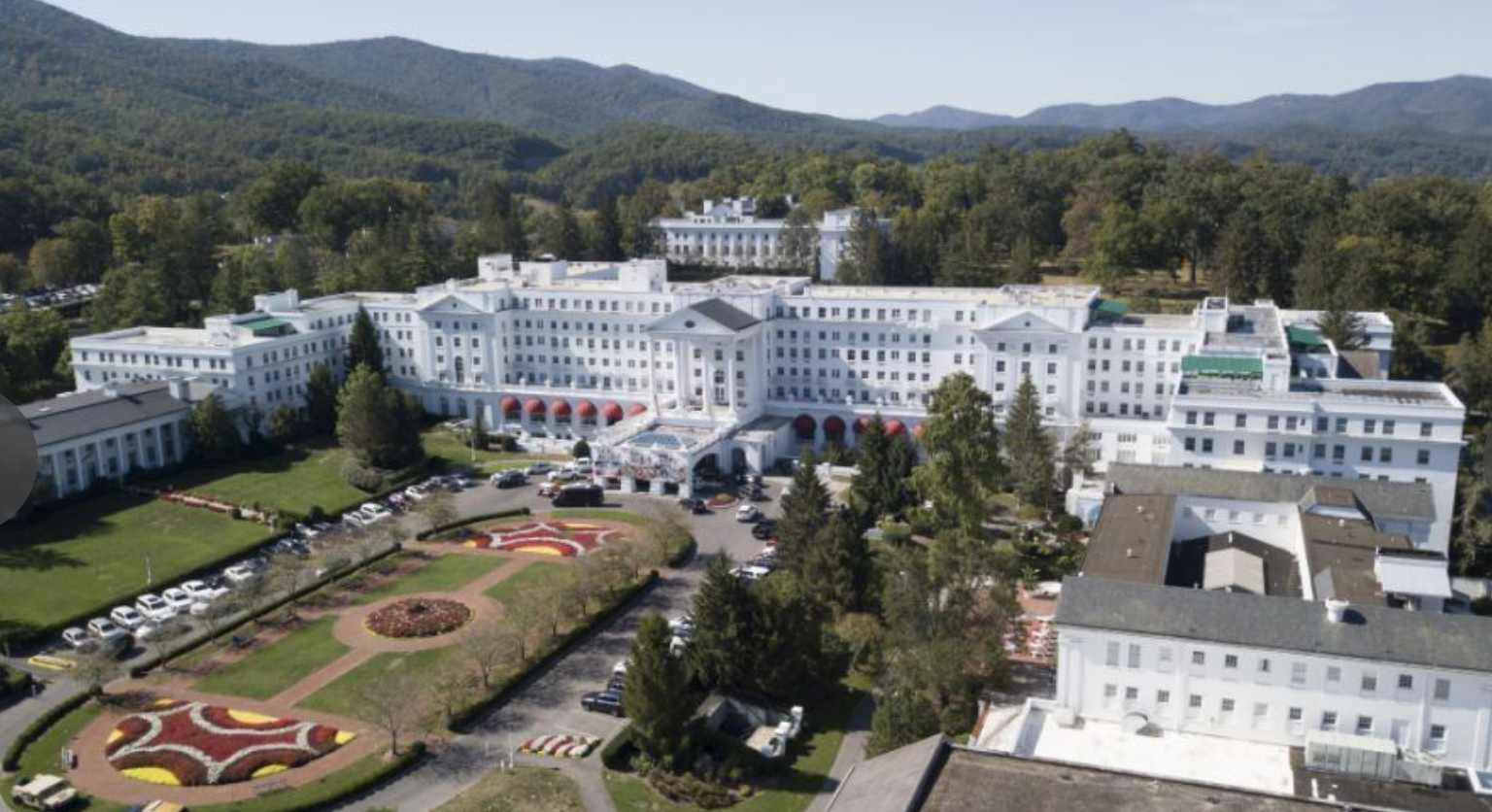
R.I.P. The Greenbrier Classic

Screen Shot 2020-04-16 at 7.10.41 PM.png

Jim Justice’s purchase of the Greenbrier Resort and subsequent ten playings of the Greenbrier Classic made for a welcome addition to the PGA Tour.

Besides bringing the pros to West Virginia and highlighting C.B. Macdonald’s work, the stop gave pro golf another look at an interesting old-school layout.

Lost though in the remaining 2020 schedule rollout was the tournament’s demise despite having seven years left on its existing contract, notes GolfDigest.com’s Joel Beall. Officials with the event blamed the move to fall, in part, on what killed off the event, according to Beall’s report.

In a statement, Greenbrier officials said the tournament moving to the fall had not gone as well as hoped compared to its Fourth of July date. The Greenbrier said attendance and the attractiveness of sponsors "dropped significantly."

And this from AP’s

The yearly tournament, A Military Tribute at The Greenbrier, has struggled to draw fanfare after moving from summer to fall. Last year, attendance dragged as the matches went up against college football home games, even as one of Justice's family mining companies bought 30,000 tickets to give away to fans.

“We are happy to reach a resolution with the PGA Tour that is mutually beneficial to both parties in this time of crisis,” said Jill Justice, the governor's daughter and president of The Greenbrier.

Just a reminder here that the PGA Tour rearranged it’s calendar schedule to the dreaded wraparound for two reasons: to avoid football season and to elevate the fall events into tournaments with FedExCup points status. The Greenbrier took a year off to accommodate a leap to the fall and now, is no more with seven years left on its deal.

An Alternative To Raised Cups: The EZ Lift

Nice spot by Alex Myers at GolfDigest.com to post this device in use at Cobblestone Golf Course in Acworth, Georgia.

It’s an upgrade to raised cups, though who actually makes it, I’m not sure.

Last Call: McKellar Journal Issue 3 For $10

Screen Shot 2020-04-16 at 10.10.50 AM.png

At a time we all need a little extra distraction reading, many thanks to co-founders Lawrence Donegan and Thomas Dunne for knocking a few dollars off the McKellar Journal cover price to provide the best issue yet.

Here is the last chance, with code SHACK, to get issue 3 for $10 plus shipping. Today, Thursday April 16 is the final day of this promotion. Thank you already to all who have picked up a copy or checked out McKellar’s website.

Also, one of my favorite pieces in an issue with 20 superb reads, is now available to listen to:


PGA Tour To Players Uncomfortable With June Return : "You're an independent contractor. You're not required to be at any PGA TOUR event."

Screen Shot 2020-04-16 at 9.55.42 AM.png

The PGA Tour rolled out an ambitious 2019-20 schedule completion, followed by a 2020-21 schedule start (minus the suddenly-defunct Greenbrier Classic and cancelled Canadian and Barbasol stops). But this comment from the PGA Tour’s Andy Pazder is certainly accurate, though insensitive to players who have COVID-19 concerns.

From a teleconference featuring operations heads Andy Pazdur and Tyler Dennis in support of the schedule rollout:

Q. What about the players who don't feel comfortable? There are going to be players who don't feel comfortable coming back. What happens to those players if you start and they're not comfortable coming back playing again?

ANDY PAZDER: That's a question I think you need to direct to individual players. My only experience with anything like this I guess would be the first few tournaments following 9/11. We had players that were uneasy about air travel. That's one of the beauties of being a PGA TOUR member; you're an independent contractor. You're not required to be at any PGA TOUR event. So they have that discretion to play tournaments where they favor the golf course or tournaments in this instance, to your question, they may or may not feel comfortable. But that's an individual player decision.

So I would direct you to reach out to some of the players that you know to get their direct perspective. I can't speak on their behalf as it relates to that.

Athletes in other sports have already begun to openly question the sanity of quarantining in the same hotels. For example, in baseball, which has considered a concept of stationary games and hotels, normally not-outspoken players are sensing their safety and sanity is not being taken into account (Bill Shaikin reports on the comments of Mike Trout and Clayton Kershaw).

The PGA Tour’s plan is to have robust testing, as Rex Hoggard reports, and the repeated mention of this key point was reassuring. So was the plan to only go forward if testing is not being taken away from those on the front lines or more in need.

Details of how things work on course are still being worked out:

TYLER DENNIS: Yeah, so that's another part of our analysis that we've been working on, you know, from a health and safety point of view, but even with the rules officials, for example. So if you think about how a player and a caddie travel throughout their daily competition routine, we've looked at -- we've mapped out and are still in the process of finalizing what that day looks like, because we know that golf can be played in a safe way that abides by social distancing guidelines, and we're seeing that in many spaces across the country, by the way, at the amateur level. But we can apply some of those same principles to golf on the PGA TOUR.

So anyway, from the driving range to the first tee, all kinds of little details, scorecards and bunker rakes and flagsticks and how we can make sure all that is done in a socially distanced way and make sure that things stay safe and clean and sanitized. So there's a big project going on to think about those details, and as we get closer, we'll certainly share with you guys those details of how that day would look.

But in general I think that the daily life of a PGA TOUR golfer and his caddie won't be tremendously different. We're just going to have to have some nuances to relate to social distancing and safe sanitation practices.

Not addressed and still not clear beyond safety and logistics: the optics of returning and using resources in markets that are still under strain, and what damage that could do to the PGA Tour’s reputation.