PGA Tour: No Rangefinders In The Foreseeable Future

Screen Shot 2021-02-10 at 9.00.02 AM.png

Well you can cross one theory off the list: the PGA of America was not doing the PGA Tour a favor by allowing rangefinders at their majors.

In Alex Miceli’s MorningRead.com in-depth story on the use of distance measuring devices at the PGA of America majors, he features a statement from the Tour:

“The PGA Tour conducted a four-tournament test of Distance Measuring Devices on the Korn Ferry Tour in 2017, with varying results,” the Tour said in a statement released Tuesday. “We decided at the time to continue to prohibit their use in official competitions on the PGA Tour, PGA Tour Champions and Korn Ferry Tour for the foreseeable future. We will evaluate the impact rangefinders have on the competition at the PGA of America's championships in 2021 and will then review the matter with our player directors and the Player Advisory Council.”

Players are welcoming the news but also suggesting they don’t see the devices as a vital tool in competition. Brentley Romine reports for GolfChannel.com.

Caddies are even less excited, reports GolfDigest.com’s Brian Wacker.

2021 Waste Management Up In All Ratings For NBC And Golf Channel

Screen Shot 2021-02-09 at 9.01.55 PM.png

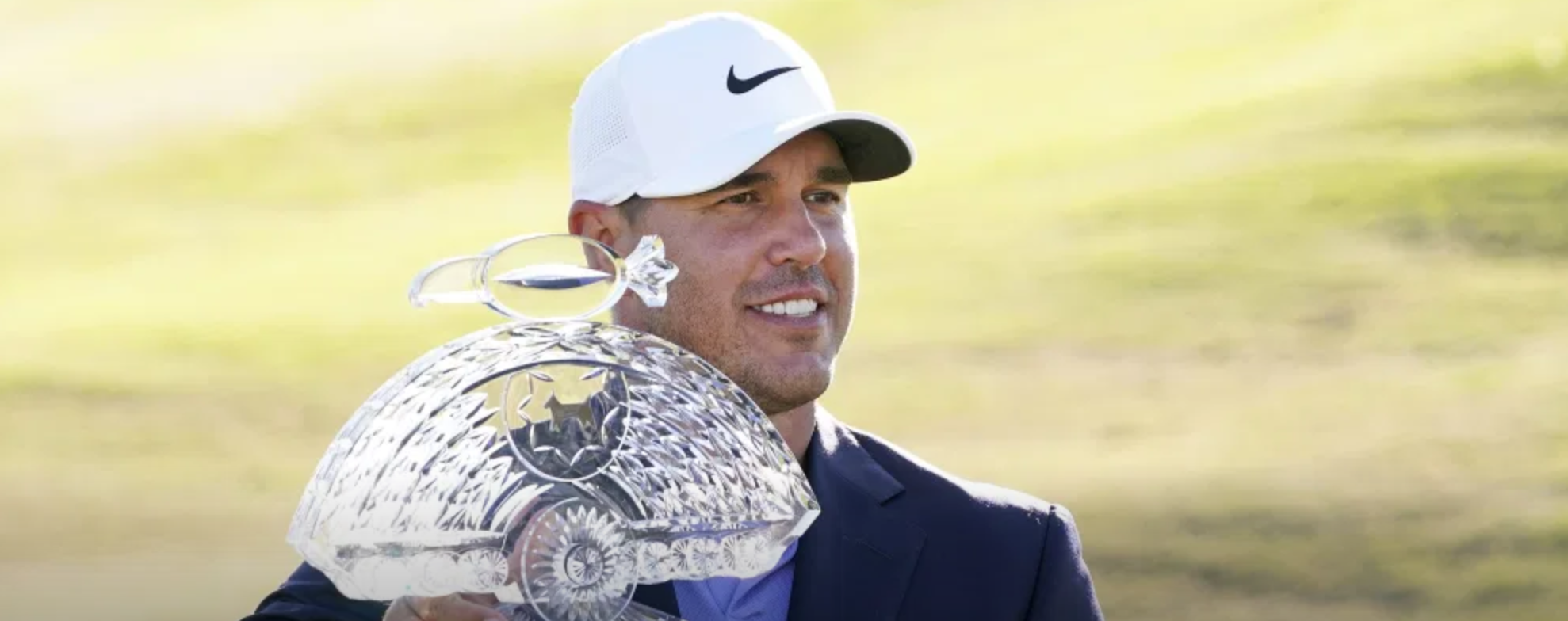
Showbuzzdaily.com with the ratings up all days and especially Sunday on NBC, filling in while CBS hosted the Super Bow. With a compelling leaderboard and pre-Super Bowl finish ultimately captured by Brooks Koepka the 2021 Waste Management delivered.

Streaming numbers are not made available but assuming you can get the balky NBC Sports app to work—they no longer support my cable subscription, so charming!—there might have been nice numbers there as well.

Last year’s Waste Management numbers on CBS and Golf Channel along with other sports that 2020 weekend. Webb Simpson prevailed last year over Tony Finau and Justin Thomas.

Screen Shot 2021-02-09 at 9.02.48 PM.png

PGA Of America To Allow Rangefinders At Its Majors, Effective Immediately

Screen Shot 2021-02-09 at 7.54.41 AM.png

A couple of oddities with this PGA of America announcement:

  • It was made by the current president, with no quote or comment from the CEO or Chief Championships Officer Kerry Haigh.

  • The use of the world “flow” instead of speed of play (perhaps because faster rounds are a myth?).

  • No supporting evidence of or evidence how “flow” is improved.

  • No mention of demand from players for their use, examples of such use in elite professional competition, or support of other leading organizations.

  • No clarification whether the senior-athlete golfers in the KitchenAid will be able to also access their cart GPS systems. Those are common within the game as well.

The full press release is here.

PGA OF AMERICA TO ALLOW FOR USE OF DISTANCE-MEASURING DEVICES DURING ITS MAJOR CHAMPIONSHIPS, BEGINNING IN 2021

PALM BEACH GARDENS, Fla. (February 9, 2021) – The PGA of America today announced that, beginning in 2021, the use of distance-measuring devices will be allowed during competition rounds at its three annual Major Championships: the PGA Championship, KPMG Women’s PGA Championship and KitchenAid Senior PGA Championship.

“We’re always interested in methods that may help improve the flow of play during our Championships,” said Jim Richerson, President of the PGA of America. “The use of distance-measuring devices is already common within the game and is now a part of the Rules of Golf.  Players and caddies have long used them during practice rounds to gather relevant yardages.”

With this announcement, the distance-measuring devices used by players and/or caddies in PGA of America Championships will need to conform to the Rules of Golf regarding their use and performance:

Rule 4.3a (1)

Distance and Directional Information.

●      Allowed: Getting information on distance or direction (such as from a distance-measuring device or compass).

●      Not Allowed: Measuring elevation changes, or, interpreting distance or directional information (such as using a device to get a recommended line of play or club selection based on the location of the player's ball).

This policy will debut with the 2021 PGA Championship, which will be played at The Ocean Course in Kiawah Island, South Carolina, from May 17-23. The PGA Championship perennially features the strongest field in golf based on the Official World Golf Rankings.

Strong field super-human athletes apparently needing the support of a petite and pricey device.

USGA: Courses Built In Last Three Decades Around 64 Acres Larger Than Yesteryear's Footprint

USGA

USGA

Adam Moeller and George Waters of the USGA Green Section set out to determine how much golf courses footprints have changed as the sport has chased distance.

They developed an 80-course random sample with an even distribution of public and private from different regions and built in different eras. As always I urge you to read the whole thing. But the key takeaway part is a landmark finding and explains precisely why the USGA invested in studying distance. Well done.

A carefully selected case study of courses that had recently hosted men’s professional golf events was also included in the research because we recognized that these facilities face unique pressures with regard to hitting distance, and because these facilities typically have resources above and beyond what is available to most golf courses, so their patterns of change were likely to be different. The championship courses selected had a variety of opening dates and architects, and came from different regions.

For the purposes of this study, footprint is defined as all playing areas of the golf course, all practice facilities, all native areas that are likely to require some maintenance, ponds and lakes, roads and paths, the maintenance facility, the clubhouse, and any dumping or staging areas that can clearly be attributed to the golf facility. Where a course had woodland borders, an approximation within the perimeter of the tree line was made to account for maintenance that likely occurs along and within the woodland margins.

In the 80-course sample, courses built during the three most recent decades had an average total footprint of 216.3 acres. Courses from the earliest three decades – the 1920s, 1930s and 1940s – had an average footprint of 152.3 acres, a difference of 64 acres. This pattern was also observed in the championship course case study, where the five most-recently opened courses had an average footprint 47 acres larger than the five oldest courses (260 acres versus 213 acres, respectively).

There could be folks out there who love a bigger, longer walk in the park that wastes more resources and spreads out those strolls between holes. I just haven’t met them yet.

Another key finding: the average total area of greens and bunkers decreased over time. Meaning the expansion also came at the expense of design features in favor of dead space or roughs.

In the 80-course sample, the average total putting green area was 109,077 square feet for the earliest map year and 101,197 square feet for the last map year. The average total putting green area for the championship courses decreased from 125,642 square feet in the earliest map year to 115,755 square feet in the last map year. The average area of bunkers in the 80-course sample decreased from 82,573 square feet to 76,823 square feet. In the championship course case study, the decrease was even more pronounced, with a drop from an average of 243,971 square feet of bunker area in the earliest map year to 156,033 square feet in the most recent map year.

Course alterations for distance have been more recent:

In both the 80-course sample and the championship course case study, alterations to golf courses with a clear distance component have increased from 1990 onward. In the 80-course sample, 79% of the total distance added through new tees or moved greens occurred from 1990 to the present. In the championship course case study, a more pronounced version of this pattern arises, with 92.9% of all distance added since 1990. This suggests that courses have faced more pressure in recent years to accommodate increased hitting distance than in decades past.


Even With Aggressive Mask Enforcement Waste Management Open Is Success

Screen Shot 2021-02-08 at 8.48.40 PM.png

Why did I ever doubt the Thunderbirds?

The Arizona Republic’s Jose Romero on a successful return to sizeable galleries, a good test run that could have gone so wrong for other upcoming tournaments.

Despite the undoubtedly different feel to the 2021 Phoenix Open, it was still the most-attended PGA Tour event in almost a year, with several thousand fans allowed to on the course daily. 

"There's always silver linings in everything," Jenkins said. "This just made us better at running this tournament. We had to look at different ways of being creative and just look at our expenses. It's easy to deal with your partners when times are good.

"We really relied upon our partners, our vendors, as well as the (PGA) Tour and the city of Scottsdale."

For Jenkins, seeing fans pay attention to washing hands, wearing masks and watching their distance was what stood out. If there was any doubt, he said, it was whether fans and officials would abide by protocols, and if enforcing those would be problematic.

The prospect of 5000 at TPC Scottsdale—generally the type of people you fear will plop down next to you—seemed a disaster waiting to happen. But at least on television and based on the accounts of those on the ground, the Thunderbirds were aggressively enforcing mask wearing and a good time was still had by all. Hospitality areas looked well ventilated and other than the Mashed Potato types screaming out, the event felt good to watch. Helped that the golf was fascinating down the stretch, too.

MLB Slightly Deadening Ball Due To HR Surge

The Athletic’s Eno Sarris and Ken Rosenthal broke the news along with the incredible details of Major League Baseball’s plan to tweak the ball. The focus seems to be on not overemphasizing the home run but safety has to be part of the equation. Either way, chicks digging the long ball appears to be taking a back seat to the game getting played at a faster clip with less emphasis on the home run.

Golfers will enjoy hearing about COR…

“In an effort to center the ball with the specification range for COR and CCOR, Rawlings produced a number of baseballs from late 2019 through early 2020 that loosened the tension of the first wool winding,” the memo from the office of the commissioner reads, explaining that this change had two effects — reducing the weight of the ball by less than one-tenth of an ounce, and also a slight decrease in the bounciness of the ball as measured by the COR and CCOR. 

COR is the coefficient of restitution, or the relationship of the incoming speed to the outgoing speed. So, in other words, this new ball will be less bouncy. How much less is a matter of science, but also opinion.

Research conducted by Rawlings says the balls will be centered more in the midpoint of the established COR range, which is from .530 to .570 with a midpoint around .550, as the (now missing) first report on the home run rate surge stated. So the COR likely changed around .01 to .02 at most, and the ball size was likely reduced by less than 2.8 grams.

AP’s Jake Seiner added this:

MLB anticipates the changes will be subtle, and a memo to teams last week cited an independent lab that found the new balls will fly 1 to 2 feet shorter when hit over 375 feet. Five teams also plan to add humidors to their stadiums, raising the total to 10 of 30 MLB stadiums equipped with humidity-controlled storage spaces.

No Pro-Am? AT&T Pebble Beach Field Even Weaker Than Normal

With Dustin Johnson’s WD no top 10 players are making it to Pebble Beach this year.

Plenty of blame to go around for an elite schedule slot drawing a Fall field.

In no particular order, my guesses as to why the field for the 2021 AT&T Pebble Beach Pro-Am (without a Pro-Am) is so weak despite a $7.5 million purse and only two courses: Pebble Beach and Spyglass Hill.

Matt Kuchar also WD’d to open a spot for Ricky Barnes, who is apparently still active as a player.

  • Saudi Arabia appearance fee money drew several top players last week

  • Waste Management Open drew a better field with players knowing that with only 5000 the baba-booeys crowd would be minimized

  • One-two punch of Riviera and free-money WGC are lurking the next few weeks

  • No pro-am, no fun. Yes, there really still are players who enjoy the networking and old pro-am vibe.

It would have been interesting to see if Pebble Beach picked up more big names had the WGC Mexico not been salvaged. Instead, one of America’s great resorts and courses featuring some of the biggest non-major ratings annually has failed to attract a stellar field.

On a separate note, sponsor AT&T now pays for two events that have been absolutely hammered by schedule changes and stronger competition. Given the corporation’s longtime devotion to golf and the millions they’ve paid out to PGA Tour pros, they deserve better.

The (Current) Major Pecking Order, Part I

QuadRankingTheMasters.jpeg

Now that football has moved on and spring training’s start is up in the air, the Masters and condensed major season begins in earnest.

So what better time than now to rank the majors? I have done so in the latest Quadrilateral, this one for paid subscribers who already have it in their inbox.

For more on The Quadrilateral here is the standalone site explaining what it’s all about with big pretty pictures. And here is the Substack landing page with more words, few photos and info on how to sign up.

Trying To Grasp McIlroy's Take On Distance Research, Endorsement Of Bifurcation

Quite a few folks have reached out to ask for clarification of Rory McIlroy’s contradictory remarks last week. As I noted at the time, say what you want about his criticism of the governing bodies, he endorsed their likely solution as well. They will take the latter and ignore the former.

But the Golf.com roundtable gang did a nice job summing up the matter for those trying to figure out McIlroy’s point.

Berhow: The study and research and time that went into this is important. Facts matter. And it’s good to see how the game evolves. Hardly a waste of money or time. I do agree with him that the game has other issues to address as well, but that doesn’t mean the USGA and R&A should give distance or any other relevant topics the cold shoulder. That would be irresponsible. 

Zak: I was seriously disappointed in Rory’s knee-jerk perspective. It surprised me. The USGA is not ruining the game for amateurs with this study. The R&A is not focused solely on professionals. They are simply trying to make sure that some of the pillars this game sits on — centuries-old courses and using all the clubs in the bag — are not bastardized and made extinct by extreme advancements in technology. If slight bifurcation is the answer that keeps Bryson occasionally using a 4-iron at St. Andrews, it would be a great success.

Sens: I think he’s right about bifurcation. It makes good sense. 

Bamberger: Oh, I got ahead of things here — yes, he makes good sense, to a point. All recreational golf, as well as club golf and after-work leagues and all the rest need rules and regulations. But we should play lost ball. drop one where you think you lost it, add a shot. The Tour can do it some other way. 

Koepka: "There was a period maybe for about two months where I just questioned whether I was ever going to be the same"

Screen Shot 2021-02-07 at 9.28.43 PM.png

Incredible stuff from Brooks Koepka in winning his fourth PGA Tour event to go with four majors. The chip-in eagle from a tough angle (embed below) and this frank quote after the round from Adam Schupak’s Golfweek game story:

“It was a lot worse than I probably let on,” he said. “There was a period maybe for about two months where I just questioned whether I was ever going to be the same, whether I was even going to be somewhat remotely the same golfer that I ever was. Those dark places, a lot of tears, questioning yourself, and in dark places mentally. You’ve got to come out of that. … I’ll tell you what, it takes a lot of effort just do get out of those places.”

Thursday Chamblee: "Spieth is headed into oblivion. That’s hard to turn that ship around."

Screen Shot 2021-02-07 at 8.39.40 PM.png

Brandel Chamblee on Thursday, talking to Golfweek’s Adam Schupak.

Q: You just said Jordan is “on his way to oblivion.” I take that to mean you see him getting worse rather than better.

BC: If you go back and look at Ian Baker-Finch and David Duval’s ascent and descent in the game of golf, they track a similar path to Jordan Spieth. When they get to a point where they are really searching and they get desperate there’s not only the insecurity of whether or not you’re ever going to find it again, there’s also that psychological scar tissue. It’s like a physical wound and some of them will heal up and some of them will kill you.

Ian Baker-Finch or David Duval, no disrespect to them, but the only reason I picked them out is they made the game look so easy for a period of time as did Jordan Spieth. Their descent is a reminder to all of us that it is ephemeral. You can lose it in the blink of an eye. He seems to be searching every single week, spending lots of practice swings, over the ball a long time.

Duval will be thrilled!

Now those of us used to Chamblee’s pivots on the distance issue will not be surprised to learn he had already forgotten the comments about his fellow Longhorn when Schupak returned for a follow up. This, after Spieth posted rounds of 67-67-61.

GW: Do you want to walk back any of your comments about Jordan since we talked the other day?

BC: What did I say? I can’t even remember. I wasn’t probably sanguine about his comeback.

He did something today I don’t think I’ve seen. I’ll go look it up. I can’t remember a person being in the lead position in a golf tournament being dead last in fairways hit and next-to-last in distance from the edge of the fairway. That’s unprecedented. I don’t know how you do that. I guess you can in a place like the desert where there is a lot of luck involved in the lies you get and then you hit your irons like a God. He still has the ability to stun us with his short game and putter.

As I chewed on it today, there are a handful of people who lost their edge. Sam Snead in 1947-48 he won only one time because he had the putting yips and then he won 17 times when he sorted that out the next two years in 1949-50.

From oblivion to losing his edge is definitely different.

As for that final round 72 and playing this week, Schupak also reported on Spieth’s post round remarks stating his pleasure at having decided to play the Waste Management. The T4 was his best finish since a T3 at the 2019 PGA Championship.

The commentary is as robust as ever even when the mic’s cut off on the live network show.

Golf.com’s Michael Bamberger listed the reasons so many were happy to see Spieth in contention again.

He set up an enjoyable read this way:

But the first sentence is the telling one. All of sports are loaded with I-don’t-know. Most athletes aren’t willing to admit it. Spieth is. How refreshing.

He’s a breath of fresh air and has been for years.

I was rooting for Spieth on Sunday at Phoenix. (Yes, sometimes we root.) Unless your name is Jena or Chase, I’m guessing you were, too.

"PGA Tour goes all-in on simulcast gambling"

Screen Shot 2021-02-07 at 9.11.03 PM.png

Morning Read’s Mike Purkey paid for Peacock Premium and did us all a public service in watching the first-ever golf gambling simulcast. Oddly, the whole endeavor is powered by PointsBet whose customers can legally bet in just six states. And sports gambling is no where close to even being on a legislative radar in Arizona, home of the Waste Management Open.

It sounds like there are a few hundred kinks to work out.

The TV guys did their best to explain how it all works and attempted to share their thinking on the faux bets on Thursday. They even asked Croucher and Teddy Greenstein, former longtime sports columnist at the Chicago Tribune, for advice on betting strategy.

To say the PointsBet pair hedged would be understating the point. They absolutely refused to give betting advice, and with good reason. The purpose of a sportsbook is for as many people as possible to lose. That’s why they call it gambling.

The most awkward part of the webcast was the effort by the announcers to mix golf analysis with betting analysis. Do one or the other, but remember: This is not a traditional telecast.

More than once, viewers were encouraged to have a gambling budget and stick to it, that advice coming from the American Gaming Association.

Like I said, thank you Mike. We owe you one.