Former USGA Executive Director Frank Hannigan emailed this letter in response to Acushnet CEO Wally Uihlein's recent interview with John Huggan. I emailed Mr. Uihlein to ask if he wished to respond but have not heard back as of this posting.
What a week of glory it was for Acushnet CEO Wally Uihlein!
First, he gives an interview to the always entertaining golf site, "Golf Observer." What it amounts to is a tribute to himself and his company. It is longer than "War and Peace."
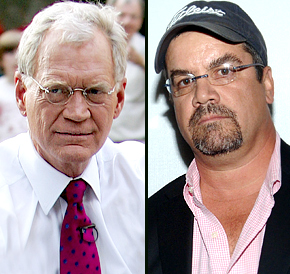 Then, better yet, the man accused of blackmailing David Letterman wears a Titleist cap in various photos that surfaced. The whole world sees "Titleist" and it doesn't cost Acushnet a dime. (By the way the USGA handicap processing system shows one Joe Halderman, a resident of Connecticut, as bearing a 16.8 at the Longshore Golf Course, a muni in the posh town of Westport).
Wally is special. He would like it thought that he was found in a manger outside the door of the dean of the Harvard Business School. In fact, he was a left-handed New England golfer with a modicum of talent who became somebody's assistant pro. The USGA welcomed him back by granting him reinstatement to amateur status. He jumped over to Acushnet where he displayed a tremendous ability to sell stuff.
His company owns more than 50% of the golf ball market plus Foot Joy shoes and a couple of lines of clubs. It is now more than a billion dollar operation. Wally is not satisfied. He thinks he should BE golf. There is nothing he is unwilling to foresee. He predicts there will be no more successful incursions into the golf equipment business by outsiders. That's an expression of resentment toward the late Karsten Solheim and the late Ely Callaway who came from nowhere to dominate the club business and kick Acushnet's butt in the process.
I will now present an abbreviated list of items worthy of comment from the interview:
- On the prospect of rolling back distance, he says any change is bound to be good for some tour players and bad for others. How come he didn't weep for the prospective losers when he dramatically changed his ball to the HD line in the early 2000s?
- Wally says there is no precedent for rolling back performance - not in golf or any other sport. Excuse me, but in 1931 the USGA changed the minimum diameter of the ball in its rule to 1.68 inches - up from 1.62 inches. Writing in the late 1930s, Bobby Jones reckoned that the 1.68" ball was about 5 yards shorter than the ball he played with during the 1920s.
- He says the distance explosion is due in part to bigger and stronger people. Look, distance was stable on the Tour between 1980 and 1995. It then shot up every year until 2002 when it again became stable - after the horse left the barn with an overall driving distance increase of about 9%. For the size of people to matter, you'd have to believe that something dramatic happened to the species for an 8 year period only. Darwin wouldn't buy that.
- He hints at the possibility of litigation on the heels of any equipment rules change by the USGA. That's odd because a few years ago he told me personally that suing the USGA is very bad for business. Wally said that both Ping, which did sue, and Callaway, which threatened to sue, were singed.
Is the USGA frightened by threats of an anti trust suit? Perhaps, even though I make them about a one touchdown favorite in such a clash.
What does scare the USGA is the fear of general non-support, which would render the USGA irrelevant. Just suppose the USGA did muster up the courage to do what it knows is right - roll back distance. If that were to happen I am sure that Wally and other manufacturers would continue to turn out today's balls. What would the customer do - buy the ball announced as being shorter? Sure, the pro shops at Seminole and Cypress Point might only carry the new ball. How about WalMart? I can't envision the boys from Arkansas acting on the basis of what the USGA says is good for the game. There would, for a time at least, be chaos, the exact opposite of the uniformity prized above all by the USGA.
The ongoing tension between equipment makers and the USGA is both sad and unnecessary. It wasn't always so. I remember the day when an earlier CEO of Acushnet, John Ludes, came into my office at the USGA bearing a $10,000 check as a gift for a USGA building fundraiser. Mr. Ludes understood that the USGA had created a climate in the sport that put all manufacturers on a level playing field and was doing so without any ax to grind. Naturally, I could not accept the check.
Equipment gets nearly as much play as instruction in commercial golf media because of ad budgets. Nothing gets the attention of a publisher quicker than a message saying, "You didn't give us enough space last month. My money is itching to go elsewhere."
So the consumer is led to believe that his or her search for a driver counts more than the choice of a spouse. The truth of course is that equipment does not determine outcomes in golf on every level of the game. If it were otherwise you would see only one brand of ball in use on the Tour. Hostility is meaningless in that equipment simply doesn't matter. By that, I mean that the choice of equipment on all levels of golf does not determine who wins or loses. The performance of today's clubs and balls is remarkably similar with minute variations that are almost impossible to discern. Why is it you never see blind test results in golf? Because even the greatest of players can't tell one ball from another if the markings on the balls are wiped out.
For reading this far, I reward you with a tip. The plastics used in modern golf balls do not decompose. So if you are in a pro shop that has used balls in a bucket for $1.25 each, don't hesitate to reach down for a few. As for the decay issue, I do not fear climate change. My fear is that eventually the surface of the earth will consist of nothing but Pinnacles.
Uihlein says no Tour player will use equipment he does not favor. Right on. Tour players are influenced by how much they can extract in endorsement fees.
Remember when Tiger Woods turned pro in the fall of 1996? He quickly scored a deal with Acushnet granting him $4 million per year. In no time at all he was recognized as the best player in the world. Fast forward a few years. Nike, which dwarfs Acushnet, snatched Tiger away by doubling or tripling Tiger's fee. Tiger remained the best player in the world. The same would happen if he developed a yen for Callaway or Taylor Made or whatever.
It's astonishing how much attention is paid to equipment now. The truth is if Acushnet was gobbled up tomorrow by Nike or Adidas nobody would care other than the players on the Titleist staff.
We have to put up with manufacturers since the game requires clubs and balls. But we shouldn't pay much attention to them and it surely doesn't matter which of them prosper and which fail.
Frank Hannigan
Saugerties, New York