Monty: If The Ball Doesn't Change, The Courses Have To

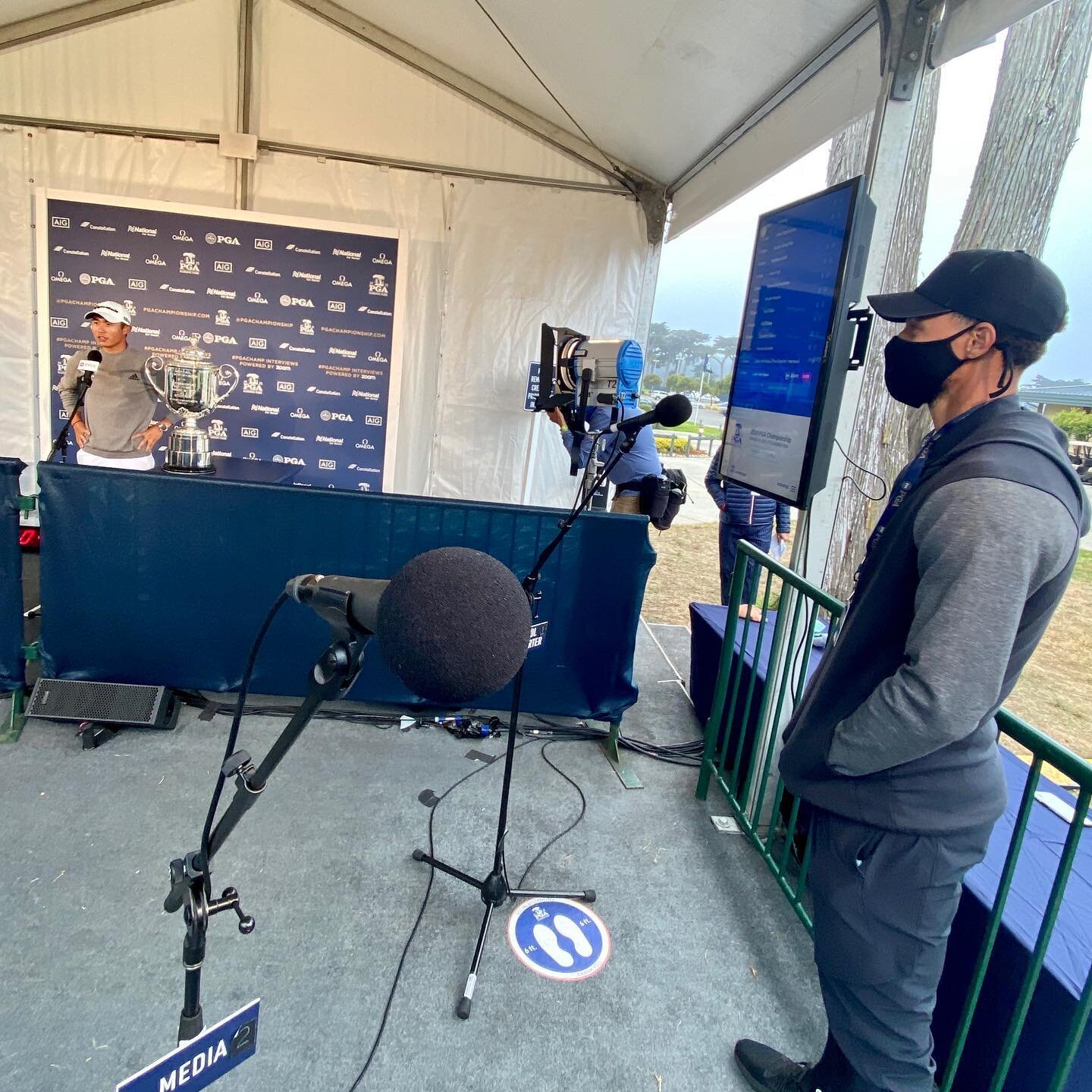
Monty at the Masters...

The one big change is 11, that's the big change that I find. That's become a very, very difficult hole. If it was hard before, now it's become very difficult. But the rest of the course, I agree with the changes. I think we have to keep going, provided that if we never change the golf ball, we have to keep changing the course and if we change the golf ball, we'll have to change courses. Wish we had done this 15 years ago in 1990 that you found a ball that was good but you can't go backward in this world, you have go forward. If the golf ball doesn't change, the courses have to.

Q. Specifically, what's the difficulty on 11 for you?

COLIN MONTGOMERIE: Generally holes that start with a 5 and it says par 4, are generally the problem, yeah. (Laughter) So that tends to be that one.

And...

Q. Phil Mickelson is using two drivers in his bag this week.

COLIN MONTGOMERIE: Yes, he is, yes.

Q. What's your reaction to that?

COLIN MONTGOMERIE: Well, I think with the manufacturers now being able to do that, I think it's sensible. He's sort of caught everybody on the hot, really, I think and good luck to him. He tried it last week as an experiment and it certainly worked. Won by, what was it 14 or something crazy. I think you'll find, and not just on this course, you'll find a lot of people using two drivers now. Why try and change one swing to accommodate a hole. Why not if the club is designed to go left or right or whatever, why not use that? We have a number of courses that you can think of immediately that would favor both and certainly used more than a 3 iron or 4 iron in a round of golf. There's no reason why that can't be the same. It will give him an advantage of hitting the fairways around here which we all know is crucial. The rough isn't long, but we need control from the fairways and distance.

Tiger's Q&A

Lawrence Donegan in The Guardian: "If Hootie Johnson, the chairman of Augusta National golf club, did not already know the wholesale changes to the most familiar golf course in the world were unpopular with those who have to play it at the Masters this week, he knows now.The defending champion Tiger Woods, in a breach of his lifelong vow of public blandness, yesterday delivered a devastating critique of the decision to lengthen six holes, narrow fairways and plant dozens of new trees around the Augusta National course."

Yes, Tiger sat down for his annual Masters Q&A, and as Donegan writes, there was little of nuance in his take on the course changes:

Q. As you go around the course after the changes have been made, what spots do you say, wow, this really is different?

TIGER WOODS: Well, every one they have changed. (Laughter).

4, I've never hit lumber.

4, I've never hit lumber into 4, that's different. Yesterday I hit 3 wood. My buddy, O'Meara, hit driver. That's a tough hole now. Like it wasn't an easy hole before; now it's even harder.

First interruption here...driver? Oh lordy.

Bobby Jones is too shocked to spin in his grave.

7 is totally different. That's one of the it's one of the narrowest holes on the golf course, if not the narrowest. At that length, the trees they have added on both sides makes it very interesting.

No. 11 is extremely long. By shifting the fairway over to the left, it adds to the length and now it's a little bit of a dog leg.

Q. Do you agree with the changes and why or why not?

TIGER WOODS: Not necessarily. I didn't think you need to mess with 4. I thought 4 was one of the cool holes as it was. It was pretty tough, and you know, I thought it was fine just the way it was. I thought 7 was a great risk/reward hole where you could hit driver, you could hit fairway wood or even iron off the tee, depending on what you feel like you could do. You can try and drive it on the upslope where you had an advantage to be able to spin the golf ball. But then again, it narrows up way down there. It's the narrowest tee shot down there if you decide to hit driver down there. Now you're hitting driver, where usually we're hitting 3 woods or 2 iron. Playing totally different now.
You see, that strategy stuff, that those "so-called" Golden Age architects practiced? Who has time for that!?
Q. How much of a factor will the narrowness of the trees be?

TIGER WOODS: It's a big factor because they have made a concerted effort to make driving part of the game. Here I always thought that you could get some angles to some of the pins and now those angles have been taken away from you. It doesn't make any sense to try to put yourself in those positions now, because if you did, you would be either in the trees or in that new second cut. So it's totally different.

Q. Just 7 and 11?

TIGER WOODS: Well, 9, 1, 2. You name it, there's a bunch of holes like that; 17, 18.

So much for options.

Q. Some players are saying that the course changes have played right into your hands, there's only a dozen or so players who can win here this week; would you agree with that?

TIGER WOODS: I certainly agree that it's narrowed up the field a little bit. Seeing some of the guys at their length, they have what they have to hit into some of the holes, they are having a hard time holding greens. So some of the shorter hitters are definitely going to struggle.

And you are thinking, okay, here comes the follow up, is that a good thing for the Masters?

Q. David Duval is a great buddy of yours, are you secretly pulling for him? I know you want to win but are you pulling for him deep down and what's the progress on his game?

Sigh.

Q. How much aspirations do you have toward golf architecture and if so, what sort of what would be the characteristics of the course you would design?

TIGER WOODS: Well, I certainly would love to get into course design. That's something that I'm looking forward to in the future.

I think some of the greats golf courses in the world are right down there in Melbourne, that sand belt. I absolutely love the face of the bunkers and the shape of the greens. I think that's how the game should be played. I just enjoy that type of golf to me. I don't enjoy elephant burial grounds out there.

Amen Tiger.

Q. How long would your course be?

TIGER WOODS: Depends, actually what the people there want it. It's up to them and my job and my responsibility is to provide a product that suits their needs.

If I were paying $10 million for Tiger, I'd want him to do what he thinks is best. Right?

And...

Q. Players used to shape shots before and now they carry two drivers. What do you think of the technology?

TIGER WOODS: The faces have become faster and the balls have become less spiny and all that means is that you can't shape the ball anymore because you need spin to shape shots. With that, it's hard to maneuver the golf ball. You have to change your plane a lot to make the ball move either way. It's totally different because the ball used to go out there and if you hit a draw, you used to go out there and fall left, now it draws early and it straightens out. So it's certainly changed.

Guys, even some of the more powerful players, have put in 5 woods or 7 woods because it's hard to get the ball in the air with a 2 iron or 1 iron. A 1 iron is obsolete now and 2 iron is kind of headed that way.

Back to the butchery at No. 11:

Q. What about No. 11, you haven't said anything about that.

TIGER WOODS: Yes, it's a tough hole now. It's 505 yards.

Q. Par 5.

TIGER WOODS: It's a short par 5, yeah. As I said, what makes it longer is because now the fairway is being shifted over to the left, which makes it a dog leg and just adds a little bit of extra length. If they would have kept it straight ahead, then it would have played a little bit shorter. But now moving the fairway to the left, it makes it a little bit harder.

Lovely.

Q. Not that this will happen, but if Hootie Johnson were to ask you about the changes, which ones you think were the biggest mistakes, what without him (laughter)?

TIGER WOODS: Is Hootie listening to this? (Laughter) I think Hootie would probably say we're going to have a private conversation. I'm just going to say, leave it at that. I want to be invited back (laughter).

And finally, for the question of the day, maybe the year...

Q. What would you name a son?

TIGER WOODS: I don't know. That's a good question. I don't know. Honestly, I couldn't tell you.

Fields Story and Photos

Bill Fields in this Golf World Masters preview, writing about the course changes:

It is almost as if Wimbledon traded grass for clay and reduced the service box by half. Legends are vexed and current competitiors are wary.
And he has this quote from Pete Dye, who clearly has not read The Spirit of St. Andrews in a while:
Architect Pete Dye, who has had to re-work a number of his designs to accommodate the distances top golfers are hitting the ball, also sides with the club. "If Jones and Mackenzie were alive today, seeing what's going on, they certainly would do something," Dye says. "I don't think they'd be offended [by the changes]. Mackenzie certainly had no idea somebody was going to hit the ball 370 yards."
On the subject of fast and firm, I thought this was interesting since I'm of the belief that a fast course with the added accoutrements will turn into a freak show:
 "The only defense to the course was really firm, fast greens, and there was a point in the '90s where they really crossed the line," Mickelson says. "I saw Jeff Sluman on the second hole have a four-footer uphill, and it spun out on him and then rolled 60 feet off the green. [Since] they've lengthened it, the greens have been very fair … they have not crossed over the line."

Of course, the last few Masters also have been wet ones. There hasn't been a dry week since all that length was added for the 2002 event, which makes some wonder what kind of scenario will play out this year if it doesn't rain for the first time on the new Augusta -- and why the club didn't wait until it got a week of sunshine before renovating the course yet again.

"If it ever gets dry and baked out and it doesn't rain like it did in '99 when Ollie won, and the greens get blue-looking like they did that year," says Woods, "even par or over par will win easily."

Should that happen, the Masters will have come to resemble the U.S. Open, and one wonders if that is the angle the tournament has been after all along.

Accompanying the Golf World piece are these photos (linked from GolfDigest.com) that tell boggle the mind. Note on the first hole how pinched it is between bunker and trees, and the ridiculous looking 7th and 11th holes:

changes2.jpgchanges4.jpgchanges3.jpg

Weir On Changes

Thanks to reader Tuco for the heads up on Mike Weir's website musings:

The changes are going to make things tough. On the first hole, the new tee is a ways back from where it used to be. Monday morning, into the wind, I hit a pretty big drive and had a rescue club in. I expect without a wind in my face, it will be driver, 3-iron where before it was driver, seven-iron. No one has really mentioned any changes to the second hole, but when I saw it Monday, it seems that the tee is back about 10 yards or so, making it tough to get home in two.

The changes on 11 are big. When I played here a few weeks ago, I hit a solid drive and still had 200 yards to the front. You have to just flat bust it down the left side here and it’s a tight drive now, with trees added to the right. It’s really a dogleg now. But even with a good drive, I think a lot of guys are going to lay up right and take their chances with a Larry Mize-like chip.

The 17th they’ve moved back 15 yards so that makes it significantly different for getting the ball up on the top tier instead of landing it into the hill in the fairway. 

DiMarco and Olazabal Comments

From Thomas Bonk in today's L.A. Times:

"I like the comments that he and Mr. Palmer said about Augusta," DiMarco said. "[Nicklaus] certainly has the right to have an opinion on what he has done to that course."

That "he" is Johnson and he's already the talk of the town.

Jose Maria Olazabal won the Masters in 1994 and 1999 when it was more than 500 yards shorter.

"We have seen the direction they have taken and time will tell if they are right or wrong," Olazabal said.

"It's not a matter of how I want it …. With all the lengthening and everything, some of the pin positions we played through the years, they are not going to be accessible, maybe except for, I don't know, 10 players.

"I don't think by making the golf course longer you are improving the whole situation when you say you are trying to protect the golf course from the long hitters. I think the long hitters, they have the hugest smile, from ear to ear, to be honest."


"It's Just Way Less Interesting Than It Used To Be"

masterslogo2.gifOther than Fred Couples, everyone else quoted in this David Westin story for the Augusta Chronicle is not very complimentary of the course changes.

Stewart Cink clearly has given the subject a lot more thought than the average tour player and is characterizing the destruction of the Jones-MacKenzie design ideals quite nicely:

"It's still a very good test, but a lot harder test than it's ever been," Stewart Cink said. "It's just not the gem of architecture that is used to be."

"It's just like an American golf course; it used to be linksy," Cink said. "Bobby Jones really wanted that thing to be linksy. We play courses all year out here where you have to drive it between the rough and you have to hit your ball on the green in a certain way."

And Nick Faldo's satirical take ended up not too far off base:

"I'm sure they can start getting the roads moved around on the outside," three-time champion Nick Faldo said in jest. "I'm sure they've got the power to do that. Buy a few houses."

Little did he know, but Faldo might not have been far off the mark. The club's holding companies own more than 145 acres outside its borders.

Todd Hamilton isn't too wild about the demise of options:

"To me, on a good golf course, on every hole you should be able to pick what shot you want to play," Hamilton said. "You shouldn't be forced to hit a shot."

But back to Cink, who understands the shift from a free-market design approach to Hootie Johnson and Tom Fazio's shallower, dictatorial style:

Said Cink: "Augusta was always a place where you could have a lot of fun and you could demonstrate an artistic talent for strategy around the golf course. Now, it's not.

"No. 11 is a hole where you could hit your drive anywhere you wanted to; you could create your own angle, you could make the hole set up any way you wanted to," Cink said. "That was one of the great things about the old course.

"Now the fairway is probably 30 yards wide because they added trees on both sides. Everybody has to hit the same shot. To me, it's just way less interesting than it used to be."

And Jim Furyk explains how some changes have eliminated temptation:

"The way the golf course is set up now with the length, you can't play that aggressively," Jim Furyk said. "You can't have a 9-iron into the 14th green. Before, you had a 9-iron and I might have a go at a back-left pin. If I had a 6-iron in my hand now, I'd have to be a complete moron to go at it."

The Debate That Cannot Be Won

Scott Michaux writes in the Augusta Chronicle:
Whatever happens this week, the constant changing of the storied golf course will be the primary topic of conversation for the foreseeable future. If it's not the length that is offending players, it is certainly the interpretation of design intents that can spark an argument between players and anyone wearing the members' signature green jacket.

For every talking point quote culled from the Jones and Mackenzie archives that would seemingly support the club's changes, there are plenty of counterpoints that would suggest the original designers would cringe at what has been done to their course.

Case in point, the diabolical par-3 fourth hole. Stretched to 240 yards, Jones reportedly offered dueling perspectives.

The club's preferred context: "The shot is usually a strong iron or even a 4- or 3-wood."

The critic's preferred context: "I have never been convinced that a so-called one-shot hole of 240 or 250 yards is a forthright golfing problem."

Masters Chairman Hootie Johnson has said repeatedly that he is trying to "maintain the integrity of the shot values" envisioned by the designers. Numerous players argue that Jones and Mackenzie never envisioned forests of trees corralling competitors into singular options.

When a quiet and reasonable player such as Stewart Cink contends Augusta National "isn't the architectural gem" it once was, it has to give pause to even the course's most hardened defender.

Who knows yet whether it can be fixed - or whether it even needs to be? All that is known is that players today will certainly get to experience what it was like for players of preceding eras to hit longer irons into greens.

But those forebears never got to know what it was like to hit those irons into firm and wickedly fast greens ill-suited for those approaches.

It's an argument that can never be truly resolved in any context.

Clayton On Masters

Mike Clayton, previewing the Masters:

There have been critics of the changes, most notably Arnold Palmer and Jack Nicklaus, and the objections have centred on the use of great length, narrow fairways and trees in an attempt to maintain the relevance of the course in the face of the debacle of modern technology.

Jones might have been particularly upset by the use of trees to reign in the long bombers of the modern game. 'I see no need for a tree on a golf course' was one of his famous utterances.

The equipment rules were designed to stop exactly what has happened but the minds of the scientific geniuses employed by the equipment companies have run rings around the moribund bureaucrats at the USGA and the R and A who are seemingly still in a case of denial.

Augusta is fortunate to have enough room to be continually moving tees back but our best courses like at Royal Melbourne and Kingston Heath have no such luxury and they are in desperate need of preservation by way of a new ball for professionals.

He goes on to look at the struggles of Australian players in the majors and considers possible contenders.

Questions For Hootie Johnson

114238.jpgOn Wednesday, Hootie Johnson will enter Augusta National's state-of-the-art press building for his annual no-comment session with the world's leading scribblers. He will probably be joined by the club's Chair of Winter Storm Damage Storage, Will Nicholson, and Question Screening Committee Chair, Billy Payne.

First, a question for Nicholson:

  • Last year you said, "There are no top players that I talk to that aren't unanimous that the ball is changing the nature of the game. The ability to move the ball right, or left, as the old timers did, is now out of the game." Have you recommended a change in the ball to your friends at the USGA?

And now, here are a few questions I'd love to ask Hootie:

  • Are you concerned that several holes, in their present configuration, will not allow for increases in length.

  • Bobby Jones, while looking out at Augusta National with Alistair Cooke, once remarked that he "didn't see a need for a tree on a golf course." With that in mind, do you really believe he would approve of so much tree planting?
  • Have club members and USGA officers Walter Driver and Fred Ridley asked you not to adopt a Masters ball spec?
  • With ShotLink now being used to collect data, will this information be made available to patrons and media?
  • And...Martha Burk:  great woman, or the greatest woman? (With apologies to Colbert.)
I'd love to hear what you would like asked.

Phil and Skill?

Is anyone else intrigued by the notion that Phil Mickelson is using two drivers, one to shape the ball right to left (the "gamer"), and another for the opposite shot shape?

Golf World's E. Michael Johnson has the details in this story.

In the "skill" debate, I wonder if this will come up as an example where equipment is supplementing skill? 

More power to Mickelson for doing what he has to do to win within the rules, but I guess this brings me back to Max Behr's quote about the role of equipment:

I do not think we will go far wrong if we define a true sportsman as one who endeavors to adjust his implements down to a point where they will just sustain his skill, in order that upon skill, and skill alone, must depend the decision of the contest.

A strong case could be made that good players used to use drivers with slightly open or closed faces to create a certain ball flight or to offset a swing flaw.

And I suppose you could say there is skill in determining that you get different reactions from different clubs. But it seems that the real skill in this case was in the club fitting?

It was this Telegraph story quoting Colin Montgomerie that left me wondering:
Montgomerie then considered how useful the two clubs would be at, say, the 17th and 18th at Wentworth and, again, at the last two holes at the Belfry. "The best thing about the idea," he continued, "is the way you can do away with the need to come up with two different swings."

Thoughts?