"Their charge is protecting the game of golf, not making sure it's OK for Tour players."
/Thoughtful response from Brandt Snedeker
Read MoreWhen you come to think of it that is the secret of most of the great holes all over the world. They all have some kind of a twist. C.B. MACDONALD
Still no Tillinghast, but Willie Park Jr. is a worthy inductee into the World Golf Hall of Fame. This will be the second father-son tandem in the hall, following Old Tom and Young Tom Morris, explains Garry Smits.
 For Immediate Release...
St. Augustine, Fla. (Nov. 15, 2012) – The World Golf Hall of Fame & Museum will induct Willie Park Jr. as part of the Class of 2013. Along with his father, World Golf Hall of Fame member Willie Park Sr., Park helped form one of the legendary families in golf history. He is the third member of the Class of 2013 and will be inducted through the Veterans Category.
Park will be inducted into the Hall of Fame at its Induction Ceremony on Monday, May 6, 2013, at World Golf Village in St. Augustine, Fla. The Ceremony will once again kick off THE PLAYERS Championship week.
Park is one of the Open Championship’s most distinguished players, winning in 1887 and 1889 while compiling 12 top-10 finishes in golf’s oldest major. He also did pioneering work in many other areas of the game both in Europe and the United States.
"Willie Park Jr.’s contributions to the game as a player, architect, innovator and writer were truly extraordinary," said Mike Davis, USGA Executive Director and chairman of the World Golf Foundation Board of Directors. “He not only advanced the status of professional golfers, but also was influential in shaping the early development of golf in the United States. This is an overdue, well-deserved recognition.”
Park was born in Musselburgh, Scotland in 1864; four years after his father won the first Open Championship at Prestwick. Young Willie quickly took to the family business of ball and club making. He developed a reputation as an outstanding player and played his first Open Championship as a 16-year-old in 1880.
After five top-10 finishes without a victory, Park finally broke through and won the Open title in 1887, fittingly at Prestwick. Park added his second Open title in 1889 at another special place, his home of Musselburgh – the final time it was played there.
Park used his prowess as a player as a springboard to other facets of the game. He continued pioneering ball and club design, registering several patents and expanding the family business. Park's seminal 1896 book “The Game of Golf” was the first about golf written by a professional golfer. His widely acclaimed “The Art of Putting” was published in 1920.
Park made an impressive mark in golf course architecture as well, having designed or modified more than 200 courses in Europe, the U.S. and Canada. Sunningdale Golf Club outside of London is one of his most famous designs. His success in this arena carried him to the United States and Canada in 1916, where he continued to design courses of the highest quality, including the Maidstone Club in New York and Royal Quebec Golf Club.
"It is a tremendous honor for the family to have a second member recognized for his contribution to the game,” said Mungo Park, Willie Park Jr.’s great nephew and family historian. “Willie Jr., possibly more than any other, marked the transition from the old-school caddy and player to the modern professional golfer and businessman. He gave up high-stake money matches for energetic golf course design. His playing skill was undoubted, particularly with the putter, but it is his courses that provide the most impressive legacy.”
Park joins Fred Couples and Ken Venturi in the Class of 2013. The Hall of Fame will round out the Class, including the International Ballot, in a future announcement.
“The addition of Willie Park Jr. to the Hall of Fame is a significant one,” said Hall of Fame Chief Operating Officer Jack Peter. “The Hall of Fame celebrates the rich history of the game, and that story cannot be told without the tremendous contributions of the Park family. To have Willie Park Jr. join his father in the Hall of Fame is truly fitting.”
 Here's a nice Tom MacWood write up of Willie Jr.
A view of one of Park Jr.'s sleek putter designs...take that Jonny Ive!
After a severely overplayed A1 story and a ludicrous examination of average golfers suffering extreme heartburn, The New York Times finally gets around to doing what it does best: taking a story like Charlie Beljan's panic attack and talking to experts about the efficacy of anxiety treatments and PGA Tour drug use rules that ban such treatments (with medical exemptions).
Bill Pennington saves the day reports:
The permissibility of beta blockers in golf’s top level has come into focus anew this week. Charlie Beljan won a PGA Tour event Sunday, two days after being hospitalized with a panic attack. Beljan, who said that this week he was going to consult doctors near his home in Arizona, might be treated with medication to prevent future panic attacks.
 For those of you following this epic saga, Beljan got a clean bill of health Tuesday from Jim Rome, Diane Sawyer and Inside Edition. There is no mention in the linked story of the Mayo Clinic that he was supposed to visit on Tuesday (reported here, here and here.)
Anyway, back to beta blockers and their ability to help...some:
“Some level of anxiety is good for performance,” said Richard Ginsburg, a sports psychologist at the Harvard Medical School and Massachusetts General Hospital. “It keeps you on your game. A beta blocker can take away some edge, mellow you too much.”
Danforth, who twice played in the United States Women’s Open, agreed, though she added that beta blockers, purely from a golf perspective, had been likened to the stabilizing advantage some find using a long putter.
There are medical concerns for those who acquire beta blockers without a prescription, perhaps through the plethora of Web sites selling the drugs. Singh said there was a serious risk for people using beta blockers without a genuine, long-term medical need for them.
“They are a very powerful class of drugs that have enormous impact on essential bodily functions,” he said. “They are not without adverse effects.”
You can read the banned drug list here (PDF).
And as Bernie McGuire reports, Rory McIlroy and Justin Rose supported the idea when asked about Ahmet "Head Butt" Agaoglu's desire to launch a Turkish Golf Federation supported bid. Of course the lads are both carrying quite a bit of cash from their recent visit there, so it would rude to say otherwise.
As you know, it's a European Tour tradition to hang a for sale sign on their most important event, regardless of course quality and as we learned not long ago, location. Dubai was kicked around as a possibility, before sanity prevailed. And since Turkey is also not a European union member, it might take some convincing to send the Ryder Cup there.
 Some poor lad named Nate Schweber got the call from a golf savvy NY Times editor: justify our superfluous A1 story on Charlie Beljan's "panic attack" by finding more golfers suffering from an untold epidemic that has been quietly dooming the game.
So Schweber headed to Van Cortlandt Park where, of course, no one had read the story in spite of its A1 placement.
Mateo’s tale of an anxiety attack on the golf course was one of several that were heard during a random stop at the course in Van Cortlandt Park. None of the golfers interviewed had read about the PGA Tour player Charlie Beljan, who had had a panic attack last week, only to forge ahead to his first career victory.
But the golfers in the Bronx did not need much prompting. Told the details of Beljan’s harrowing experience, they shook their heads in recognition.
What the NY Times actually uncovered were stories of folks needing my drug of choice, Prilosec.
William Larkin, 44, the general manager of the golf course in Van Cortlandt Park, said he had an anxiety attack trying to qualify for a golf tournament in Westchester County about 15 years ago and had to be taken to a hospital.
“I was getting winded going up small hills, my mouth was dry, my left arm got stiff,” he said. “I started thinking I was having a heart attack, which made everything worse.”
He said he spent two days in the hospital having tests. His symptoms had been found to be psychosomatic except for one. His worry had caused his stomach to produce higher-than-normal quantities of acids, which rose up and caused his left arm to stiffen.
“I’ll never forget that day,” he said.
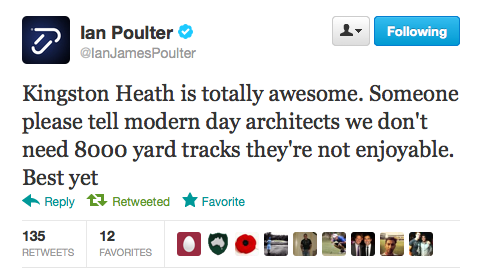
The defending Australian Masters champion Ian Poulter got his first look at Kingston Heath Tuesday (he won last year at the equally fantastic Victoria).
Not surprisingly, Poulter liked what he found at the Heath and Tweeted accordingly:
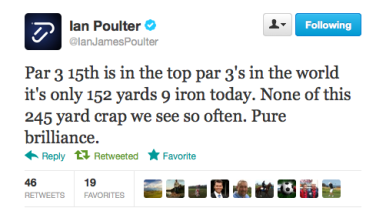
And this about the famous 15th.
Golf Channel hosts live coverage in the United States beginning at 5:30 Pacific Wednesday. Not only a chance to see great players dealing with one of the world's most idyllic courses, but Australian coverage is nearly always excellent.
The Australian Masters returns to Kingston Heath this year and after several weeks of some truly horrifying golf architecture on television, we get a welcome opportunity to cleanse ourselves by watching the game played on one of the world's very best designs.
While the neighboring Royal Melbourne might be the superior tournament course because of its grand scale and ability to hold up better under the technology onslaught, the more intimate Kingston Heath is the course you'd probably enjoy playing the most on a daily basis. You can't go wrong with either one.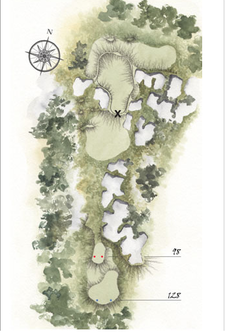 Don't sue me for linking this, but the club's guest page offers a course tour which includes a 360 degree photo tour of the holes. It's a massive time killer and great fun once you get the hang of it.
For a refresher, here is Darius Oliver's excellent Kingston Heath review at Planet Golf, a super resource for course design insights.
Kingston Heath features one of my favorite logos and the most elegant course guide I've ever seen, created by Michael Cocking of Ogilvy-Clayton design. You can see a sample on his website.
I visited the area last year for the Presidents Cup, which led to this Golf Digest feature on The Australian Way and below, this admittedly substandard photo gallery of the course in not-the-best light. Still, it should be enough to whet your appetite to watch.
Golf Channel offers coverage Wednesday through Saturday nights starting at 5:30 p.m. Pacific time.
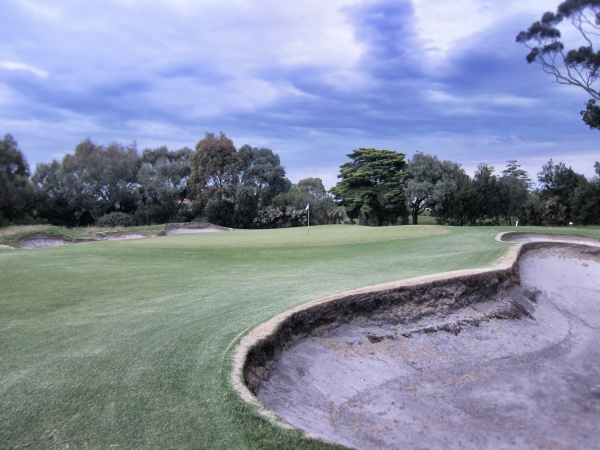
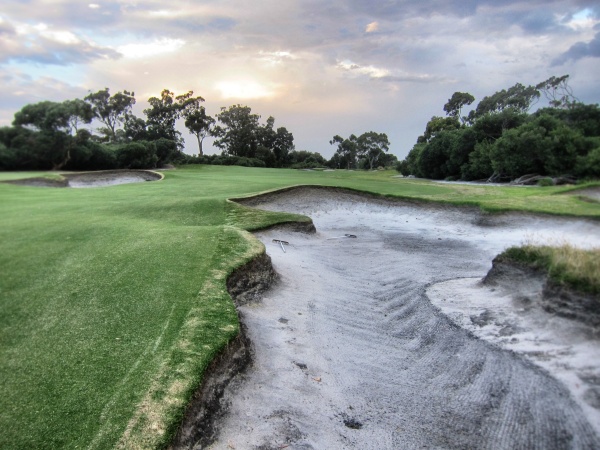
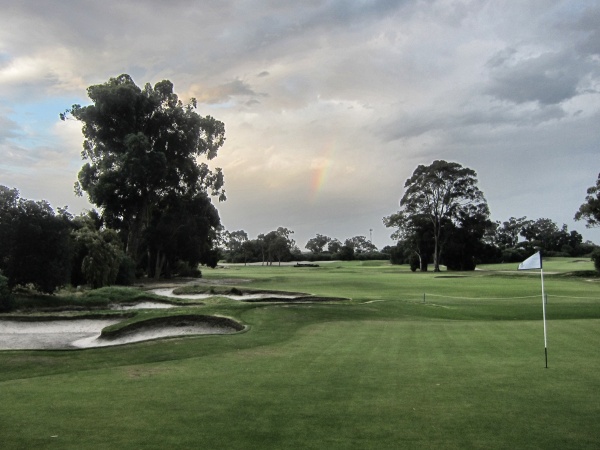
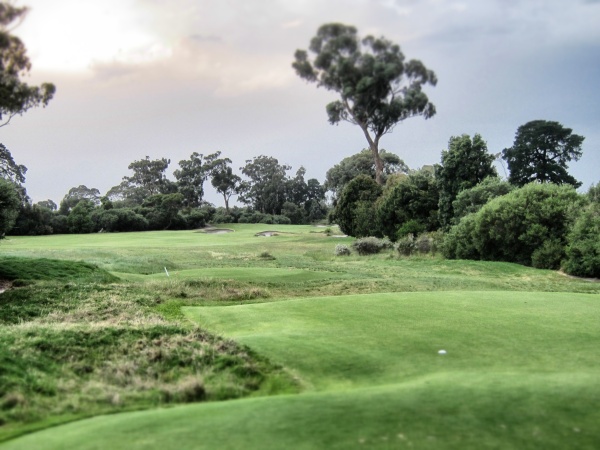
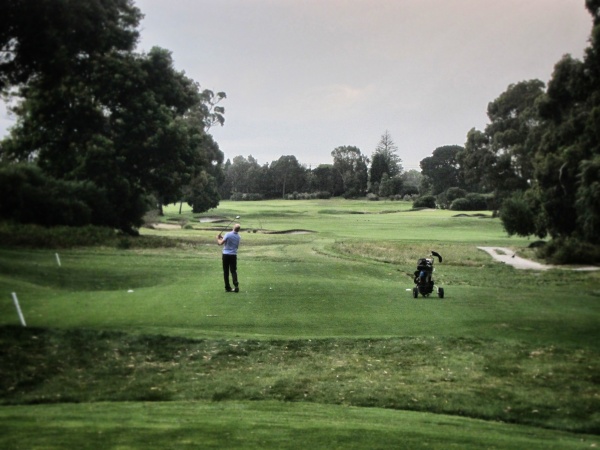
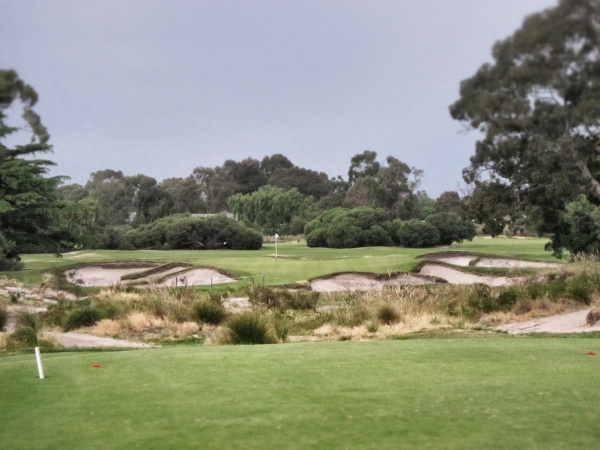
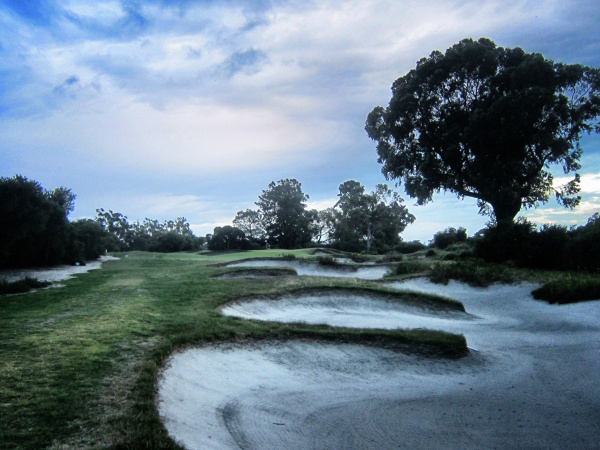
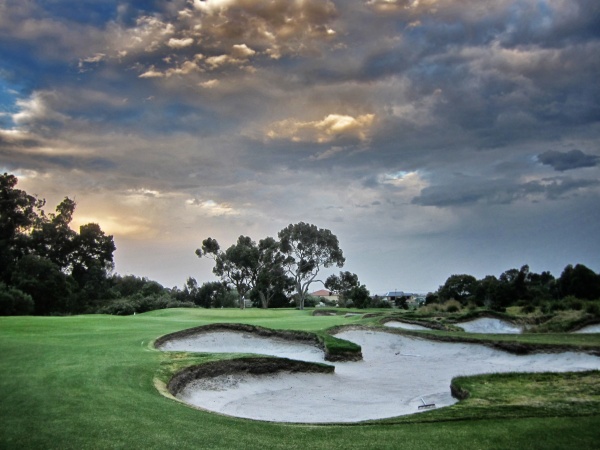
**Graeme McDowell had lots of nice things to say about Kingston Heath, reports Patrick Sexton.
"It's a fantastic golf course, just a real advertisement for, you know, how a golf course doesn't need length to be tricky and tough," he said.
"It's very unique. Obviously we're on one of the greatest pieces of golfing land maybe in the world down here. It reminds me a little of the west coast of England there with your Birkdales and your Hillsides and that little stretch of phenomenal golf courses you have there.
"I played here on Sunday and I played in a northerly wind, then I played nine holes yesterday afternoon (Monday) in a very strong southerly wind and (that) obviously changed the dynamic of the back nine, so it's a big factor, the wind this week."
**Check out Mark Bourgeois' aerial comparison of Kingston Heath, 1945 vs. 2012.
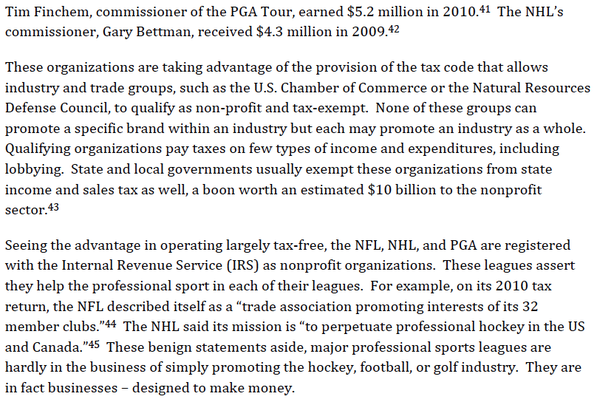
Reader David passed along Tom Coburn's (R-Oklahoma) "Waste Book," released just before the election where the senator outlined wasteful spending by the United States government. Coburn's full quote:
"Taxpayers should not be asked to subsidize sports organizations already benefiting widely from willing fans and turning a profit, while claiming to be non-profit organizations."
 Among the examples of waste cited by Coburn? The non-profit, 501(c) status of professional sports leagues, namely the NFL and PGA Tour.
Unfortunately, whoever wrote the report for Coburn (A) does not know the difference between the PGA Tour and PGA of America, and (B) he neglects to mention the PGA Tour's charitable donations, especially compared to the other leagues.
PGA Tour events have raised more for charity than all other pro sports leagues combined.
As evidence of for-profit activities, Coburn's Waste Book cites "PGA" commissioner Tim Finchem's $5.2 million salary in 2010 and "over $900 million in revenue, mostly through television rights, tournament earnings and sponsorships, and royalties."
From a Fox News report after the release of Coburn's book (PDF):
In all, the 2012 Waste Book report details 100 examples totaling nearly $19 billion. Coburn acknowledges that's a drop in the bucket in contrast to the overall federal deficit, which tops $16 trillion, but he says the items are snapshots of the bigger problem.
"Would you agree with Washington that these represent national priorities, or would you conclude these reflect the out-of-touch and out-of-control spending threatening to bankrupt our nation’s future?" he said.
The PGA Tour part of the report, screen-captured because I'm too lazy to transcribe:
In light of many professional golfers lamenting the election results and in particular, government debt, no doubt the PGA Tour's finest will agree with Coburn that the PGA Tour's tax status needs to be changed?
Geoff Shackelford is a Senior Writer for Golfweek magazine, a weekly contributor to Golf Channel's Morning



Copyright © 2022, Geoff Shackelford. All rights reserved.