Not Again! Players Talking Up Yet Another Wentworth Redo
/Remodeled to the point of looking, well, remodeled, Wentworth's greens
Read More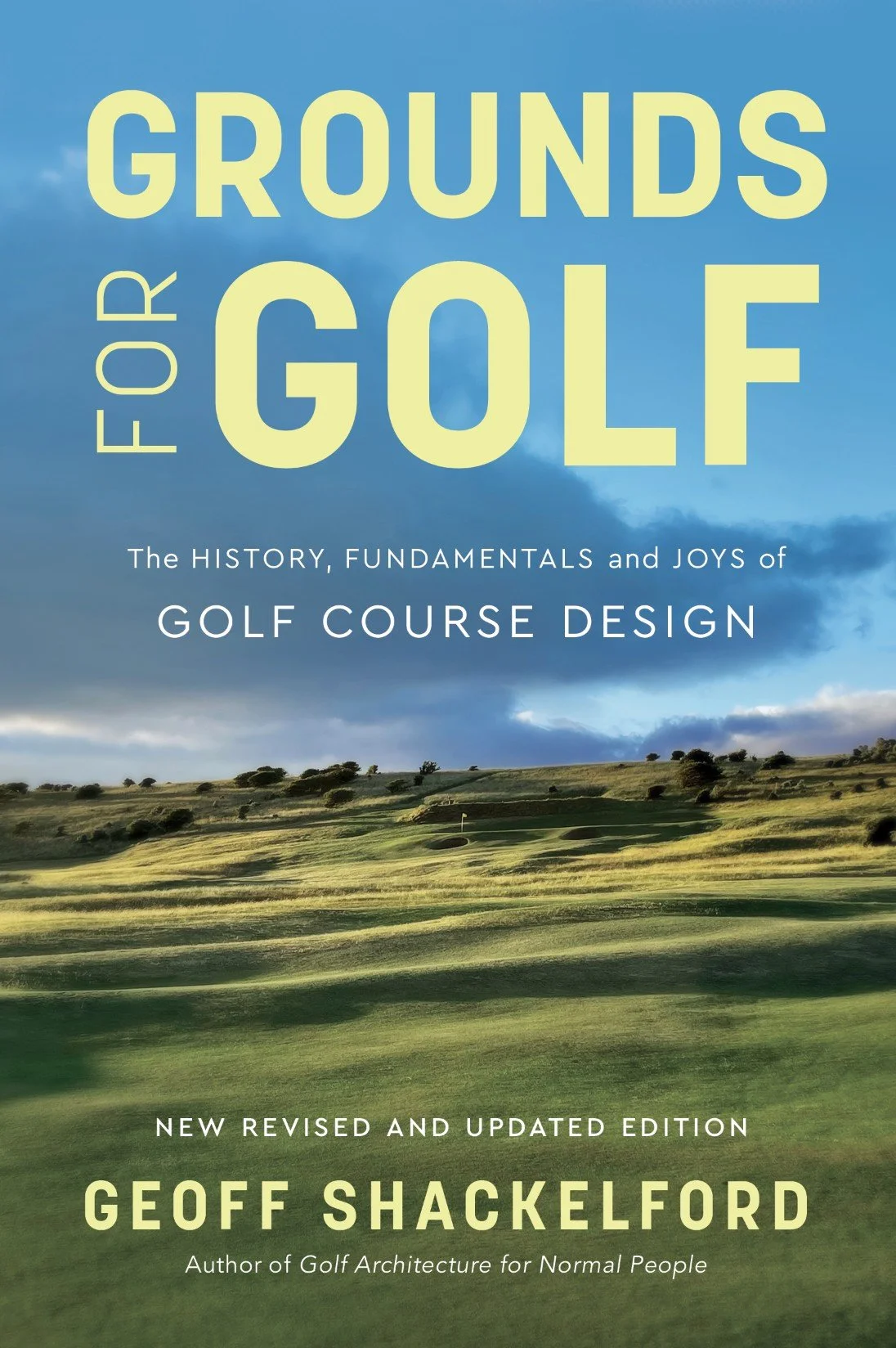
It’s back!
Twenty years later Tatra Press has kindly allowed me to bring back Grounds For Golf now that golf architecture is of more interest to the masses. A new Introduction looks at what’s driven the interest growth and two new chapters I had a blast adding (plus a few edits to keep things up-to-date).
The Amazon purchase page for the book arriving June 15, 2026.
CNBC's Jeff Cox files the stunning revelation coming out of University of Tennessee and Alabama labs confirming what we all feared: excessive CEO golfing can lead to weaker returns.
Of course, any CEO who still turns in scores at this point will actually confirm something about them to their shareholders, the researchers dug deep into handicap info to expose this disturbing finding.
Using the records from 363 chief executives in the S&P 1500, the study drew some conclusions sure to scare more than a few of them off the course.
For one, it found that executives who use their time to lower their handicaps also often lower their firms' returns. The study also concluded, not surprisingly, that these same executives who play more often than their peers are more likely to lose their jobs.
"Top traders want to know everything they can about a company before they get involved in a name—down to where its C-level executives dined the night before a big day of investor meetings, for example. You never know how an overdone steak or disagreeable conversation will affect their mood after all, and inadvertently the stock price," New York brokerage Convergex said in a note that unearthed the study from August 2014.
So that's what it's come to, eh? So it's dachshund racing in suits?
In companies where the CEOs played more than 22 rounds of golf a year the return on assets was about 1.1 percentage points lower than firms where the top executives played less frequently. That's significant because the average ROA for the sample was about 5.3 percent, so the performance was equal to about 20 percent lower.
"Some CEOs in the database play in excess of 100 rounds in a year!" the study said. "While some golf rounds may clearly serve a valid business purpose, it is unlikely that the amount of golf played by the most frequent golfers is necessary for a CEO to support her firm."
Here is the deeper analysis from CNBC...
Here's a clever promotion involving Golf Digest's U.S. Open cover model, Dustin Johnson. From the folks at TaylorMade who deserve some points for an imaginative stunt that isn't totally out of the realm given Johnson's recent form: DJ wins, you either get a refund on the driver you bought in the month leading up to the U.S. Open, or you get a free one for filling out the PGA Tour Superstore form.
All the details here.
Geoff Shackelford is a Senior Writer for Golfweek magazine, a weekly contributor to Golf Channel's Morning






Copyright © 2022, Geoff Shackelford. All rights reserved.