With the USGA recently announcing a $12 million purse for this year's event, the potential for a major championship purse battle seems worth keeping an eye on, especially with The Opentrailing significantly at $8.5 million (slightly less than next week's Arnold Palmer Invitational).
Garry Smitsreports thatPGA Tour Commissioner Jay Monahan is holding firm on The Players purse for now, putting less pressure on the PGA Of America to side with their partners on a similar purse.
“I think it’s great what the USGA has done,” Monahan said. “Our plan coming into the year has been to stay at $10.5 [million] and we’re going to stay to our plan.”
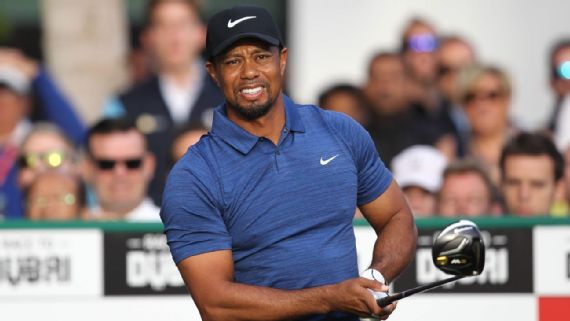
Tigertells TigerWoods.com thatBay Hill next week is not option despite his desire to honor the late Arnold Palmer.
As Bob Harig notes for ESPN.com, this makes the Masters all but a no-go. It's the lack of any public appearances that is even more disconcerting.
Woods missed two tournaments he was scheduled to play, the Genesis Open and the Honda Classic, and now is out of an event he dominated for most of his career. Woods has made no public appearances since the Dubai event and did not appear at the Genesis tournament that supports his foundation.
The latest developments would appear to put next month's Masters in serious doubt, although Woods played the tournament two years ago after taking a nine-week break to work on his game.
The first taste of Tiger's upcoming book written in conjunction Lorne Rubenstein has been published in the March issue of Golfweek. Here's a sampling.
Naturally, I couldn't resist enjoying this little reminder of Monty and his mouth.
If I needed any extra motivation for my third round, Colin Montgomerie provided it during his media conference the day before. Monty was in second place, three shots behind me, and so we were going to play together in the last twosome on Saturday, just after two o’clock. At the conference, Monty was asked about our prospects for Saturday, and he spoke his mind, saying that everybody would see in the third round what I was made of, and that experience was a “key factor.” … His comments only strengthened my resolve to play my best golf the rest of the way.
I had a clean card, eleven pars and seven birdies, for 65. That was the kind of golf I had been working toward. Monty and I shook hands on the eighteenth green. His 74 had put him twelve shots behind me, after starting the round three shots behind. He was beaten up but cordial.
I stumbled on news of the "reimagined"Golf World via the GolfDigest.com RSS feed. The new Golf World homepage is here under the GolfDigest.com News and Tours page. Editor Jaime Diaz says the now-defunct weekly digital publication will shift to a web-based one offering intelligent takes. At least, that's what I could pick up from the miniscule fonts both on desktop and mobile (the Mobile version screen captured here appears to be in partnership with Taylor Made).
Diaz writes:
As always, Golf World will set the conversational agenda for what is topical and enlightening in the greatest game of all.
We are uniquely positioned to do so. Golf World, in conjunction with the staff of Golf Digest, has the most collective knowledge of any golf publication. Our writers and editors are intimately familiar with all aspects of the game—its players, people, history, institutions and issues. Some of the respected names that will regularly contribute to our content include Tim Rosaforte (the game’s leading insider), Guy Yocom (longtime producer of Golf Digest’s celebrated “My Shot” series), Dave Kindred (the 1991 Red Smith Award winner), John Feinstein (best-selling author of books including A Good Walk Spoiled) and expert reporters John Huggan and Dave Shedloski.
I wish my former colleagues the best of luck carrying on such a storied brand. Hopefully they will get larger fonts and some social media coverage of the launch.
Meanwhile, check out former Golf Digest contributor Cliff Schrock's new site where fans of "This Day in History" items will love his golf insights. He's also posted other pieces as well and the site looks sharp.
Of course we know that (A) most people only pay money to see a handful of players and (B) most of those paying people couldn't tell the difference between a 290 yard drive a 325 yard one.
But good news, instead of reciting talking points of manufacturers, the idea of a golf balls to suit surfaces makes sense to players who have seen what the folks in tennis have done to better suit their implements to surfaces and athletes.
Charl Schwartzel views Davis’ idea as an added opportunity to help pace of play if new tees built well beyond the course’s original design no longer have to be used.
“Now you have to walk 150 yards back and then walk this way, so you’re walking 300 yards and you’re still at the same place,” Schwartzel said. “If you can make the balls and clubs go shorter, and you can play the old courses, then the game will be 3 ½ hours again. It’s simple. But you’ve got to walk so far, how are you going to play quick? It’s impossible to play quick.”
After Jamie Lovemark is quoted saying folks pay to see the long ball, Augusta National comes up (as it's known to do in these discussions).
“I think if the USGA or R&A try to do it, there might be a lot of players kicking and screaming,” he said. “Somehow when it happens at Augusta, there’s a slightly different respect level there. Not sure why, it’s just something special about Augusta.”
And even better was this:
“Something’s got to happen,” McDowell said. “We’re starting to lose the integrity of some of the most beautiful courses in the world. They’re becoming outdated, which is just a little scary, really.”
While we hope the folks in Silicon Valley emphasize world-changing advancements over helping golfers, it's fun to read some of the augmented reality ideas and other concepts that ex-Yahoo CEO and start-up investor Jerry Yang sees potentially impacting the game.
From Mike Stachura'sreport at the USGA Innovation Symposium in Vancouver:
“If you look at the categories of things that are coming across our investment activities and how people are understanding their bodies, every element of that is applicable to golf,” he said. “Measuring brain waves, measuring all the body metrics and understanding those things, I think is all very interesting.”
Yang imagines a near future where laser-rangefinder technology is incorporated in your sunglasses, where a golf simulator in your garage “will let you play St. Andrews in a way that really feels like St. Andrews.”
But Yang thinks that sort of development is only a start. He talked about a coming “smart ball” technology that would track every shot and its launch conditions, direction and distance. He also suggested that the kind of “haptic suits” designed to help the disabled walk could “be the same suit that can make you become a super person where you can literally swing like Dustin Johnson if you wanted to.”
Or were able to. Nonetheless, keeping dreaming big. If nothing else it's fun to read about. After all, it's not our money!
Just skip past the part where we hear about how this distance thing is cornered and flatlining for 15 years now. After all, if this belief makes them do the right thing, the game's governors are entitled to their always-correct opinions!
GolfDigest.com's Mike StachurareportsUSGA Executive Director Mike Davis' suggestion at the USGA's Innovation Symposiumthat no rollback is happening, but there is a place for a rolled back ball that allows Dustin Johnson's to enjoy the Myopia Hunt Club's of the world.
The key line:
“We don’t foresee any need to do a mandatory rollback of distance. We just don’t see it. But that’s different than saying if somebody comes to us and says I want an experience that doesn’t take as long or use as much land, can we allow for equipment to do that?”
Yes!
Davis continued in what I would dare say are by far the most provocative comments from a governing body officer (in office, of course the late, great Frank Hannigan was long outspoken on this topic).
“Anybody is hard-pressed to say that as distance has increased in the last 100 years that that’s been good for the game,” he said. “We all want to hit the ball farther. We get that. But distance is all relative. When you think about the billions and billions of dollars that have been spent to change golf courses, and you say, Has that been good for the game?
“Is the fact that Shinnecock Hills went from 5,500 yards to 7,500 yards, what has that done good for the game? It’s increased the expenses to maintain it. It’s cost us time to walk an extra 2,000 yards. So you have to say, What has that actually done?”
Davis later even suggested golf was alone among all sports because of the way its equipment has dictated its playing field.
I feel like I have read about this classic course ball thing in a book somewhere, say, about 14 years ago it seems if memory serves. And I know PING's John Solheimhas offered a proposal on this, but it sure sounds like we are headed (finally) for having a ball suited to designs of a certain vintage.
The only mystery remains, why hasn't a company gotten out of front to be the first to corner the vintage course market where purists buy golf balls too?
Anyone, anyone? How about rollback advocate Jack Nickaus, who has a golf ball line? Nope. How about Solheim's PING? Any prototypes brought to the market? Nope.
One would think this lack of urgency within companies might change given this last comment from Davis:
Would one of those options include bringing the best players in the world to a course like Myopia Hunt Club for a U.S. Open in the future with a reduced-distance ball?
“We haven’t talked about that,” Davis told GolfDigest.com, “but if we were closed-minded to that, shame on us.”
It's a strange state of affairs when Billy Horschel is a voice of PGA Tour reason, especially after he said he would have passed on playing in theWGC Mexico had he qualified. Somehow, the event carried on.
But it is fascinating to see Horschel join the likes of Louis Oosthuizen and Henrik Stenson in highlighting the lack of star power likely at next week's Arnold Palmer Invitational, the first without The King.
Disappointing. Totally understand schedule issues. But 1st year without AP. Honor an icon! Without him wouldn't be in position we are today https://t.co/yzaIqbbSpM
Doug Fergusonconsidered the convoluted road to Augusta, altered by the location and placement of two World Golf Championship events. He also talked to Rickie Fowler who is contemplating a pass on the easy money and points of the WGC Match Play for the API.
And given Steve Stricker's comments Tuesday at the Valspar Championship, Tiger Woods is not a likely last minute contestant either. Bob Harigreports.
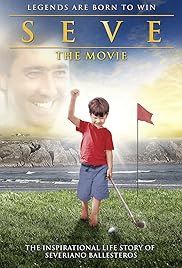
Brace for impact:Seve The Movie has (at least temporarily) bumped Tin Cup from Golf Channel's prime time.
Pointing to a pair of Tuesday morning airings as assurance that character actors Gary McCord, Peter Jacobsen and John Cook will still receive their normal residuals, the Tin Cup team has assured us fans they will be back. The team suggested a comeback is in order once everyone sees how Seve The Movie lacks the layered roles, original plot twists and the nuanced writing making Ron Shelton's 1996 film a Golf Channel staple.
"We stand by our timeless story and the many, many lives changed by better understanding the plight of struggling mid-90s mini-Tour players," the cast and crew said in a statement. "We know that Cheech Marin's supporting performance remains one of the Academy's great oversights and we're confident the many Golf Channel airings have proven this. However, we wish nothing but the best for Seve The Movie."
While Tin Cup is entirely fictional, Seve The Movie (8 pm ET, Tuesday March 7) is a "docudrama" that sounds utterly fascinating. From the Golf Channel description:
Combining archival footage with dramatic recreations, the film will delve into the life of the beloved Spaniard from his young upbringing – where at age six he taught himself the game with a broken 3-iron strapped to a stick – to becoming the top-ranked golfer in the world.
Ballesteros was one of the sport’s leading figures from the mid-1970’s to the 1990s. He won more than 90 international tournaments in his career, including five major championships, and is widely regarded as playing a leading role in the re-emergence of European golf by helping the European Ryder Cup team to five wins both as a player and a captain. In 2011, Ballesteros passed away at age 54 after a long bout with brain cancer.
In other news to keep an eye on for Tin Cup's diehard fans, Golf Channel is debuting "The Making of Tommy's Honour" immediately following Seve The Movie. Tommy's Honour hits theaters this April.
From the release and note Jordan and Shawn Spieth's role in the show:
Golf Channel will take a behind-the-scenes look into the Making of Tommy’s Honour, a historical drama based on the challenging relationship between “Old” Tom and “Young” Tommy Morris – the father-son team who ushered in the modern game of golf – in a half-hour special airing tonight at 10:30 p.m. ET.
Tonight’s behind the scenes special will include interviews with the cast, director Jason Connery, producers and key crew. Jordan Spieth and his father, Shawn, also will be a part of the special, dressed in the wardrobe of the “Morris era,” playing a round of golf with replica hickory golf clubs and discussing what it would have been like to play in that era. Tommy’s Honour, which premiered in 2016 in the U.K. and won the Best Feature Film Award at the 2016 British Academy Scotland Awards, is scheduled to make its U.S. theatrical debut on Friday, April 14.
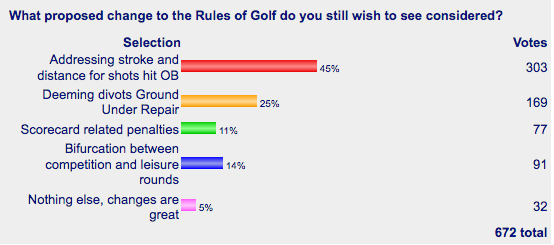
I'm guessing it starts with the difficulty of determining "point of entry" when treating OB like we currently treat a lateral hazard. Though in thinking about holes bordered by a boundary, it seems like the option to re-tee for a ball that went OB or will not be able to be dropped in a playable location would address most situations.
One of the biggest hang-ups is differentiating the penalties for a lost ball and a shot that was hit out of bounds. Any option that requires an estimation of the spot where the ball was lost could lead to significant debate about players, and it’s not yet clear how many penalty strokes should be assessed, one or two.
Meanwhile, the Rules maintain that out of bounds is a strategic part of the challenge of playing some holes and that it could be “undermined” if players can hit toward those areas with less concern, such as if they were marked with red stakes.
“We’ve looked at every angle,” Pagel said. “But of all the alternatives we’ve considered, we haven’t found one that is workable for all levels.”
From an architect's perspective, Out-of-Bounds is not as intriguing of a ploy as many think. Because we all know it's not an ideal risk-reward hazard. Ultimately, the risk on OB-lined holes nearly always outweighs reward and we take the safest route.
My hunch is that safety is another part of the issue: would changing the rules make a hole lined with OB to protect homes or a road become less safe?
I also wonder if those involved in the rules discussions keep thinking of elite players playing the Road hole at St. Andrews. If they hit one into the Old Course hotel, where do they tee? If we change this rule after centuries of the Old Course boundaries having played a key role in defending the course, what will happen? (Though I'm fairly certain defined OB is much less than a century old there as players famously used to play off of The Links road to the 18th green).
Scoring wise, a change in stroke and distance would almost assurely lead to a few lower scores in major events by elite players. But I can't think of a scenario on the Old Course where, at psychologically, modified stroke and distance significantly lessens the impact of those boundaries.
I can, however, think of many ways that the golf ball flying way longer than it did 20 years ago lessens the impact, safety and resistance to scoring of the Old Course's hazards.
Former PGA of America president Ted Bishop suggests the organization he once served jumped the gun on allowing shorts at their major, solidifying it as the fourth of four and clearly not coordinating this European Tour-driven idea with the PGA Tour.
It's worth noting in the quote below that PGA Tour Commissioner Jay Monahan, more progressive than his predecessor, cites the pro-am appearance as a legitimately good reason for not budging. After all, do you want your picture taken with someone who looks like a professional in uniform, or in shorts looking like it's a casual round?
It appears that the PGA Tour was not consulted by the PGA this time. Similar to yanking the Fall Series from the Ryder Cup points system, the PGA of America pulled the trigger on a new shorts policy to the apparent surprise of the Tour. I’m not saying that the PGA needs to ask the Tour for permission to do anything, but when a policy affects both organizations, collaboration should be required. It’s another example of the PGA being shortsighted.
In a statement, Monahan pointed to the Tour’s unique relationship with sponsors during Wednesday pro-am rounds.
“That special experience, which no other sport can provide – where one of the world’s best players can play alongside two, three or four amateurs and those amateurs can look at that player playing the same clothes, the same club, the same course over the next four days – we think that’s really special,” he said. “We want to do everything we can to protect that.”
Geoff Shackelford is a Senior Writer for Golfweek magazine, a weekly contributor to Golf Channel's Morning Drive, is co-host of The Ringer's ShackHouse is the author of eleven books.

 Garry Smits reports that PGA Tour Commissioner Jay Monahan is holding firm on The Players purse for now, putting less pressure on the PGA Of America to side with their partners on a similar purse.