Greg Norman Resurfaces To Defend Rory's Round With Trump, Talk More About Himself

Thanks to reader LC for this BBC interview with Greg Norman explaining why Rory McIlroy was right to accept President Donald Trump's invitation to play golf. Apparently this was a placeholder discussion as we await Norman's Q3 plans to revolutionize the game.

More mesmerizing is Norman recounting the story he's told many times about not wanting to golf with Bill Clinton, only to have President George Bush set him straight. Norman admits to that round changing his perspective of Clinton and even becoming friends with the former president.

Why that experience didn't stop Norman from suggesting more than once that President Barack Obama was playing a "hefty" amount of golf, is a mystery. Or worse, hinting Obama's supposedly flippant approach to keeping score was the sign of character issues. Or the Shark weighing in on any of this!

Here is Shark at Fox and Friends sharing his enthusiasm for President Trump's efforts to get the economy going. The Shark's excited about rollbacks in regulations he sees helping the golf course design industry, but still no announcement on his efforts to disrupt the game...until Q3 when they "go to market" with whatever the mystery product is.


Meet The PGA Tour’s Biggest Social Media Point-Misser To Date: Grayson Murray

Golf has been very fortunate to have players use social media largely for the purposes of highlighting sponsorships, thanking tournaments and sharing little glimpses into the life of a tour pro. The LPGA's players were ahead of the curve and remain so, while PGA Tour players have caught up in some regards.

So while I saw some of the chatter on my feed, it wasn't until G.C. Digital put together the musings of Grayson Murray, world no. 155, that I realized we have our first Grade A, All-Conference PGA Tour Social Media Point Misser.

Though Murray's vowed to take a leave from Twitter following the hate he received for questioning the world ranking standing of foreign players--even when one made the semi-finals of the WGC Dell Match Play--Murray inexplicably crossed a line I never thought I'd see a player cross: his idea of a jab back at Ben An was to question the path he took to the tour, even though An is exactly 100 places higher on the world ranking list and certainly far more accomplished as the youngest U.S. Amateur winner...ever. 

Here is the full list of offending Tweets, which ends with a profession of love for the President.

And An's reply:

I'm not a fan of the PGA Tour fining players for merely being ignorant, nor do I support the secrecy of fines. However, Murray's disrespect for his peers and general need for attention certainly warrants a deduction from his PGA Tour account, or however that works. Though given his missed cut streak, there may not be sufficient funds. At least he opened with a nice round in Houston!

Video And Poll: The Variable Distance Ball

In the coming months I'm going to start rolling out "Eye On Design" videos focusing on various design elements in golf that either interest me or need to be reconsidered. While it's not sexy to kick off with the "variable distance" ball topic, we might as well try to wrap our heads around what I anticipate will be a lively debate centered around golf course design.

To set this complicated topic up, here are my thoughts presented in digital video form. I flesh a few more thoughts out to (hopefully) better inform your votes...


For us technophobic, distance RIPer's, things have come a long way over the last decade. Just look at your reaction to the WGC Dell Match Play last week where we saw epic driving distances on fairways playing at a nice, normal firmness.

A consensus of serious golfers see that distance increases for elite players have altered the brilliance and safety of our best-designed courses. This combination of improved technology, blatant outsmarting by manufacturers and a host of other elements like Trackman and instruction, have forced the governing bodies to defend expensive and offensive alterations to works of art.

No other sport pats itself on the back more than golf for upholding its traditions and integrity. Yet no the other sport has sold its soul to protect a relationship between participation and the equipment professionals play. A relationship, which I might add, will continue even after a bifurcation of the rules.

Fast forward 22 years and the amazing synergy of athleticism, fitting, instruction and technology has produced super-human driving distances for decent golfers on up to the best. No other sport on the planet has tolerated such a dramatic change in short time, so should we see 10% taken off the modern driving distance average of an elite golfer--at certain courses and events--the sky will not fall. The players who use such a ball would restore the strategy and intrigue of most golf courses built before 1995. (That was the year, not coincidentally, when things started to change.)

Several solutions that do not fundamentally alter the sport have been offered endlessly. They've also been resisted even as the game has not grown during a technology boom that has seen golfers offered the best made and engineered equipment in the game's history. Solutions such as reducing the size of the driver head for professionals and tournament-specific golf balls have not been welcomed or even tried.

The growing sense that a first step solution is on the way arrived when the USGA’s Mike Davis suggested at the recent Innovation Symposium that a “variable distance” ball could be an alternative for select courses and select social situations.

From Mike Stachura’s Golf World report, quoting Davis:

“We don’t foresee any need to do a mandatory rollback of distance. We just don’t see it. But that’s different than saying if somebody comes to us and says I want an experience that doesn’t take as long or use as much land, can we allow for equipment to do that?”

As we know, the proposed rules of golf re-write emphasizes speeding up the game and everyone knows adding new back tees has never helped on this front. For the first time, elite golfers are suggesting they see the correlation between distance and new tees, but are also tired of walking back to such tees on golf courses where the flow of the round is fundamentally altered. 

Beyond the pace and silliness of it all, all indications suggest the USGA and R&A have also developed ways for the handicap system to address a variable distance ball that could be used in select circumstances.

Perhaps it's a club championship and is employed in lieu of extra rough or greens Stimping 13 feet. Or it's an invitational tournament played from tees other than the back. Or maybe there are golf courses experiencing pace of safety issues that will require golfers use such a ball?

On the social side, I expect the case to be made for golfers of different levels playing the same tees thanks to the variable distance ball,  Since Davis’s remarks, I have been surprised how many golfers have told me this would make their Saturday foursomes a more cohesive affair, with everyone playing the same tees and the short hitters not frightened by getting fewer shots from a scratch golfer using a shorter flying ball.

Most of all, such a ball on certain courses would return certain skills (hitting a long iron approach?) and end decades of pretending golf does not have an integrity problem.

I point all of this out because Davis’s remarks were no accident. Whether anyone likes it or not, this ball is coming. The variable ball will not be forced, just another way to play the game. The British ball did not break the sport and neither will this option. Because that's all it is, an option. Given that The Masters arrives next week featuring long fairway grain mown toward the tee to prevent roll, I believe the variable distance ball will again be on the minds of all watching.

With that in mind, your votes, please!

Question 1:

Is golf ready to add a variable distance ball?
 
pollcode.com free polls

Question 2:

Should The Masters adopt a variable distance ball instead of adding more length to the course?
 
pollcode.com free polls

Brandel: Tiger's Practicing Diligently, Don't Rule Out Masters

The Golf Channel's pre-Masters teleconference call included this from Brandel Chamblee, writes G.C. Digital fresh from a two-week tour of Myrtle Beach's best courses.

G.C. writes:

“If you can believe anything that you read on social media – I know that his coach has been down there, and they’ve been hitting a lot of golf balls down in Palm Beach. The way I understand it, he’s been practicing quite diligently. So it wouldn’t surprise me if Tiger showed up at Augusta National.”

For his part, Montgomerie said that if Woods does show up, he hopes fans don’t see the 14-time major champ bowing out after “77-78 and going home from there.”

Stacy Lewis Pushing For Firmer, Faster LPGA Courses

In another I'll file under "how far pros have come" in the last five years, it was fun to see Stacy Lewis yearning for firmer, faster conditions and not just declaring today's players superior to their predecessors.

I could do without her love of rough, but two out of three is still amazing.

And it's her reasoning that may be the best part. Randall Mell reports for GolfChannel.com from Mission Hills as the ANA Inspiration is about to begin:

Three of the year’s first tournaments were won with 72-hole record scores. The average winning score this year is 20 under par. The LPGA’s last major, the Evian Championship, was won by In Gee Chun at 21 under, the lowest score by a man or woman in major championship history.

“I definitely think play has gotten better, but I’ve also noticed over the last year and a half that our golf courses have gotten a lot softer,” Lewis said. “Softer golf courses mean you don’t have to think as much. You can be more aggressive and you can go at pins. There’s not as much penalty for a bad shot.

Video: Schjoelberg's Backflop Shot

I was hitting some flip wedges today and became pretty impressed with how quickly I got those Mack Daddy's airborne off a mat.

Then I saw the latest from our old trick-shot artiste friend Mathias Schjoelberg and I realized, uh, some people just have gifted (and absurdly strong) hands.

Here's a new variation on a shot he's perfected in other ways from his knees and off a mat. But this one is off grass and he's standing, calling it the "backflop". Mind blown!

Backflops

A post shared by Mathias Schjoelberg (@mathiasschjoelberg) on

Players Try To Explain That (Pricey) Rangefinders Are Only Part Of Their Distance Measuring Process

We should all applaud the PGA Tour for testing out how distance measuring devices look and play at some of their "other tour" events.

But as someone who has followed the issue from the day the USGA mysteriously started advocating for another costly device, I've always been a bit amazed at the lack of statistical backing for these devices as pace enhancers. So again, we must have good players kindly explain how the devices are essentially a backup tool to them in real championship conditions. Or when they blow one into the next fairway.

Will Gray surveyed players at the Shell Houston Open and only Bryson DeChambeau saw a pace of play improvement by introducing rangefinders. The rest, including Jon Rahm, don't see any change coming. There was this from Justin Rose:

“I don’t think it’s going to make any difference to speed of play,” Rose said. “We don’t play ‘one number’ golf. We want to know what it is to the back edge of the green; we want to know the distance over a bunker. We want to know what the distance is to a certain slope.

“So it’s not as basic as, ‘I have 179 to the pin.’ You kind of make decisions out on the golf course based on what’s around the pin.”

Rose’s sentiment was echoed by multiple other players, who added that the utility of rangefinders will hinge on how players choose to use them.

I'm happy to wait out the experiment, but unless the PGA Tour is willing to subsidize the cost for juniors, advocating these devices means they will encourage young and aspiring golfers to believe they need such pricey devices. And just like that, the entry barrier to golf that any sane individual says we must break down, become $300 more expensive.

I mean, that's money they could use to subscribe to PGA Tour Live! For seven years!

But back to the issue of pace, Brad Fritsch added this on Twitter with some fun back and forth after the initial Tweet:

Videos: Getting In The Irish Open Mood

Thanks to reader PG via Golfweek's Marty Kaufman in spotting the Portstewart aerial teaser below.

The Irish Open is played there in July with a $7 million purse as part of the European Tour's new Rolex Series and Rory McIlroy hosts, as this teaser piece by BBC Sport explains (with help from tournament director Michael Moss).

But getting to a brief teaser Portstewart from above is a nice treat, as is the reminder that we have a full links golf season this summer to look forward to:


PGA Tour Set To Test Rangefinders On Three Tours

The good news? The PGA Tour is using the Web.com Tour to experiment with something new. The reluctance to do so has always been a surprise at how little this tour, the other satellite tours or the Champions Tour are not used to test formats or rule changes.

Allowing the use of rangefinders on such a stage will, once and for all, allow us to see if they speed up play on the professional level and how they "look" to a television audience. I suspect, as we've seen with other elite golf where players use rangefinders as a way to double check what they learn via traditional yardage books, that play will not speed up.

There will also be the dreadful optics of watching someone looking through a device, which is about as fun as watching people test virtual reality devices. Perhaps the rule will allow caddies to use them but not players?

But now we'll have data and visuals so that we can remember how rangefinders really only help when a player hits their tee shot into the other fairway.

For Immediate Release: 

PONTE VEDRA BEACH, Fla. (March 28, 2017) – The PGA TOUR has announced that it will begin testing the use of distance measuring devices during competition at select tournaments this year on the Web.com Tour, Mackenzie Tour-PGA TOUR Canada and PGA TOUR Latinoamérica.

Each of the three Tours will allow use of the devices by players and caddies at four consecutive tournaments, including Monday qualifiers. For these events, the PGA TOUR will temporarily enact a Local Rule in accordance with Decision 14-3/0.5 of The R&A/USGA Rules of Golf, which stipulates the device can be used to measure distance only (use of functions to measure slope, elevation or wind will not be allowed).

The Web.com Tour tournaments are: the BMW Charity Pro Am presented by SYNNEX Corporation, May 15-21 in Greenville, S.C.; the Rex Hospital Open, May 29-June 4 in Raleigh, N.C.; the Rust-Oleum Championship, June 5-11 in Ivanhoe, Ill.; and the Air Capital Classic, June 12-18 in Wichita, Kan.

PGA TOUR Latinoamérica will do its testing at the last four tournaments of the schedule’s first segment: the Essential Costa Rica Classic, April 20-23; the Quito Open, June 1-4 in Ecuador; the Puerto Plata DR Open, June 8-11 in the Dominican Republic; and the Jamaica Classic, June 15-18.

The Mackenzie Tour-PGA TOUR Canada will test at: the GolfBC Championship, June 15-18 in Kelowna, British Columbia; the Players Cup, July 6 - 9 in Winnipeg, Manitoba; the Staal Foundation Open presented by Tbaytel, July 13 - 16 in Thunder Bay, Ontario; and the Mackenzie Investments Open presented by Jaguar Laval, July 20 - 23 in Mirabel, Quebec.

“For years there has been significant discussion and debate about whether distance measuring devices would have a positive or negative impact on competition at the highest levels of professional golf,” said Andy Pazder, Chief Tournaments and Competitions Officer of the PGA TOUR. “The only way we can accurately assess their impact is to conduct an actual test during official competition on one or more of our Tours. We look forward to seeing how these tests go and carefully evaluating the use of the devices over those weeks. Our evaluation will consider the impact on pace of play, optics and any other effects they might have on the competition."

Once the test and comprehensive evaluation is completed, the PGA TOUR will share the results with its Player Advisory Council on all of its Tours for additional review and discussion.

DJ Out At Houston, Day To Play Masters But Hasn't Touched Club

As the Masters approaches I'm not sure there is much to read into Dustin Johnson's WD from the Shell Houston Open following his WGC Dell Match Play, citing fatigue that surely wasn't helped by those 2-a-day Soulcyle classes last week.

Bob Harig reports for ESPN.com:

"After a great deal of thought and consultation with my team, I have decided to withdraw from this week's Shell Houston Open,'' Johnson said in a statement. "Having played seven rounds of competitive golf in the last five days, I feel it is best to give my mind and body a much-needed rest heading into Masters week.''

Meanwhile Jason Day says he hasn't touched a club since his match play WD and a Masters appearance will depend on his mom's prognosis.

From an AP story:

“It’s very, very difficult to even think about playing golf when a loved one is going through such a traumatic experience,” Day said. “Once I get past this initial stage, hopefully I’ll find some balance and I’ll be able to kind of move on and really focus on getting my game back.

“Unfortunately, I’m human. I like to feel like I’m always on it, I’m always … ready to go and trying to compete and I want to get back to that stage but sometimes it’s very, very difficult.”

Poll And Wrap: Match Play's Renaissance, Two Small WGC Tweaks & What Is Next?

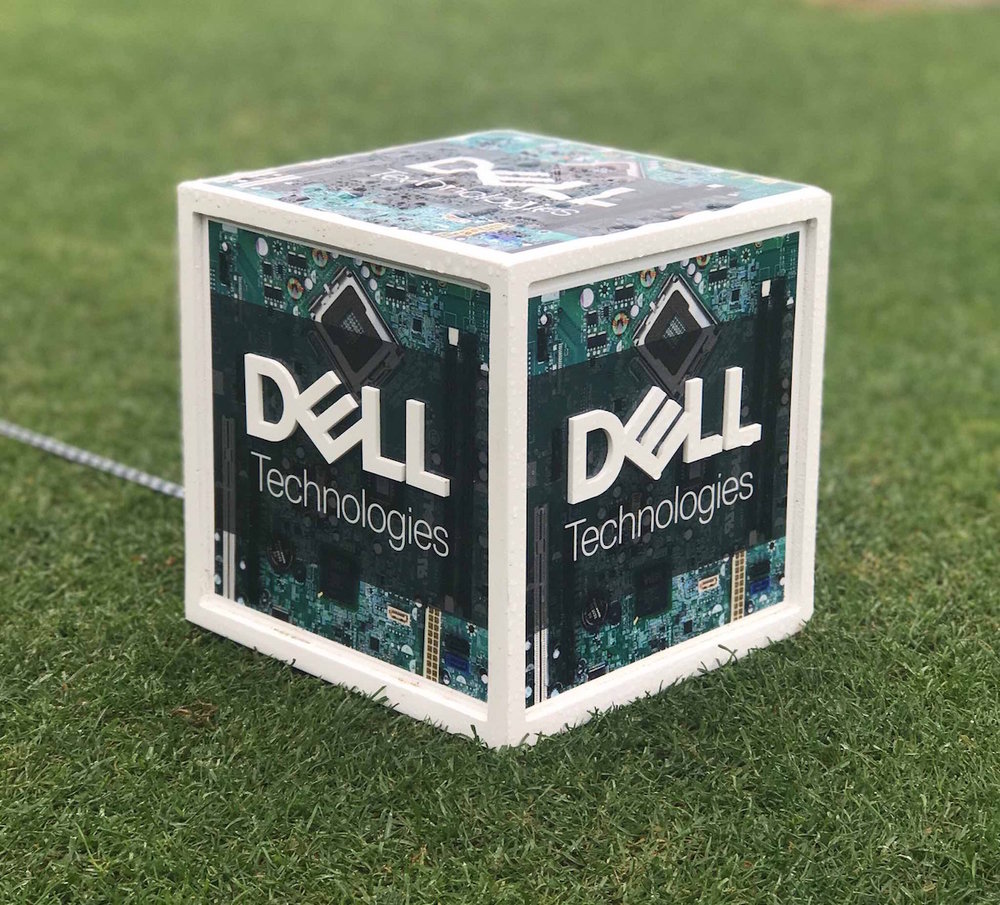
Tim Finchem's greatest legacy may be his support of match play despite annual consternation over a format that literally grew the game. After three years of round robin guaranteeing players three matches, there is still some kvetching about the loss of knockout dramatics, but even after a year where two WD's had the potential to issue a fatal blow, the WGC Dell Match Play was an enormous success: high energy, international intrigue and so much great skill on display.
As I wrote for Golfweek's weekly issue, match play is enjoying a renaissance through some strange combination of Finchem's devotion to saving the format, the move to round-robin play, the increased affinity for team match play events and the high risk, huge reward alternation in NCAA team format. 

Match play is cool again.

Considering that the sport was built on match play centuries ago its little wonder that Jordan Spieth said last week it should be deciding a major. Television ultimately put the kibosh on a return of the format, making it ironic that television now embraces match play because of the faster pacing, raw emotions and overall excitement it brings.

In our ADD world, each match has stories to tell and each hole produces a result. And in our crowded sports landscape, worrying about filling 33 minutes of post-match dead time takes a back seat to putting forward an event generating buzz.

This long post will try to resolve how the WGC Dell Match Play can get better and how can we work more match play into the schedule?

Two Small WGC Tweaks

The first is simple: lose the halves. Fans and media are asked to work too hard during the round robin play trying to figure out pod scenarios which include half-points for halves. They are not interesting and sudden death playoffs add much-needed tension to the first three days.

The second solution would not have had a huge impact in 2017, but should be considered and was suggested to me by fine souls not seeking credit: reseeding after round robin play by world ranking. The NHL seeded its playoff teams for several years and then reseeded after each round to reward top seeds. But due to travel-planning issues, the practice ended in 2014.

Given the randomness of the initial bracketology in the WGC Dell Match Play, the emphasis should be on giving higher seeds some reward for their standing while giving fans hope for the occasional dream match up. Consider what the weekend bracket would have looked like after a reshuffle of the group winners by their tournament seeding, not the placement of their bracket pools:

Dustin Johnson (1) vs. Soren Kjeldsen (62)

Alex Noren (8) vs. Charles Howell (61)

Paul Casey (12) vs. Hideto Tanihara (54)

Bubba Watson (13) vs. William McGirt (48)

Phil Mickelson (14) vs. Ross Fisher (47)

Brooks Koepka (20) vs. Kevin Na (46)

Jon Rahm (21) vs. Zach Johnson (44)

Marc Leishman (28) vs. Bill Haas (42)

Again, this is for years when the ranking form holds better and seems like an easy solution.

More Match Play Options

As I noted in the Golfweek piece, European Tour Commissioner Keith Pelley is all-in on match play due to its faster, edgier elements as well as providing tangible results to chew on during Thursdays and Fridays. He is said to be quite protective of the new Perth stop and has introduced a team match play event called Golf Sixes this May.

So before you vote, I'd like to nominate some other fomats. Naturally I want to see them all but realize it's likely unrealistic on a crowded schedule. Then again, after Zurich enjoys much admiration for its new better-ball format this May, other sponsors may be looking to alternative formats. Here are the five I could come up, though I'm sure there are others.

--Four ball. Imagine the fun of two-player teams, only at match play. The players pick their partners ala the new Zurich Classic format. I'm suggesting best ball instead of some combination including foursomes play because...yep, it's for the stymie!

Imagine the intrigue of teammates nursing a putt up to stymie the opposition! The strategic and dramatic possibilities would make this must see TV, and it would be good to see players play the ball down again on the green. Shoot, we'll let you clean your golf ball even, but then you must replace so that the fun can begin.

--9-hole round-robin and 9-hole matches. Why not just cut the entire thing in half? Shorter matches with more urgency legitimizing the 9-hole round.

--Stroke play, followed by knockout. This is a solution suggested to remedy the WGC Match Play when it was under fire would give players two rounds of stroke play qualifying that determine seeding. Matches are then played in a traditional single elimination bracket.

--Corporate or nationality. Team match play is beloved, so why not have an event that is a miniature version of the major international events or the NCAA team format? The European Tour's GolfSixes is using two-person teams by country. How about three or five person teams by corporate affiliation of some kind? Team RBS, Team Titleist, Team Mercedes, etc...

--PGA Championship. What if the top 32 players are exempt from two rounds of qualifying? Perhaps as with the Ryder Cup, there is a PGA Championship points race that determines the exemptees and helps build excitement for the event. Once the matches start, every now and then a club pro might qualify and face a top player in round one. Better yet, the PGA would have an epic identity.

Ok, vote away!

What other type of match play events would you like to see?
 
pollcode.com free polls

Q&A With Steve Timms, Houston Golf Association

As the PGA Tour leaves Austin and the spotlight on the dire Lions Muny situation there--Adam Schupak at MorningRead.com filed a nice look at the place and the fight--we at least get to hear a happier story in Houston this week.

Rendering of renovated clubhouse at Gus Wortham ParkUnder the leadership of Steve Timms, President/CEO of the Houston Golf Association, the organization has turned the Shell Houston Open into a must-play tour stop for many pre-Masters. They are behind the effort to save Gus Wortham Park Golf Course, a potential model for other communities.

In year 16 as tournament director, I asked Steve to answer a few questions about how they structured the effort to save Wortham and also the upcoming end to Shell's run as sponsor. Timms also oversees the largest First Tee chapter in the U.S.

Given the importance of this topic in so many cities across the land, we all know how important it is to hear from those successfully tackling this vital issue for golf. Oh, and to see the project underway!

GS: Explain how the Houston Golf Association got into the management and renovation effort at Gus Wortham, and the role Shell Oil Company played?
 
ST: In 2014, Houston Golf Association (HGA) assumed operations of F.M. Law Park Golf Course, taking over maintenance and turning the public golf course into a dedicated The First Tee (TFT) Facility. That same year, we learned about a proposal to turn the historic Gus Wortham Park Golf Course into a botanic garden. As advocates and stewards of the game, we felt it was our duty to help save this golf course and restore it to its former glory.
 
Houston Golf Association, backed by the financial engine of the Shell Houston Open (and Shell Oil Company), was in a position to pursue a solution to manage and operate the courses, raising private funds as a nonprofit self supporting enterprise to maintain facility quality for years to come. Given our proven track record maintaining F.M. Law Park Golf Course, City Council unanimously approved a resolution that Gus Wortham would remain a public golf course operated by the HGA. As we approached our second fundraising milestone needed to initiate the construction start, Shell Oil Company stepped up to provide funds needed for the proposed community center.
 

The Gus Wortham Park property has much potentialGS: Is the non-profit model for this much-needed work something you see as repeatable in other cities with tired courses or is this unique to Houston?
 
ST: The original non-profit model was implemented in Baltimore in the late 80s. We feel that this model is applicable in other cities because it has six main benefits:
 
1) Lessens the financial burden on the government
2) Sets up a sustainable business model (long-term operating lease agreement in our case)
3) Allows for private fundraising to upgrade the facilities
4) Allows cash flow generated from the facilities to be reinvested back into the facilities (by design as a nonprofit)
5) Improves accessibility of affordable golf, and in our case, extends our youth programs (The First Tee of Greater Houston and HGA Junior Golf) into more underserved communities
6) Acts as economic development stimulus in the surrounding communities (in our case, Houston’s East End)

 
GS: Are you looking at ways to revitalize the other city courses?
 
ST: Yes. We have developed an overall master plan for four additional facilities that’s currently being evaluated. We are also proposing the establishment of a new The First Tee location on an old golf course property, Inwood Forest, whose land is owned by the City of Houston.
 
GS: What has been the most difficult aspect for your organization in getting this restoration/revitalization effort going?
 
ST: In January 2015, we signed the contract with the city and were required to raise $5M by the end of that year -- a time period that was challenging for fundraising. Now, with our fundraising needs met, we are experiencing the normal challenges of any organization involved in a major, multi-phase construction project. We are seeing great progress though and are excited about the project’s eventual completion later this year.
 
Construction underway at Gus Wortham ParkGS: From your perspective, what are some of the best ways to “grow the game” and attract new junior golfers?
 
ST: We think it’s important to attract young people and pique their interest in golf at an early age. Through The First Tee of Greater Houston, we reach almost 300,000 students in 455 schools throughout Houston. Access and affordability are also important in trying to foster interest. Public golf courses serve as a key expansion of our The First Tee program into underserved communities. These courses, when revitalized, can provide kids from every walk of life with a place to practice, grow their skills and move into competitive opportunities like our HGA Junior Golf program.
 
GS: Have you seen any impact from the Drive, Chip and Putt Championship in the Houston area?
 
ST: We are proud of our two The First Tee participants, Ariana Saenz and Bella Saenz. Ariana qualified for the Drive, Chip and Putt in 2015. Now her sister is following in her footsteps. Bella is headed to Augusta to participate in the 2017 competition. The fact that they are sisters has certainly generated a lot of buzz and excitement in our community.
 
GS: What is the hoped-for best case scenario for the Shell Houston Open going forward as it looks for a sponsor and the PGA Tour potentially juggles the schedule in a few years?
 
ST: As our 26-year partnership with Shell wraps up, we are continuing to work hard to secure a new title sponsor that will help us continue to do so much in our community. We have enjoyed success with our date before the Masters and hope to keep that date on the schedule, which is dictated by the PGA Tour.