No Practice Round Access For NoTrust Open Fans
/I pen a short item and remembrance of practice rounds at
Read More
It’s back!
Twenty years later Tatra Press has kindly allowed me to bring back Grounds For Golf now that golf architecture is of more interest to the masses. A new Introduction looks at what’s driven the interest growth and two new chapters I had a blast adding (plus a few edits to keep things up-to-date).
The Amazon purchase page for the book arriving June 15, 2026.

Steve Brown on the latest ownership change at the Four Seasons Resort and Club at Las Colinas, host to the Byron Nelson.
 Brown writes:
Since 2010 the 431-room luxury Irving golf course hotel, conference center and spa have been owned by lenders who foreclosed on the property after previous owners defaulted on debt.
Now a company set up by Blackstone Real Estate Advisor has purchased the Four Seasons for an estimated $150 million.
New York-based Blackstone is a major U.S. real estate investor. It acquired the hotel in a private sale from CW Capital, which represented the securitized debt holders on the property.
The TPC Four Seasons Las Colinas may only host the Byron Nelson a few more years as future sponsor AT&T eyes a possible new Coore-Crenshaw design.
As we put a wrap on 2013, it's impossible not to think back to all of the rules controversies that made things fascinating and slightly awkward at times.
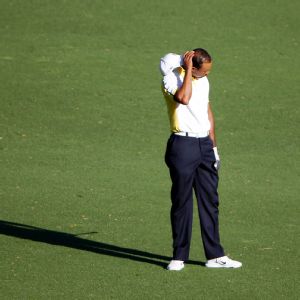 So consider the following anecdotes and you tell me if the PGA Tour Commissioner Tim Finchem is earning his millions.
Yet Commissioner Bottom Line has steadfastly refused to hire a few additional rules staffers to monitor all of the PGA Tour telecasts. This is a man who gladly pays Vice Presidents CEO money and gets the Willies just thinking of any potential controversy that might taint the vaunted "brand." Yet he apparently despises union workers so much that he's willing set aside his primary predilections and put the sanctity of his product at the mercy of more phoned-in rules violations in 2014.
Thankfully, the drumbeat continues as very intelligent people are calling on the PGA Tour to expand its rules staff to include a full-time telecast monitor who saves players from penalty and embarrassment in the HD era. Considering what HD television is doing to make golf more compelling to watch, this is a small price to pay for the PGA Tour flush with cash.
Jack Ross in a special to ESPN.com, notes the reluctance by the USGA and R&A to add more pages to the Decisions book for what is essentially a PGA Tour financial decision.
So far, the USGA and R&A do not seem inclined to place restrictions on input from television viewers. The ruling bodies of golf have long maintained that, since most golf competition is not supervised by rules officials, the vigilance of players, caddies and spectators is necessary to maintain the integrity of the competition and protect the field. In fact, the reliance on input from spectators is well embedded in the Rules of Golf. Rules decisions say that testimony of spectators and television footage must be evaluated in resolving rules issues.
Former USGA Executive Director David Fay in the January Golf Digest lays out all of the particulars from 2013, the past attempts at telecast monitors (pre-HD and pre-DVR), and explains why it's time for the PGA Tour to have a full-time monitor.
And Fay, Feinstein and yours truly discussed this very topic on the season finale of Grey Goose 19th Hole.
John Strege reports that Oklahoma Republican Senator Tom Coburn has released his annual "Wastebook" of 100 examples highlighting 100 examples of wasteful and low priority spending.
 Following ESPN's Outside the Lines report, Coburn has a newfound love for the PGA Tour's practices.
"Despite generating over $900 million in revenue, the PGA Tour classifies itself exempt from federal income taxes on earnings," it states on page 71 of the 177-page report. "Eliminating the ability for the PGA to claim tax-exempt status could result in nearly $10 million in increases [in] federal revenue annually. Taxpayers should not be asked to subsidize sports organizations already benefiting widely from willing fans and turning a profit, while claiming to be non-profit organizations."

Digging taxpayers further into the golf subsidy sand trap, in 2004 Congress created yet another tax loophole for golfing superstars, who bring home millions of dollars in tournament winnings every year.
With passage of the 2004 American Jobs Creation Act, Congress granted the PGA an exemption for its unique deferred compensation structure, which allows a portion of player winnings to be put into a tax-free account based on their performance. The 2004 American Jobs Creation Act limited the use of certain types of compensation packages used to avoid taxes, but exempted the professional golfers receiving compensation packages from the PGA, further reducing their immediate tax liability.
The full cost of these handouts to the professional golfing industry are unknown because of the clever and cryptic nature of the tax loopholes. Yet, it is clear taxpayers lose more than $10 million every year, likely more, subsidizing some of the highest paid athletes in the world.
Geoff Shackelford is a Senior Writer for Golfweek magazine, a weekly contributor to Golf Channel's Morning







Copyright © 2022, Geoff Shackelford. All rights reserved.