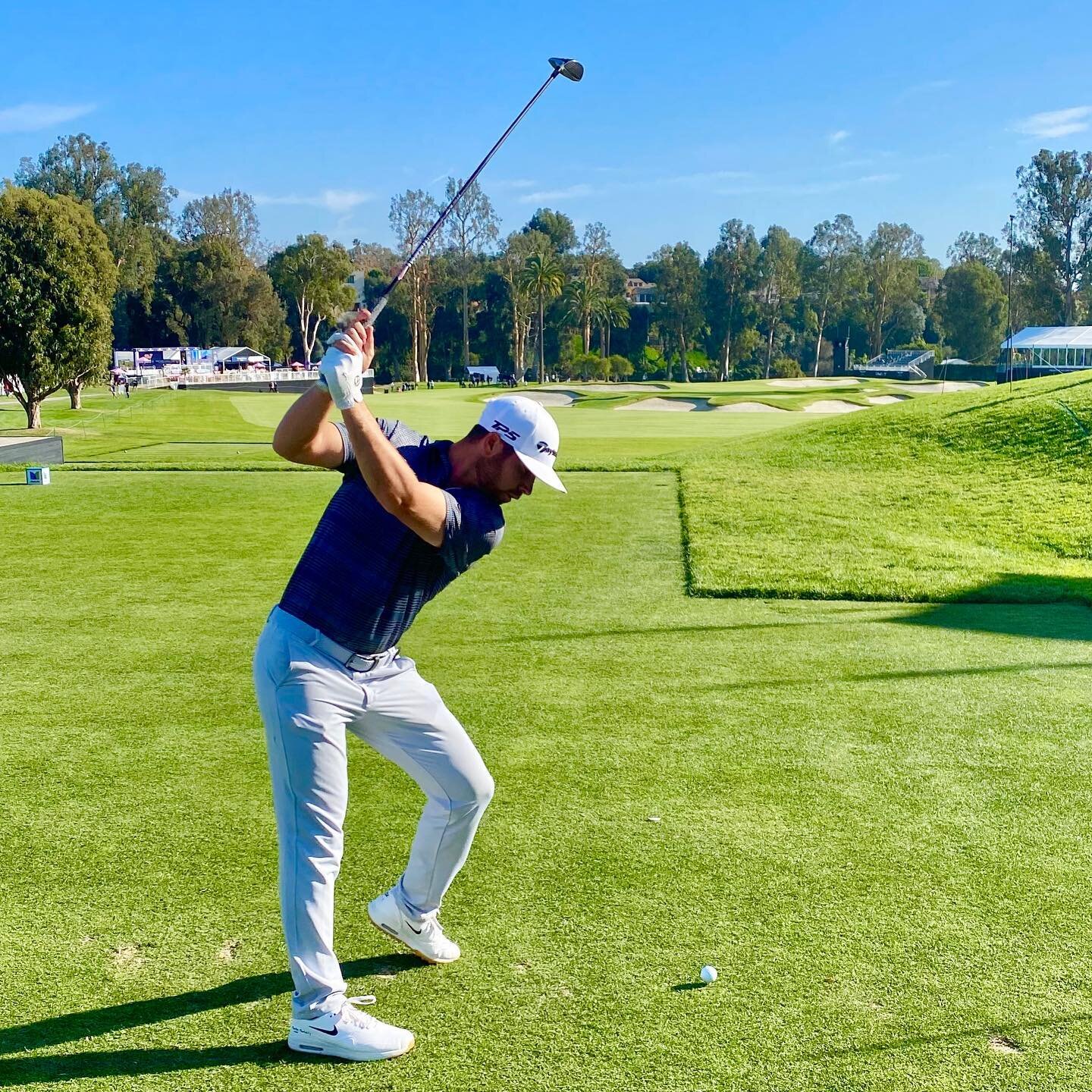
"Fitness, Family, Fast and Fun."

Ron Sirak offers good common sense ideas about the state of the game and what needs to be emphasized to "grow" (really sustain at this point) the game. The question I have though as I read it is: which of the five families will have the desire to guide the sport to a healthier future?

Sirak says the emphasis should be on the four f's, fast, fitness, fun and family.

On fun:

We need to focus on the Fun in the game. My father was a 35-year-old steel mill worker when he took up golf. The factory had a nine-hole league -- inspired by our local working class hero, Palmer -- and that league got my Dad hooked on the game. He started playing nine holes on Tuesdays and eventually was playing 18 on Saturday and Sunday, and soon he had a club in my hands.

These sorts of fun, social/competitive events are also a way to get more women in the game. Only 18 percent of rounds played in the United States are by women. The growth potential there is enormous. How about courses encouraging that growth by having daycare centers or play areas so Moms can bring their kids to the course?

New PGA President: Don't Mess With Amateur Distance!

Larry Fine on the PGA of America's outreach efforts and its new President, Ted Bishop, not supporting any kind of distance rollback that might impact the average player.

"If you do anything that's going to cause the rank and file amateur player to not hit the ball as far, there's no way you're going to enhance their enjoyment of the game," PGA President Ted Bishop told reporters on Tuesday.

And...

"I'm not so sure that's the greater issue we have to deal with," Bishop told Reuters. "This game is a hard game and anything we do to make the golf course play longer, play more difficult, is certainly going to deter from the enjoyment of the game for the average player."

Pssst....Ted, it's all taking longer and is more difficult because we're after this distance thing like a dog chasing its tail.

Bishop has already spoken out against the USGA/R&A ban on anchoring.

Cordillera And Its 54 Holes Auctioned For $14.2 Million

The Denver Post's John Mossman on the paltry price paid by Rose Holdings LLC for Cordillera's Fazio, Nicklaus and Irwin 18's along with a Pelz practice area, though developer David Wilhem only opened the Fazio course the last two seasons.

Donald Trump lost out in the bidding and according to Risa Wolf-Smith, an attorney with Holland & Hart of Denver that represented the unsecured creditors, he put on a good show.

"Auctions are always interesting, and this one was a little bit crazy," Wolf-Smith said. "It really was fun to listen to Donald Trump. He has a personality even on the phone.

"He wished the best to the other bidders as he passed on his last opportunity to bid. He muttered here and there that he didn't think it would go this high. There's always a possibility that he may try to work something out with Wilhelm on the back end."

The bankruptcy case was complicated by litigation between Wilhelm and 610 club members.

Last spring, Wilhelm promised to open all four golf courses but — for the second year in a row — opened only Fazio's Valley course. He also laid off dozens of workers.

WSJ: Jack Nicklaus And SNAG

Back in January at the PGA Show, Jack Nicklaus floated some ideas about golf in parks, youth leagues and some other peculiar sound ideas.

But after reading John Paul Newport's story on the Golden Bear's endorsement of SNAG Golf, the ideas become crystallized and make a lot of sense. Throw in the nagging issue of injuries in football (something not touched on here), and there seems to be a genuine opportunity to start kids in golf at a young age thanks to the concept.

Although SNAG golf can be played in any large open area, like a park or a beach, the Nicklaus Learning Leagues will use municipal soccer fields. A six-hole course takes less than 30 minutes to set up. Each player carries a rubber tee pad, to elevate the ball before hitting, and two clubs. One is the "launcher," which kids can use to knock a ball 40 to 50 yards. The other is the "roller," a putter equivalent, for the delicate shorter shots that finally "snag" the ball to an aboveground cylinder at the base of the flag. This so-called Flagsticky is covered in adhesive material.

The Nicklaus Leagues will build on a two-year pilot program in 15 cities run by the National Recreation and Park Association. For 5- and 6-year-olds in the Nicklaus Leagues, the emphasis will be on whacking the ball around and having fun, with snacks essential. Seven- and 8-year-olds will get more instruction and compete with partners in best-ball format against other teams. Nine- and 10-year-olds will use slightly smaller, Super SNAG clubs and balls and compete as a team with stroke-play scoring. Plans are afoot for leagues involving older kids and even adults.

There is also this supplemental video feature with the story.

Anchoring Ban Continues To Highlight The Distance Issue

I'm beginning to think the anchoring ban was a clever ploy by the governing bodies to unlock previously muted opinions on the distance issue!

Royal and Ancient Golf Club member Michael Bamberger is the latest to note the Old Course changes with little enthusiasm but says "the real problem is that the R&A/USGA have consistently lacked a 'staff futurist' to anticipate how various issues would spiral."

The R&USGA should be focused on how to make courses far shorter and easier to maintain. As modern layouts approach 8,000 yards, maintenance becomes incredibly expensive (a cost that's passed on to golfers), and the courses become excessively punitive and excruciating slow.

So, where to start? Brown, for starters, should truly be the new green. Augusta National, ridiculously verdant, sets a terrible example in this regard.

But where the governing bodies absolutely blew it was by allowing big-headed titanium drivers almost 20 years ago. It's because Dustin Johnson can use modern weaponry to drive the ball 370 yards that the Old Course is getting these pointless renovations.

And add him to the bifurcation camp.

The modern ball, coming off the face of the modern driver, flies way too far for golfers on TV trying to break 60. But it doesn't for us, shooting our newspaper 89s. The solution is two sets of rules. Rory and Co. should have a ball they can call their own. Bifurcation. That's the word they don't want us to use.

An unbylined FayObserver.com story talks to club pros and everyday golfers. Guess what, they are saying the same thing.

"I think it's kind of dumb," said pro golfer Chip Lynn of Lillington. "There's a lot of other stuff that they could ban that affects the game more."

Lynn is a former Fayetteville State golfer who now plays on the Egolf Tour and got through the first round of PGA Tour qualifying this year. He said he tried a belly putter in "six or seven events" this year and found it didn't help him.

"I didn't putt any better," he said. "I don't think the belly putter gives you that much more advantage. I didn't notice anything different. My putts weren't better during the round."

Lynn said technology has affected the game more than anchored putters.

"I agree with Webb Simpson who said there are a lot more things that have affected the game than just the belly putter," he said. "I don't think it's that big of a deal.

"If you're going to change that rule, you probably need to do something about the balls, the driver heads and the technology that has really affected the game instead of the belly putters."

 And Adam Scott continued to press his case on this theme Wednesday, asking for some consistency from the governing bodies

Maybe, just maybe, all of this crying out for a distance solution was part of the plan to start with when the anchoring ban came about? I know, they aren't that clever. But the unintended consequences of screwing with the Old Course and moving first on anchoring could ultimately work out in the favor of the governing bodies.

Second Instant Poll: Would Two Sets Of Rules Make Golf Less Appealing?

The anchoring ban announced yesterday has provoked many emotions and hence, forced many golfers or fans to think about the big picture. And those thoughts usually come back to the odd situation we find where rulesmaking is and will be making decisions based on the elite players of the world.
Read More

Buried Lede In The Anchoring Ban Announcement?

Ron Sirak, writing about the announcment of a ban on anchoring putters against the torso:

So for those currently anchoring the long putter, the announcement today created their own version of the Mayan calendar, which some say predicts the word will end Dec. 21 of this year, which is bad news for those currently leading their fantasy football leagues.

And I say there is a 100 percent chance that this ban is not an end but a means to an end, a beginning salvo in a battle by the USGA and the R&A to push back against some of the ways the game has changed in recent years.

And he's right.

They used the opportunity to repeat some of the strongest words on distance to ever come out of St. Andrews, Far Hills or their new de facto headquarters in an Orlando conference room.

Peter Dawson had to quibble with my question referencing Webb Simpson and Adam Scott's past statements and the St. Andrews redo reference.

But then he moved to the distance topic that has created many more problems than anchored putters:

As far as the distance issue is concerned, clearly that is very germane to the future of the game.

Ok, right there. That alone is a big statement from Mr. Dawson. There's more...

It affects size of golf course, amount of land use, cost of play, and there can be no doubt at all that this distance issue has to be at the forefront of our minds at all times.

You'll recall the R&A and the USGA did issue a joint statement of principle ten years ago now saying that if distances crept up further, we would take action.  Distances have actually plateaued since then.

So he reverted to old habits there briefly. But then...

But I think the issues that surround the sustainability issue are coming more and more into play when we consider distance, and both the R&A and the USGA have research projects that are ongoing in order to make sure we are ready to address this at an appropriate time.

The fact that we have chosen to do something about anchored strokes that is a completely separate matter and it would be a mistake to feel that because we have done something about one that we don't care about the other.

And the USGA's Mike Davis then chimed in:

Just to add to that, Peter mentioned [2002], the joint statement of principles, I can assure everybody, that the R&A and USGA have been quite busy on these research projects the last ten years.  And looking forward, we are very concerned about the long‑term health of the game, the sustainability of the game.  We are concerned about water usage.  We are concerned about the cost of the game; time, as Peter mentioned.

So this is something that we are taking very seriously, and certainly we are looking, also, at distance.  We want to quantify if one day there was a need to reduce distance, and we are not suggesting today; that we feel that it's our duty, that it's part of our mission to look at the future of the game.

We want to understand what reduced distance might mean; how much matter would it save?  How much cost would it save?  For those courses that haven't been built yet, how much less land would it mean?  That's important to the future of the game.  We have 33,0000 golf courses in the world right now and we need to protect them.  But furthermore, we need to protect those courses that haven't been built yet.

It sure sounds like they are preparing to present data explaining what a reduced footprint would look like economically. Most of us know if they do that, combined with some shrewd forecasting on future water costs from the USGA Green Section, and their case for some sort of revised overall distance standard may just be easier to make than the anchoring case they presented Wednesday.