Mickelson-Manchester Pull Out Of Fairbanks Ranch Takeover
/John Strege with the report you probably won't see in Doug Manchester's U-T San Diego
Read More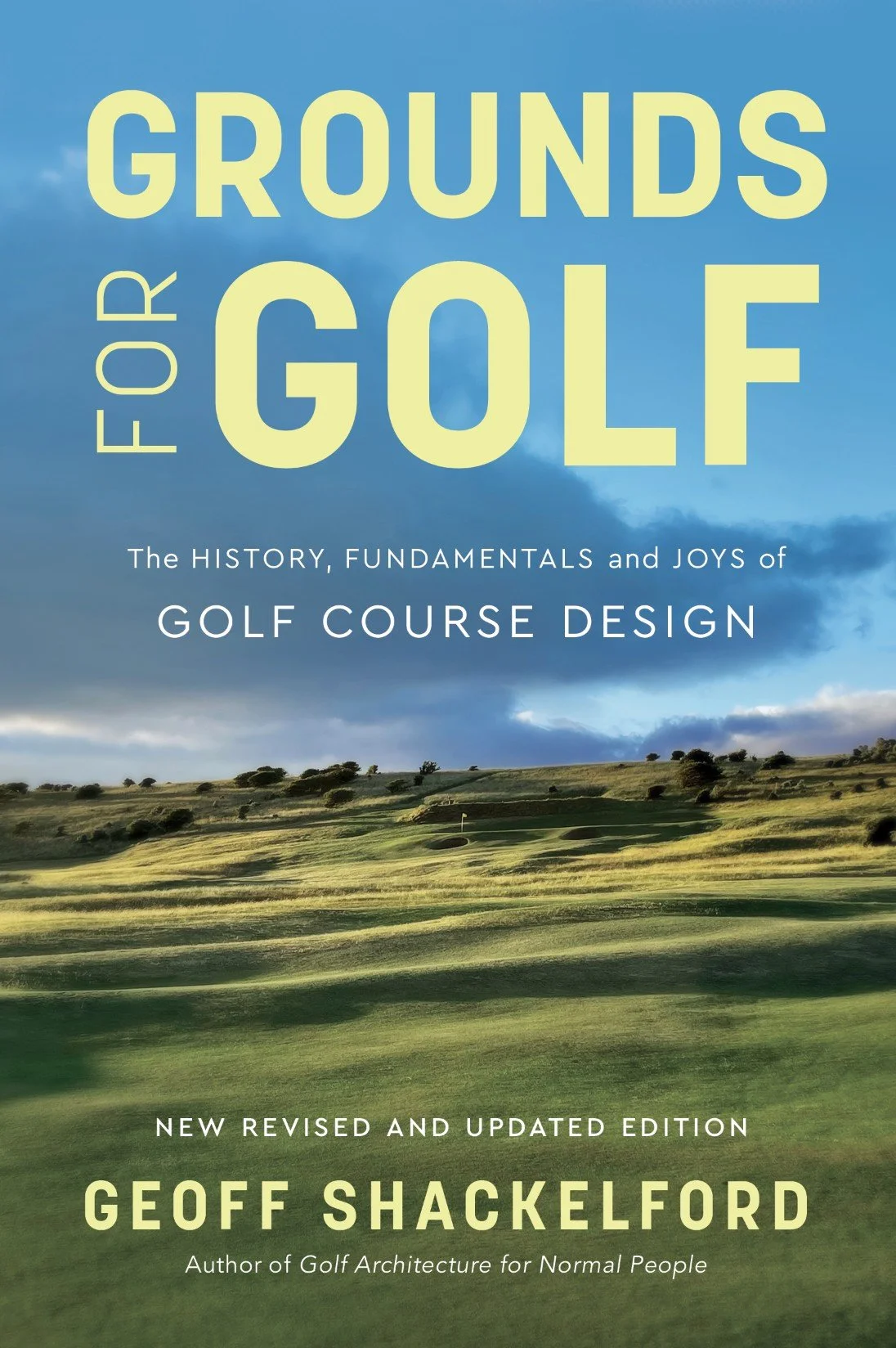
It’s back!
Twenty years later Tatra Press has kindly allowed me to bring back Grounds For Golf now that golf architecture is of more interest to the masses. A new Introduction looks at what’s driven the interest growth and two new chapters I had a blast adding (plus a few edits to keep things up-to-date).
The Amazon purchase page for the book arriving June 15, 2026.

As Commissioner Moonbeam enters the final two years of his reign heading the PGA Tour, we've officially enter the weird phase where he randomly says things that remind you it's time to start spending more time counting his millions. Rex Hoggard quotes the Commish talking about the oddity of Team USA's Ryder Cup foursomes woes even as they dominate in Presidents Cup foursomes. The talk turned to how nice it would be if more foursomes was played in the U.S., in part because rounds are faster when played that way (not to mention it serves as a great social round). Great stuff!
But then the Commish just couldn't leave well enough alone...
To Finchem, however, the endless quest to make the game faster – even at the highest levels where it took more than five hours last week to play a round at the WGC-HSBC Champions … in threesomes – is akin to making molehills out of mountains.
“If you go to Augusta or Pine Valley or Cypress Point and you’re playing with some single-digit handicaps how long does it take you to play? Four hours,” he answered. “If it’s 4:15 (hours) or 4:20, you’re going to worry about shaving 10 minutes off [a round]? It’s not a driving factor. Everybody talks about playing faster; that doesn’t make a lot of sense.”
This is true Commissioner, when you and your golf cronies play a once-in-a-lifetime course, why yes, you aren't in a hurry, but since that represents .01% of the rounds played in America, you have merely confirmed you've been in the bubble just a bit too long!
Couple this with his unspoken edict blocking your rules staff from issuing slow play penalties, and it really has become clear that Tim Finchem is the enemy of speeding up rounds.
You may recall the viral story from a year ago when an aspiring mini-tour pro was supposedly dropped by his sponsor because of a bible verse on his bag and professed love for talk show host Glenn Beck.
The story was eaten up by The Blaze, an online publication devoted to socially conservative causes which, amazingly, still has the story posted even after Ryan Ballengee exposed Cochran as a serial con man who had made his way through golf in multiple states from Florida to Nebraska, including a stint at The Prairie Club.
 Ballengee reports that nearly a year after the above mentioned incidents, Cochran was arrested after his mother's graveside service in Michigan.
While most of the world focuses on the American response to a Ryder Cup loss, the first signs that Europe has concerns about their lead driver options in 2016 is highlighted in a couple of recent stories. Sergio Garcia is quoted by Bernie McGuire as suggesting the most interesting man's English is poor enough that communication issues could be an issue when serving as a Ryder Cup captain.
“Becoming captain is different. From the time you get appointed there is more than a year-and-a-half of activities, engagements, interviews and so on that a new captain has to deal with.
“So it is important that everyone he speaks to over that period understands exactly what he is saying because words can be misinterpreted.
"Being a Ryder Cup captain is being the spokesman for the Tour and its sponsors – and then when competition gets under way there’s so many speeches he will have to handle.”
It wasn't an issue for Jose Maria Olazabal, who not only didn't communicate well with his players and exhibited questionable sportsmanship judgement, but lived to tell about it and is considered to have been a fine captain.
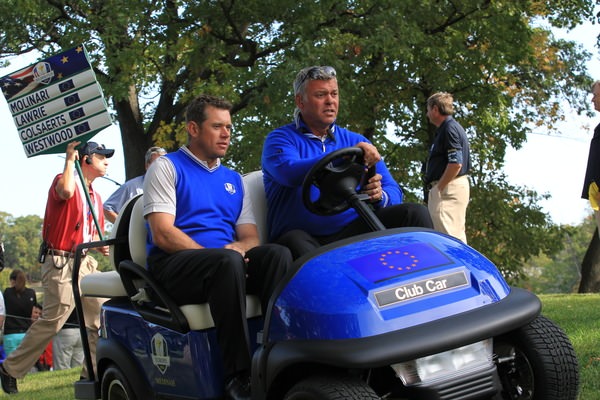
Few golfers have shown as many personas to the world as Clarke - genial and fun-loving one moment, laughing and smiling with cigar in hand as the people’s favourite, only to be transformed into a walking volcano for the waiting press, a brooding presence whose mood varied depending on his score.
So who’s he real Darren Clarke? The bleach blonde amateur in the two-tone golf shoes? The cigar-chomping, beer drinking lad with the gut, beloved of the lads down at the pub? The widower, the hard-worker or the hothead? Or the thin, white-haired Duke of our TV screens during the recent Ryder Cup?
Keogh goes on to detail Clarke's revisionist take on former buddy Paul McGinley and what that says about Clarke.
Golfweek's Adam Schupak attended the Western Golf Association's 4th annual Green Coat Gala and reports that former caddies turned stewards of the game look back at their looping days with increasing fondness.
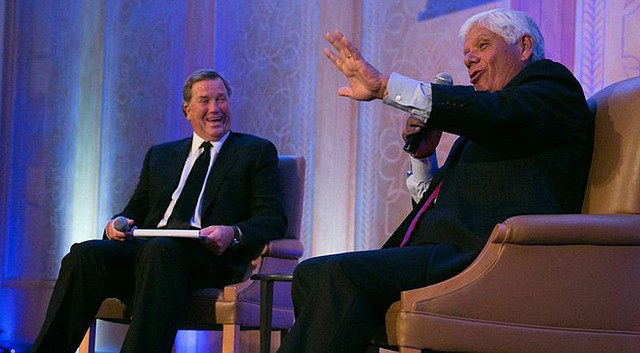 This year Mike Keiser, Lee Trevino and Peter Jacobsen represented the past-caddie ranks, while Michigan State junior Jacob Mosley talked on behalf of the 870 students currently on Evans Scholarships.
For years, the caddie yard was the academy from which the likes of Trevino, Lee Elder, and 1985 Western Open champ Jim Thorpe graduated as professional golfers. Changing social patterns, and the golf cart, eliminated many of the caddie shacks making Trevino one of the last celebrated alumni of that hard school.
"Somehow we've got to get the caddie ranks back," Trevino said.
Geoff Shackelford is a Senior Writer for Golfweek magazine, a weekly contributor to Golf Channel's Morning





Copyright © 2022, Geoff Shackelford. All rights reserved.