
New Tour Commish Jay Monahan's Four Most Pressing Issues

Tim Finchem leaves Jay Monahan a robust PGA Tour, maybe even a bloated one that presents too many management issues. Still, Finchem's now-official retirement on December 31st comes a few months sooner faster than some expected based on his comments, and while there is time for Finchem to wrap up whatever projects he has been telegraphing as priorities, the schedule would seem to indicate time is running out for him to accomplish much.

Jeff Babineau at Golfweek.com outlined his thoughts on what Monahan faces, and here are the priorities in my view:

--Television future. Expect the PGA Tour to exercise an early opt-out of its CBS and NBC deals soon, with a renegotiation of terms that would kick in for the start of next fall's 2017-18 start. The current Golf Channel cable deal is locked in until 2021, but some changes in weekend coverage of PGA Tour events may be possible in this renegotiation. Such an opt-out would be risky considering that the sports rights fee bubble has burst, golf is expensive and cumbersome to cover (ask Fox), and golf's largely older demographic is not ready to log onto Twitter, YouTube or even PGA Tour Live to watch a live feed of the Shriner's final round. Monahan can use the opportunity to consider another partner besides the two he has and ask for telecast upgrades in technology, but he also risks upsetting two very powerful media companies. Maybe Monahan has been ushered into the Commissionership to play good cop to Finchem's final-move, bad cop opt-out cop? Big bonuses are at stake, but with Finchem having stocked the Policy Board with cronies and PGA Tour employee/PGA of America President Derek Sprague, his exit will be a well-compensated one and Finchem won't need to be signing up for Obamacare anytime soon.

--Schedule. PGA Tour players are asked to compete all summer, then show up in the playoffs before "enjoying" maybe a week or two off before returning to a full schedule (or risk falling way behind in Cup points, ranking points, or re-shuffle status). In 2017, the late season schedule may have only one week off up to Thanksgiving. So while the Commissioner's job is to provide playing opportunities, the long term pacing of the schedule makes little sense for players, fans, sponsors or TV partners.

--FedExCup. There still has been no renewal with the playoff sponsor. This was assumed to be (one of) Finchem's final pet projects. Perhaps the FedEx deal is done and terms will be delivered to the networks on opt-out day. Or maybe a FedEx renewal is not done and this will dictate a more-comprehensive-than-expected re-thinking of items one (TV deal) and two (schedule).

--European Tour. As partners in the PGA Tour's WGC events, will Monahan let them have their moments or turn up the heat with an eye to squelching Europe's tour? Chief Exec Keith Pelley and Finchem have very different views of the game, with Pelley thinking about things like night golf, while Finchem still thinks the PGA Tour's greatest charm is the sight of players taking off hats to shake hands. Monahan seems like he falls somewhere in between the two extremes. Will he take his eye off the core, most highly-rated product--domestic PGA Tour golf in the winter and spring--to expand internationally, all just to squelch European Tour power? Will it lead to him not dealing with a different rival few saw coming, say, a Formula One-style team concept?

Who Is Jay Monahan And Why His Appointment Is Promising

The only negative on Jay Monahan’s resume? Why of course, he is Tim Finchem’s hand-picked successor.

Nothing against Commissioner Coterminous. Really. He navigated the PGA Tour through some swampy times and leaves a fine legacy on many fronts, but especially in providing his membership playing opportunities. But times are changing, threats loom and openings exist to re-imagine elements of the mostly-healthy PGA Tour "product".

As with Adam Silver moving into David Stern’s NBA Commissionership and Major League Baseball's Rob Manfred taking over for Bud Selig, Monahan has been positioned to enjoy similar success possibilities of those two recently-appointed leaders. Thanks to his ascension through a myriad of jobs and the core model of the tour in good shape thanks to Finchem, Monahan enters at a good time to refine what pro golf looks like and to enhance the tour's stewardship role in the game.

For a young guy (46) he’s got a lengthy résumé. That could be interpreted as the sign of someone who either (A) can’t sit still, or (B) was building an experienced pathway to a complex job like PGA Tour Commissioner.  I side with option B and give Monahan benefit of the doubt because he’s imminently likable, making him a personality that allows him to receive job offers with regularity.


Highlights of Monahan’s career to date, with commentary:

—Division III Academic All-American golfer at Trinity College: He could play the game at one time, which never hurts with players who respect such ability.

—Masters of Science in Sport Management from the University of Massachusetts at Amherst in 1995: He knows how to use B-speak.

—Account Supervisor at Arnold Advertising, handling Titleist and FootJoy Worldwide's advertising business: Okay, so rolling back the ball might be a tougher sell.

—Director, Global Sponsorships and Branding Programs at EMC Corporation: When they had the Skills Challenge, which, I think many of us kind of miss and might be the kind of alternative format idea the tour needs to be open to going forward.

—Executive Director of the Deutsche Bank Championship: has experience on the ground running a tournament, never a bad thing in a climate where tournament directors are not exactly unanimous members of The Tim Finchem Marching And Chowder Society.

—EVP at Fenway Sports Group. Knows sports, loves sports and has worked in sports besides golf. This has always felt like a blind spot for Finchem, who never seemed like a serious sports fan.

— Co-founded Golf Fights Cancer, with fellow Fenway executive Brian Oates. Has a heart!

—Tournament Director of The Players Championship
. More tournament operations experience, which will help him justify the event's move back to March, opening up the PGA Championship to some day be played in May. Or something like that.

—Deputy Commissioner of the PGA Tour starting in 2014: reportedly never once dropped Tim Finchem’s garment bag in that time, always picked out the best ties for his boss and never ran out of hand sanitizer.

—COO of the PGA Tour. Already has essentially started the job and has begun moving in his preferred lieutenants.

I’m sure there are other elements to his career missing here, but you get the idea.

Jay Monahan has worked in golf and sports from the ground up.

He does not hold a law degree. These are good things.

PGA Tour Policy Board Appoints Jay Monahan Commissioner Effective January 1, 2017

I'll share a few thoughts and insights over the next few hours and days, but for now the official press release regarding the long-expected appointment of COO Jay Monahan as Tim Finchem's PGA Tour successor.

For now, the press release...with all caps reluctantly left in place.

Policy Board Appoints Jay Monahan as PGA TOUR’s Next Commissioner

PONTE VEDRA BEACH, Fla. (November 7, 2016) – The PGA TOUR Policy Board has announced the appointment of Jay Monahan as the PGA TOUR’s next Commissioner.

Monahan, currently the TOUR’s Deputy Commissioner and Chief Operating Officer, will take office on January 1, 2017, upon the retirement of Tim Finchem.

The action was unanimously approved today during the Policy Board’s meeting at PGA TOUR Headquarters in Ponte Vedra Beach. Finchem is stepping down after serving more than 22 years as the TOUR’s third Commissioner. He succeeded Deane Beman on June 1, 1994.

Monahan, who joined the TOUR in 2008, has served as Deputy Commissioner since April 1, 2014. He assumed the additional title of COO earlier this year.

“Jay has proven himself to be an outstanding leader who has developed an intimate knowledge and understanding of the PGA TOUR and a clear vision for the future of the organization,” said Victor F. Ganzi, Chairman of the Policy Board. “He is highly respected among our members, staff, business partners and the golf industry as a whole. We are extremely fortunate to have someone of Jay’s caliber fully prepared to assume the role of Commissioner and lead the PGA TOUR’s exceptional executive team as it continues to
build upon the remarkable success achieved under Tim’s leadership.”

“I am greatly honored by the trust the Policy Board has shown in me to succeed Tim Finchem as Commissioner,” Monahan said. “Under Tim’s leadership, the PGA TOUR has made remarkable progress, even in the most difficult economic times. We are now entering a very important time in our organization’s history, and I know our executive team and I will draw upon and be inspired by the invaluable experience of working with Tim as we take advantage of the extraordinary opportunities, as well as face the challenges, that are ahead for the TOUR.”

Monahan follows a similar path to the position as did Finchem, who also served as the TOUR’s Deputy Commissioner and COO before being named Commissioner.

“I have the highest regard for Jay and have total confidence in his ability to lead the PGA TOUR well into the future,” Finchem said. “He has been a key member of the executive team since joining the TOUR and has worked closely with me on all business matters since becoming Deputy Commissioner. Jay is well respected throughout the PGA TOUR family and the golf industry. I know he will do a tremendous job for the players and all constituents of the PGA TOUR.”

Finchem has left his own major imprint upon the organization in a multitude of areas. Under his leadership, the PGA TOUR has continued its tremendous growth, from record purses, revenue and charitable contributions, to leading a number of major global golf initiatives.

Finchem’s tenure has included the creation of the FedExCup and Presidents Cup; formation of the International Federation of PGA Tours, World Golf Championships and World Golf Foundation; introduction of The First Tee youth initiative; creation of PGA TOUR Latinoamérica, the Mackenzie Tour-PGA TOUR Canada and PGA TOUR China; and taking a leadership role in golf’s return to the Olympic Games.

Monahan came to the PGA TOUR from Fenway Sports Group (FSG) in June 2008 as Executive Director of THE PLAYERS Championship. He had been FSG’s executive vice president, leading the sales and business development team for the property ownership and representation divisions. Additionally, he directed FSG’s sponsorship sales operations for the Boston Red Sox, Major League Baseball Advanced Media, NASCAR’s Roush Fenway Racing and Boston College Athletics.

In 2010, Monahan was named the TOUR’s Senior Vice President for Business Development and in March of 2013, was promoted to Executive Vice President and Chief Marketing Officer, overseeing business development, corporate marketing and partnerships, title sponsor relations, retail licensing and media sales.

Prior to joining FSG, Monahan spent three years as executive director at IMG Worldwide, where he played an integral role in the development of what is now the Dell Technologies Championship at TPC Boston in Norton, Mass., and served as the tournament’s first director.

Monahan began his sports sponsorship career as director of global sponsorships and
branding programs at EMC Corporation. Previously, he worked at Arnold Advertising
and Bob Woolf Associates.

Monahan graduated from Trinity College in 1993, where he was a four-year member of the golf team and a Division II Academic All-American his senior year. He earned a masters degree in sport management from the University of Massachusetts at Amherst
in 1995.

Monahan and his wife, Susan, have two daughters, Sophie and Phoebe.

Eddie Pepperell Blogs On Losing His Card

England's Eddie Pepperell last posted just prior to the Ryder Cup and in the meantime has continued to struggle with his game.

Pepperell took to his blog to share his emotions and excessive-obsession with swing mechanics. The 25-year-old ends the post with a positive outlook though, interspersed with some jokes. Mostly though, he's just a wonderful writer and it's a rare look into the tougher side of professional golf.

Unfortunately 2016 has been the year I came to the realisation I don’t love this game the way I used to. It’s like being married to someone you have such a deep, inextricable connection to. It beats you up, yet you still come back for more. Don’t get me wrong I love the challenge of getting better, and I really enjoy being in the hunt on Sunday. That makes me feel alive. But golf has shown me it’s darker, more insidious side this year. Of course the irony is you only ever witness this part when you, the individual, start spiralling out of control. I’d say I started wandering the corridors of discontent with my game sometime last year, and I thought I knew which door I needed to take to get out, but yet I could never open it. That hasn’t happened to me for a while. I went from being a talented 18 year old, to a good professional because I used my brain and figured out what my weaknesses were and how I would go about fixing them.

Arizona Golfer With Down Syndrome Plays In High School Championship

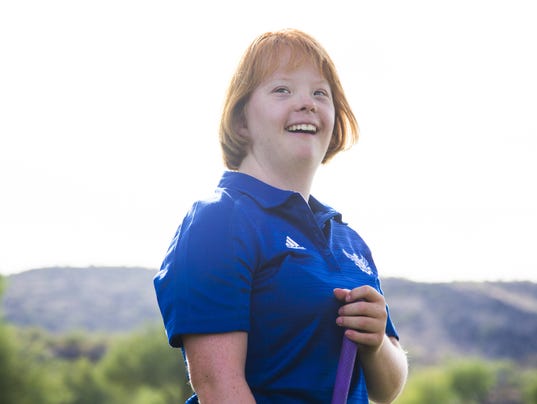
Richard Obert catches up with Sandra Day O'Connor High School golf coach Steve Casey about Amy Bockerstette, one of his starting five before last week's Division I girls at Aguila Golf Course in Laveen, Arizona.

Bockerstette is a 4-foot-9-inch junior with Down syndrome who has inspired her teammates by moving into the lineup.

This is her second year competing in high school matches.

Bockerstette was granted allowance from the Arizona Interscholastic Association to have a caddie during match play.

She has qualified with the team to compete in the state tournament, which runs Wednesday and Thursday for Division I girls at Aguila Golf Course in Laveen. Bockerstette is the team’s fifth golfer, shooting a best nine holes of about 50 this year.

Her swing coach, local pro Matt Acuff, who works with some of the top local juniors, will be on her bag and in her head as he steers her through the biggest tournament of her life, a journey that nobody but Bockerstette, her coach/caddie and those closest around her ever thought possible.

“It’s awesome,” she said.

The story goes on to detail how she got into golf and it's pretty inspirational stuff. Enjoy!

Euro Tour Chief Pelley: Not To Be Afraid To Make Big Changes

James Corrigan of the Telegraph reports on European Tour Chief Keith Pelley surprising in his response to calls for a Ryder Cup rethinking.

Speaking to writers in Turkey where the Turkish Airlines Open was just won by Thorbjorn Olesen, Pelley suggested he's using the Paul Casey example as motivation to improve the European Tour.

“Our job as the gatekeepers of the Tour is to provide bigger purses, greater experiences and greater courses so that the players want to play here – and play here more than they need to just to stay a member – and so be a Ryder Cup player,” he said.

“The Ryder Cup is a critical component of our Tour and it is a sensational event. But it shouldn’t be the only reason why someone wants to be on our Tour. That’s our job at hand right now.

“We are having discussions regarding the qualification system. We will have them with our players, with our tournament committee and our board over the coming weeks and months. We will adjust the Ryder Cup qualification if we feel that we need to. We won’t be afraid to make the changes.”

But as John Huggan notes at GolfDigest.com, it's not as simple as making changes.

Eligibility for the Ryder Cup is one of the few “weapons’ he has in the on-going - and generally losing - battle with the bigger purses on offer on the PGA Tour.

Ramifications Galore From Spieth's Plan To Remain Titleist-Loyal

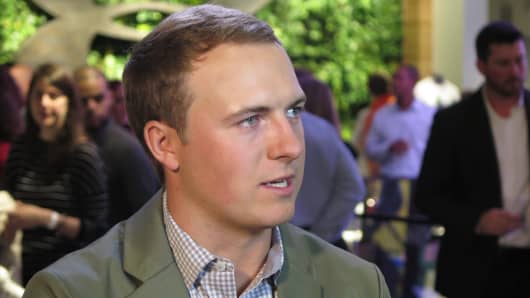
There were some intriguing remarks by Jordan Spieth to CNBC's Jessica Golden about his plans to remain loyal to his Titleist sticks. Three primary reasons: one, he's not helping his negotiating position going into a contract renewal. Two, he's exhibiting unusual loyalty and foresight compared to many of his peers who made costly switches And three, he doesn't sound like someone laying groundwork for Under Armour to join the golf equipment industry.

From the story:

When Nike announced it's getting out of the golf equipment business, Spieth said that caught many people off guard. "That was a bit of a shock when that came down," he said. However, Spieth said his PGA tour colleagues sponsored by Nike, most notably, Tiger Woods and Rory McIlroy, enjoy the flexibility of playing with what they want. Spieth says they frequently talk shop to each other about the different equipment brands and clubs.

Despite that, Spieth has no plans to give up playing with his Titleist clubs. "I have played Titleist my whole life, so I just trust it," he said. Acushnet, which owns Titleist, had an IPO this month. Spieth said he didn't get any stock with the offering but he imagines he'll be a shareholder at some point.

"In golf trusting what you are wearing and playing with is first and foremost so you don't have to worry about anything but your game."

Q&A With Ted Bishop, Author Of Unfriended

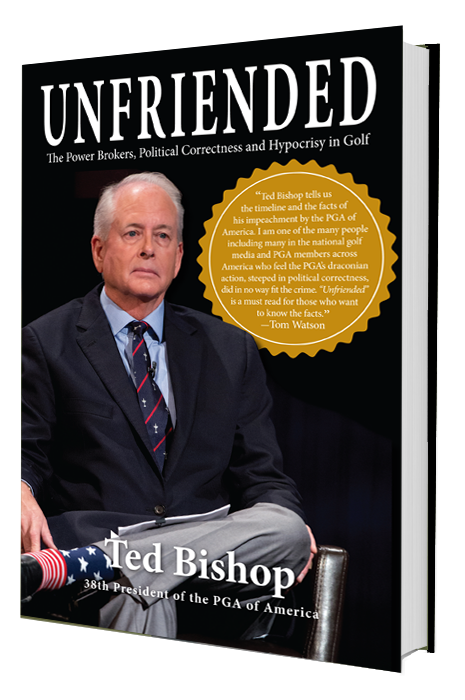
Ted Bishop's Unfriended opens like a media crisis thriller, but ultimately is worth reading because of the gentle way the former PGA of America president shows how golf's five families work and takes you behind the scenes of Tom Watson's Ryder Cup captaincy. While serving as a golf tell-all that only genuinely exposes a few PGA of America officers as short-sighted given the absurdity of his offense, the book never makes you want to run for the shower. In fact, it's often hard to put down thanks to Bishop's brisk, breezy style that only occasionally slows down.

The book documents Bishop's extraordinarily productive two years as PGA President, which saw the organization's profile raised and the membership defended by Bishop. Things have flat-lined since with the PGA and it's little wonder that the downward trend coincides with Bishop's removal with 28-days to go.

Ted answers a few questions via email below. You can buy Unfriended here at Amazon that includes a Kindle edition, or should you support non-Amazon retailers and want a signed copy from Ted, visit this page.

Also, Ted recently joined us on ShackHouse pre-Ryder Cup. Here is The Ringer's page for the show.

GS: What was your goal in writing this book?

TB: My departure as the President of the PGA of America is unprecedented and historic. Political correctness has taken on a life of its own with the 2016 Presidential election and it makes my impeachment look even more bizarre. Unfriended was simply an opportunity for me to tell my side of the story with no filters from anyone, including the media. It was also a chance for me to share some of the great stories and memories that I have been privileged to be part of in golf.    

GS: Did the PGA Of America attempt to stop the book from being published?

TB: The PGA made it difficult to write and publish my book. Ultimately, I had to seek the services of Levine, Koch, Sullivan & Schulz, one of the top First Amendment firms in the U.S. My lawyers determined that I had not violated any of my confidentiality or fiduciary duties to the PGA. That allowed me to press on with the book. I was fortunate that Classics of Golf publishing stuck with me through the PGA threats. In the end, I allowed the PGA to preview the book before it was published. In my opinion, that validates the integrity of the content in Unfriended.  

GS: What’s the feedback been like since you published?

TB: People tell me the book is extremely interesting, entertaining and easy to read. They enjoy being "inside the ropes" on things such as the Ryder Cup plus getting to know the biggest names in golf like Tom Watson, Arnold Palmer, Tim Finchem, Donald Trump, Phil Mickelson and Tiger Woods. Golfweek said that the book "raises the curtain on the insular world of those who rule the game and offers rare insights." 

But, I would also say that the politics in golf have worked against Unfriended to some degree. There is no question that certain media outlets won't touch the book because they don't want to get sideways with the PGA of America. That's too bad because the book does not reflect poorly on the PGA. People need to give Unfriended a chance. I suppose the title might have given some readers the wrong impression about the book's message, but Unfriended is a pretty fitting way to describe what happened to me.   

GS: The book opens as a firsthand account of how not to handle a modern media crisis, which you openly share. Was this a bit of therapeutic writing or your effort to help someone down the road in a similar situation?

TB: It was definitely therapeutic to a degree, but the first couple of chapters were also very painful for me because I had to relive the events when I wrote about my departure. You are absolutely correct about helping other people out. Unfriended is far more than a golf book. It's a case study on corporate media relations, political correctness and social media usage. I would like to use the book as a spring board to speak at the corporate level about the responsibilities of leadership in the 21st Century. There are many valuable lessons that I can share and they are very interesting given the people that I associated with in golf.     

GS: The account of the 2014 Ryder Cup is particularly interesting and puts the U.S. performance in good perspective. You also detail the beginnings of the Task Force concept, but now in hindsight you think it was unnecessary?

TB: The Ryder Cup Task Force was absolutely necessary. We had to change our approach and it obviously paid off with a U.S. victory this year. PGA Tour players are A-3 members of the PGA of America and they deserved a greater voice when it came to the Ryder Cup. That being said, I will always defend the PGA of America on its choice of past Ryder Cup Captains. However, Larry Nelson and Hale Irwin are certainly glaring omissions from several decades ago.  

GS: Have you gotten a thank you from the Task Force you helped start, post-2016 Ryder Cup?  

TB: Phil Mickelson left me a voice mail after Hazeltine and said, "I like the fact that you went out on a limb and brought the Task Force together even though you are not getting a lot of credit for that. It's a whole different feel than I have ever experienced before in my 20 years prior. l will never forget that first call I had from you about it. It's just one Ryder Cup, but we have something to build on now thanks to you." I appreciated that from Phil.  

GS: You dealt with Donald Trump quite a bit during your tenure as President and speak highly of the interactions you had with him. What should the USGA and PGA of America do, if anything, with regard to events hosted at his courses? I was disappointed when the PGA chose not to play the Grand Slam at Trump LA.

TB: At the time, I thought that was a mistake.

It has been surprising to me that more of the media are not asking the PGA questions about the 2017 Senior PGA at Trump D.C. and the PGA Championship at Trump Bedminster in 2022 given his past comments that are certainly degrading to women. As the guy who was exiled from the PGA for calling Poulter a 'lil girl, I have been surprised that the PGA has softened its stance on political correctness with Mr. Trump.

But, like Mr. Trump, we have all done things or said things that we certainly would not want the public to know about. Trump has great courses and is a great host- so I say play on!

Nominate Golf Courses Thinking Outside The Box...

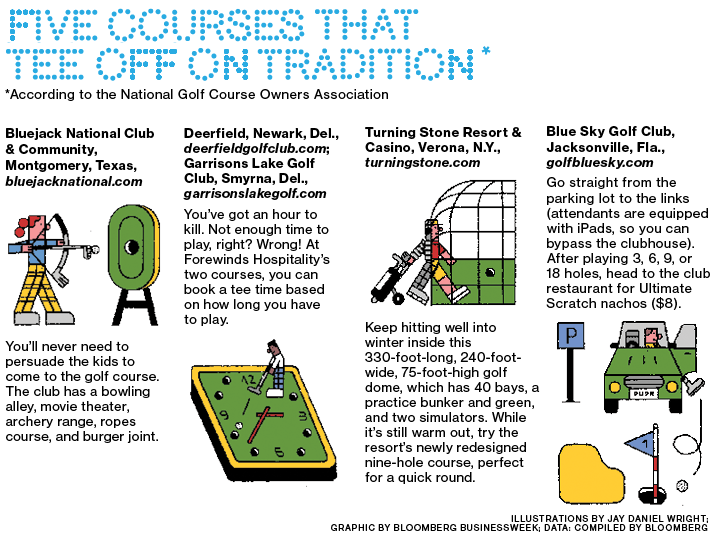
Coming to you today from The Links at Petco Park got me thinking about something in Ira Boudway's Bloomberg story on Topgolf, which included this info-graphic on other golf courses attempting to shake things up.

Besides the fun of playing stadium golf, Blue Sky in Jacksonville sounds like the most creative...anyone been?

Are there good examples out there not mentioned above trying to do something fun and different to the golf experience?

Bloomberg: "To Make Golf Fun, Just Add a Nightclub"

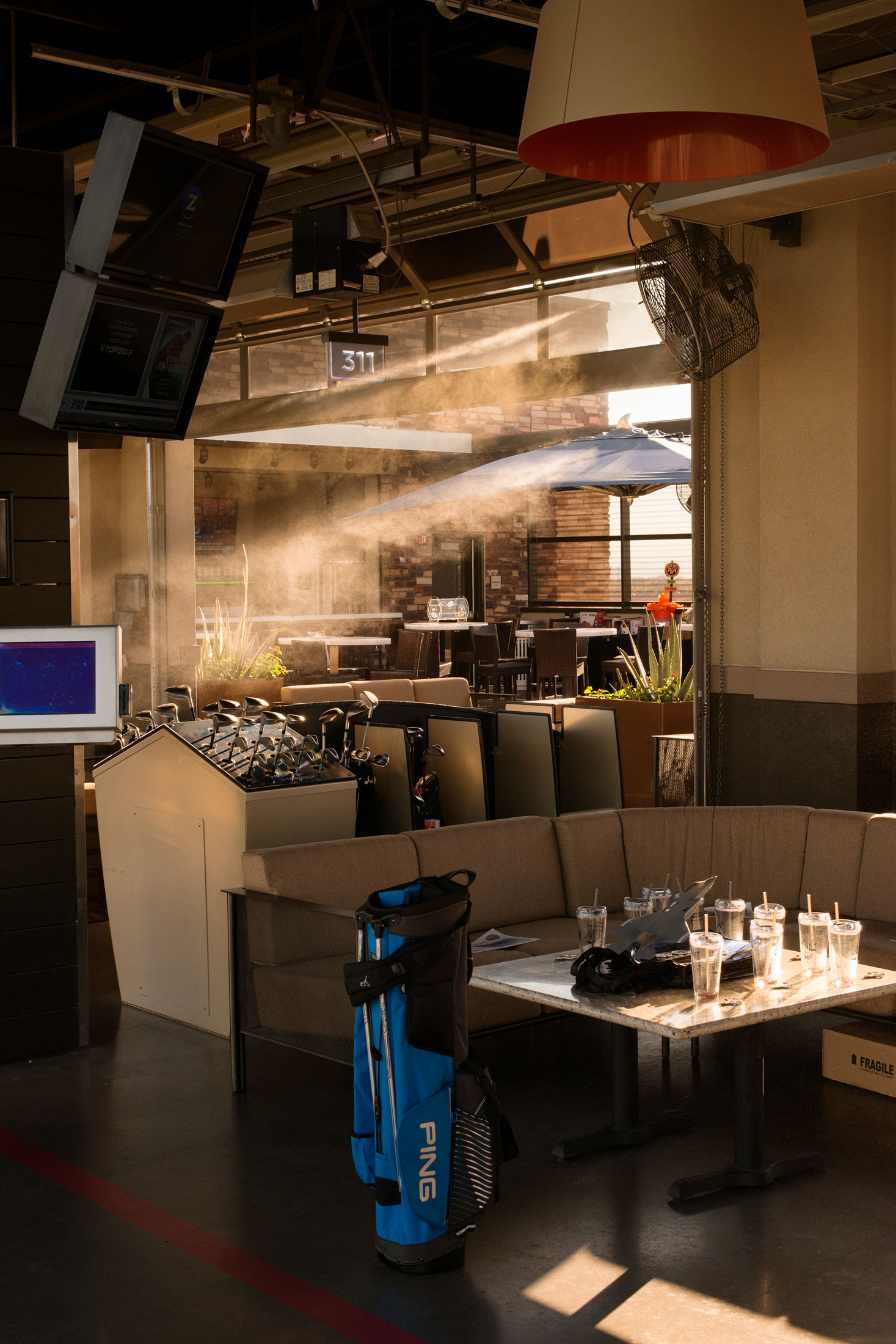
Topgolf gets the Bloomberg treatment and while there have been many profiles of the indoor-golf-driving-range-hipster-21st-Century-bowling-alley, Ira Boudway's story features plenty of fresh anecdotes.

A couple of highlights, starting with this on how CEO Erik Anderson, founder of private equity fund WestRiver Group brought the idea stateside and made a key move: TV's in the hitting bays.

In 2009, Anderson and a group of U.S. investors bought Topgolf’s technology for an undisclosed fee and decided to overhaul the floor plan for future locations. They added a third level, tripling the size of each venue to 65,000 square feet; replaced the buckets with motion-sensing ball dispensers; and, in a key change, put TVs and lounges—effectively, the entire sports bar experience—at each bay. “We realized that this was really an integrated entertainment and sports experience,” Anderson says.

There was also this on the financing side...

In September the company lined up $275 million in financing to build 7 to 10 locations a year. (Each costs $20 million to $25 million to open.) “We think there’s room for 100 or so in the U.S. and an equal amount globally,” Anderson says, though other than the original locations, the company hasn’t yet opened any outside the U.S. Revenue last year was about $300 million; this year it will be about a half-billion dollars.