Consternation Growing Over API's Lack Of Star Power

It's a strange state of affairs when Billy Horschel is a voice of PGA Tour reason, especially after he said he would have passed on playing in the WGC Mexico had he qualified. Somehow, the event carried on.

But it is fascinating to see Horschel join the likes of Louis Oosthuizen and Henrik Stenson in highlighting the lack of star power likely at next week's Arnold Palmer Invitational, the first without The King.

Even with multiple tributes planned, including a 13-foot tall statue of Palmer, the stars are passing.

Will Gray with some of the other player comments about what is shaping up as a weak field next week in Orlando.

Doug Ferguson considered the convoluted road to Augusta, altered by the location and placement of two World Golf Championship events. He also talked to Rickie Fowler who is contemplating a pass on the easy money and points of the WGC Match Play for the API.

And given Steve Stricker's comments Tuesday at the Valspar Championship, Tiger Woods is not a likely last minute contestant either. Bob Harig reports.

Tin Cup "Wishes Nothing But The Best" For Seve The Movie's U.S. TV Debut

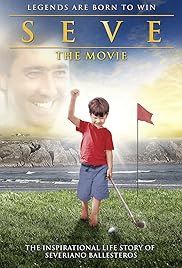
Brace for impact: Seve The Movie has (at least temporarily) bumped Tin Cup from Golf Channel's prime time.

Pointing to a pair of Tuesday morning airings as assurance that character actors Gary McCord, Peter Jacobsen and John Cook will still receive their normal residuals, the Tin Cup team has assured us fans they will be back. The team suggested a comeback is in order once everyone sees how Seve The Movie lacks the layered roles, original plot twists and the nuanced writing making Ron Shelton's 1996 film a Golf Channel staple.

"We stand by our timeless story and the many, many lives changed by better understanding the plight of struggling mid-90s mini-Tour players," the cast and crew said in a statement. "We know that Cheech Marin's supporting performance remains one of the Academy's great oversights and we're confident the many Golf Channel airings have proven this. However, we wish nothing but the best for Seve The Movie."

While Tin Cup is entirely fictional, Seve The Movie (8 pm ET, Tuesday March 7) is a "docudrama" that sounds utterly fascinating. From the Golf Channel description:

Combining archival footage with dramatic recreations, the film will delve into the life of the beloved Spaniard from his young upbringing – where at age six he taught himself the game with a broken 3-iron strapped to a stick – to becoming the top-ranked golfer in the world.

Ballesteros was one of the sport’s leading figures from the mid-1970’s to the 1990s. He won more than 90 international tournaments in his career, including five major championships, and is widely regarded as playing a leading role in the re-emergence of European golf by helping the European Ryder Cup team to five wins both as a player and a captain. In 2011, Ballesteros passed away at age 54 after a long bout with brain cancer.

The Guardian's Ewan Murray gave the 2014 film a rave review.

Here is director John-Paul Davidson explaining the project and what Seve meant to him.

In other news to keep an eye on for Tin Cup's diehard fans, Golf Channel is debuting "The Making of Tommy's Honour" immediately following Seve The Movie. Tommy's Honour hits theaters this April.

From the release and note Jordan and Shawn Spieth's role in the show:

Golf Channel will take a behind-the-scenes look into the Making of Tommy’s Honour, a historical drama based on the challenging relationship between “Old” Tom and “Young” Tommy Morris – the father-son team who ushered in the modern game of golf – in a half-hour special airing tonight at 10:30 p.m. ET.

Tonight’s behind the scenes special will include interviews with the cast, director Jason Connery, producers and key crew. Jordan Spieth and his father, Shawn, also will be a part of the special, dressed in the wardrobe of the “Morris era,” playing a round of golf with replica hickory golf clubs and discussing what it would have been like to play in that era. Tommy’s Honour, which premiered in 2016 in the U.K. and won the Best Feature Film Award at the 2016 British Academy Scotland Awards, is scheduled to make its U.S. theatrical debut on Friday, April 14.

Here is Seve The Movie's trailer

Golf Architecture Should Not Get In The Way Of A Stroke-And-Distance (OB) Fix

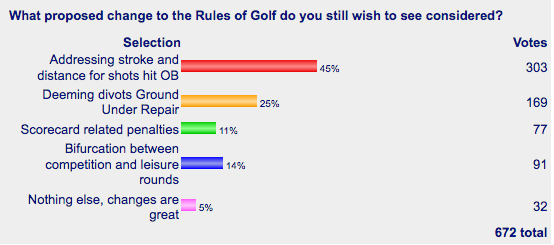
Thanks to everyone for voting in the rules poll! We a clear winner: stroke and distance still needs to be remedied:

Cara Robinson and I discussed the poll at the end of my Morning Drive segment today and some other positives and negatives from the Rules unveiling.

So what is the OB issue?

I'm guessing it starts with the difficulty of determining "point of entry" when treating OB like we currently treat a lateral hazard. Though in thinking about holes bordered by a boundary, it seems like the option to  re-tee for a ball that went OB or will not be able to be dropped in a playable location would address most situations.

The bigger philosophic issue, according to the USGA's Thomas Pagel during his Morning Drive appearance, involves design impact. Ryan Lavner reports:

One of the biggest hang-ups is differentiating the penalties for a lost ball and a shot that was hit out of bounds. Any option that requires an estimation of the spot where the ball was lost could lead to significant debate about players, and it’s not yet clear how many penalty strokes should be assessed, one or two.

Meanwhile, the Rules maintain that out of bounds is a strategic part of the challenge of playing some holes and that it could be “undermined” if players can hit toward those areas with less concern, such as if they were marked with red stakes.

“We’ve looked at every angle,” Pagel said. “But of all the alternatives we’ve considered, we haven’t found one that is workable for all levels.”

From an architect's perspective, Out-of-Bounds is not as intriguing of a ploy as many think. Because we all know it's not an ideal risk-reward hazard. Ultimately, the risk on OB-lined holes nearly always outweighs reward and we take the safest route.

My hunch is that safety is another part of the issue: would changing the rules make a hole lined with OB to protect homes or a road become less safe?

I also wonder if those involved in the rules discussions keep thinking of elite players playing the Road hole at St. Andrews. If they hit one into the Old Course hotel, where do they tee? If we change this rule after centuries of the Old Course boundaries having played a key role in defending the course, what will happen? (Though I'm fairly certain defined OB is much less than a century old there as players famously used to play off of The Links road to the 18th green).

Scoring wise, a change in stroke and distance would almost assurely lead to a few lower scores in major events by elite players. But I can't think of a scenario on the Old Course where, at psychologically, modified stroke and distance significantly lessens the impact of those boundaries.

I can, however, think of many ways that the golf ball flying way longer than it did 20 years ago lessens the impact, safety and resistance to scoring of the Old Course's hazards.

PGA Tour Not Likely To Be Allowing Shorts Anytime Soon

Former PGA of America president Ted Bishop suggests the organization he once served jumped the gun on allowing shorts at their major, solidifying it as the fourth of four and clearly not coordinating this European Tour-driven idea with the PGA Tour.

It's worth noting in the quote below that PGA Tour Commissioner Jay Monahan, more progressive than his predecessor, cites the pro-am appearance as a legitimately good reason for not budging. After all, do you want your picture taken with someone who looks like a professional in uniform, or in shorts looking like it's a casual round?

It appears that the PGA Tour was not consulted by the PGA this time. Similar to yanking the Fall Series from the Ryder Cup points system, the PGA of America pulled the trigger on a new shorts policy to the apparent surprise of the Tour. I’m not saying that the PGA needs to ask the Tour for permission to do anything, but when a policy affects both organizations, collaboration should be required. It’s another example of the PGA being shortsighted.

In a statement, Monahan pointed to the Tour’s unique relationship with sponsors during Wednesday pro-am rounds.

“That special experience, which no other sport can provide – where one of the world’s best players can play alongside two, three or four amateurs and those amateurs can look at that player playing the same clothes, the same club, the same course over the next four days – we think that’s really special,” he said. “We want to do everything we can to protect that.”    

Talk! Mickelson On Feherty, Tirico On Callaway Live

A couple of fun talk shows air this week, starting with part one of Phil Mickelson on Feherty, Monday night March 6th (9 pm ET).

Still buzzing from having just attended the monthly Rancho Santa Fe chapter meeting of the Arthur Fonzerelli Society, Mickelson talks Masters and Ryder Cup in part one.

A preview of this comments on Tiger Woods:

On Tuesday at 9 pm ET and streaming permanently thereafter, NBC Sports' Mike Tirico sits down with Callaway Live host Harry Arnett to discuss his new gig as primetime Olympic host and his love of golf.

Great news: Tin Cup is airing twice on Golf Channel during the mid-morning hours, so you won't have a reason to skip Tirico! Last week's season three opener guest was Jim Furyk.

A preview:

Eight Years! Sharp Park Finally Gets Long Term Reprieve, Chance For MacKenzie Restoration

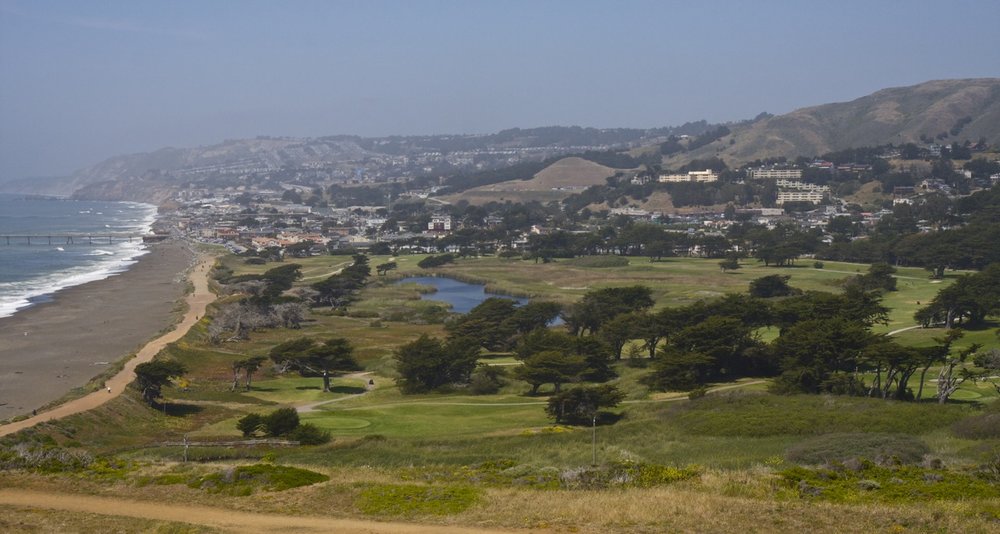
We've been following this saga way too long but huge credit to Richard Harris and Bo Links for nearly a decade of battling to save Alister MacKenzie's Sharp Park design. After essentially facing the same foe--Brent Plater of Wild Equity--the San Francisco Board of Supervisors finally included the course as part of a natural resources plan that will ensure its long term prospects.

A WPA project designed by MacKenzie and Pebble Beach remodeler Chandler Egan, the run-down public course still sports a vibrant and diverse golf scene. With some love and money, it could be one of America's best public golf facilities.

The full press release announcing what appears to be the (merciful) end to this saga.

FOR IMMEDIATE RELEASE

March 6, 2017

SHARP PARK PLAN MOVES FORWARD

Historic “Working-man’s golf course” to Remain Open with SF Supervisors’ Support 

SAN FRANCISCO, CA – After eight years of non-stop political battles, efforts to preserve the historic Sharp Park Golf Course have received a long-term commitment from the San Francisco Board of Supervisors. 

By a 9-1 vote on Tuesday, Feb. 28, the Supervisors certified a Final Environmental Report for a Sharp Park Restoration Plan that recognizes the historical significance of the 85-year old links designed by Alister MacKenzie, one of world’s most famous golf course architects.  Specifically, the Supervisors: 

  • ·      Approved the continued operation of the 18-hole public course, owned by San Francisco but located in its beachside suburb of Pacifica;
  • ·      Designated the seaside links as “Historic Resource Property” under the California Environmental Quality Act; and
  • · Allowed modification of three holes along the margins of Laguna Salada, a freshwater marsh in the center of the course, to enhance habitat for the endangered San Francisco garter snake and the protected California red-legged frog, on condition that the changes be consistent with the golf course’s historic architectural character. 

A handful of environmentalist groups, including Wild Equity Institute, the San Francisco chapter of the Sierra Club, Surfrider Foundation, a couple of local Audubon societies, National Parks Conservation Association, and, for a while, Center for Biological Diversity, had for years opposed San Francisco’s Sharp Park Plan. They had demanded closure of the course to protect the frogs and snakes, but since 2009 these opponents had lost a series of fights over the golf course in San Francisco city agencies and before the California Coastal Commission, US Fish & Wildlife Service, and other state and federal resources agencies. In 2012 and again in 2015, four different state and federal courts dismissed lawsuits from the activist groups.  They lost at every turn.

The California Coastal Conservancy and several resources agency and court decisions noted that construction of the golf course in the early 1930’s severed connection between the Pacific Ocean and Laguna Salada, thereby converting what had been a brackish marsh into suitable habitat for the freshwater frogs and snakes, which were first found at Sharp Park in 1946, 14 years after the course was opened.   In a 2015 decision in favor of San Francisco’s Sharp Park plans, the Coastal Commission emphasized the importance of balancing the historic public recreation value of the golf course with the need to protect endangered species.   

On its Feb. 28 agenda, the SF Board of Supervisors was scheduled to hear yet another appeal, from the same environmentalist groups, challenging December 2016 decisions by the San Francisco Planning and Recreation & Park Commissions certifying a Final EIR and adopting the Sharp Park Restoration Plan as part of the Rec & Park Department’s comprehensive San Francisco Natural Areas Plan.  But when it came time for the anti-golf appellants to put on their case, their attorney Michael Lozeau dramatically announced his clients were withdrawing their appeal, in consideration for a minor Rec & Park concession on the placement of dredging spoils. 

At that point, 50-plus San Francisco Public Golf Alliance members who came to City Hall to testify – working men and women, retirees, and students from across San Francisco’s  broad ethnic and social spectrum – happily went home.  During the two weeks before the hearing, the golfers submitted over 1,000 e-mails and mostly-hand-signed letters, pleading the case for their beloved Sharp Park.

The golfers’ message resonated with the Supervisors.  Voting with the 9-1 majority to certify the Natural Areas Plan Final EIR, Supervisor Ahsha Safai – whose southern San Francisco district is near Sharp Park – noted “the irony of it all . . . that we have an existing working-man’s golf course . . . designed by a Scottish immigrant . . . that would be restored . . . that would then in the end be the reason why we have the opportunity to protect two of the most endangered species in Northern California.  That’s one irony that shouldn’t be lost.” 

Thanks to the Supervisors’ vote, neither the irony nor the golf course will be lost.

“There’s still a lot of work to be done to restore MacKenzie’s masterpiece at Sharp Park,” concluded Golf Alliance co-founder Bo Links, “but now the wind is at our back.”

R.I.P. Mark Laesch, Golfstat Founder

While college golf will never reach the popularity level of other major sports, donors contribute often remarkable amounts to fund college programs across the United States. The impact has been felt both in lives changed by scholarships, but also by careers enjoyed because of college golf.

Which is why it's hard to capture the role played by Mark Laesch, founder of Golfstat in 1984. While described as a "friend to college golf" in this moving remembrance from Beth Ann Nichols, I would argue that Laesch's vision for scoring, stats and rankings made the sport something to be followed by friends, family, donors and fans. That Golfstat continues today as the preeminent source of information speaks to Laesch's influence on countless lives and importance of his creation.

From live scoring to detailed statistics and rankings, Golfstat provided new methods for NCAA coaches and committees to advance the game.

“I think what he did simply was a labor of love for him,” said Florida State men’s coach Trey Jones. “He changed college golf.”

Inbee Park Is Back (Again) And Incredible Again

She turned up in Rio, won the gold medal and seemed to be setting the stage for a walk-off (career) win. Turns out, Inbee Park took six months off and beat a top field in the HSBC Women's Champions. And seems to be back? Maybe?

Either way, the Inbee legend grows and becomes more intriguing if she continues to play a limited schedule, especially when she hits turns up to hit 64 of 72 greens and 55 of 56 fairways in beating an elite leaderboard that included Ariya Jutanugarn, Brooke Henderson and a resurgent Michelle Wie.

Beth Ann Nichols of Golfweek reports on the win and Park's ability to post incredible numbers off a layoff.

“Today was pretty much, everything I looked at, it wanted to drop in,” said Park, who hit 17 greens (her first miss coming on the 18th hole) and took only 27 putts.

It wasn’t that long ago that an ailing Park struggled to finish tournaments to even qualify for the LPGA Hall of Fame. A lingering thumb injury made her future on tour seem doubtful. But then she shocked the golf world in Rio by taking Olympic gold after a two-month break.

At the HSBC Women’s Champions, Park stunned once again, winning in only her second start since last August.

In the winner's circle with Inbee Park! #hsbcwomenschamps

A post shared by LPGA Tour (@lpga_tour) on