Masters Ends Par-3 Contest Rounds For Past Major Winners

There are two ways to interpret Doug Ferguson's AP story on the Masters no longer including former major winners--aka "honorary invitees"--to the Par-3 Contest proceedings:

A) The club thought having the extra participants was deterring current Masters invitees from playing the Par 3.

B) They just didn't like the look of the occasional "who is that" taking part in the Par 3 or, more likely, playing a practice round on the big course.

I'm guessing the answer is A, but I have to wonder if today's players skip the Par 3 in part because the family fun day vibe it's taken on. Yes, yes, it's a wonderful family event, etc... But the Par 3 is not nearly as fun as what it had become through the years: a lively, quick competition involving most of the tournament participants that just happened to include some former major winners.

Because for every Mitch Voges there was a Jack Fleck who added to the fun and aura of the proceedings. Anyway, the Masters folks have their reasons no doubt and maybe it'll be better. And the former Masters champions are still there, which, to most fans, is most important.

From Ferguson's story:

Now, however, the club is asking that they no longer play practice rounds or use the practice facility.

Augusta National said in an email that honorary invitees still have special access to the Masters, but that the Par 3 Contest will be limited because of increased participation and interest. ESPN has televised the Par 3 Contest since 2008.

"As a person and an honorary invitee, I'm disappointed because it was my favorite day of the year," former British Open champion Ian Baker-Finch said Tuesday. "I loved it. I'll still be there, though, and I'll watch like everyone else."


Lorne: "I was provided the opportunity to dig deep into the mind of a golfer who had accomplished amazing things in the game."

Lorne Rubenstein's much-anticipated collaboration with Tiger Woods on the 1997 Masters book was hopefully going to mean many interviews for Lorne to discuss the story and his co-author.

Unfortunately as Rick Young notes at ScoreGolf.com, Rubenstein has made clear this is Tiger's book.

Lorne did, however, write this enjoyable piece for Medium on working with Tiger on the book and it definitely gets you more excited about what is in the pages beyond what we saw in the early Golfweek excerpts.

In the early stages of our discussions we watched video of that Masters. One vivid memory led to another, one story to another. I attended that 1997 Masters and followed Tiger as he shot 40 on the front nine. I watched as he walked from the ninth green to the tenth tee, deep in thought. What had gone wrong? How could he turn things around? Was he worried?

I was interested and even surprised when he said he had put the front nine out of his mind by the time he reached the tenth tee, and that he had already focused his attention on what he needed to do. It wasn’t so much that he needed to correct what had gone wrong. He resolved to find the feeling that had allowed him to shoot 59 the week before at the Isleworth Golf & Country Club when he had played with his friend Mark O’Meara.

This was the sort of insight that helped me appreciate Tiger’s golfing mind. I kept this story in mind as we continued to chat during our talks in a conference room in his office in Jupiter, Florida, and many follow-up conversations over the phone.

Precious Millennials Files: SXSW's Golf Panel Edition

The cool kids are gathering in Austin this week prior to next week's WGC Dell Match Play and in a tradition unlike any other, a golf panel was assembled Sunday because, well, someone probably paid for it.

Apparently South By Southwest turned to an automated copy writer or someone from Bruce Lee's artisanal, small-batch, craft scriptwriting team to describe this "Intermediate" gathering.

Remember, I just copy and paste...

Brands must evolve and sports brands are no exception. But sports traditions are sometimes the most sacred of customs and golf may be the most brutal of masters.

It's debatable whether that was an attempted play on words, but the judges'll give it to them. Go on...

Golf is attempting thrive in an era that is changing so rapidly that the way a sport is consumed might be radically different in just one season.

Hmmm...profound, though not entirely accurate until I get a PGA Tour Live press release touting some numbers. Any numbers.

But hey, it's a golf panel at the cool kids conference, so I get the hard sell mode. I'll stop interrupting...

Does a round count at a Topgolf range and is a fan of an irreverent smartphone video worth the same attention as an argyle-wearing TV-watcher?

Ok, I know I said I was done interrupting but seriously? An argyle association?

How can golf keep the attention of potential fans? This panel will explore these challenges, examining what a game that can be burdened with its tradition and but lives by its history needs to do to survive the attention span of a 20-year-old.

Eh-em, golf's history dates back at least 400 years so I'm guessing it'll survive the attention span of today's 20-year-old.

But hey you guys explore, we can't wait to study the transcript for deep, deep thoughts on how to survive the 20-year-old's attention span!

Video: The King's Augusta National Yardage Book

I can't think of a better way to kick off Bay Hill week than this great stuff from Amanda Balionis inside Arnold Palmer's office sharing The King's handcrafted, homemade, small batch ANGC yardage book:


Cantlay Shines Positive Light On Tour's Major Medical Exemption

There has always been plenty of grumbling over the PGA Tour's major medical exemptions and players using them in strange ways, but I don't think anyone can doubt the importance of the clause when it works. At least, that was my takeaway from Patrick Cantlay's stirring bid to catch Adam Hadwin at the Valspar Championship Sunday.

Funny though, Cantlay suggested he wanted the win (and played like it). The exemption essentially is satisfied by the second place check, though the former UCLA Bruin wanted (and played like) someone wanting a win. From Brentley Romine's Golfweek.com report:

Still, Cantlay will leave Tampa disappointed. He bogeyed his 72nd hole. A par would have forced a playoff and a birdie would have won him his first PGA Tour tournament.

“It didn’t really feel like a burden to begin with,” Cantlay said of the medical extension. “I’m not too worried about that. You know, it doesn’t really feel like much consolation at the moment. I didn’t finish the deal.”

As for Hadwin, the win capped off a 2017 run that has been building toward a signature victory. His post round comments, his bag, Kevin Casey's Valapar roundup, and the PGA Tour Entertainment highlights.

Thomas Tizzy: Maybe We Should Let Pros Repair Spikes Marks?

I've been crafting a few thoughts for an eventual post on the proposed rule change for spike mark tapping. But after belatedly seeing Justin Thomas lose his cool in Mexico over a blemish by creating more damage to the green, maybe this explains the rule change: allow players to tap so they don't dent the green to let us all know their putt took a bad bounce. After all, it's a time-honored tradition that will not be missed with the rule change!  

Tag a mate that can't putt 😂 #golfgods #definitelythedivot #fuckbogeys #golfmeme #golf #putting

A post shared by Golf Gods (@golf_gods) on Mar 11, 2017 at 4:49pm PST


Interestingly, Thomas was one of the players to voice concern over the proposed change.


No Purse War Yet: The Players Holding Firm At $10.5 Million

With the USGA recently announcing a $12 million purse for this year's event, the potential for a major championship purse battle seems worth keeping an eye on, especially with The Open trailing significantly at $8.5 million (slightly less than next week's Arnold Palmer Invitational).

Garry Smits reports that PGA Tour Commissioner Jay Monahan is holding firm on The Players purse for now, putting less pressure on the PGA Of America to side with their partners on a similar purse.

“I think it’s great what the USGA has done,” Monahan said. “Our plan coming into the year has been to stay at $10.5 [million] and we’re going to stay to our plan.”

No Bay Hill For Tiger, But At Least We Have '97 To Read About!

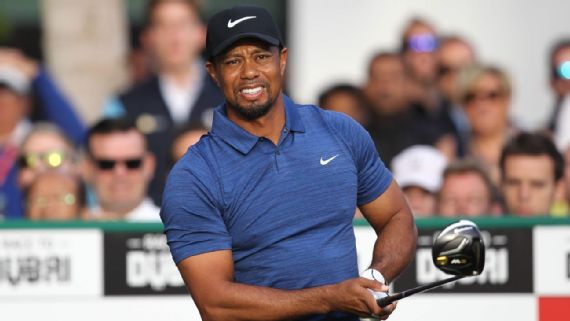
Tiger tells TigerWoods.com that Bay Hill next week is not option despite his desire to honor the late Arnold Palmer.

As Bob Harig notes for ESPN.com, this makes the Masters all but a no-go. It's the lack of any public appearances that is even more disconcerting.

Woods missed two tournaments he was scheduled to play, the Genesis Open and the Honda Classic, and now is out of an event he dominated for most of his career. Woods has made no public appearances since the Dubai event and did not appear at the Genesis tournament that supports his foundation.

The latest developments would appear to put next month's Masters in serious doubt, although Woods played the tournament two years ago after taking a nine-week break to work on his game.

The first taste of Tiger's upcoming book written in conjunction Lorne Rubenstein has been published in the March issue of Golfweek. Here's a sampling.

Naturally, I couldn't resist enjoying this little reminder of Monty and his mouth.

If I needed any extra motivation for my third round, Colin Montgomerie provided it during his media conference the day before. Monty was in second place, three shots behind me, and so we were going to play together in the last twosome on Saturday, just after two o’clock. At the conference, Monty was asked about our prospects for Saturday, and he spoke his mind, saying that everybody would see in the third round what I was made of, and that experience was a “key factor.” … His comments only strengthened my resolve to play my best golf the rest of the way.
I had a clean card, eleven pars and seven birdies, for 65. That was the kind of golf I had been working toward. Monty and I shook hands on the eighteenth green. His 74 had put him twelve shots behind me, after starting the round three shots behind. He was beaten up but cordial.

Golf World "Reimagined for the digital age"

I stumbled on news of the "reimagined" Golf World via the GolfDigest.com RSS feed. The new Golf World homepage is here under the GolfDigest.com News and Tours page.  Editor Jaime Diaz says the now-defunct weekly digital publication will shift to a web-based one offering intelligent takes. At least, that's what I could pick up from the miniscule fonts both on desktop and mobile (the Mobile version screen captured here appears to be in partnership with Taylor Made).

Diaz writes:

As always, Golf World will set the conversational agenda for what is topical and enlightening in the greatest game of all.

We are uniquely positioned to do so. Golf World, in conjunction with the staff of Golf Digest, has the most collective knowledge of any golf publication. Our writers and editors are intimately familiar with all aspects of the game—its players, people, history, institutions and issues. Some of the respected names that will regularly contribute to our content include Tim Rosaforte (the game’s leading insider), Guy Yocom (longtime producer of Golf Digest’s celebrated “My Shot” series), Dave Kindred (the 1991 Red Smith Award winner), John Feinstein (best-selling author of books including A Good Walk Spoiled) and expert reporters John Huggan and Dave Shedloski.

I wish my former colleagues the best of luck carrying on such a storied brand. Hopefully they will get larger fonts and some social media coverage of the launch.

Meanwhile, check out former Golf Digest contributor Cliff Schrock's new site where fans of "This Day in History" items will love his golf insights. He's also posted other pieces as well and the site looks sharp.

More Pros Embracing Variable Distance Golf Ball Idea

A few years ago if GolfChannel.com's Will Gray had surveyed PGA Tour players about something like the USGA's variable distance ball suggestion, the good soldiers would have all demanded that people pay to see them hit it as far as possible.

Of course we know that (A) most people only pay money to see a handful of players and (B) most of those paying people couldn't tell the difference between a 290 yard drive a 325 yard one.

But good news, instead of reciting talking points of manufacturers, the idea of a golf balls to suit surfaces makes sense to players who have seen what the folks in tennis have done to better suit their implements to surfaces and athletes.

Charl Schwartzel views Davis’ idea as an added opportunity to help pace of play if new tees built well beyond the course’s original design no longer have to be used.

“Now you have to walk 150 yards back and then walk this way, so you’re walking 300 yards and you’re still at the same place,” Schwartzel said. “If you can make the balls and clubs go shorter, and you can play the old courses, then the game will be 3 ½ hours again. It’s simple. But you’ve got to walk so far, how are you going to play quick? It’s impossible to play quick.”

He keeps talking like that I might even forget he killed an elephant!

After Jamie Lovemark is quoted saying folks pay to see the long ball, Augusta National comes up (as it's known to do in these discussions).

“I think if the USGA or R&A try to do it, there might be a lot of players kicking and screaming,” he said. “Somehow when it happens at Augusta, there’s a slightly different respect level there. Not sure why, it’s just something special about Augusta.”

And even better was this:

“Something’s got to happen,” McDowell said. “We’re starting to lose the integrity of some of the most beautiful courses in the world. They’re becoming outdated, which is just a little scary, really.”

Yang On AR, Other Ways Tech Start-Ups May Change Golf

While we hope the folks in Silicon Valley emphasize world-changing advancements over helping golfers, it's fun to read some of the augmented reality ideas and other concepts that ex-Yahoo CEO and start-up investor Jerry Yang sees potentially impacting the game.

From Mike Stachura's report at the USGA Innovation Symposium in Vancouver:

“If you look at the categories of things that are coming across our investment activities and how people are understanding their bodies, every element of that is applicable to golf,” he said. “Measuring brain waves, measuring all the body metrics and understanding those things, I think is all very interesting.”

Yang imagines a near future where laser-rangefinder technology is incorporated in your sunglasses, where a golf simulator in your garage “will let you play St. Andrews in a way that really feels like St. Andrews.”

But Yang thinks that sort of development is only a start. He talked about a coming “smart ball” technology that would track every shot and its launch conditions, direction and distance. He also suggested that the kind of “haptic suits” designed to help the disabled walk could “be the same suit that can make you become a super person where you can literally swing like Dustin Johnson if you wanted to.”

Or were able to. Nonetheless, keeping dreaming big. If nothing else it's fun to read about. After all, it's not our money!

USGA Head Floats Idea Of "Variable Distance" Ball

Just skip past the part where we hear about how this distance thing is cornered and flatlining for 15 years now. After all, if this belief makes them do the right thing, the game's governors are entitled to their always-correct opinions!

GolfDigest.com's Mike Stachura reports USGA Executive Director Mike Davis' suggestion at the USGA's Innovation Symposium that no rollback is happening, but there is a place for a rolled back ball that allows Dustin Johnson's to enjoy the Myopia Hunt Club's of the world.

The key line:

“We don’t foresee any need to do a mandatory rollback of distance. We just don’t see it. But that’s different than saying if somebody comes to us and says I want an experience that doesn’t take as long or use as much land, can we allow for equipment to do that?”

Yes!

Davis continued in what I would dare say are by far the most provocative comments from a governing body officer (in office, of course the late, great Frank Hannigan was long outspoken on this topic).

“Anybody is hard-pressed to say that as distance has increased in the last 100 years that that’s been good for the game,” he said. “We all want to hit the ball farther. We get that. But distance is all relative. When you think about the billions and billions of dollars that have been spent to change golf courses, and you say, Has that been good for the game?

“Is the fact that Shinnecock Hills went from 5,500 yards to 7,500 yards, what has that done good for the game? It’s increased the expenses to maintain it. It’s cost us time to walk an extra 2,000 yards. So you have to say, What has that actually done?”

Davis later even suggested golf was alone among all sports because of the way its equipment has dictated its playing field.

I feel like I have read about this classic course ball thing in a book somewhere, say, about 14 years ago it seems if memory serves. And I know PING's John Solheim has offered a proposal on this, but it sure sounds like we are headed (finally) for having a ball suited to designs of a certain vintage.

The only mystery remains, why hasn't a company gotten out of front to be the first to corner the vintage course market where purists buy golf balls too?

Anyone, anyone? How about rollback advocate Jack Nickaus, who has a golf ball line? Nope. How about Solheim's PING? Any prototypes brought to the market? Nope.

One would think this lack of urgency within companies might change given this last comment from Davis:

Would one of those options include bringing the best players in the world to a course like Myopia Hunt Club for a U.S. Open in the future with a reduced-distance ball?

“We haven’t talked about that,” Davis told GolfDigest.com, “but if we were closed-minded to that, shame on us.”