There Goes Lawrenson's Erin Hills, USGA Welcome Mats...

In what he saw as an otherwise exciting year in golf, Derek Lawrenson hands out his best and worst from 2017.

The veteran Daily Mail correspondent gave "Worst Tournament" to the U.S. Open at Erin Hills.

Just when you think they can't possibly cock it up for a third year running, the United States Golf Association managed to debase yet another US Open. A shocking, soulless venue in the middle of nowhere and scoring so low the tournament's raison d'etre as the hardest major was lost completely. I recently had to fill in a survey from the USGA asking what I thought of them. It's fair to say they didn't score well.
Inspired By Langer And McCarron, Scott Goes Long Again

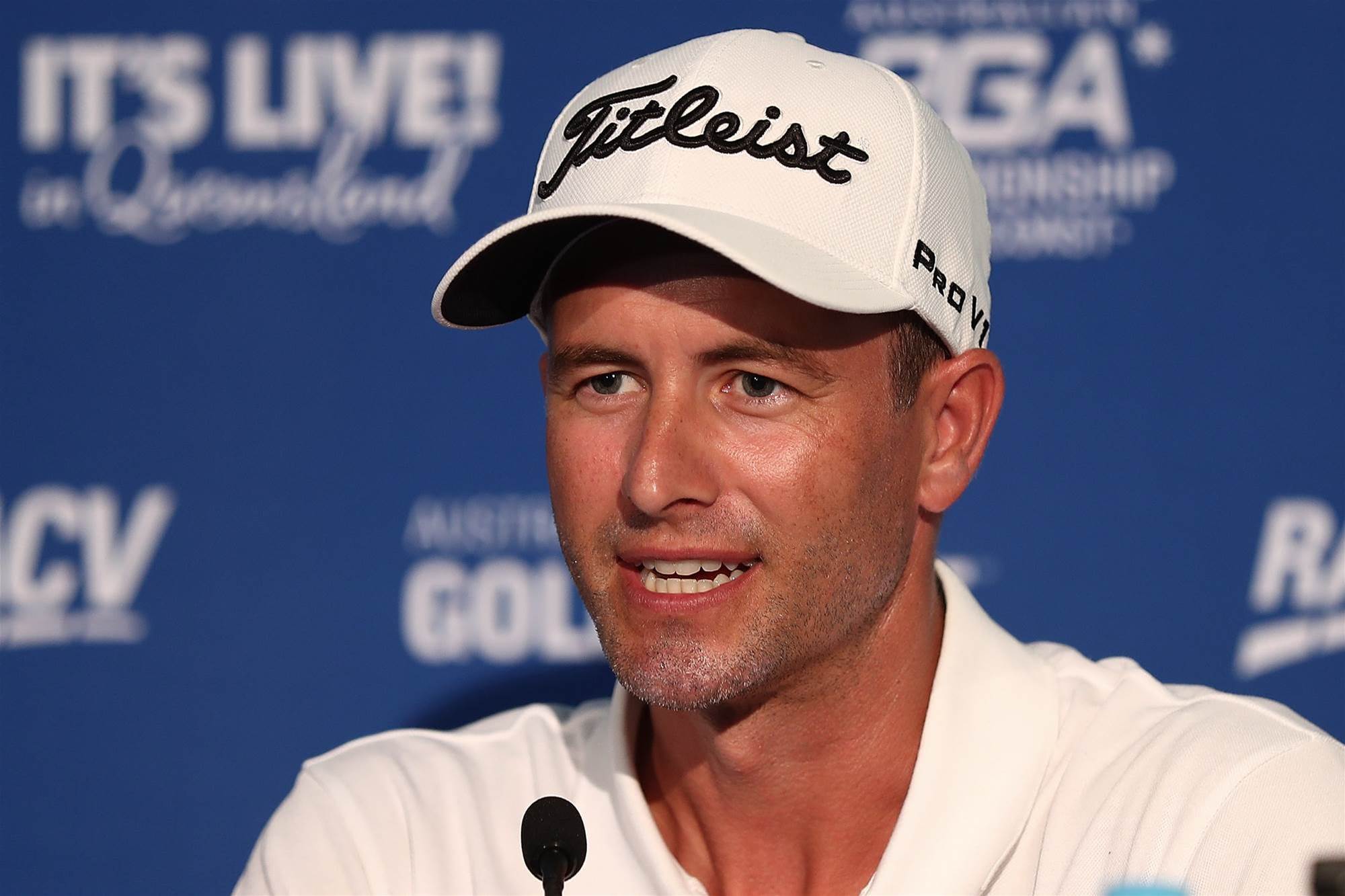
Jimmy Emanuel reports that former Masters champion Adam Scott will be wielding the long putter, minus the now-banned practice of anchoring, as he tees it up in the Australian PGA (Golf Channel coverage starts Wednesday at 8 pm ET).

Scott says he was inspired to try after seeing the incredible results of seniors Bernhard Langer and Scott McCarron on the PGA Tour Champions. 

“… it was actually pointed out to me that this year they (Langer and McCarron) both recorded the best ever putting stats since stats have been kept. Both of them beat the old best. You know, I don't know if it's just a coincidence or if they had just a really good year, but maybe they've found the best way to putt,” Scott said.

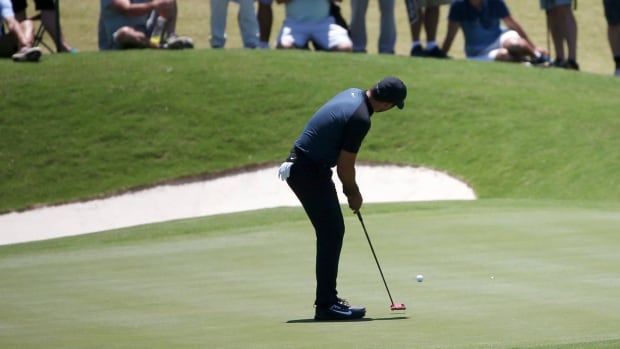
Study: Golfers Make A Few More Putts Looking At The Hole

Jordan Spieth does it from time to time and many instructors have advocated looking at the hole to help struggling putters.

But according to a professor Sasho Mackenzie and student Neil MacInnis at St. Francis Xavier University, their studies show looking at the hole is productive.

Thanks reader DGS for this Elizabeth McMillan CBC story on the study, that you can find here.

They held sessions over four days with 28 experienced golfers who tested the hypothesis with breaking putts — shots where the green slopes and golfers don't aim directly for the hole.

Forty per cent of the putts where golfers looked at the target line went in the hole — three per cent more than when they kept their eyes on the ball.

To put that in perspective, MacInnis said golfers typically make 33 putting strokes a round.

"It doesn't sound like it's a big difference but if you think about it in golf terms … you're going to save one stroke a round and that's actually very meaningful for golfers," he said.

Dufner Gets A Brandel Block After (Almost) Using An Obscenity

There is nothing quite like a Pro Golfer Twitter spat and today's Brandel Chamblee v. Jason Dufner back-and-forth resulted in a conclusion just about everyone saw coming: Chamblee blocking the 2013 PGA Champion.

This outcome made Dufner's day:

Brandel explained his thinking in blocking a major winner: 

Alex Myers of GolfDigest.com explains what precipitated the manspat--a jab at Dufner instructor Chuck Cook at a seminar, followed by a side Twitter conversation where Chamblee was included against his will. Unable to get Dufner and friend to not include him, Chamblee reached for the block button.

After sharing his joy at the blockage, Dufner went on quite the re-Tweet storm, sharing the tales of other Brandel Blockees, including one who noted Brandel's liking of a profane Tweet. A few examples:

"Rory firm's $105m loss after rights write-down"

I haven't a clue what this means, but Gordon Deegan briefly explains why Rory McIlroy's in-house management firm took a massive $105.4 million (€88.3m) write down in 2017.

The paper loss stems from a non-cash writedown of $99m in the value of McIlroy's lifetime image rights.

The Northern Ireland golfer is unlikely to be too perturbed with the loss, with 'Forbes' magazine last year estimating that he earned $42.5m in 2016 - broken down between $35m from endorsements and $7.6m in winnings.

Deegan goes on to explain the finances of McIlroy's firm which presents far-fewer jaw dropping lines as the write-down.

Rory named his ownself as manager/agent to Rory in 2013.

Gulp: Next May's Tiger Bio Is 150,000 Words

Alan Shipnuck of Golf.com has an exclusive first insight into Jeff Benedict and Armen Keteyian's 150,000 word bio of Tiger Woods, set for a May 2018 release. Besides the book's length--Downton Abbey doorstop-deep--Shipnuck also notes this:

In golf circles it has long been whispered that Tiger Woods would focus on the question of whether or not the eponymous protagonist used performance-enhancing drugs, which he has always denied. Woods has been dogged by these rumors since the 2009 reveal that he was treated by Anthony Galea, the disgraced Canadian doctor who was arrested for smuggling human growth hormone into the United States. (In 2011 Galea pleaded guilty to a lesser charge of bringing mislabeled drugs into the U.S.) Benedict and Keteyian acknowledge that there is a meaty chapter in the book examining the PED question but at this moment are not at liberty to divulge any specifics.

Golf Magazine Not Part Of Time Inc. Sale To Meredith

From Kara Bloomgarden-Smoke and Evan Clark's WWD story on The Meredith Corporation's purchase of Time Inc.:

“Time has publicly reported that they have some assets that are currently for sale, the Time U.K., Golf magazine, Sunset and Essence. And we’re going to allow Time Inc. during this — before the close period — to go for it and consummate those transactions, and we think that they’ll have those done by the end of the calendar year,” Meredith’s chief operating officer Thomas Harty said.

The all-cash transaction was announced Sunday and features financing by the private equity arm of golfers Charles and David Koch, but appears to not be on the radar of the new owners or their partners.

I've asked for confirmation of the status of the Golf sale but a Time Inc. spokesman has ignored two requests for comment.

2017: Year "Ultra-Premium" Became Part Of The Golf Industry

In David Dusek's year-end equipment industry wrap for Golfweek, he considers the role PXG and other influences have had in convincing golfers to buy more expensive equipment.

Dusek writes:

“PXG has livened the ultra-premium market again, and all the other guys are (upset) because that used to be their golfers,” said Tom Olsavsky, Cobra’s vice president of research and development. “So now they are saying, ‘We can do that as good as (PXG) can,’ and we’re seeing them offer expensive irons and expensive drivers. Fifteen years ago that was the after-market business, and they made tons of money because it was a better product and people were willing to pay for it.”

In 2017, Callaway released the Epic and Epic Pro irons priced at $2,000 for an eight-club set, as well as the Epic Star driver, which retails for $700 and was previously available only in Japan. Xxio brought the $850 Prime driver to the U.S. market and said there was plenty of demand for it, while Titleist re-released the C16 iron set for $2,700 and debuted the J.P. Harrington line of custom-fit wedges for $500 each.

It will be interesting to see if 2018 brings more of these clubs into the bags of professionals and what impact that has on in the industry. So far PXG is the only brand to have players using these ultra-premium clubs, but could we see the others start having players adopt the pricey stuff?

Golf.com Gang Endorses Doing Something About Distance For Pros

The technophobic press is really warming to this idea of addressing distance gains at the pro level and I just enjoy copying and pasting this so much!

The SI/Golf.com gang this week responded to the USGA's Mike Davis calling the leaps horrible for golf courses. The chat included Michael Bamberger, John Wood (Kuchar caddie), Josh Sens, Jeff Ritter, Joe Passov and Alan Shipnuck.

Bamberger: I couldn't judge the hurt-the-economics-of-golf question. The modern ball has made Tour golf, for me, less interesting and more of a slog. At my level (92-shooter!) the longer ball with space-age equipment has made the game more enjoyable but at the expense of beauty. I'm in favor of a ball for them and a ball for us. I think a softer ball that curves more is a better test of golfing skill at the highest level.

Ritter: Totally agree. I've never hit the ball farther than I do today, and that's certainly a blast. But the pros are decimating classic courses. The ball isn't the lone culprit, but it's certainly a factor. I see no harm in a ball for the Tour pros, and one for the rest of us.

Wood: I'm 100 percent agree with Michael. There's no reason to change the ball for the everyday player. (By the way, if you're a 10 handicap or more, you'll shoot the same score with a decent range ball that you would with one from a $60 per-dozen price tag, speaking of economics.) I can only comment on the competitive aspect of the balls. Shrink the allowable head size of a driver and roll back the ball a bit for the best of the best, and I think the game at that level gets more interesting as well as preserves classic courses for major championships

Any day now we are going to have a reduced-driver head distance study released, I just know it. Because no matter how you feel about the impact of distance, wouldn't it just be fun to know how much today's larger driver heads allow players to gain distance. Or not?