"I don't know why you are asking me about this"

gwar01_071005jackgarydiaz.jpgGolf World's Jaime Diaz considers the future of the President's Cup in this week's issue...
Meanwhile, the game's second most viable star, Mickelson, could potentially use the threat of not playing in future Presidents Cups as a lever to persuade the tour to make some of the changes he is seeking in the implementation of the FedEx Cup.

In an effort to head off such an insurrection, the tour has been predictably sensible. To create some breathing room for team play that did not exist this year nor will for the Ryder Cup in 2008, the 2009 Presidents Cup at San Francisco's Harding Park will be held Oct. 5-11. The 2011 event in Melbourne, meanwhile, is scheduled for November.

But while San Francisco offers enough star-quality resources, Australia will be a litmus test of the Presidents Cup's true growth. The same site in 1998 produced the most desultory American performance to date -- a 20½-11½ pasting. If Woods and/or Mickelson decide against the trip, it could start the Presidents Cup the way of the once proud, now in shambles World Cup.

Asked about the future of the event, the assessments of several principals ranged from defensively optimistic to non-committal. The former stance, not surprisingly, was taken by PGA Tour commissioner Tim Finchem. "I saw the enthusiasm, and I don't know why you are asking me about this," he said Sunday after the matches. "All I see are guys who love this competition. It's hard for me to imagine a situation where a guy wouldn't make every effort to participate because I know how much they care. Based on that, my comfort level for the Presidents Cup is high."

Ty Votaw, the tour's vice president of communications and international affairs, seemed even more comfortable. "I think in terms of the Ryder Cup and the Presidents Cup, the players really don't have a choice," he said. "They can't skip them. It's God and country."

Gggggggg's Baaaaack!

kennyG_T1.jpg Kenny G is back at Ontario's Nationwide event to take up a spot that could be used by someone trying to make a living at this nutty game. But as Jill Painter reports, Kenny's got an album to plug.
Kenny G used to own a plus-.6 handicap, but he's played only four or five rounds this year. He has used 2007 to focus on music and will release an album - "Rhythm and Romance" - on Valentine's Day next year. It's his first Latin album.

"I'm super excited," said Kenny G, who's sold more than 50 million albums worldwide. "When I made my first Christmas record, I made it because I couldn't find a Christmas record I liked. It's the same thing with the Latin record. There were a lot that I liked but not a lot I could put on and get into a certain vibe.

"This is very romantic and very rhythmical. It has a lot more tempo than most records I've done."

That's saying a lot.
The tempo of his golf swing isn't Kenny G's only thing this week. He was scheduled to play a charity concert Tuesday night as part of the week's golf activities.

"I'm totally flattered they think I can add some value to the tournament," he said. "My music performance raises money for charity, and I'm good enough (golfer) to not embarrass them by using a sponsor's exemption."

Wow, and you thought the last Monday charity event you played in was a long day. Imagine 6 hours at Empire Lakes followed by a Kenny G concert?

The Power Of The Swoosh?

What do these logos have in common? Why, it's a forward or upward moving swooshy kind of solid line. Can our graphics experts please fill us in if this is synonymous with a brand that's moving forward? Or just the same person designing logos for the PGA and LPGA Tour?


FirstTeelogo.jpgWGCAmExLogo05.gifchampionstour.gifLPGA07logo-c_125px.gifnationwide%20logo.jpg 

LPGA Unveils Green-Haired, Yellow-Rumped Brand Vision

LPGA07logo-c_125px.gifThey've taken Tiger's old follow through, morphed it with the World Golf Championship and First Tee logos, and voila, leveraged brand equity is born...
DAYTONA BEACH, Fla., Oct. 3, 2007 -- The Ladies Professional Golf Association (LPGA) today unveiled its new logo, a contemporized version of its classic “swinging lady” mark. Working with SME, the world leader in strategic sports branding and design, the LPGA brought the vision of its dynamic future to life with a series of bold brushstrokes designed to stand the test of time.

“We designed a logo that represents the power, strength and athleticism of our LPGA athletes, and with the use of the bold colors, highlights our international membership and global business,” said LPGA Commissioner Carolyn F. Bivens. “This new logo underscores the changes in women's sports and the LPGA in recent years, and communicates the LPGA's bright future.”

That's not what I got from it. I got: why does she have a green ponytail?
The sleek new logo, which features an effortless, bold stroke-form of a female golfer, was designed to reflect the power, energy and contemporary lifestyle of the LPGA athlete. For the first time in the association's 58 years, the LPGA's primary mark will not be enclosed in a frame, representing a future with limitless potential.
LPGA07Logo-solid_125px.gifOh nice symbolism. And time for the traditional quote pile-on...


"Throughout the creative-design process, we sought a logo that offered a balance between the classic and traditional nature of the sport, but also captured the passion and drive of today's LPGA members," said Bill Susetka, the LPGA's chief marketing officer. "We also needed a logo that we could easily reproduce on merchandise, billboards and signage, and one that could carry its meaning to all points around the world. We've achieved this with our new logo."

"Of all the prestigious brand development assignments that we've been fortunate enough to work on over the years, the LPGA is among the most exciting," said Ed O'Hara, SME's chief creative officer and senior partner. "The new logo is a dramatic expression of the special and unique attributes of the brand, and truly symbolizes the LPGA's brand promise of showcasing the very best in women's golf."
And there's even more good news... 
Fans do not have to wait until the ADT Championship to catch their first glimpse of the striking new logo. A wide array of official LPGA merchandise and golf related items are available for the first time today via the LPGA's new online pro shop: www.LPGAproshop.com. A wide array of LPGA-branded apparel and golf-related items are now available on the Web site.
300730.jpgI think I know what I want for Christmas: the hat pin and hat clip ball marker combo platter. Though I wouldn't be upset if you got me a "These Girls Rock" hat too.
The logo redesign, the first since 1992, and LPGA Pro Shop launch are part of the organization's on-going branding initiatives that reinforce the LPGA as one of the world's most dynamic sports brands.

Just looking at the logo, I feel better about the LPGA already. 

On a serious note, it is an improvement. Seriously, it is. 

Where's Marty Hackel When You Need Him? Vol. 397

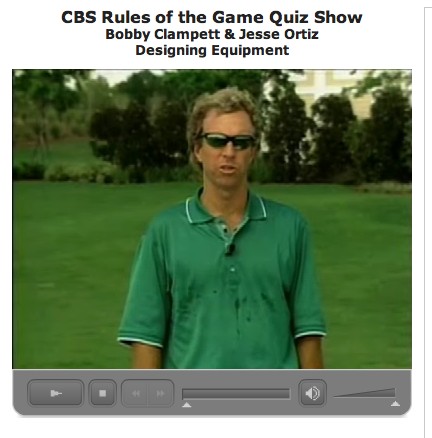
Accidentally clicking on a link in an attempt to get another broken link to work, I stumbled upon one of those CBS-Golf Digest Rules of the Game deals and was thoroughly impressed with the look cultivated for Bobby Clampett, though I'm guess it wasn't the handiwork of Golf Digest's intrepid style guru Marty Hackel.

The sagging green shirt he picked up at a Las Vegas Golf factory store, complete with a circa 1997 below the elbow cut. Then there's the fully branded, certificate of authenticity verified Dale Earnhardt Commemorative Edition shades straight from Walmart (to cut down on glare), and of course, the sweat stains for a touch of Central Florida post-Villages golf outing gritty.

Please, I know Marty's on the road too much as it is, but can we get him to do one of those fashion rehab things with Clampett (minus the $520 belt).

BobbyClampett 


"Without Davis Love III, Fred Couples, Jay Haas and other U.S. mainstays from the pre-Tiger era, Woods and Mickelson seemed far more comfortable"

gwar02_071005philwoody.jpgA few interesting observations from Golf World's John Hawkins regarding the U.S. triumph at Royal Montreal:

From a personnel standpoint, however, the pieces here all fit perfectly. Without Davis Love III, Fred Couples, Jay Haas and other U.S. mainstays from the pre-Tiger era, Woods and Mickelson seemed far more comfortable, not only as team leaders, but with each other. Nicklaus' light touch has never imparted a more positive effect -- when you've won 18 majors, there's no need to break chalkboards. Furyk, Toms, Stricker and Zach Johnson are gentle, easygoing guys, low-maintenance types and dependable putters. It's easy to say now, but this team was a lot better in person than on paper.

Then there's Woody. "He brings exuberance, and it [rubs] off on everyone," said Mickelson, who manhandled Vijay Singh in Sunday singles and lost just once in five matches, countering his poor performances at the '03 Presidents and '04 and '06 Ryder Cups. "We've played these things every year since '94, and guys like Woody and [Mahan] remind us how fun and exciting it is. That gets us focused."

On past U.S. squads Jerry Kelly and Chris DiMarco auditioned for the role of emotional catalyst. Both are high-end grinders whose relative lack of talent has been overcome by high levels of intensity, but neither was all that successful when it came to translating that vibe throughout the roster. Their intentions may have been admirable, but the message came across in a foreign language.

Meanwhile, because I know they love having their work lumped together, don't miss Alan Shipnuck's golf.com Hot List for this week. I've included the Presidents Cup list-makers here:

1. Rory Sabbatini. On a team of disappointments, he stood out with a homely 0-3-1 record, including a loss in the leadoff single match, which is supposed to set the tone for the team. Not only that, but Woody Austin has now usurped him as golf's biggest dufus, an honor Sabbo seemed to treasure.

3. George O'Grady. The Euro tour's executive director used a Presidents Cup press conference to pooh-pooh drug-testing as unnecessary and too expensive. Earth to George: ask Bud Selig how costly denial can be.

5. Vincent Chase. He used to be the most famous Aquaman, but now Woody Austin has stolen this title, too. Funny thing about Austin, as goofy as he is, you can't deny he's got a ton of game. 

I also hoped to read Brett Avery's typically entertaining player scorecard but couldn't get the link to work. Is  it just me or anyone else having the same problem? **

** Now working! 

“Barb has always stood out as someone who epitomizes all that is good about the game of golf."

I make a point to read as many press releases as possible so that I can remain thoroughly jaded. Imagine my pleasant surprise at the Oregon Golf Association's announcement that Barb Trammell had been hired as their CEO.

You may recall that Trammell was the highly respected LPGA official fired early into the Biven regime for placing tournament rules over marketing priorities.  

The OGA release features the usual nonsense and stiff quotes from the parties involved, but what caught my eye were the two endorsements Trammell received in the official release.

David Fay, Executive Director of the USGA commented, “Barb has always stood out as someone who epitomizes all that is good about the game of golf.  She emanates class and integrity, and believes that the golf business, championship operations and the application of the Rules of Golf should be administered with the highest level of excellence.  I am particularly pleased that the OGA will be able to benefit from her wisdom and talent.”

Former LPGA Commissioner Ty Votaw, who worked with Trammell from 1999 to 2005, stated that Trammell is “a consummate professional who is respected throughout the golf industry.  The LPGA was extremely fortunate to have Barb Trammell working for it and I feel extremely fortunate to have had the opportunity to work for so many years with a person of such integrity and talents.”

There's something you don't see every day. The Executive Director of the USGA and a high ranking PGA Tour official endorsing a regional golf association hiring.

Their comments would seem to speak to the esteem others in executive circles have held for Trammell's work. And perhaps it's a statement about what other higher-ups think of Bivens' decision to fire her.

"Consistent with last year, several trees were removed."

Who says Tom Fazio can't do a little restoration?

Why, he's taking out trees at Augusta! 

Granted, he planted them, but still...progress toward total de-Hootification:

October 2, 2007
FOR IMMEDIATE RELEASE

Billy Payne, Chairman of Augusta National Golf Club and the Masters Tournament, announced today changes to four holes, Nos. 1, 7, 9 and 11, for the 2008 Masters. In addition, other modifications were made on the grounds.

"Refinements to the golf course and grounds have been made almost every year since the Tournament's inception and this year was no exception," Payne said. "Overall, we are happy with the golf course. We think last year's exceptionally high scores were an anomaly due to the frigid, windy weather."

The changes for the 2008 Masters are:

Hole No. 1: Ten yards were added to the front of the Masters tee providing more flexibility in the event of a strong northwest wind. Back of the tee was reduced to ease patron movement. Masters scorecard remains 455 yards.

Hole No. 7: Green was changed for agronomic reasons and approximately six feet added to the left of the green allowing the possibility of 2-3 additional pin placements.

Didn't they just do No. 7 recently? Refresh my memory.

Hole No. 9: Green was changed for agronomic reasons and right pin placement softened on first and middle plateaus.

Hole No. 11: Consistent with last year, several trees were removed.

Whoa Nellie. It's because you recognize how ridiculous they look right?

The result allows for enhanced patron viewing.

Hey, whatever floats your boat. Just get 'em outta there!

Additional work throughout the course included construction of a new patron viewing area on the hillside at No. 16, further work on the new practice facility that will open in 2010, adding and extending azalea beds to increase course color and replacing grass with pine straw between Nos. 15 and 17 (pine straw was also added to the left of No. 15).

Well, 11 is a start but it sure would be nice if a tornado blew through 15/17 too.

The hillside seating area is located to the left of the pond at No. 16 and will provide viewing for over 2,000 patrons. Holes that can be viewed from this location include No. 6 green, the second shot and every putt at No. 15, the green complex at No. 16 and the tee shot and second shot at No. 17.

Easy access can be gained to this area from a newly renovated back entrance. From there, patrons can travel to No. 16 hillside, No. 5 fairway or to holes Nos. 13, 14 and Amen Corner. "We are very excited about these significant improvements for our patrons, and hope that we have made an already special experience even better," said Payne.

Now, about that slippery-when-it's-wet second cut? I think it needs to go for patron safety? Not yet?


Bridgestone and Acushnet Settle; World Peace Next?

Susan Decker of Bloomberg reports what sounds like a victory of sorts for Bridgestone:
Acushnet, which makes the Titleist and Pinnacle golf balls, will pay unspecified royalties to Bridgestone, and the companies agreed to cross-license other patents, the companies said in separate statements. The agreement doesn't cover a related suit pending in Japan.

Bridgestone Sports, based in Tokyo, and its Bridgestone Golf unit sued Acushnet in 2005 in federal court in Wilmington, Delaware. The company's patented technology relates to ways of making balls so they fly farther, spin better and last longer. One patent is designed to increase a ball's distance when struck by a No. 5 iron or sand wedge.

``We are very pleased to have reached a settlement agreement with Acushnet and to bring the U.S. litigation to an end,'' Bridgestone Sports President Hisashi Kawano said in that company's statement. ``This agreement demonstrates the value of our technology and our intellectual property.''

Acushnet Golf, based in Fairhaven, Massachusetts, confirmed reaching a settlement. ``Acushnet considers this matter to be closed and will have no further comment,'' the company said in a statement. Fortune Brands, based in Deerfield, Illinois, also makes Jim Beam bourbon and Moen faucets.

"Why are so many players lifting weights if strength doesn't help?"

eqar01_golftechsteroids.jpgIf you've followed the steroid story in golf, you know that most players and certain administrators believed there was no problem and no benefit in using performance enhancing drugs. Others have said that may be true and everyone may be clean, but how can you know without testing? Still another school has said there is evidence that certain drugs or steroids could be beneficial, and if nothing else, a policy should be in place.

And then there are blowhards like me who have found the "we play golf, therefore we are honest" response downright offensive. Especially considering that we've seen a big jump in distance in recent years that most of golf's administrators attributed to increased athleticism. Yet somehow with those dubious claims, we are to expect today's youth to sit idly by and just work hard in the gym?

So if nothing else, you test, for the children!

Yet no matter where you stand, I think it would be hard to come away from reading Matthew Rudy's piece in the October Golf Digest, still insisting that beta blockers can't possibly work or that designer steroids will not help a golfer. Yes, it's clear Rudy has a bias: he talked to many people and heard an overwhelming consensus, then reported it.

I highly recommend reading the story, but because this is my clipping archive and you never know when Golf Digest's archives will vanish overnight, here are some of the highlights along with clips from Dr. Grant Liu's excellent guest sidebar on antidepressants.

But a wide cross section of scientific experts, trainers and instructors say [Gary] Player is neither crazy nor wrong. Many of them not only believe performance-enhancing drugs would significantly help golfers, but that far more than the approximately 10 pros Player estimated to be taking drugs are using them to recover from injuries quickly and hit the ball longer.

How many more? As many as half of the top 100 players in the world, according to one prominent trainer.

Even if the true number is closer to zero than 50, it's clear that the idea of professional golf not needing to worry about steroids is as outdated as the notion that golfers aren't athletes. "The reality is that the public is slowly coming to the view that performance-enhancing substances are prolific in sports," says PGA Tour Commissioner Tim Finchem, who is expected to announce a set of anti-doping rules for the tour later this year. "Whether we have an issue or not doesn't matter if people think we have one."

And this on the specifics, which will help those players who immediately shrug off the steroid concept thinking that today's designer drugs are only designed to make you bigger.

It's easy to lump steroids into one general "they make you more muscular" category, but different performance-enhancing drugs produce dramatically different effects. Drugs that athletes would use for help fall into four main categories: anabolic steroids, synthetic hormones, beta-blockers and stimulants.

Anabolic steroids like synthetic testosterone are the workhorses of the performance-enhancing drug world. "When you put your body under constant physical stress, it releases substances called corticosteroids," says Dr. Charles Yesalis, author of Anabolic Steroids in Sport and Exercise. "They're the most powerful anti-inflammatories in history. But corticosteroids break down muscle tissues as they work."

Anabolic steroids block the muscles from being broken down, allowing an athlete to train longer, recover faster from that training and build more muscle mass. For a golfer, that means being able to hit more practice balls -- and do it more often.

Powerful injected anabolics like stanzolol and deca-durabolin can produce body builder-type gains when taken in conjuction with an aggressive workout regimen. Testosterone creams that are spread on the body before a workout help generate smaller amounts of lean muscle.

Hormone drugs like HGH and EPO have had a central role in the ongoing controversy in baseball. HGH is synthetic human-growth hormone -- the substance responsible for bone growth and tissue health -- and it is commonly prescribed for its anti-aging effects. EPO is the synthetic form of a natural substance in the body, erythropoietin, that promotes red blood-cell production and increases the cells' ability to carry more oxygen -- both of which give an athlete more endurance.

Fast forward to this, along the same lines...

Some drug experts, trainers and other teachers call the idea that a golfer wouldn't benefit from getting stronger naïve. "Tell me a sport where a good big man doesn't beat a good little man," says Yesalis, who has researched steroid use in sports for almost 30 years. "Why are so many players lifting weights if strength doesn't help? Tiger Woods started training seriously when he came out on tour, and he's put on 15 to 20 pounds of muscle. I don't hear anybody saying getting stronger hasn't helped him."

Dr. Jim Suttie, former PGA Teacher of the Year, gives a qualified endorsement of that view: "There's no doubt steroids build muscle and increase strength," says Suttie, who holds a Ph.D. in biomechanics. "Bigger muscles mean more explosive core strength, more explosive hip strength, more arm strength." Suttie believes players taking steroids would be able to hit the ball longer -- provided they didn't get too bulky and lose flexibility.

The first piece of any golf doping regimen involves ambitious weight training and cardio work. Anabolic steroids have no effect on a player who isn't adding muscle by working out.

Hey maybe all the guys were working out to keep up with their...oh just kidding.

The chemical component most commonly mentioned by trainers and experts interviewed for this story was a 5 percent testosterone cream, applied just before each workout. A week's supply of that cream would cost approximately $40. "That level of steroid would have minimal side effects," says Yesalis. "Certainly nothing that would prevent a golfer from being able to concentrate on the course. At least five different studies have shown that doses far, far larger than this cause no psychological response."

Experts estimate a player could generate 10 percent more clubhead speed using testosterone cream in addition to working out. That translates into roughly 30 more yards of carry for a tour player swinging at 110 miles per hour with a driver. Managed with expert supervision, a player could get the benefits from that relatively small amount of testosterone without even triggering a positive result on a drug test.

"The best players aren't going to be testing positive for steroids," says Randy Myers, who trains more than a dozen tour players. "Small doses of impact drugs -- HGH, things like that -- that's what the modern athlete is doing. It's barely testable, and it doesn't bulk you up. It builds explosive muscle, which is what all golfers want."

Doubters, doesn't that pretty much say it all?

Doctors routinely prescribe HGH to middle-age men to help fight muscle loss and increase suppleness -- two things that would obviously help a player prolong a competitive career. HGH is widely available on the Internet illegally without a prescription, or an athlete could visit an anti-aging clinic, where a physician-supervised HGH and nutrition regimen can run more than $15,000 a year. "You've got a small window of opportunity in sports, and players are threatened with the loss of millions of dollars if they don't perform," says Yesalis. "You don't think that would tempt somebody to go to the 'dark side,' so to speak? As competitive as golf is, people are going to be doing this just to keep their job."

Myers says he believes no more than a handful of tour players are using performance-enhancing drugs, but that group includes players who could be doing so unknowingly. "There are trainers out there that nobody knows anything about," says Myers, who has trained tour players since 1989. "There's a lot of money at stake, and players pay bonuses to trainers, teachers and psychologists for things like major championships and money-list finish. There's a lot of pressure on trainers, for sure, to not just show results, but show them fast."

Accompanying the piece was this sidebar from the University of Pennsylvania's Dr. Grant Liu who breaks down what today's "mind enhancers" can do.

A class of drugs called "mind enhancers" poses a greater potential for abuse in golf than do steroids. Mind enhancers, such as antidepressants and anti-anxiety agents, are legitimate drugs with medical uses, but their effects make up a veritable wish list for the ambitious golfer. They can increase focus, dampen emotional extremes and reduce anxiety. Plus, they're more available than steroids, and there's less of a stigma associated with taking them.

BETA-BLOCKERS / example: Inderal / These blood-pressure medications are sometimes used by performers to deal with stage fright. The golf application would be to battle nerves or the yips. These drugs have been studied in Post-traumatic Stress Disorder, and could help golfers get over a crushing loss.

Oh but Nick Price, like, 15 years ago used them and he said they didn't help, so forget it!

AMPHETAMINES / example: Adderall / This group of stimulants promotes alertness and focus and is commonly prescribed to treat Attention Deficit Disorder. They're often used illegally by students taking the SATs or final exams. The golf goal could be better concentration during a round.

ANTIDEPRESSANTS AND MOOD DRUGS / example: Prozac /These mood elevators and stabilizers combat stress and depression and help people control emotions. Think of the golfer who dramatizes mistakes, like the missed three-footer.

No, not us golfers.

BENZODIAZEPINES / example: Valium / This class of anti-anxiety drugs is prescribed to treat phobias, such as fear of crowds or closed spaces. In golf, fear of on-course situations or consequences can be crippling. Imagine a Ryder Cup rookie needing to take the edge off on the first tee.

And this definitely says it all...

Would golfers really take these drugs? Consider that many people today use medications to enhance their appearance, performance or lifestyle. For example, Viagra, indicated for erectile dysfunction, is used by 20-somethings to increase sexual prowess. Botox, a drug for neurological disorders, is commonly injected to smooth wrinkles.


"The Ryder Cup has been captains coming up and saying, ‘You’re playing with him and he’s playing with him.'"

Doug Ferguson on Ryder Cup Captain Paul Azinger reaching out to Jack Nicklaus...

What the Presidents Cup inspired Azinger to do was call Nicklaus — and that’s never a bad idea no matter what the subject, unless it’s the golf ball — along with Tiger Woods, Phil Mickelson, Jim Furyk, David Toms and Stewart Cink.

Low blow Doug! Low blow.

Those five have played on each of the last two Presidents Cup and Ryder Cup teams.
“I want input from the guys who played on both teams,” he said. “I’d rather know from them, rather than blurt out what I like. And I’d like to spend some time on the phone with Nicklaus and get a feel for what he was thinking and doing. And if there’s a glaring difference, then I’d like to try to duplicate what he did.”

Nicklaus wants it to be fun, but isn’t it always fun when you’re winning?

Captain Jack also has reduced the science of pairings to an art form by letting the players decide. He pulled his master list out of his pocket Saturday morning, and next to each player was three or four names. Nicklaus couldn’t accommodate everyone, but he was close.

“The thing that I’ve noticed between the Ryder Cup and here is Jack is very much, ‘Guys, do what you want to do, have a great time. Tell me who you want to play with,’ ” Scott Verplank said. “The Ryder Cup has been captains coming up and saying, ‘You’re playing with him and he’s playing with him.’ I don’t know if that makes a difference.”

"From Day One, Bivens moved fast to reshape the LPGA. She replaced the exiting staffers with a team heavy on marketers and intellectual-property lawyers"

0926_bivens.jpgNow I'm sure that the LPGA Carolyn Bivens inherited was far from perfect and that as with any organization, some change was necessary. But if you believe BusinessWeek (and that's hard to do considering how they pandered to ranking partner ESPN), you would be under the impression that the LPGA Tour was a complete and utter disaster and that her initiatives have completely turned things around.

Is it me or does Dean Foust's breathless piece reads a bit too much like an official LPGA press release:

If you think the inauspicious start chastened Bivens, think again. The LPGA chief makes no apologies for rattling cages at the 58-year-old tour, telling more than one interviewer: "I didn't take the job to be voted Miss Congeniality." She sees her game-changing overhaul as crucial to making sure the players reap their fair share of the spoils from the growing fan interest in the LPGA. "There were a number of people invested in maintaining the status quo," says Bivens. "It would have been criminal not to change the business model. The value of the LPGA had changed exponentially, and the contracting and the fees hadn't caught up to that."

Ah the value. Of course.

The tour Bivens inherited was far from healthy. Since 2001, the number of tournaments had shrunk from 40 to 35, and interest among TV networks was so limited that the LPGA not only didn't receive rights fees but had to buy air time to broadcast. The tour couldn't even afford to provide health care or retirement plans to its players.

And that has changed?

Perhaps more important, the LPGA didn't control any of the tournaments on its calendar. That left it vulnerable to the whims of tournament operators. For example, in 2006, CBS decided to move the final rounds of the McDonald's LPGA Championship to early afternoon—a time slot that was clearly unpalatable to the tour. NBC was willing to air the tournament in a better slot for $1.5 million. But the tournament's owner opted for The Golf Channel, which cost much less—about $300,000—but could deliver only a quarter of the NBC audience.

From Day One, Bivens moved fast to reshape the LPGA. She replaced the exiting staffers with a team heavy on marketers and intellectual-property lawyers who could help strike better deals with sponsors, licensees, and networks. For players, she hired a "branding coach" to help enhance their marketability. What's more, Bivens gradually hiked the sanctioning fees charged to the tournament owners to $100,000, from the $10,000 or so many had paid—a fee that wasn't enough to cover the cost of setting up the course and providing weekend child care for players. That triggered a backlash among tournament operators, but many players backed Bivens. "In the past I think our leadership was in a position of wanting to please too much. She wanted to do things differently," says tour veteran Wendy Ward.

I always forget that all change is progress! Stupid me.

This was also curious, since the ADT started under the prior regime:

To that end, she has already gained control of the season-ending ADT Championship held in mid-November in West Palm Beach, which pays two-thirds of its $1.55 million purse to the winner (winners usually get 15% of the purse). That disproportionate payout upset some older tour players, but their complaints have fallen on deaf ears. One more reason Carolyn Bivens won't be winning that congeniality award anytime soon.

Internationals Want Aid From Flies To Capture Prez Cup

From an unbylined story in the Sydney Morning Herald:

The International players sometimes wondered if they were really playing a home game in the past four days at Royal Montreal, near the US border. The galleries cheered for Americans Tiger Woods and Phil Mickelson sometimes with greater fervour than the Internationals.

If the competition returns to somewhere close to the US, watch out for a mutiny.

"I think South Africa and Australia would be the best place," said International Vijay Singh.

The US Tour selected Canada for this year's event because of its proximity to the US, making it an easy trip for the American players, and the time zone suited US television.

But Scott and his teammates want the Americans on the other side of the world, where the heat, flies, jetlag and all of those other intangibles will come into play.

The Internationals started yesterday's singles needing to win 10 of 12 matches to pull off an unlikely victory. They did win seven matches, but the US prevailed 19½ to 14½ overall.

The four Australians were generally disappointing. Geoff Ogilvy and Stuart Appleby finished with two wins and three losses, while Adam Scott had one win, three losses and one tie. Nick O'Hern posted one win and four defeats.