Poppy Hills: You Like Me, You Really Like Me

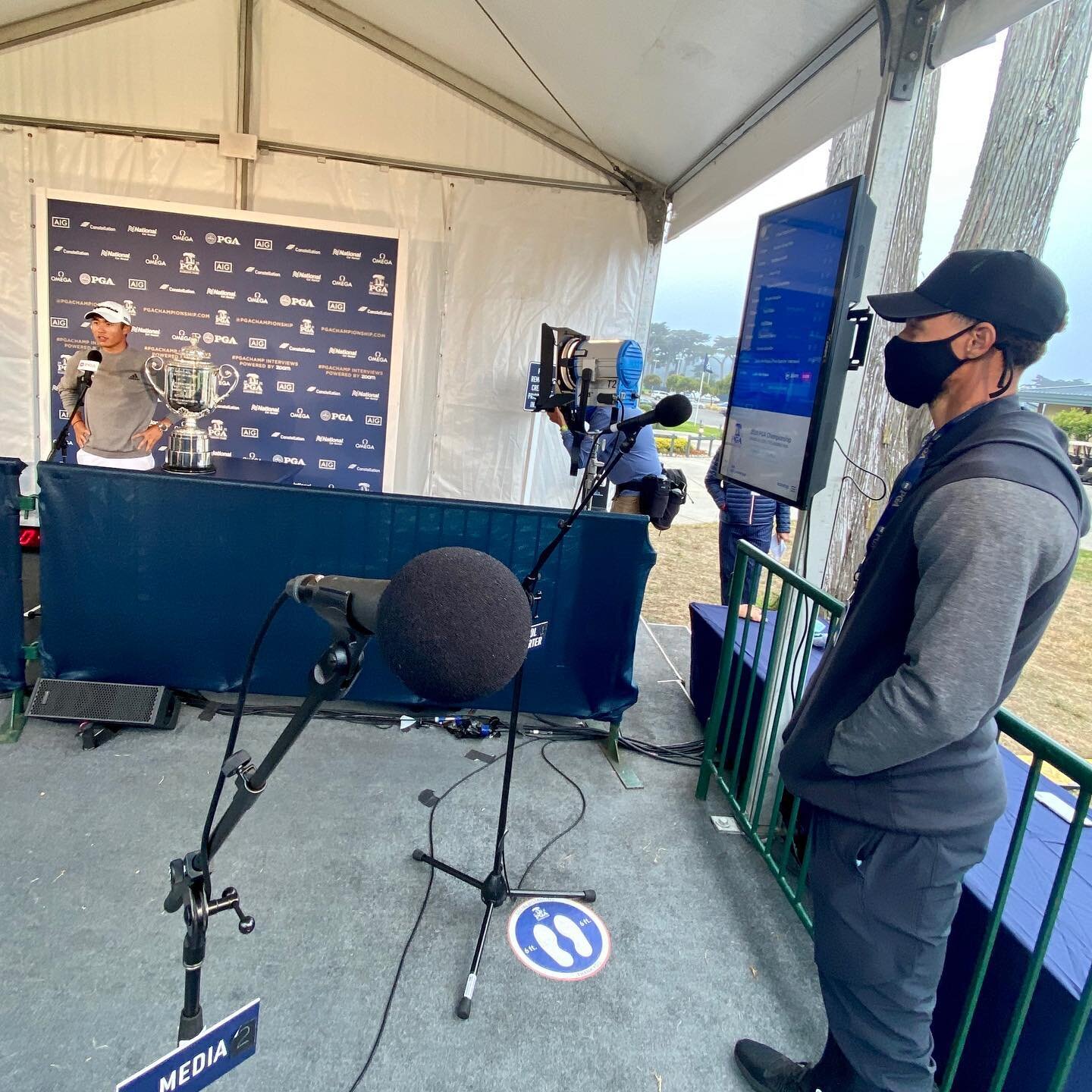
PoppyField.jpgPoppy Hills is named National Golf Course Owners Association of America course of the year. The cutting edge addition of GPS to the carts made the difference.

In 2005, Poppy Hills made numerous improvements, including the addition of Global Positioning Systems to its golf carts and an Inpractis 4View video system for the driving range. Course conditioning has also been a priority with noticeably firmer and drier conditions now more prevalent.

"We're honored to have been given this award considering the numerous qualified courses across the country," said Poppy Hills General Manager Tyler Jones. "The hard work that [Superintendent] Manny Sousa and [Assistant Superintendent] Kregg Bush have put into course drainage and design improvements is really paying off."

Past winners of the National Course of the Year award include World Tour Golf Links in Myrtle Beach, S.C.; Bay Hill in Orlando, Fla.; and last year's winner, Saratoga National in Saratoga, N.Y.

Thanks to our in-house digital satirist Naccarato for his "Poppy Field" piece accompanying this thread.  

Year In Review, Vol. 14: Television and the PGA

2005.jpgABC's team of Nick Faldo, Paul Azinger and Mike Tirico, along with a strong supporting cast (Baker-Finch, Rankin, Brown, North, Alliss) proved that you could make golf telecasts fun. Credit producer Mark Loomis for the fresh telecasts.

Meanwhile Stu Schneider and Peter McCleery did some of the best writing of the year covering golf on television.  Here's Schneider's year end wrap-up and maybe the best lead of the year here. And two of my favorte McCleery pieces previewing the US Open and British Open telecasts. McCleery also weighed in on the TV contract situation.

The wild and wacky PGA Championship, where the PGA of America ignored week-long weather forecasts predicting Sunday problems, culminated a wild and wacky week (it must have been the heat).

First, Stevie stepped on Tiger's ball, I mean, he was accused of doing that and of course he didn't. Then we learned they were raking the rough at Baltusrol. Not to mention that there was Tiger's Sunday departure, even though he was within striking distance of a playoff. And we had Tiger's refusal to be interviewed by Peter Kostis, which allowed Stu Schneider to write about that mysterious spat.

But it was the CBS-PGA decision to hope for a bad weather forecast that proved most embarrassing.  After all, a strong lead into a 60 Minutes rerun trumps all else.

That absurdity put Kerry Haigh in the hot seat, where already overheated writers sick of power outages, humidity, commutes and the PGA of America, unleashed their fury.

Peter Kostis defended those signing his paychecks for compromising a major championship in the name of ratings, but most of the press let the PGA have it, including McCleery, who had long been predicting the Monday-finish-due-to-darkness-scenario.
 

Year In Review, Vol. 12: Flogging and Narrowing

FlogGolf2.jpgIt's all Johnny Miller's fault, really.

His comments at Doral were transcribed here (thanks TiVo) and picked up by a few writers, helping to give the bizarro bomb-and-chase approach to narrow fairways its name. Oh, and did I mention, flog spelled backwards is...sorry...

Jack Nicklaus had some interesting things to say about flogging. From the Whistler Something and News:

Nicklaus would like to see the golf ball change, he admits that he is no longer a mainstream player. Nicklaus said the game has shifted from being 80 per cent shot making and 20 per cent power to the opposite. “It is evidenced by looking at the top five money earners on the PGA Tour. Not one of them are in the top 20 for driving accuracy,” Nicklaus said. “I am not saying they can’t play differently, but they have chosen power over strategy because it has been rewarding.”

Many players talked about flogging at the U.S. Open, perhaps the first time most spoke about it at length.2005.jpg

This was my favorite flogging stat: blogger Paul Kedrosky's moving graph that showed Tiger's transition from Hoganesque precision to first rate flogger.

Then Tiger had to go and say at the PGA that this flogging thing won't change until you roll back the ball. You know, technophobe that he is.

I don't see why they won't continue making the golf courses longer, just because guys are going to continue to hit it further, and it's just kind of the nature of the game until they put there's a speed limit on the faces and on the balls, but we seem to every year find something a little bit faster and a little bit longer. Granted, guys are giving up a lot on the greens by going to harder balls to hit it further, but that's how the game has changed. It's not relying upon spin around the greens anymore. It's about distance off of the tees.

Nick Faldo and Paul Azinger talked about it on the air. Exchanges like that or a look at the money list, or the mockery the players made of the Pinehurst setup, might have prompted the USGA and R&A to study grooves as a result of the flogging.

Meanwhile, as fairways got narrower and courses longer, Sally Jenkins of the Washington Post really stepped up and tied the issues together nicely. It'd be nice to read something like this column in a golf magazine too.

Year In Review, Vol. 11: The Commish

finchem.jpgEvery time PGA Tour Commissioner Tim Finchem met with the media, he offered plenty of entertaining MBASpeak as only he can deliver it (here's his fall tally of isms).

The highlight was his impactful press conference at East Lake, which included confused questions from the assembled laptoppers. Frank Hannigan had fun with the Finchem antics.

His 2007 Schedule concept was met with skepticism and plenty of questions from writers like Steve Elling.2005.jpg

John Hawkins wrote a lengthy feature on the proposed schedule concept that raised even more questions about how the Tour was approaching their network negotiations. Players voiced concern and even Peter Kostis didn't praise the proposed concept.

Worse, the Commissioner had Sean Murphy up in Washington causing trouble and asking tough questions. trouble. And the ironic situation with the Nationwide is quite fun.

Worst of all, he's got Carolyn Bivens trying to talk like him now.

But at least he's well paid. 

Year in Review, Vol. 10: Old Course Setup

As wonderful as it was to watch Tiger dissect the Old Course again, the last memory of the 2005 Open Championship remains the R&A course setup antics.

Not only was there the movable out of bounds silliness, but the inclusion of rough all over the course showed just how desperate the governing bodies are to mask dramatic equipment-fueled changes in the game. Rough had to be cut down early in the Open week to help players unable to make the 290-yard carry on the 4th. But the most notable rough was found on the par-5 14th and Road Hole, where players were forced to lay-up off the tee, all so the R&A would not be embarrassed by flip-wedge approach shots.

John Huggan provided the strongest commentary in August when reviewing the majors, and again in this year in review column. I joined in the fun with this Golfobserver.com column.

Meanwhile on this website, Tommy Naccarrato provided the illustration of the year, using Alister MacKenzie's sketch of No. 14 to show how narrow the fairway had become, eliminating the A-C-D options so revered by MacKenzie (and Bobby Jones). Oh, and don't forget the out of bounds tee that Tommy added!

OldCourse14 small.jpg 

Year In Review, Vol. 9: Distance Measuring Devices

Jim Achenbach broke the news that the USGA and R&A had agreed to let tournaments create local rules allowing distance measuring devices. He later wrote that he was "overjoyed" at the decision, as were the makers of these devices who are claiming they will speed up play.

A few dared to offer rebuttals, but when the USGA announced they would not allow rangefinders in USGA events, it put a damper on things.

No subject generated more spirited comments from readers. So the debate will rage on in 2006.
 

Year in Review Vol. 8: USGA Ball Study

2005.jpgApril and Golf World delivered the revelation that the USGA asked ball manufacturers to submit a rolled back pellet for study (only, of course). The USGA's Dick Rugge said these were only for study, but that all was fine. He also said all eight major manufacturers would be complying with the USGA's request.

Manufacturers moaned and said that the answer to golf's problems lies in narrower fairways and more rough. By July, Titleist was making it clear they weren't happy about cooperating with the ball study, but said they would still submit rolled back balls.

Meanwhile, the USGA took the offensive with the October issue of their sparse newsletter, which offered plenty of devil's advocacy, lame humor and little substance.

And in November, Lawrence Donegan informed us that no manufacturers had submitted rolled back balls for study.

"Hitting It Straight Will Be Key"

That was the jump header in Sunday's LA Times. The Thomas Bonk story in question offered an extensive look at Augusta National's recent changes.  It's a nice summary of the new look course, with some of the recent comments from Tiger and Couples. And thankfully, it lacks the excessive glorification we've read recently.

If nothing else, the club has helped Augusta's moribund non-Masters tourism industry by having all of these writers down for a looksy (ah, but do they get to bring their clubs?!). 

On this "hitting it straight" thing. I'm thinking that within a decade, maybe they'll paint a straight line down the center of what's left of the fairways, and deduct a stroke for those who toe the line, and maybe add strokes for those who dare to non-conform by playing to sides of fairways to gain approach better approach angles, etc...

Nice metaphoric quality to this, don't you think?

Year In Review Vol. 7, SI Roundtable

tx_roundtable.jpgIn May, Sports Illustrated convened David Fay, Brad Faxon, Larry Dorman and myself at Rhode Island Country Club for a roundtable discussion hosted by Jeff Silverman. This meeting of the minds appeared in SI's stand-alone U.S. Open preview issue.

While David Fay's "middle of the night" Shinnecock Hills green rolling didn't make the published version in its entirety, but it did give me a Golfdom column (and served as a reminder that the USGA needs much better overnight security...assuming this tale of woe is true).

Should you have nothing else to do today: we pick up during the 2004 U.S. Open conversation and why the USGA was consistently messing up course setups...

SHACK: Doesn’t the problem still come back to scoring – low scoring and the USGA being bothered by that. I mean Jeff Maggert said last year that he knew after those two rounds – and the words he used – were I knew that they were gonna panic. And it just seems like with all the changes in the game that the USGA is still clinging to par. And I know you’ve said that that’s not the case, but it seems to me the only way to explain the things that went on, and I’m sorry, but Saturday was to me, watching it on television, was as embarrassing as Sunday because that’s when it started to go bad…

FAY: Um-hum…

SHACK: And it just seems so apparent that the scores bothered everyone. I’ve spoken to all the people who rolled the greens and it was clear that Friday night that was the feeling, that these guys have gone low for a US Open. Seventeen were at par or better.

FAY: Um-hum…

SHACK: And I don’t understand why the USGA clings to that notion when courses are in better shape, players are better, technology and equipment are just better, so scores should naturally evolve.

FAY: Well, they have naturally evolved. And we’ve always taken that position. Look at Ben Hogan. Two of his four US Opens he won at seven over par. Seven over par. And the one he lost in a playoff he was seven over par. You look at his average over his salad days other than at your home club, Riviera, his scoring was very high. We’re not gonna cling to par. But we want par to have some meaning. And on the rolling, we can go on and on about that, but that’s our fault. The rolling took place. It was not done at our request. It was done in the middle of the night.

SHACK: In the middle of the night?

FAY: In the middle of the night.

SHACK: Really?

FAY: In the middle of the night.

SHACK: That’s (laughs)

FAY: In the middle of the night.

SHACK: You make it sound as if Carl Spackler came out and rolled the greens in some vendetta.

FAY: It would be nice if Carl did write a book on the US Open. It would be pretty juicy.

SHACK: Well, everybody there that I’ve spoken to said that wasn’t the case.

FAY: You haven’t spoken to the right people.

SHACK: Well, the other problem…

FAY: In the middle of the night. I can understand they were upset that they were blamed…

SHACK: As they should be…

FAY: …on Saturday by certain voices within the USGA. So on Saturday night that was when the rolling took place.

Faxon: Without your knowledge…

FAY: I want you to know, that was without our knowledge.

SHACK: Saturday night there was another rolling…

FAY: It was excessive rolling on Saturday night. Saturday night. Not Friday night.

SHACK: Cause I was watching on television when you came on and said that by mistake it was rolled, and NBC had a shot of the seventh green and they were out double-cutting it. And my mom called and she said that doesn’t make much sense does it if the green got too fast. Why are they out doublecutting it again. To anybody watching, it just seemed like the whole thing was out of control. And I guess it’s just hard for people who want our national Open to be something special to see this sort of chaos.

FAY: Well, it’s sort of in the eye of the beholder, too, Geoff. As I said, it got out of control, but it didn’t get in our minds that far out of control. Now you’re gonna say, Oh, now wait a minute, now. But I’ve said for many years, and Brad, I said it to you I remember up at that dedication up at Buttonhole, because I’ve been consistent on it, once a year, and this goes back in the history of the US Open, it has always been a very punishing examination…

SHACK: Um-hum…

FAY: Whether it was at Myopia Hunt Club at the turn of the century, which was far tougher than any other course, whether it was Oakmont, with the Fownes rakes in the bunkers, whether it was Oakland Hills in 1951, or Olympic in ’55, or Winged Foot in ’74. You can go on and on. But the US Open has always been probably the hardest golf tournament. We’ve got majors. We’ve got four or five majors. But that’s always been its imprimatur. It’s the hardest golf tournament. If you look at it, when we’re all growing up, there’s more strain strain on the faces of the players. It feels like they’ve been in a fist fight. You would say I was embarrassed by it, and believe me, we did not want to see what we saw on Sunday. But a lot of people are saying, Man, I loved that. But you don’t want to see that every week because these are great players. Look, it wasn’t that far away from what we wanted. Seven – everyone focuses on that. I was just as concerned about one. Actually, one in some ways bothered me more than anything. There were shots, where don’t have a wild slope to the green, where once they were hitting and they looked like they were finished, they had come to rest they rolled on for 25 yards.

SHACK: Well, that’s where Ernie gave up, according to Tom Meeks.

Faxon laughs.

FAY: Well, anyone who’s an athlete knows you don’t say that. That doesn’t even warrant response.



Year In Review, Vol. 6: Shot of The Year (21st Century?)

masters_0413tiger2.jpgHappy holidays to all. My small gift to you, courtesy of Tiger Woods. If you haven't seen the epic Masters shot in a while, here it is, in its entirety.  I hope the cameraman who zoomed in on the ball got a bonus this year. And nice job by Verne Lundquist too.

Here's Tim Rosaforte writing about the shot and where it ranks in Tiger lore. 

Year In Review, Vol. 5: The Rankings

2005.jpgAn odd numbered year means Golf Digest and Golf Magazine roll out their rankings to a chorus of...well, this year to "what were they ingesting" and "you have to be kidding." The Golf Digest list seemed to generate its fair share of discussion, but mostly their decision to drop the "Tradition" score and move to an Ambiance category exposed just how bizarre the panel's taste can be. Which may have prompted this fall's Golf Digest Panelist Summit.

After years of credibility and solid lists, the leadership of Gary Galyean took the Golf Magazine list into shaky territory, with too many USGA hard-is-good-voters and many questions that needed to be raised (here, here and here). Golf's downfall was best exemplified by the ridiculous inclusion of a Korean course that had offered way too many people free rides to come play it.

Golfweek, which offers a yearly ranking, kindly added Rustic Canyon to its Modern list and continues to mature, albeit with minor hiccups ( compared to Golf and Golf Digest) and into the most reliable of the lists. If it only would not publish yearly, it's credibility would skyrocket.rustic13.jpg

The year in rankings was rounded out by the Golf Digest Best New lists, which proved their prophetic worth when two former "Best New" first place winners  earned Best New status again when they made the magazine's Best New Remodel just a few years after being recognized for their original design. The two courses have positioned themselves nicely for the first ever competition of Best New Remodel of a former Best New Remodel.